




Hormuz Shipping Constraints Lift Brent to $72.84, Keeping Fuel Costs Elevated for Mining Companies


Brent rebounds despite Hormuz shipping disruptions as tight oil inventories and Saudi price cuts keep fuel costs elevated for mining companies.
- Brent crude rose 1.2% to $72.84/barrel, returning to near pre-conflict levels even as Hormuz vessel crossings remained in single digits, indicating Gulf oil exports had not yet normalized.
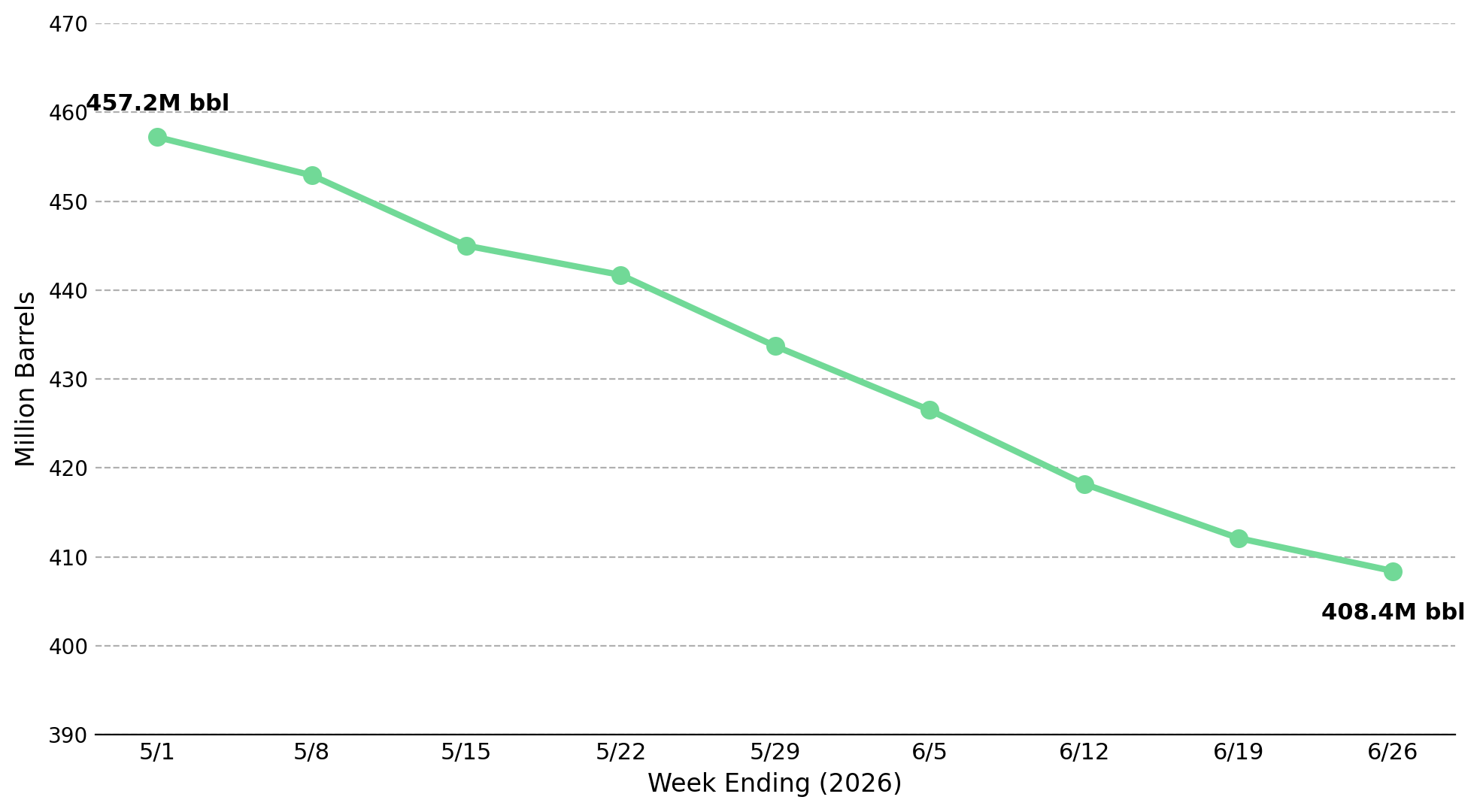
- US commercial crude inventories fell 3.8 million barrels to 408.4 million barrels, 7% below the five-year seasonal average, while distillate inventories stood 8% below average at 108.6 million barrels, supporting oil prices despite higher OPEC+ output.
- Saudi Arabia cut the August Arab Light official selling price for Asia by $11/barrel, the steepest monthly reduction in more than two decades, to $1.50/barrel below the Oman/Dubai average to keep its crude competitive as Gulf exports remain constrained.
- OPEC+ raised August output targets by 188,000 bpd after similar increases in June and July, while the UAE lifted production above 3.8 million bpd, its highest since April 2020, increasing global oil supply despite ongoing shipping constraints.
- Janiv Shah, VP of commodity markets at Rystad Energy, warned that any tolling model at the Strait of Malacca could disrupt a route that handled 29% of global maritime oil flows in H1 2025, with crude oil accounting for more than 70% of total throughput.
Iran Missile Strike Lifts Oil Prices
Brent crude rose 1.2% to $72.84/barrel and WTI gained 1.1% to $69.29/barrel, recovering to near pre-conflict levels despite ongoing risks to Gulf shipping. The rebound followed Iranian missile strikes on commercial ships transiting the Strait of Hormuz, highlighting that shipping risks remain despite recovering oil prices. President Trump also warned of further military action if negotiations with Iran fail, adding to geopolitical risk.
ANZ analysts said tanker traffic through the Strait of Hormuz remained in single digits, limiting the recovery in Gulf crude exports. Shipping operators remain cautious, slowing the return of Gulf crude exports to pre-conflict levels.
US-Iran MOU Leaves Hormuz Transit Rules Unresolved
The US-Iran MOU provides 60 days of free navigation through the Strait of Hormuz, but Iran and Oman have yet to agree on its long-term administration, including any transit fees. Tim Waterer, chief market analyst at KCM Trade, said oil prices had already reflected higher supply expectations, but further gains depend on a recovery in physical oil flows through Hormuz that has yet to occur.
Janiv Shah, VP of commodity markets at Rystad Energy, said any Hormuz-style tolling system at the Strait of Malacca could disrupt a route that carries 29% of global maritime oil flows, with crude accounting for more than 70% of total throughput.
Saudi Arabia Expands Price Competition Despite Higher OPEC+ Output
Saudi Arabia cut the August Arab Light official selling price for Asia by $11/barrel, the largest monthly reduction in more than two decades, to $1.50/barrel below the Oman/Dubai average to keep its crude competitive while Gulf exports remain constrained. OPEC+ raised August output targets by 188,000 bpd after similar increases in June and July, while the UAE increased production above 3.8 million bpd after leaving OPEC+, expanding supply even as shipping constraints limit exports.
The base case is for Brent to trade between $70 and $75/barrel through Q3 2026 as higher OPEC+ output and gradually recovering Hormuz transit balance supply growth with improving exports. For energy-intensive mining operations, the downside case is that Hormuz crossings remain in single digits through August while concerns over tolls at the Strait of Malacca grow, pushing oil prices above the current Brent trading range. Hunter Marston of the Lowy Institute said a Malacca tolling system would likely violate international law but warned the waterway could still face disruption without coordinated security patrols.
Elevated Diesel Prices Increase Mining Costs
Mining companies with diesel-intensive operations face higher operating costs when WTI and diesel prices rise. Distillate inventories, a proxy for diesel supply, stood at 108.6 million barrels, 8% below the five-year average and tighter than crude inventories, supporting higher fuel costs. Retail diesel remained at $4.668/gallon, $0.941 above year-ago levels, showing that fuel costs remain elevated despite Brent returning to near pre-conflict levels. US refinery utilization averaged 96.2%, leaving little spare capacity to offset any disruption to crude imports.
Diesel hedging through Q3 protects operating costs even if shipping through the Strait of Hormuz remains constrained. Companies buying diesel at spot prices could benefit from Saudi Arabia's $11/barrel price cut if fuel prices fall, but continued single-digit Hormuz crossings or new toll risks at the Strait of Malacca could push oil prices higher in Q3. US net crude imports averaged 1.0 million bpd, down from 2.6 million bpd a year earlier, leaving less supply available if another shipping disruption occurs.
Inventory Data & Gulf Shipping Set the Next Oil Trend
US commercial crude inventories stood at 408.4 million barrels, 7% below the five-year average, while distillate inventories totaled 108.6 million barrels, 8% below average, indicating supply remains tight despite higher OPEC+ output. Below-average crude and diesel inventories continue to support oil prices, limiting the impact of higher OPEC+ production.
A sustained recovery in Strait of Hormuz vessel crossings to pre-conflict levels would signal that Gulf oil exports are normalizing, but ANZ said no such recovery has occurred. Any decision to impose tolls at the Strait of Malacca would increase supply risks, while a renewed commitment to free passage would reduce them. A crude inventory draw of more than 3.0 million barrels alongside continued single-digit Hormuz crossings would confirm that physical oil supplies remain tight despite lower Brent prices.
Analyst's Notes





Subscribe to Our Channel



Stay Informed


