




The Nevada Advantage: How Permitting & Processing Infrastructure Shape i-80 Gold's Development Timeline


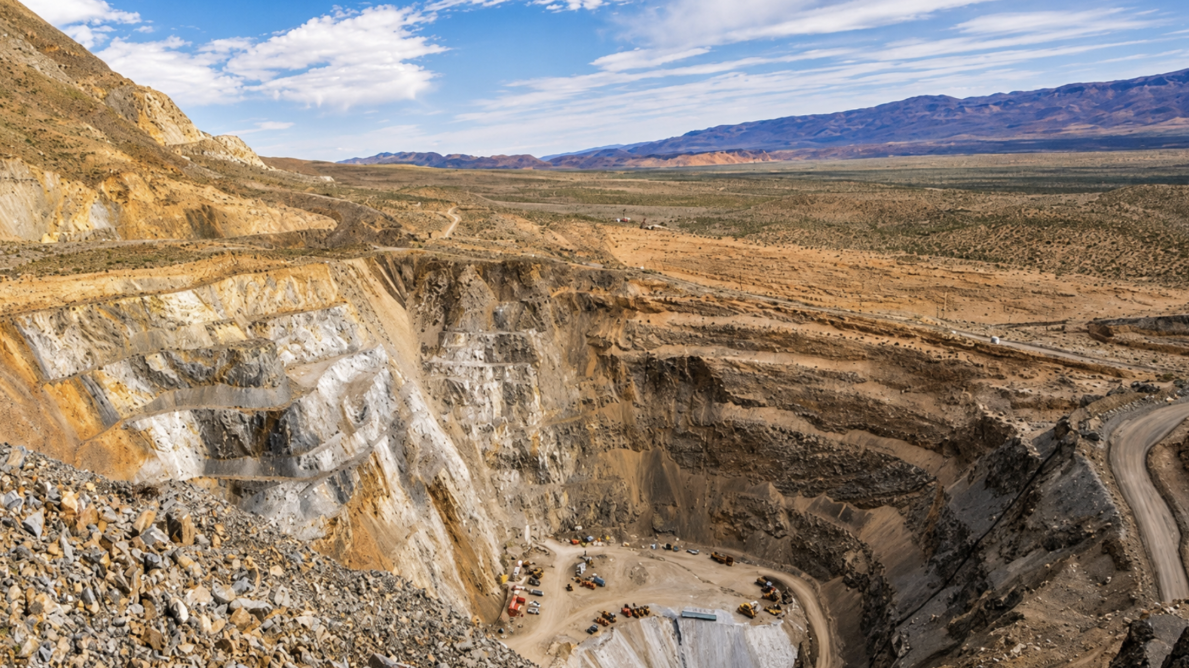
i-80 Gold Corp's Nevada development strategy is defined by permitting timelines and processing infrastructure as it advances multiple gold projects to production.
- The 2025 Fraser Institute Annual Survey of Mining Companies ranked Nevada as the number one jurisdiction globally for mining investment attractiveness.
- i-80 Gold Corp is advancing Granite Creek Open Pit and Cove Underground through permitting processes that include anticipated Environmental Impact Statements.
- National Environmental Policy Act activities and permit submissions are underway with the Bureau of Land Management for the Cove Underground project.
- The company is targeting Environmental Impact Statement timelines of approximately 3 years for key development projects from the effective dates of their technical reports.
- The Lone Tree autoclave refurbishment is designed to increase the payability of refractory material from approximately 55% to 60%, and to achieve up to approximately 92% recovery through owner-operated processing.
- An updated engineering study completed in the fourth quarter of 2025 estimated a total capital cost of US$430 million for the Lone Tree refurbishment.
What Has Happened
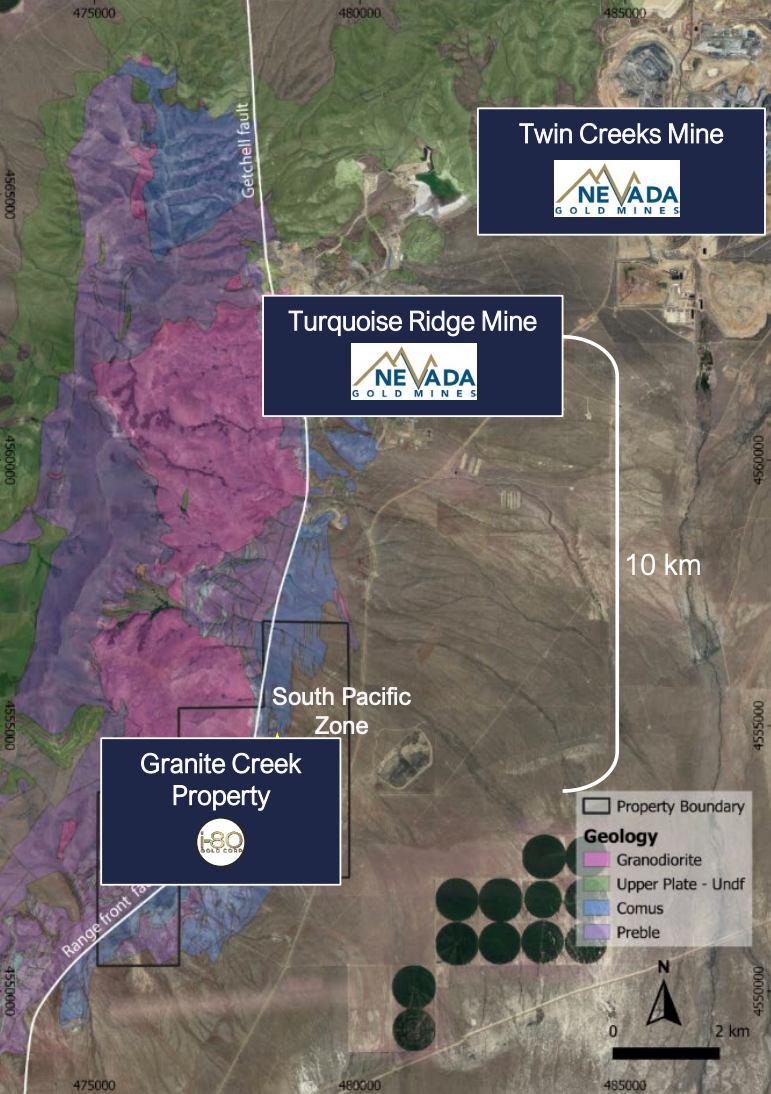
i-80 Gold Corp (NYSE American: IAUX | TSX: IAU) is advancing technical studies, permitting activities and infrastructure development across a Nevada portfolio that includes Granite Creek, Cove, Ruby Hill, Mineral Point and the Lone Tree processing facility. Recent corporate disclosures highlighted progress on Environmental Impact Statement permitting activities, feasibility studies and engineering work associated with future mine developments and the refurbishment of Lone Tree.
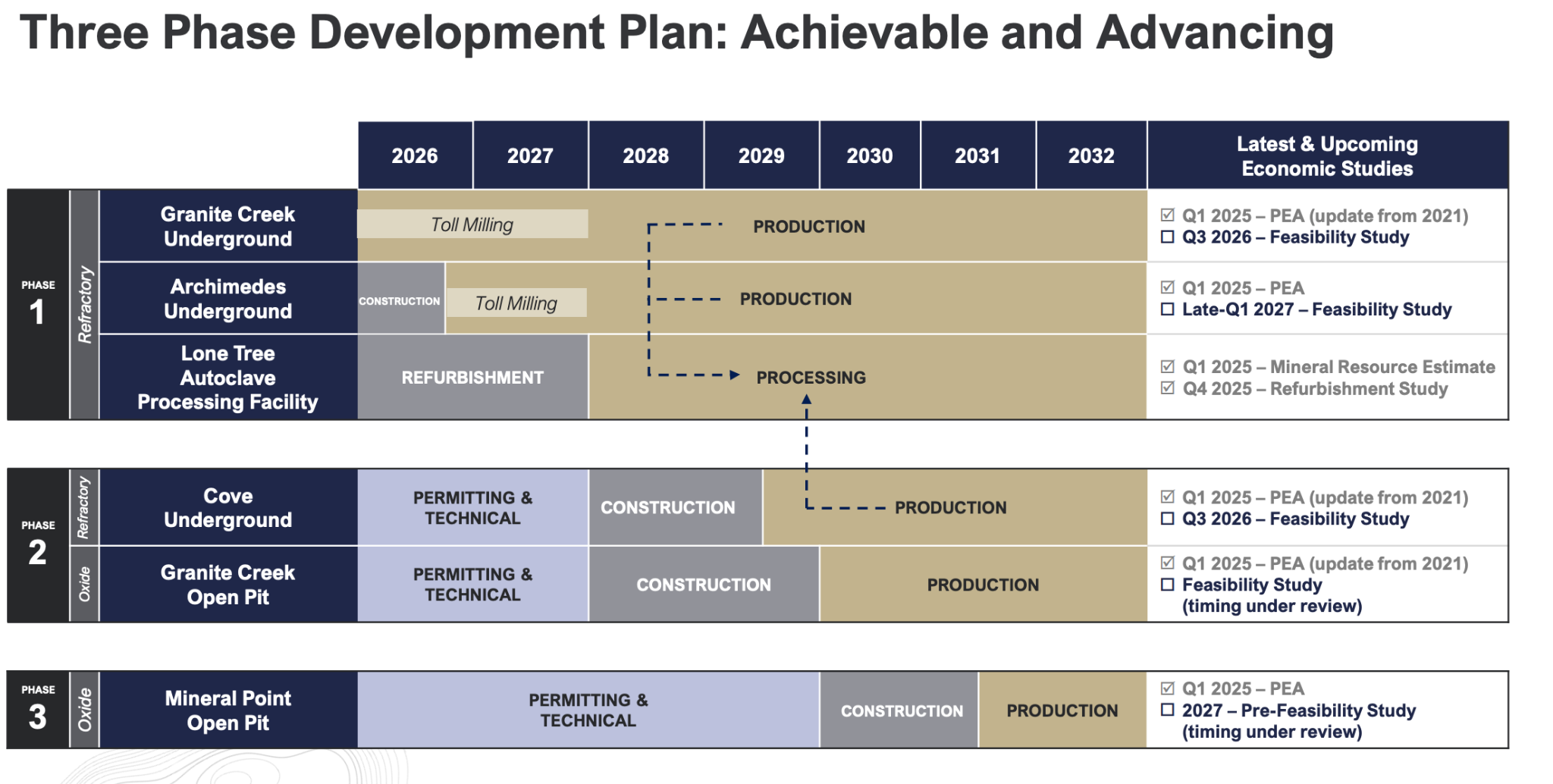
The updates matter because several of the company's larger development assets require federal and state approvals before construction can begin. At the same time, the company's strategy relies on refurbishing the previously operated Lone Tree autoclave facility, which can process refractory gold material from multiple projects. These developments show how permitting activities and processing infrastructure are becoming key factors in the sequencing of i-80 Gold's phased Nevada development plan.
Nevada's Top Ranking Highlights the Importance of Public Policy
Nevada ranked 1st globally for mining investment attractiveness in the Fraser Institute's 2025 Annual Survey of Mining Companies, up from 2nd in 2024. The ranking was part of the broader context for the company's Nevada-focused development strategy. All of the company's major assets are located within Nevada. As those projects advance through permitting and technical studies, government policies and approval processes will remain central to the development schedule.
Permitting Pathways Are Shaping Project Timelines
Several of i-80 Gold's future development assets require additional state and federal approvals before construction can proceed. The company's Granite Creek Open Pit project is advancing through early-stage pre-permitting activities and will require additional permits, including an Environmental Impact Statement.
A similar process is underway at Cove Underground. According to the company's latest presentation, National Environmental Policy Act activities and permit submissions are underway with the Bureau of Land Management in anticipation of an Environmental Impact Statement. The company is targeting an approximately 3-year completion timeline from the effective date of the technical report.
These permitting activities directly influence the company's phased development strategy. Both Granite Creek Open Pit and Cove Underground are identified as future development assets, and their progression toward construction is linked to the completion of the anticipated Environmental Impact Statement processes outlined in the company's latest project schedules.
Processing Refractory Gold in Nevada
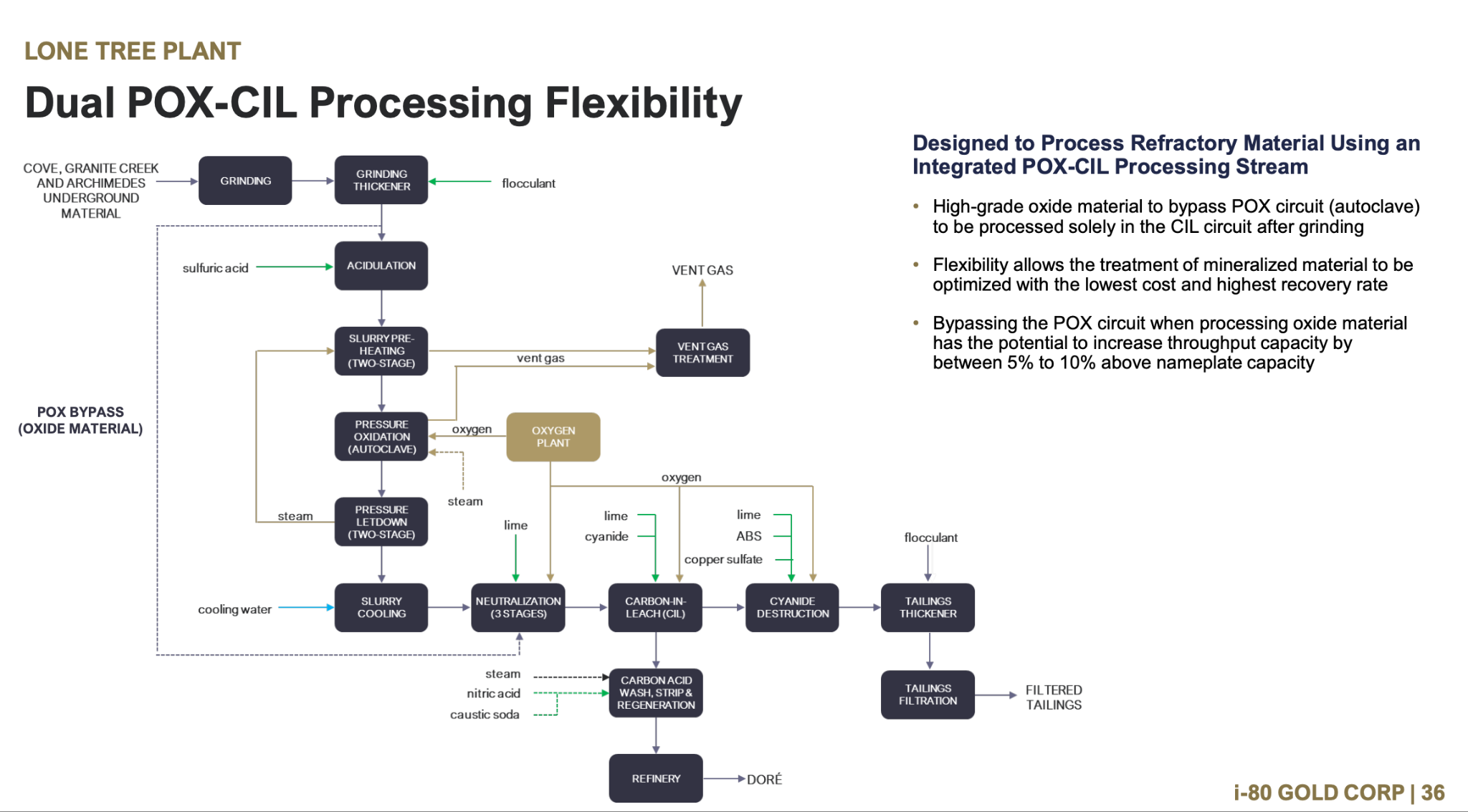
Much of the gold mineralisation within i-80 Gold's portfolio is refractory, meaning the gold is contained within sulphide minerals and requires additional processing before conventional recovery methods can be applied. The company's strategy centres on refurbishing the Lone Tree autoclave facility to provide internal pressure oxidation capacity for this material.
Owner-operated processing at Lone Tree is designed to increase payability on refractory material from approximately 55% to 60% under third-party arrangements to approximately 92% recovery. That increase is one of the principal operational drivers behind the refurbishment strategy.
Executive Vice President and Chief Operating Officer Paul Chawrun of i-80 Gold explained the role of autoclave processing:
"The reason why you need an autoclave, and it's very common in Nevada, is the gold is occluded in a pyrite or an arsenopyrite in our case it's mostly arsenopyrite, and so fundamentally you need some pressure and you need some oxygen pressure oxidation leach to be able to remove that part of the mineral away and have the gold free, and then it's a standard process called the carbon and leach CIL process afterwards. We have a number of people on the team who have operated the autoclaves for NGM in the area for the other facilities in the area, and also a couple who have operated this autoclave, and so we know this stuff works, and it's well-known technology in Nevada."
As the company advances engineering, permitting and construction activities, access to personnel familiar with pressure oxidation technology remains a key component of the operational plan.
Lone Tree Connects Multiple Development Assets
The updated Lone Tree engineering study, completed in the fourth quarter of 2025, estimated a total capital cost of approximately US$430 million and outlined a refurbishment strategy targeting first gold production in late 2027. The study also outlined an annual throughput of approximately 827,800 tonnes.
The facility occupies a central position in i-80 Gold's development strategy because several projects in the portfolio host refractory mineralisation that can be processed in the autoclave. As a result, Lone Tree is intended to function as shared infrastructure supporting multiple future mining operations.
Chawrun discussed the engineering work completed for the refurbishment:
"The overall capital cost is US$430 million. We're quite confident about that because it's a level-three engineering study, and in fact, the vast majority of it is level-two. And what that means is the amount of detailed engineering that has gone into putting the capital estimate together, the execution plan, the timing of all the different components, the construction schedule, the construction strategy, and so on. So we're very comfortable with the feasibility study."
The project also benefits from existing infrastructure and a previous operating history. The company noted that the refurbishment strategy is expected to require approximately 600,000 direct construction hours, compared with more than 1 million hours often associated with greenfield mining projects.
What to Watch Next
Several disclosed milestones will help define the next phase of i-80 Gold's Nevada development strategy. At Cove Underground, National Environmental Policy Act activities and permit submissions with the Bureau of Land Management remain ongoing as the company advances toward an anticipated Environmental Impact Statement process. Granite Creek Open Pit is also progressing through pre-permitting activities that support future regulatory approvals.
Additional milestones include the targeted commencement of demolition activities at Lone Tree in the second quarter of 2026, continued engineering and permitting work for the refurbishment project, and the facility's targeted late-2027 first gold pour. Together, these milestones represent the key regulatory and infrastructure checkpoints outlined in the company's current development schedule.
FAQs (AI-Generated)
Analyst's Notes





Subscribe to Our Channel




Stay Informed






















