




Made in America - Visiting Blossom Gold's Rosebud Project


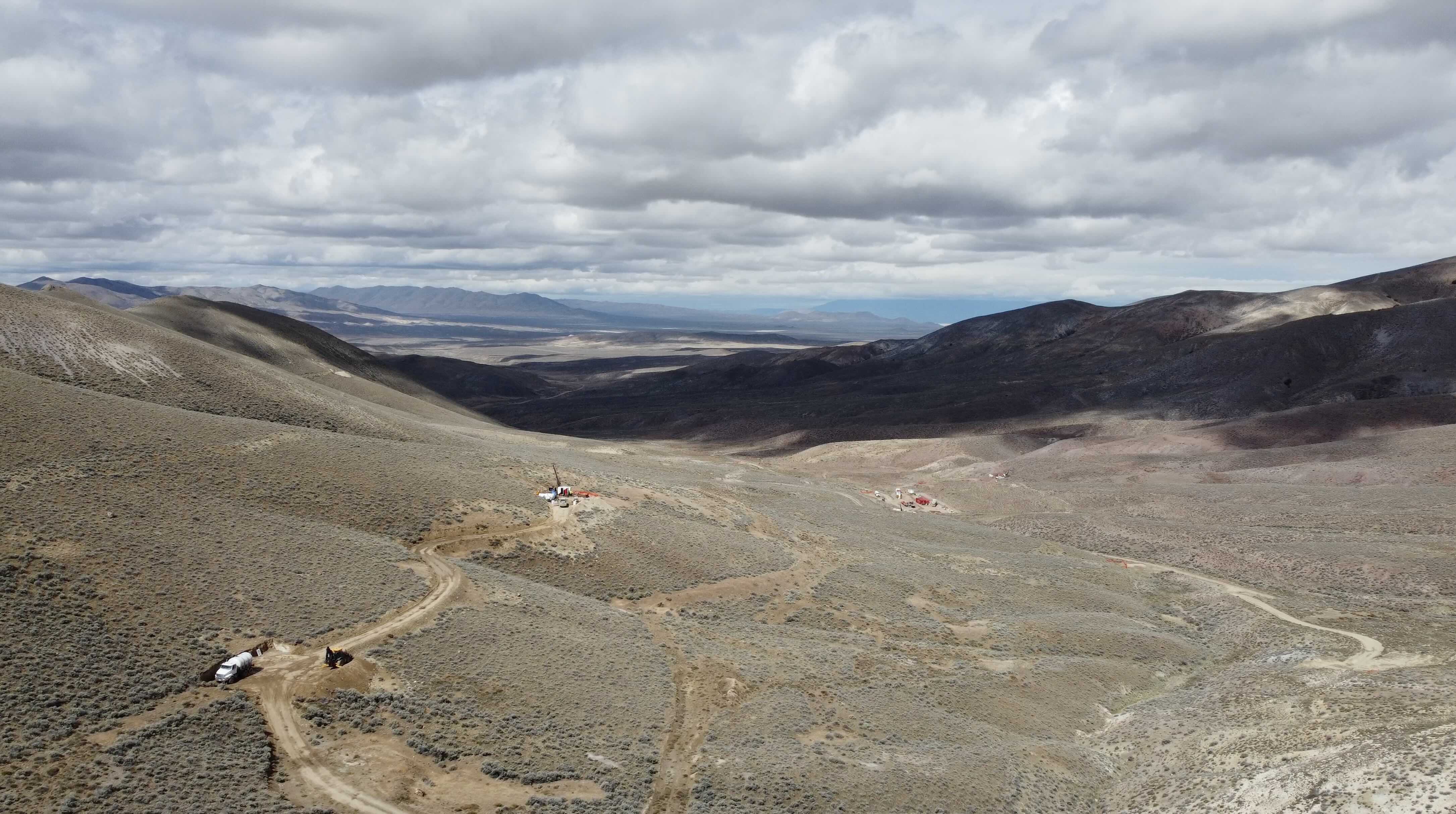
Blossom Gold's Rosebud Project: a historic Nevada district with a de-risked resource, a permitting shortcut, and a path to open-pit production.
- Blossom Gold has consolidated three land packages covering the historic Rosebud district, a Nevada property that was permitted, worked, and reclaimed six times by five major operators over the past 25 years.
- A preliminary economic assessment already points to a 97-million-tonne open pit at roughly 0.6 g/t gold, and management is now running the metallurgical and geotechnical work needed to confirm it can be mined as a heap leach.
- A rare structural advantage, an existing underground mine that can be reopened and used for infill drilling, lets the company sidestep years of standard Bureau of Land Management permitting steps and move roughly twice as fast toward a Plan of Operations.
- The technical and executive team was assembled quickly and includes experienced Nevada mine builders, geologists, and permitting specialists, several with direct district and regional experience.
- Management is targeting an updated resource estimate in Q1 2027, a feasibility study starting shortly after, and a construction decision by the end of 2028.
The Made in America Series
Nevada remains one of the most consistently ranked mining jurisdictions in the world, with a century-plus of continuous mining history and a regulatory environment that companies and regulators alike understand well. For a project like this, sitting within that jurisdiction isn't just a backdrop, it's part of the investment case in its own right. This visit is part of Crux Investor's Made in America series, a tour through Nevada's mining projects, sitting down with the teams building them.
With that context set, here's what we found on the ground at Blossom Gold's Rosebud Project.
Introduction to the Rosebud Project & Overview
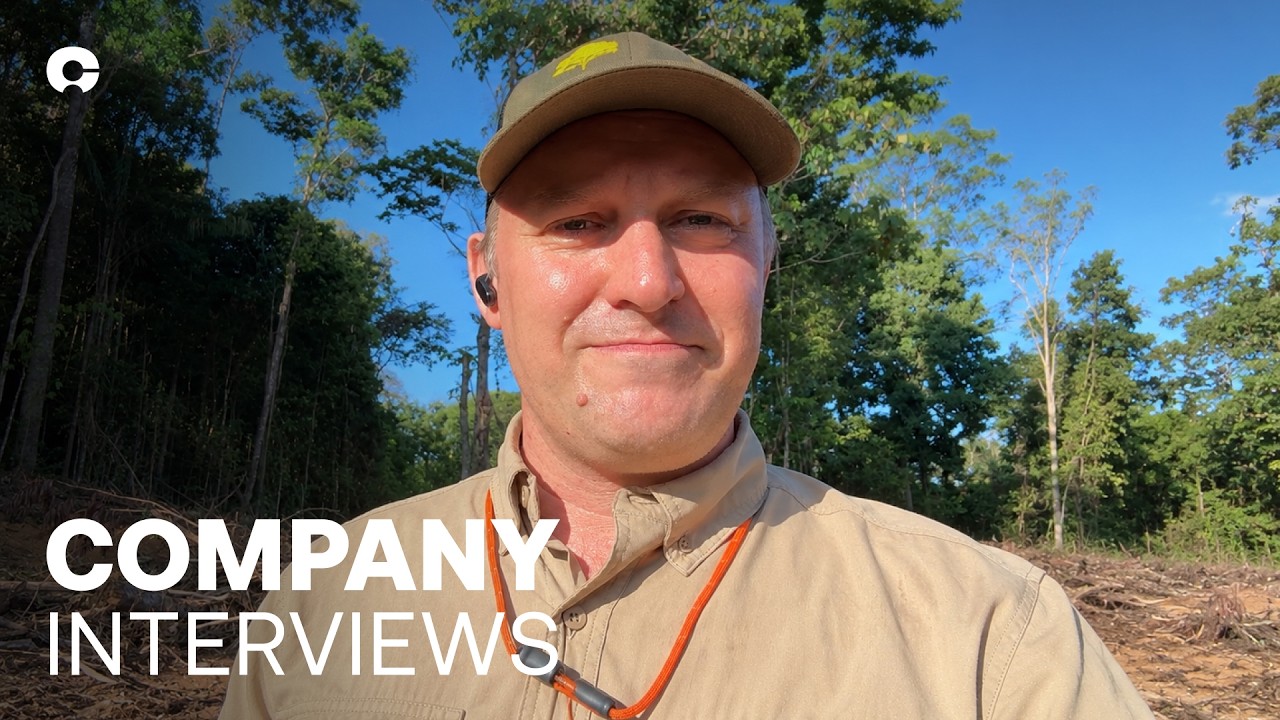
Spending time with CEO Rick Winters at Blossom Gold's Rosebud Project, the picture that emerges is of a relatively new company built around a very old, well-documented deposit. Winters came out of retirement for the opportunity, having spent 20 years as a merchant banker financing junior mining companies across North and South America, with earlier stints at Golden Star Resources and Phelps Dodge. As he put it, describing what convinced him to get involved:
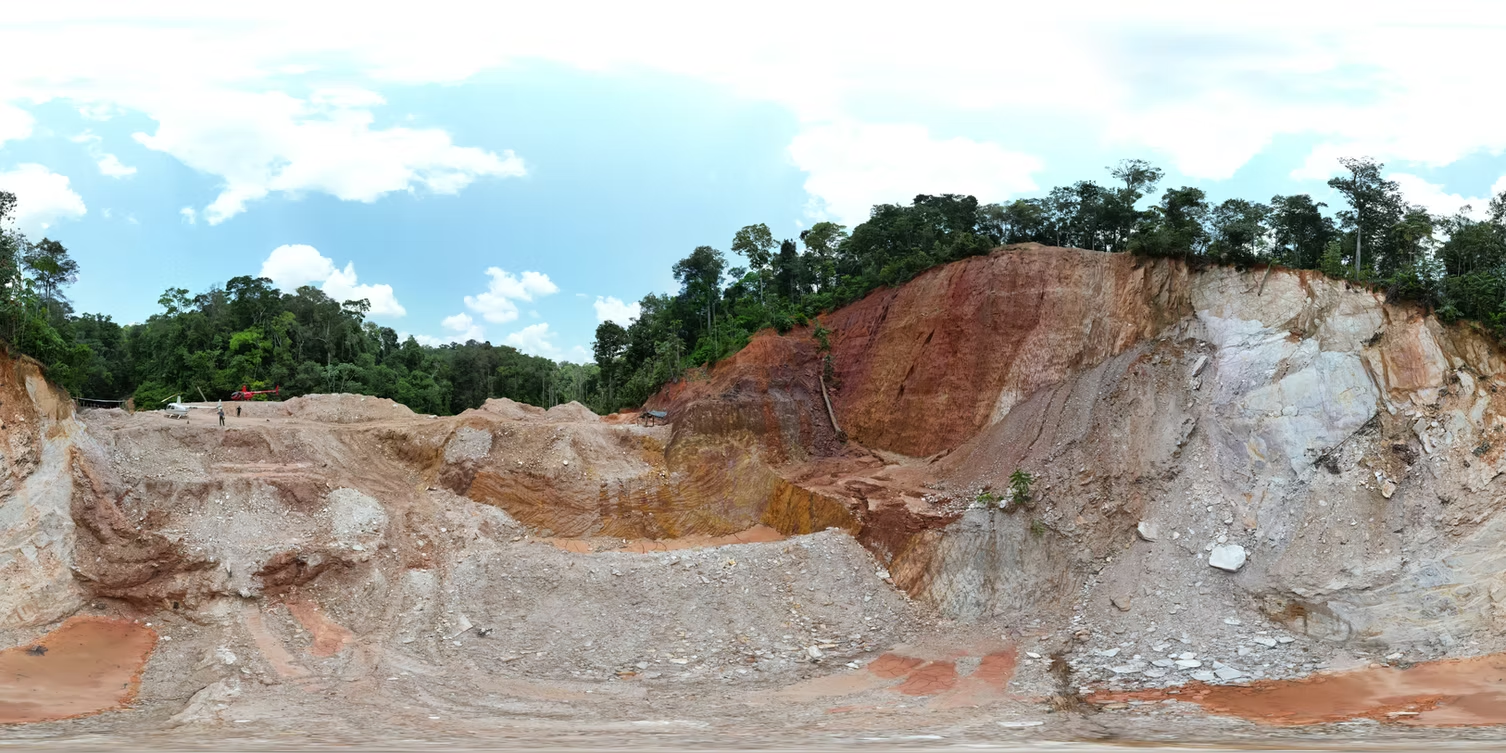
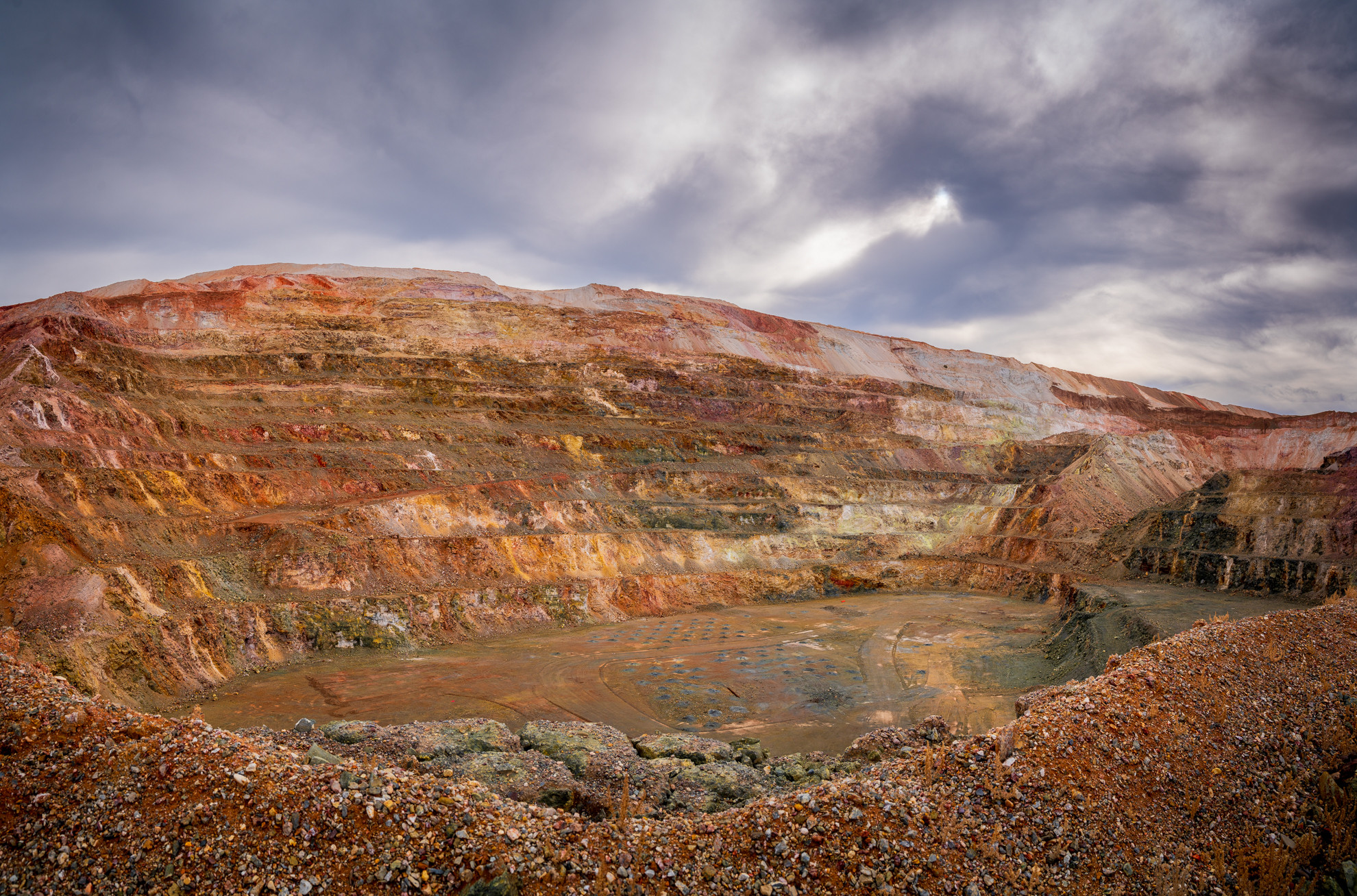
"It's a fascinating project. You can't tell now, but this has actually been permitted, worked on, and reclaimed six times in the last twenty five years."
Winters is direct about where he sees the project heading over time, describing Rosebud as one that, in his words, is going to become "one of the major heap leach operations in Nevada" within five years.
The Rosebud Project Site Visit, with the Blossom Gold Team
A Storied History: From Five Operators to One
Rosebud's history reads like a summary of Nevada mining itself. In the 1990s the district hosted five major operators at once, Lac Minerals, Equinox, Hecla Mining, Santa Fe Gold, and Newmont, before a wave of consolidation folded most of them together: Equinox was acquired by Hecla, and Santa Fe merged with Newmont. Between them, these companies drilled 192 kilometres of core at a time when gold traded at $300 an ounce, ultimately defining five underground ore bodies.
A Hecla-Newmont joint venture mined roughly a million tonnes between 1997 and 2000, trucking ore to a mill about a hundred miles away at a head grade of 15 grams per tonne. The mine closed when the companies couldn't define enough ore at that grade to justify continuing, and the operation won a reclamation award the same year. A junior company revisited the property around 2010 to test open-pit potential, but left when gold fell out of favour. From there, a private individual quietly assembled the three land packages that now make up Rosebud, holding them for a decade at a cost of around $60,000 a year while looking for the right buyer.
Acquisition, Economics & the Case for a Restart
Engineering firm SRK were commissioned to run a preliminary economic assessment on a large open pit, and the results were compelling: 97 million tonnes at roughly 0.6 g/t gold, based on a $1,350 gold price. Even so, the project sat largely unsold, since most prospective buyers understood the underground story but hadn't done the work to test whether it could support an open-pit, heap-leach operation. Blossom Gold took a different view, raising $115 million and acquiring the project for $35 million plus a 1% royalty, with an additional silver-stream upside built in for the seller.
Winters was candid that a market discount still exists until the technical work is done:
"We just had a report that came out and we were trading at 0.18 NAV. But the average for these sorts of projects is 0.4 to 0.5. So people look at that and say if they de-risk, there's obvious upside there."
The company's near-term work is aimed squarely at closing that gap: confirming the historic resource and open-pit profile, and completing the bottle-roll and column metallurgical testing needed to prove the material behaves as expected in a heap-leach setting, a program management expects to have answers on within six months.
Team & Project Management
Winters credits much of the project's early momentum to a small group of founders who put the deal together before formal contracts were even in place. Since then, the roster has grown quickly: John Seaberg, a former Newmont executive with prior CFO experience at junior companies, came on as CFO; Aaron Calhoun joined as mining engineer; and directors Vern Baker and Gradon Colby brought deep Nevada mining backgrounds, with Colby stepping in as COO after leaving Nevada Gold Mines.
On the technical side, Dr. John DeDecker joined as VP of Exploration, bringing a background in exploration geochemistry, volcanology, and epithermal systems, while John Schaff, a geologist with nearly 35 years in Nevada and a track record that includes the discovery hole at what became the Merlin and Arthur deposit for AngloGold, joined as General Manager. Permitting specialist Alan Haslum, who had just finished permitting the more complex Perpetua project in Idaho, rounds out the group. Winters summed up what that combination means for the project's credibility:
"Very high quality team, and speaks a lot to what all these gentlemen think of the project."

Permitting Strategy & the Underground Advantage
One of the most distinctive parts of Blossom's plan is how it intends to accelerate permitting using the existing underground workings. Under standard Bureau of Land Management rules, a company's first permit, the Notice of Intent, only allows five acres of surface disturbance, typically forcing a company into a two-year Plan of Exploration process, followed by a further two-year Plan of Operations. Rosebud's rehabilitated underground mine sidesteps much of that.
COO Gradon Colby, who previously managed five underground mines and three open pits for Newmont and NGM, explained the logic directly:
"We actually have a historic underground opportunity that we're going to open up here in July and then continue on with the rehab for about three thousand feet and then open up some drill stations for infill drilling, and this allows us to fast track the permitting process with the bulk sampling and the infill drilling."
Because drilling conducted from underground doesn't count against the BLM's surface disturbance limit, the company can complete the geotechnical, hydrological, and geochemical drilling an open pit requires while the surface permitting process runs in parallel, cutting the overall timeline roughly in half.
Infrastructure & Accessibility
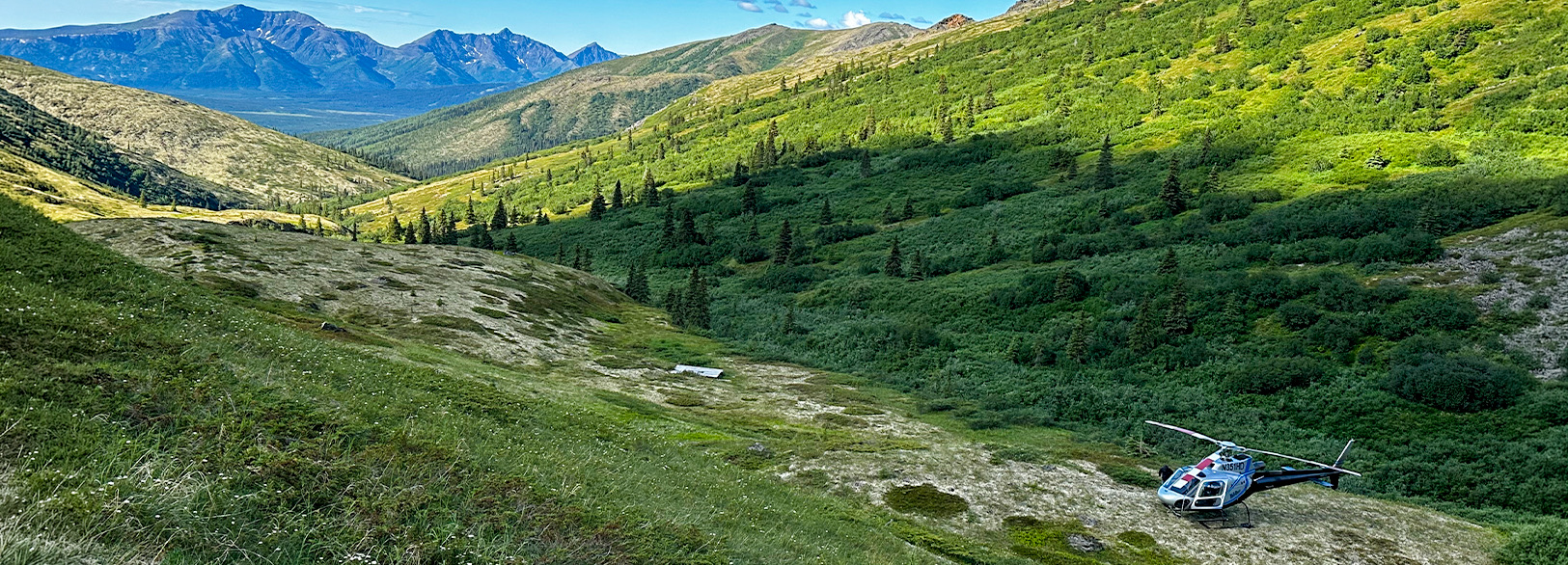
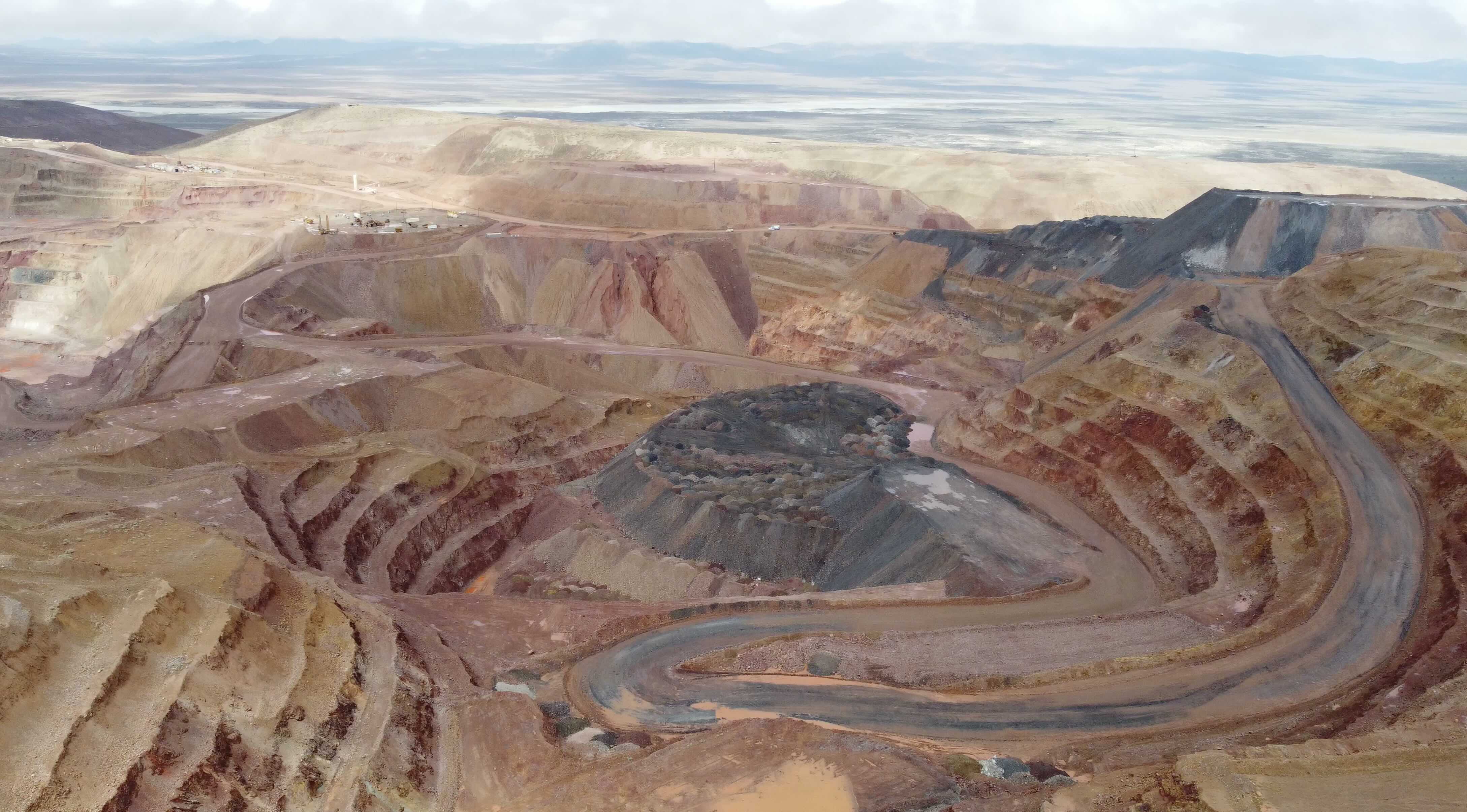
Sitting in what Winters described as "elephant country," Rosebud benefits from proximity to active, well-serviced mining operations on every side. Existing power lines have already been re-established, water availability is good, and processing facilities sit close by, a combination the company plans to build directly on top of using the district's existing roads and drill pad network.
General manager John Schaff, who has worked in Nevada for nearly 35 years, was direct about how much that infrastructure matters at a project level:
"Nevada has everything we need. Globally you can't really - it's difficult to find a place that has roads, rail, infrastructure, power, water, people, vendors. We have it all."
Drilling Program & Resource Growth
Blossom is running an 80,000-foot drill program in 2026 across three core rigs operating nearly around the clock. VP of Exploration Dr. John DeDecker outlined the program's central objectives: confirming the historic resource estimates, expanding into the medium-grade halo surrounding the previously mined high-grade material, and testing larger step-outs beyond the known deposit footprint.

Early results are already suggesting the system is bigger than the historic mining ever demonstrated. As DeDecker put it, describing a hole originally planned as a routine geotechnical test:
"That hole was actually supposed to be a geotechnical hole near the edge of the pit. It was pretty far to the southwest in the system and we're still seeing robust mineralization, intense hydrothermal alteration, which indicates that the system has a lot larger footprint than previously understood."
The early phase of the program has focused heavily on securing metallurgical drill core, which has since been shipped for bottle-roll and column testing; management expects more regular exploration drill results starting around mid-June.
Geological Insights & Core Analysis
At the core shack, DeDecker walked through freshly drilled material from the Rosebud volcanic tuff sequence, the kind of fine, glassy rock produced by explosive eruptions similar to Yellowstone, and now hosting extensive pyrite and marcasite mineralization. He pointed to white clay alteration visible in the core as a particularly useful indicator, one that previous operators also relied on:
"These kind of white clay veins right here, this is something that the people that mined this previously indicated was a really good pathfinder for gold."
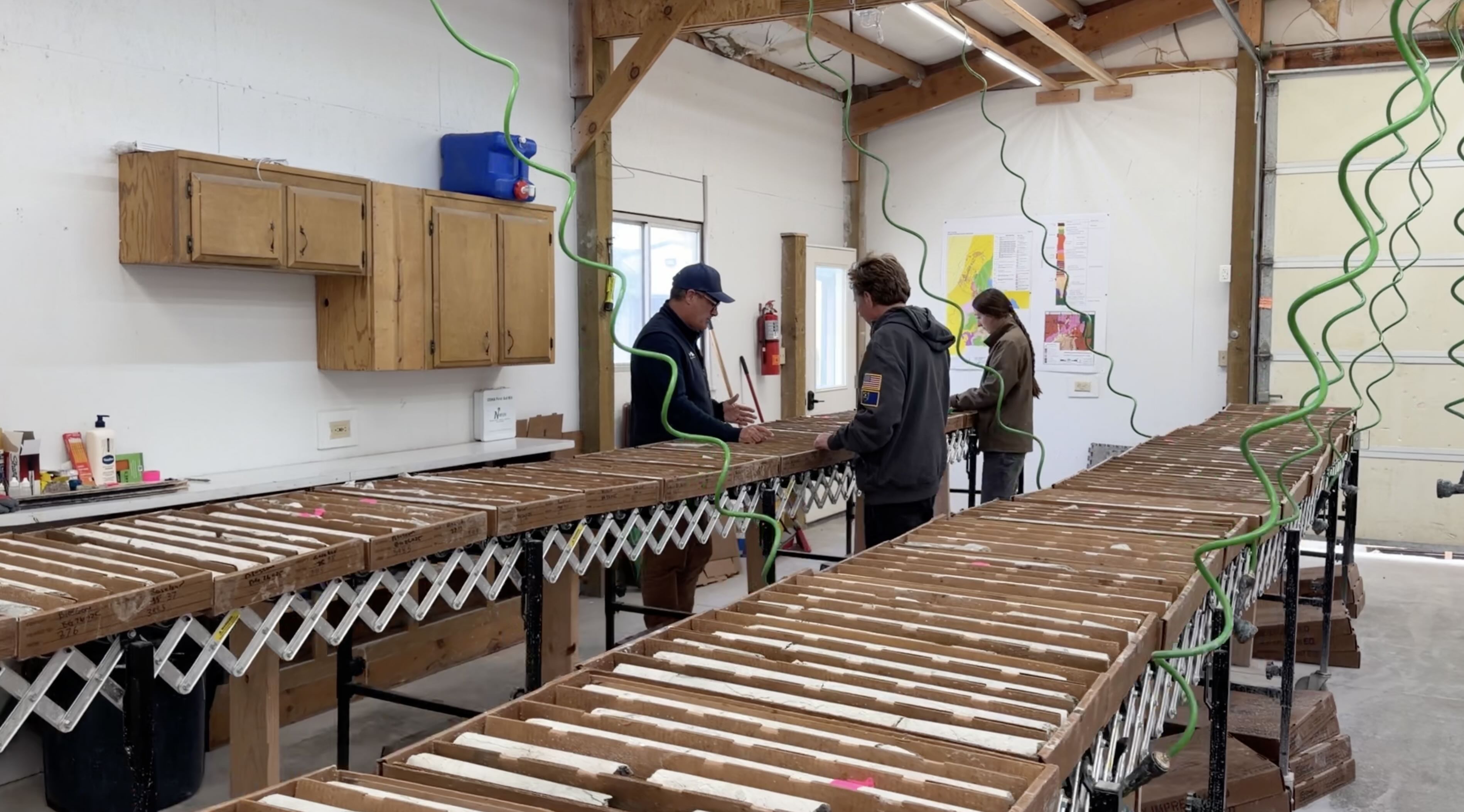
The team is also using a handheld XRF unit on site to get real-time readings on pathfinder elements like silver, arsenic, and tellurium, helping confirm whether visible sulfide mineralization is actually correlating with gold as drilling progresses.
Kamma: The Greenfield Upside
Beyond the Rosebud pit and underground workings, Blossom holds a third package, Kamma, sitting directly on trend with the neighbouring Hycroft mine and, according to Winters, representing the company's genuine blue-sky exploration target. Aeromagnetic and gravity surveys have already identified structures that appear to extend from Highcroft onto Blossom's ground, and outcrop mapping has confirmed the site sits within the same stratigraphic package that hosts mineralization at both Highcroft and Rosebud.
DeDecker described how the team is applying lessons learned at Rosebud directly to Kamma's targeting:
"We're solidly within the volcanic package that hosts mineralization. As Rick mentioned, we flew an aeromagnetic survey as well as a surface-based gravity survey, and several of these magnetic anomalies do line up with that and are consistent with that interpretation."
A 12,000-foot drill program is planned at Kamma later this year, backed by a fully funded two-year exploration budget, with an initial focus on areas where bedrock sits closer to surface before working into deeper alluvial cover.
Conclusion & Future Outlook
The visit to Rosebud left a clear impression of a project built on an unusually deep historical foundation, paired with a team assembled specifically to move quickly. VP of Corporate Development Brandon Throop, brought on to help tell the company's story to investors, summarized the pace of the past several months plainly: a lot has already been achieved in a short window, and the next 12 to 18 months are expected to bring a steady stream of news.
With metallurgical testing underway, an 80,000-foot drilling program in progress, and a rare underground permitting advantage already being put to use, management is targeting an updated resource estimate in Q1 2027, a feasibility study to follow shortly after, and a construction decision by the end of 2028. Combined with the untested Kamma package sitting immediately next door, Rosebud offers investors a project with both a well-defined near-term path and genuine longer-term exploration upside.
FAQ's (AI-Generated)
Analyst's Notes





Subscribe to Our Channel






Stay Informed






















