




Made in America - Visiting Scorpio Gold's Manhattan Project


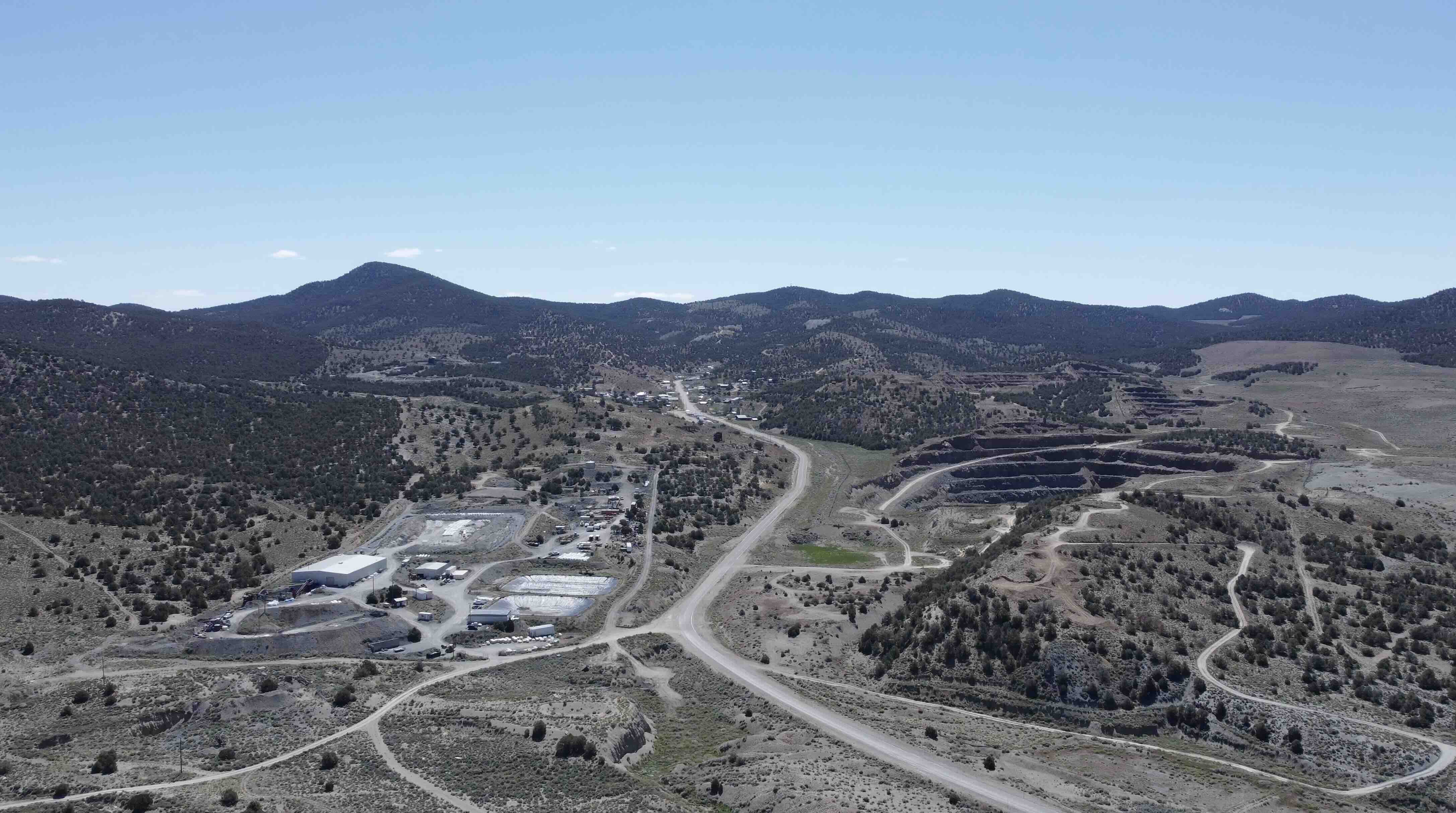
Scorpio Gold's Manhattan Project: a consolidated Nevada district with 740koz at 1.26 g/t gold, high-grade drilling, and a path to 2 million ounces.
- Scorpio Gold has consolidated a century-old, multi-operator Nevada mining district into a single district-scale project — something no prior owner had managed to do.
- The current resource stands at 740,000 ounces at 1.26 g/t gold, and management is targeting at least 2 million ounces by the end of a fully-funded 50,000-metre drill program, expected to wrap by Q1 2027.
- Recent drilling has returned standout high-grade hits, including a 400+ gram intercept, with the untested Zanzibar trend already feeding directly into the resource base.
- Beyond the main deposit, satellite targets like Keystone Jumbo (a historic 100,000+ ounce resource at 12 g/t) and Black Mammoth offer near-term step-out potential along a well-defined structural trend.
- Metallurgical testing points to recoveries of up to 92–93%, and a low-cost reprocessing opportunity sits in the historic tailings and low-grade stockpiles left behind by prior operators.
The Made in America Series
Nevada remains one of the most consistently ranked mining jurisdictions in the world, with a century-plus of continuous mining history and a regulatory environment that companies and regulators alike understand well. For a project like this, sitting within that jurisdiction isn't just a backdrop, it's part of the investment case in its own right.
This visit to Scorpio Gold's Manhattan project is part of Crux Investor's Made in America series, a tour through Nevada's mining projects, sitting down with the teams building them. With that context set, here's what we found on the ground.
Introduction to the Manhattan Project & Overview
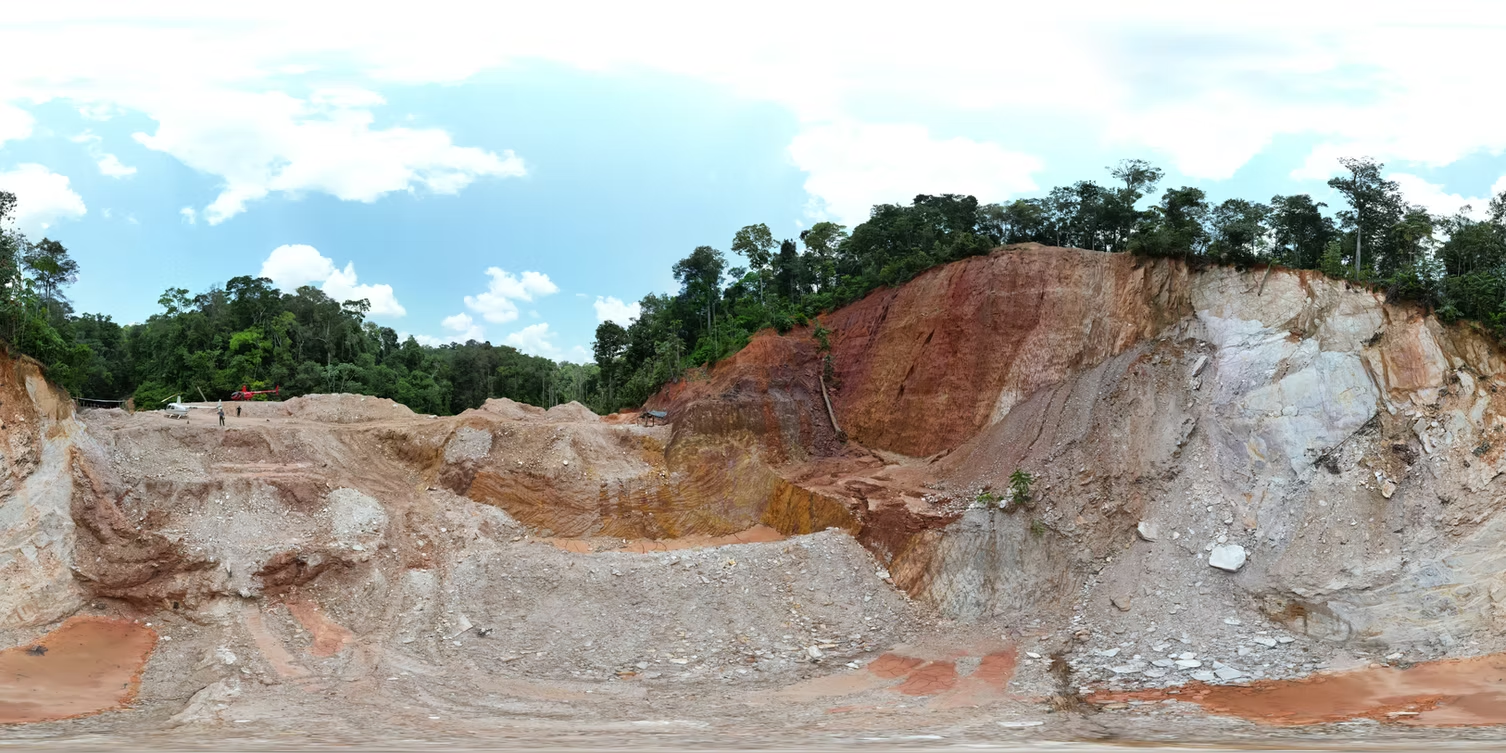
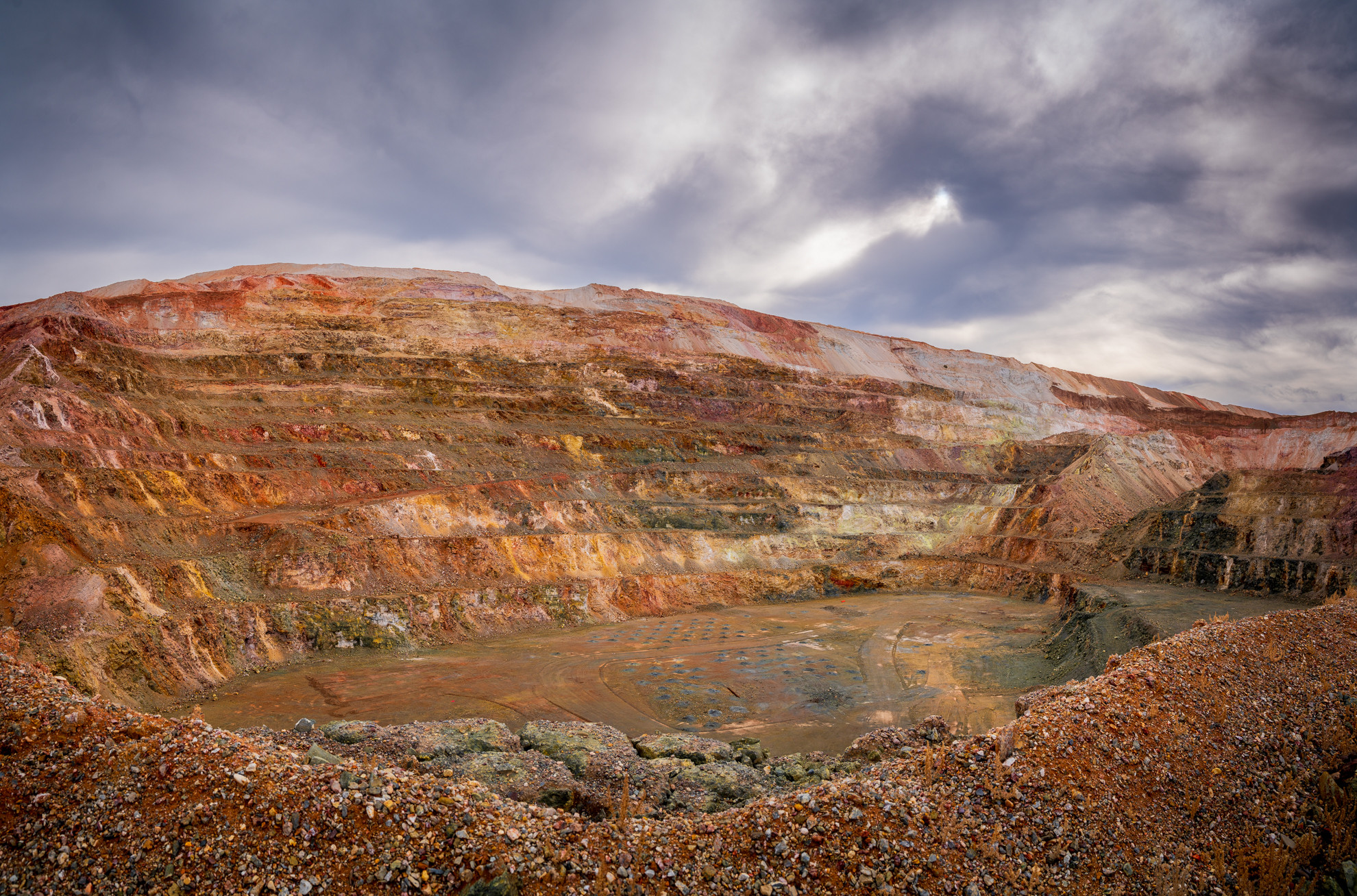
The visit took the team to Scorpio Gold's Manhattan Project, surrounded by some of Nevada's most recognizable neighbors - Newmont, Barrick, Integra, Hycroft - sitting down with Teddy Berg, who leads exploration on site. The Manhattan district has been mined for roughly a century, and the historic footprint is impossible to miss: old underground workings dot the hillsides, and dredge operations once worked the valley floor for gold, a detail that still surprises visitors given the surrounding terrain.
What makes the project distinct isn't the geology alone, but the fact that Scorpio has done something none of the previous operators managed:
"We've had a lot of small time operators over the years that have kind of had little parcels here and there, and Scorpio has really been the one that's put it all together and really made a district scale project out of it."
That consolidation - bringing together open pit, underground, and a large land package that had previously been split among many different owners - is the foundation of the current opportunity.
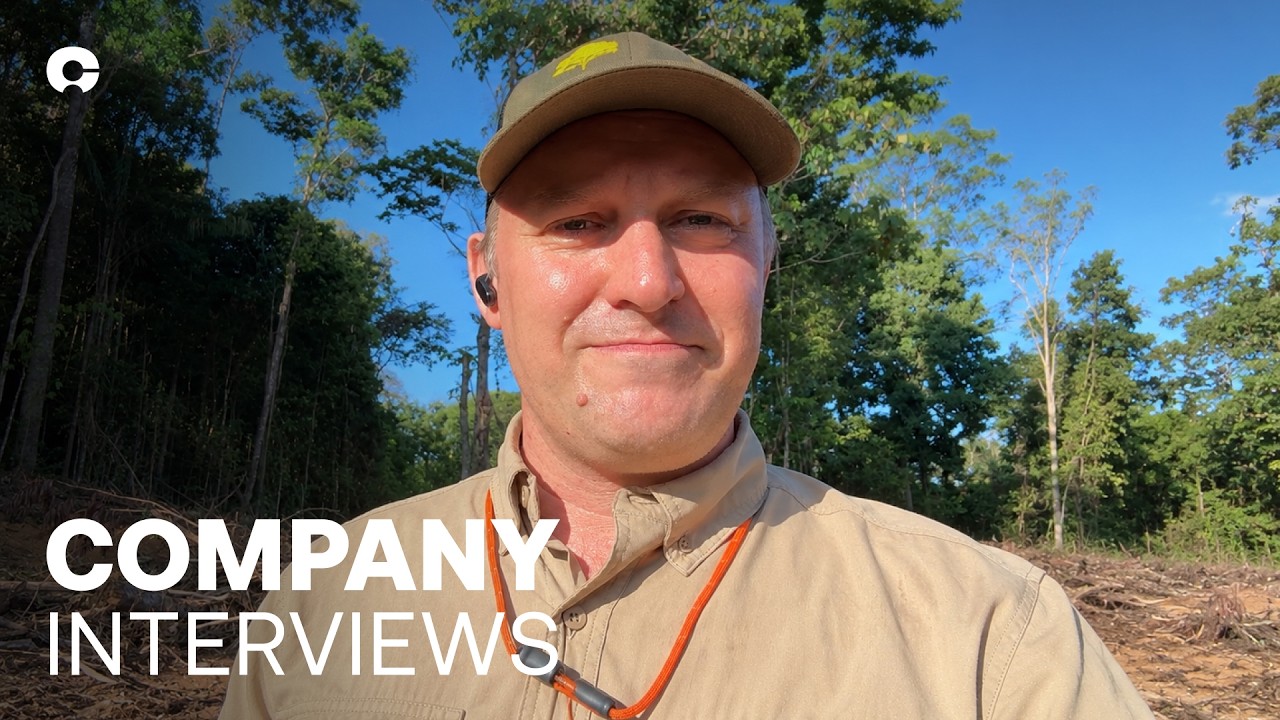
The Manhattan Project Site Visit, with Exploration Manager, Teddy Berg
District Consolidation & Historical Context
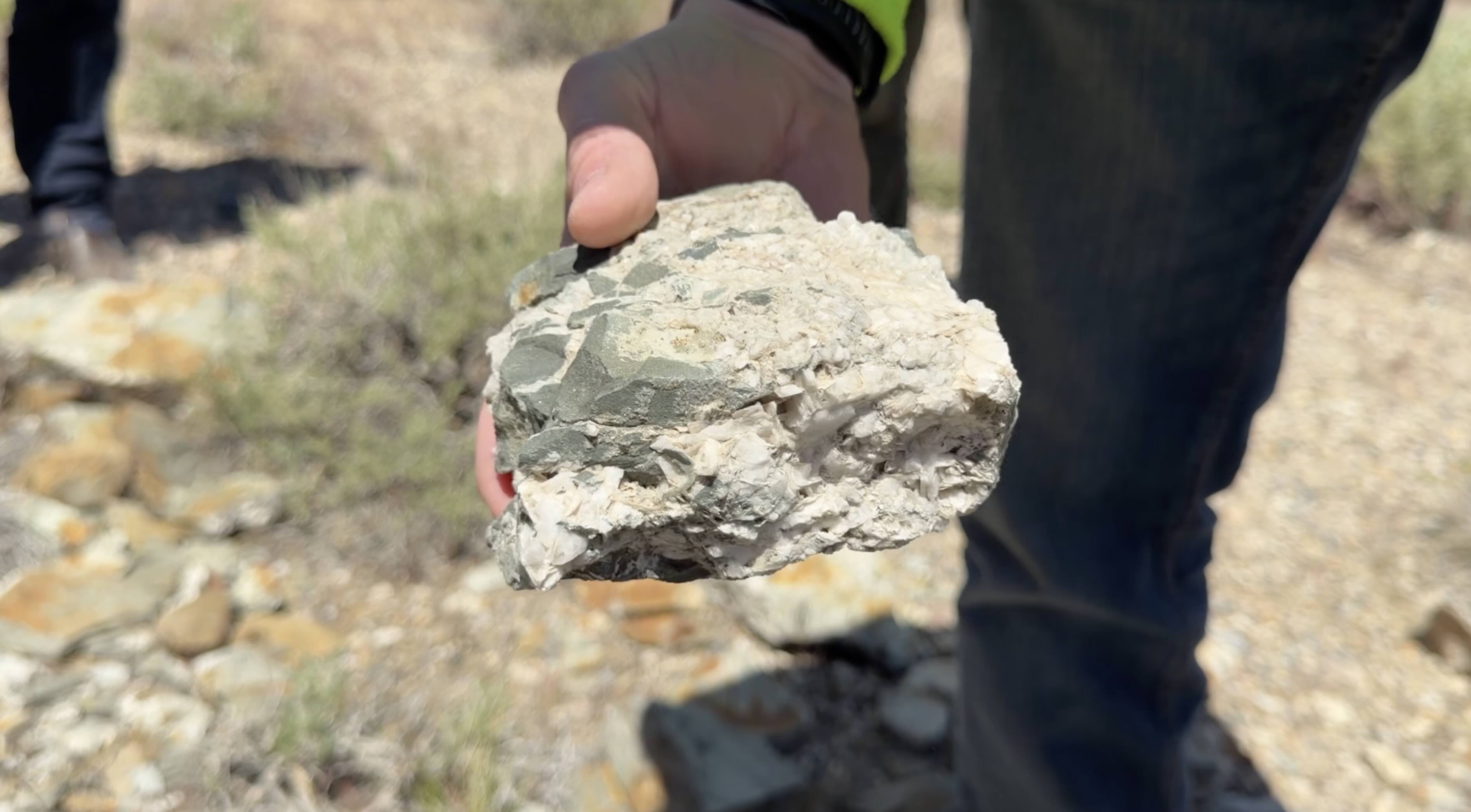
Manhattan is a low-sulfidation epithermal gold deposit, with structurally controlled mineralization running along a trend that extends roughly five kilometres toward the Keystone Jumbo prospect. Gold is generally carried in quartz-carbonate veins and breccias hosted within Ordovician sediments, with the Cambrian sediments nearby also capable of carrying gold.
Because so many operators worked pieces of the district independently, including major names like Kinross and Newmont, Scorpio inherited a fragmented but valuable dataset. As Teddy explained, the team has taken that inheritance and rebuilt it into something coherent:
"We've got drill data from Kinross, Newmont - other operators that have all done different kinds of things and we've got all that data. We've digitized it all, pulled it together into 3D and a leapfrog model, and we're going through that now to do the interpretive work."
The goal, as he put it, is to move past "little properties here and there" and understand the whole district as a single system. That reinterpretation is already paying off: historic pits mined in the late 1970s and early 1980s pulled roughly 250,000 ounces at grades of two-and-a-half to three grams per tonne on a three-to-one strip ratio, while the higher-grade Gold Wedge underground averaged seven to eight grams, both of which Scorpio is now following up on with modern drilling.

Exploration Potential & Resource Growth
Scorpio's current resource stands at 740,000 ounces at an average grade of 1.26 grams per tonne, a figure Teddy noted puts the deposit in the top tier of oxide gold deposits anywhere in Nevada, a state where 0.6 g/t is closer to the norm. The company is roughly halfway through a fully-funded 50,000-metre drill program, with 20,000 to 25,000 metres completed so far, all focused on expanding and infilling around the existing resource footprint.
One area getting particular attention is the newly identified Zanzibar trend, sitting close to the current resource but never previously drilled. Teddy was direct about the upside it's already delivering:
"We found the Zanzibar trend, which we're really excited about, is very proximal to that resource, but has never been drilled before. So we're getting some nice results out of that that will feed right into that 740,000oz. We're really excited. We think we're going to get to at least a two million ounce resource by the end of this fifty thousand metres."
Recent drill highlights have included a hole exceeding 400 grams per tonne near the Black Mammoth target, and a separate intercept of 62 metres at 0.6 g/t, both reinforcing management's confidence that the resource can nearly triple while holding, or even slightly improving, the current average grade. A resource update is targeted for late 2026 or Q1 2027.
Geological Setting & Structural Controls
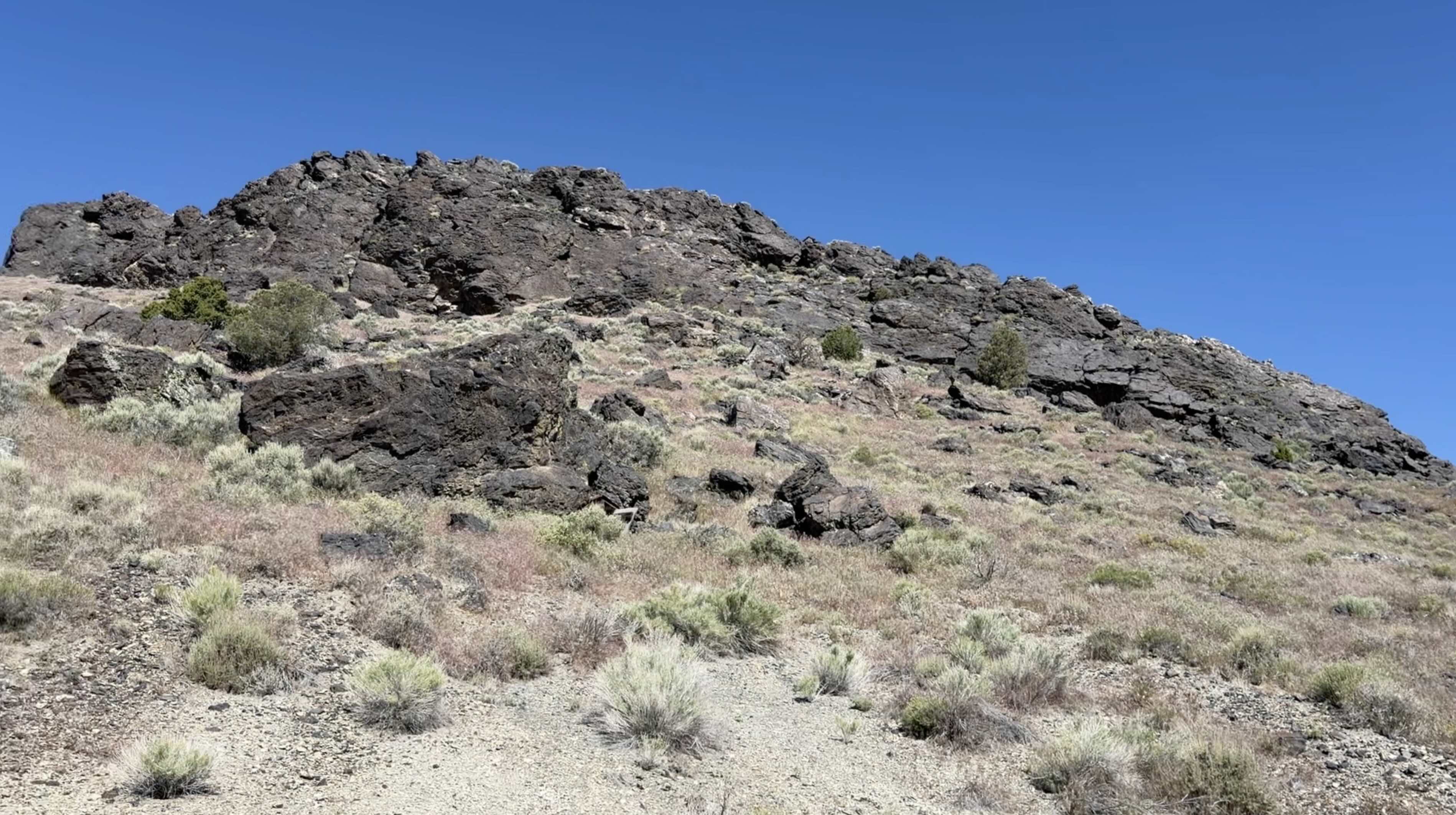
Sitting on the margin of the Walker Lane and the edge of the Manhattan caldera, the project's structural geology is genuinely complex, combining strike-slip and extensional tectonics in a way that has created ideal conditions for epithermal gold mineralization. Teddy described the setting directly: "we believe that we have a transtentional to maybe transpressional type of system," layered on top of the basin-and-range extension found throughout Nevada.
One geological puzzle the team is actively working through is why Manhattan lacks the geochemical pathfinder signature seen at the nearby historic White Caps mine, despite sitting in a similar structural position. Senior geologist Lucas Pintos explained how the team is piecing the picture together on surface:
"We mostly have this northwest, southeast trending faults, which we started calling our structural corridor where we have most of the hydrothermal activity going on. Off of those we have these sort of north-south trending faults that splay off of that main northwest-southeast zone."
Alongside the structural mapping, the team's geochemist has been using multi-element analysis to build a chemical "fingerprint" for each rock unit - carbonate-rich marbles, limestones, mudstones, and siltstones - allowing the team to map stratigraphy in 3D and tie surface observations directly to what's coming out of the drill core, work Teddy summed up simply as understanding "how the rocks are in place, how they're folded, how they're cut and chopped by the different faults in the area."
Drilling Results & Satellite Targets
Beyond the main resource area, Scorpio is sitting on a genuinely large land package with multiple satellite targets already carrying historic resources. Roughly five kilometres along strike, the Keystone Jumbo target hosts a historic resource of about 150,000 ounces at grades averaging around 12 grams per tonne, among the highest-grade rock anywhere on the property. Teddy confirmed the company is planning to test it directly within the current drill program: "we're hoping to get there within the next month or two."
Closer to the main resource, the Black Mammoth target has emerged as a standout in its own right, roughly 300 metres stepped out from the current resource footprint with no historic drilling to speak of. Teddy laid out both the results so far and the scale of what's still open:
"This is the eighth hole we've drilled at this target. No historic drilling in the area to speak of... we're quite excited about this and how it can potentially connect to our existing resource 200 to 300 metres away. And you know, that's a lot of open ground that if the grades hold across, it's a lot of ounces we're looking at."
The team's broader strategy is to close the gap between the historic Goldwedge underground and Black Mammoth, while simultaneously extending along strike in both directions, work Lucas described as already showing results in the drilling, tracing the same structural trend visible from surface all the way up the ridge.
Metallurgy & Reprocessing Opportunity
Historic operators recovered gold at Manhattan using gravity circuits and some leaching, achieving recoveries in the 60-70% range. Scorpio's own metallurgical work, based on seven separate test programs combining gravity and leaching, points to a meaningfully better outcome. Teddy summarized the results: "we can get up to 92-93%. All of those tests agree at about that number."
A separate, lower-profile opportunity sits in the historic tailings and low-grade stockpiles left behind by prior operators, who mined at an average grade of roughly three grams per tonne but only recovered 60-70% of the contained gold. Teddy described the logic directly:
"There's likely to be maybe a half gram to a gram left in those piles that are already pulled out of the ground... we just need to process that stuff and it's kind of an easy win."
That work is being led on-site by the company's VP of Exploration in partnership with an external metallurgical group, with the near-term goal of quantifying both the tonnage and grade sitting in the piles.
Core Samples & Mineralization Analysis
At the core shack, the team walked through freshly logged core from holes drilled just hours earlier, including material from the Zanzibar trend, an area outside the current resource that's already delivering results the team expects will feed directly into the 2-million-ounce target. Teddy pointed to the visible structural deformation in the core as a good sign: "these rocks have been moved around, jostled around, which allows the fluids then to find some void space to find their way through and then deposit some gold in here."
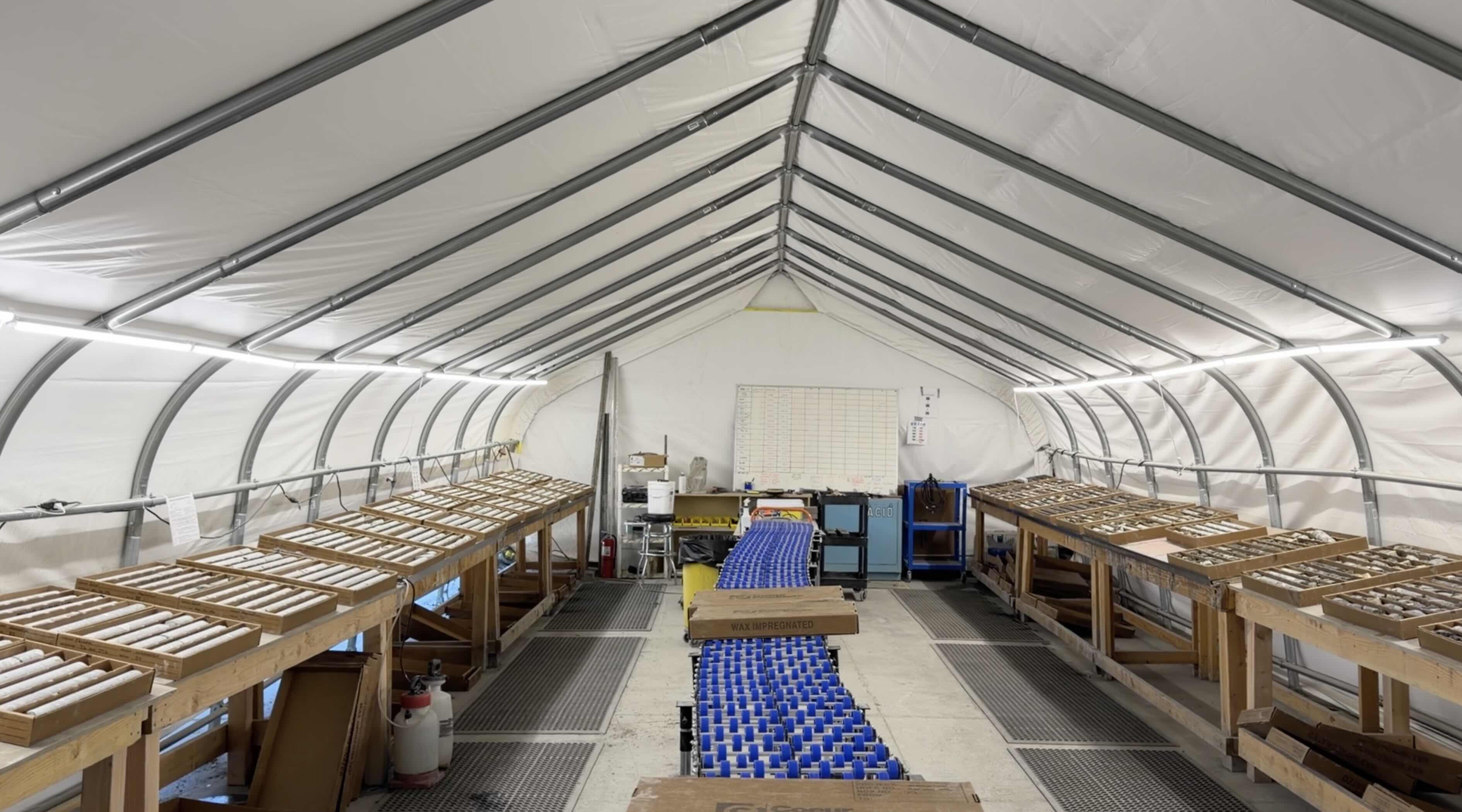
Grades encountered across the property have ranged widely, from consistent one-to-two gram material to genuinely bonanza-style intercepts. As Teddy put it:
"We've gotten well over seventy grams per ton in these kind of locations... we've actually got forty metres of three grams per ton in a nearby location."
Lucas, examining a separate section of brecciated core, pointed to the fault-hosted textures directly in front of him as clear evidence of the mineralizing system at work, describing zones of "gougy false breccias" alongside clear hydrothermal alteration, the same features the team has learned to trace from surface exposure all the way into the drill hole.
Team & Project Management
Scorpio runs a lean, focused technical team on site: roughly six geologists working out of the core shed at any given time, supported by technicians who cut and sample core, plus a handful of operations staff handling pad building and maintenance, between six and ten people in total, working two-week rotations. The operation runs essentially year-round, with three drill rigs turning 24 hours a day, a pace Teddy expects to continue "at least" through the end of the year.
The technical interpretation work is a genuine team effort between disciplines. Structural geologist Lucas focuses on fault mapping and mineralization controls, while the project's geochemist builds the chemical stratigraphy that ties surface mapping to the drill data. Teddy summed up how the pieces fit together with a simple analogy: "it's like baking a cake. You need all the ingredients together. And so knowing where this ingredient comes in and that ingredient comes in, where they connect, that's where the gold's going to be."
Conclusion & Future Outlook
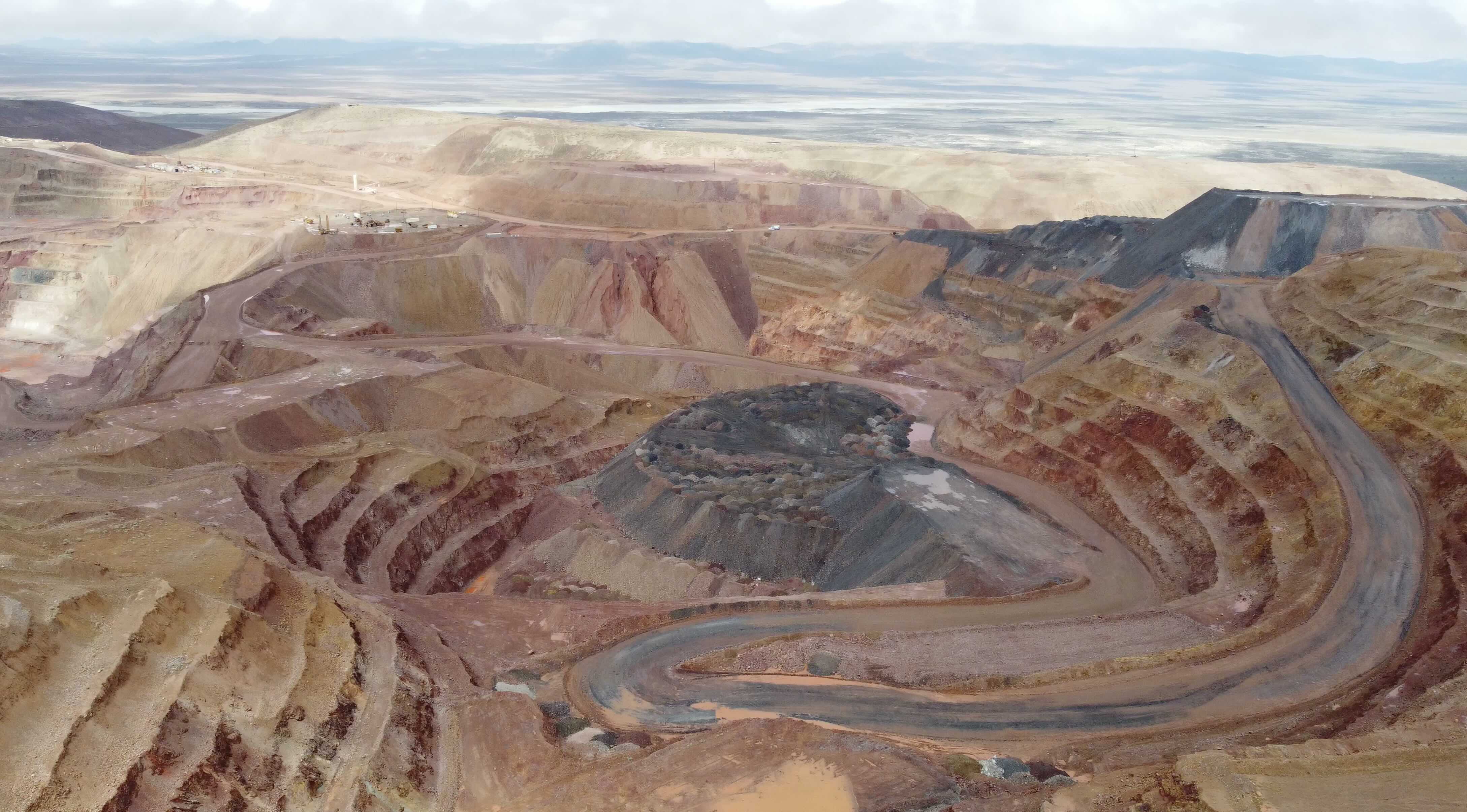
The visit to Manhattan left a clear impression of scale. Standing at surface, the continuity between zones is visible without needing it explained - from the historic Keystone pit down through the main resource area and out to Black Mammoth, all tracing the same structural corridor.
With a fully-funded 50,000-metre program roughly half complete, a resource base already sitting above the Nevada average grade, and management guiding toward at least 2 million ounces by early 2027, Scorpio has moved a century-old, fragmented mining district into a single, coherent growth story. Add in metallurgical recoveries approaching 93%, a straightforward tailings reprocessing opportunity, and multiple untested satellite targets along strike, and the project checks a rare number of boxes for investors looking for scale, grade, and a clear near-term path to a larger resource.
FAQ's (AI-Generated)
Analyst's Notes





Subscribe to Our Channel





Stay Informed






















