




Made in America - Visiting P2 Gold's Gabbs Project


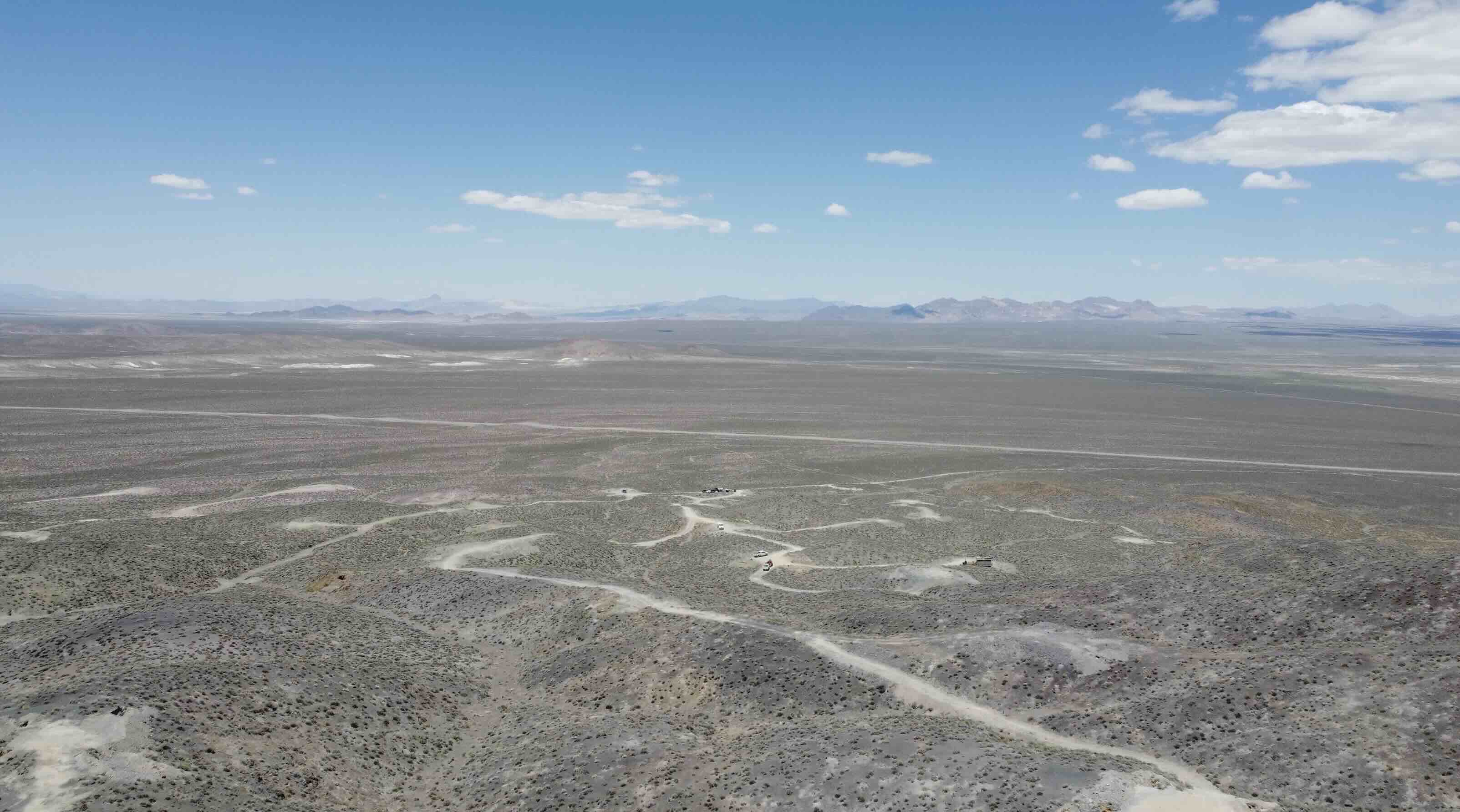
P2 Gold's Gabbs project: a Nevada copper-gold porphyry with infrastructure in place, high-grade drill hits, and a path to 150k+ oz gold production.
- P2 Gold's Gabbs project in Nevada is a copper-gold porphyry system where modern SART processing finally unlocks value that decades of prior operators, each chasing gold or copper separately, couldn't capture.
- Management is optimizing well beyond the existing PEA, targeting throughput of 12 million tonnes per year (up from 9 million), pulling mill start-up forward from year six to year three, and guiding toward 150,000+ ounces of annual gold production, with room to exceed that.
- The property already has paved highway access, power lines crossing the claim block, secured water rights, and a dense network of legacy drill roads — cutting both permitting complexity and construction lead time before a single new road is built.
- Recent infill drilling at Lucky Strike has returned a standout high-grade interval, and management believes Lucky Strike could ultimately eclipse the larger Sullivan zone in scale.
- A feasibility study is targeted for year-end, full permitting is being pursued in parallel rather than sequentially, and first production is guided toward 2029 via a staged, lower-cost heap-leach start.
The Made in America Series
Nevada remains one of the most consistently ranked mining jurisdictions in the world, with a century-plus of continuous mining history and a regulatory environment that companies and regulators alike understand well. For P2 Gold's Gabbs project, sitting within that jurisdiction isn't just a backdrop, it's part of the investment case in its own right.
This visit to Gabbs is part of Crux Investor's Made in America series, a tour through Nevada's mining projects, sitting down with the teams building them. With that context set, here's what we found on the ground at P2 Gold's Gabbs project.
Introduction to Gabbs Project & Overview
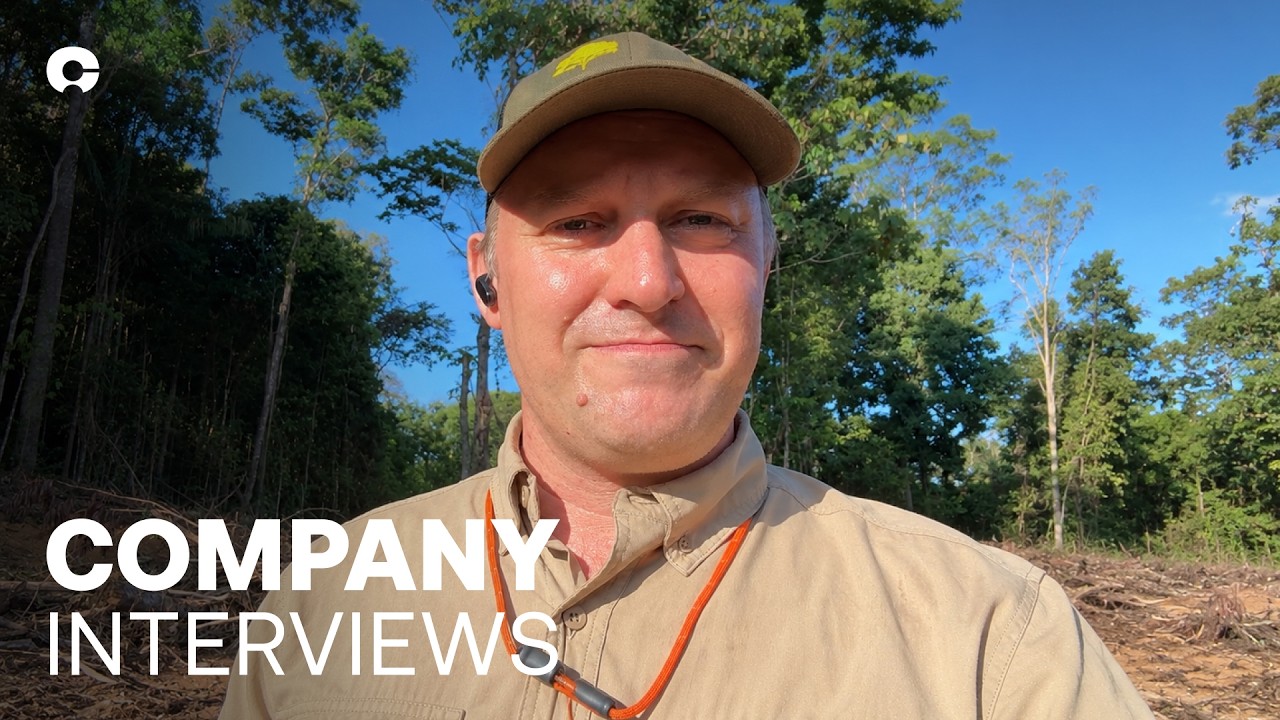
Standing in the middle of a Nevada copper-gold porphyry system that's been sitting in plain sight for over a century, Ken McNaughton, Chief Exploration Officer of P2 Gold, put it simply: past operators had the ore, they just never had the technology to unlock it. Walking the Gabbs property with McNaughton, he took us "bang, smack in the middle" of the claim block.
McNaughton framed what makes the deposit unusual for the region:
"Gabbs is a copper gold porphyry system, which is quite unique for this area. There's some great geologic reasons why we're here. And what that gives us is the ability for scale and economic."
The reason it's been passed over for so long comes down to a single technical barrier. Gabbs has been "overlooked over the years because of the copper-gold association," but the advent of SART (Sulfidization, Acidification, Recycling, and Thickening) processing now allows the company to extract both metals and build what he called a "very viable mine." Even before any technical explanation, the infrastructure was visible simply from where the team was standing: roads, power lines, historical mine workings, and water access all within sight, on a property reached that morning by a drive up a graded path rather than an off-road track.
The Gabbs Project Site Visit, with Chief Exploration Officer, Ken McNaughton
Exploration Potential & Historical Context
Gabbs is not a greenfield discovery story, it's a re-interpretation of ground with mining roots going back to the late 1800s. Modern-era operators worked the district in the 1980s and 1990s but, lacking the processing technology to handle combined copper-gold ore, focused on "either the gold or the copper," treating the zones as separate and largely uneconomic. Much of that historical drilling was shallow and stopped short, never testing the full thickness of the system.
The original read on the opportunity came from comparing the two known zones. Sullivan had outcropped and seen real historical drilling, while Lucky Strike had comparatively little. As McNaughton described it:
"There'd been some drilling here at Lucky Strike, but not a lot. But it looked very similar. So we said, look at there's potential here for 150, maybe 200 million tons. We just need to come in and drill the full thickness of the system and find what's there."
That historical database, and the decades of drilling, engineering, and metallurgical work behind it, has proven to be an asset rather than a constraint. As McNaughton put it, the company "didn't have to discover where the zones were" - that discovery risk was retired 30 years ago, leaving the team to define and expand on ground that was already known. Between Sullivan (roughly 80-90 million tonnes), Lucky Strike (which management believes could reach 120-150 million tonnes), and the untested Gold Ledge zone sitting between the two, the district-scale picture keeps expanding as infill drilling extends known mineralization to depth and along strike.
Economic Viability & Production Plans
The economic case for Gabbs rests on a combination of consistent, if modest, grades and considerable scale. Average grades run in the "0.5 to 0.6 gold range" with "0.2 to 0.3 copper," McNaughton said, plus a silver credit of three to four million ounces over the life of the operation. Management is actively pushing the mine plan beyond the original PEA, which McNaughton candidly described as a starting point rather than a finished blueprint:
"The PEA it really was a scoping study. Let's optimize that. So in the PEA we had the mill coming on in year six. We now know it's better to come on in year three. We chose nine million tons because of the resource. We now feel twelve million tons a year."
That single throughput adjustment, paired with the accelerated mill timeline, is expected to lift average annual gold production from roughly 110,000 ounces toward 150,000 ounces, with clear upside flagged, since infill grades at Lucky Strike have been running higher than the historical drilling suggested. McNaughton also pointed to the project's construction simplicity as a direct contributor to the economics. Standing at the site, the team could "practically see where you're going to put everything" - the pit locations, the haul routes, and the staging areas all visible from a single vantage point, with minimal pre-strip required because the best grade sits at or near surface at both Sullivan and Lucky Strike.
Infrastructure & Accessibility Benefits
Few undeveloped porphyry systems come with the infrastructure already present at Gabbs. Touring the property's substation, McNaughton ran through what's already solved:
"This is power in and power across to another user. And then in addition to power, as we were discussing, roads, we've got a highway out over there, roads to all of the known zones. So very well serviced in terms of infrastructure, access infrastructure, power water. We've got it all right here."
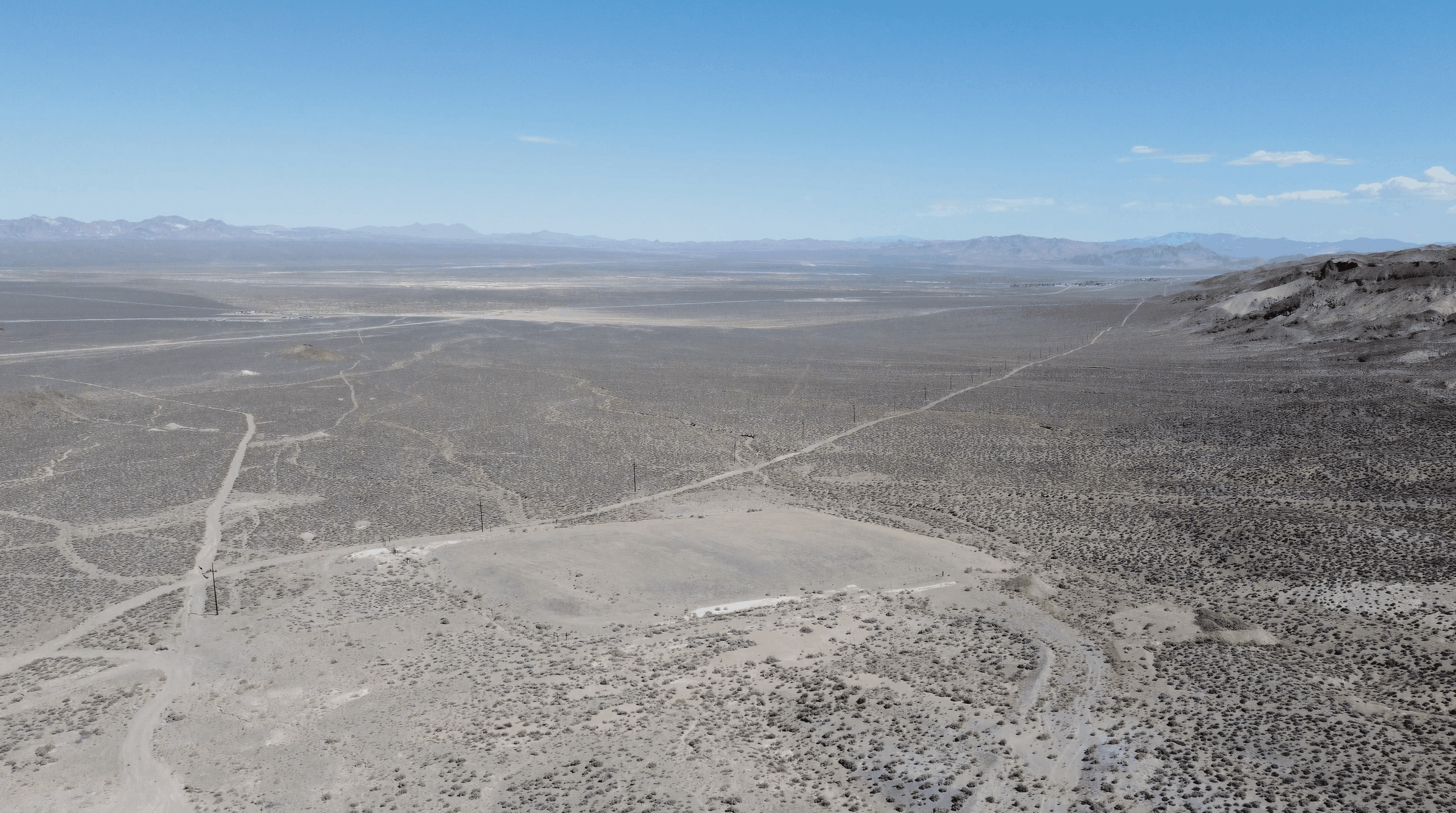
On water specifically, the position is similarly advanced: water rights are purchased and secured, a detail McNaughton summed up as simply "done." Power is a similar story. The company still has engineering work to tie into the grid, but the line itself is already there, meaning there's no need to bring in "a 20, 50 mile line" from elsewhere. The historical drill roads crossing the property carry a second, less obvious benefit: because the disturbance already exists, it doesn't have to be newly accounted for in environmental permitting, since only fresh disturbance from ongoing drilling counts against the company. The nearby town of Gabbs, home to what McNaughton described as the longest continuously running mine in the US, a magnesium operation, along with Hawthorne (45 minutes away) and Fallon (an hour away), also supplies a labor pool already accustomed to resource extraction, in a community that "welcomes mining rather than putting up roadblocks."
Permitting & Regulatory Considerations
Nevada's mine permitting process is well-established, and P2 Gold's stated approach has been to get ahead of requirements rather than wait for them to be handed down:
"Rather than waiting to be told, everybody knows what has to be done... rather than waiting for things to happen and then starting, we know what needs to be done. Let's just get it done. So that's why we can push for that year-end feasibility study."
Baseline studies, engineering work, and metallurgical test work are already well advanced, and the optimized mine plan is largely finished. What remains is folding in an updated resource estimate. Notably, the company is managing two separate permits concurrently, one for Sullivan and one for Lucky Strike, which under current rules must stay at least a mile apart. That constraint is temporarily limiting work at the Gold Ledge zone sitting between them, since a third permit isn't yet in motion there. Looking ahead, McNaughton laid out the sequencing directly: by "the end of 27," he expects the project to be fully permitted and moving into construction. The feasibility study, once complete, also feeds directly into the Mining Plan of Operation and sets the terms of reference for the eventual EIS or EIA process, with a heap-leach start for the oxide material chosen as a further simplifier ahead of the larger sulfide build.
Drilling Results & Geological Insights
Recent infill drilling at Lucky Strike has consistently confirmed the same ore-control pattern first established at Sullivan: a barren gabbro hanging wall giving way to mineralized quartz monzonite. Describing the geometry directly at the outcrop, McNaughton pointed to a recent standout result:
"We come in through a barren hanging wall of gabbro, and when we get into the quartz monzonite, there's our zone. And it's the high grade zone we just released, a great result - five feet of 183 grams, meter and a half."
He was candid that the whole Lucky Strike system remains blind at surface, with no outcrop to guide drilling directly. What gives the team confidence to keep pushing outward is the historical workings nearby, which show the system is there even where it isn't visible today. His own read on the relative scale of the two zones has shifted since the program began: where Sullivan sits around 80-90 million tonnes, he now believes Lucky Strike will "eclipse" it, reaching somewhere in the range of 120 to 150 million tonnes.

Geologically, Gabbs stands apart from the tertiary epithermal deposits found at neighboring historic mines in the district. Joy Lester, the project geologist explained the distinction:
"Most of those people are mining in tertiary volcanics, younger rocks, in epithermal systems. However, our rocks are Jurassic rocks from an old island arc, likely accreted onto the western United States continent, and then a monzonite or porphyry system intruded it. Completely different from the tertiary epithermal systems."
She drew a direct regional comparison to the Ann Mason copper deposit near Yerington, roughly a hundred miles away, noting a "similar geochemical signature" between the two systems, with a rotated, exposed cross-section at Ann Mason offering a rare window into what a deeper porphyry system typically hides. McNaughton added that the highest grades tend to cluster in a consistent structural position, generally the uppermost 10 to 30 feet of the monzonite.
Team & Project Management
McNaughton credited the project's advancement to a small, experienced on-site team built up gradually as the program grew:
"The first person we hired was Fred Brown, who Joe and I have a very long working relationship with as a consultant. Then Fred came to work with us in 2021. And last fall, when the program got bigger, Fred said, hey, I need help. You've got to hire Joy. So this is Joy Lester, who is the other project manager on site today with us."
McNaughton was direct in crediting Lester's technical contribution, noting she holds "quantums more information on the rocks" than he could bring alone. Her own background, drawing comparisons across the wider regional geology rather than the Gabbs property in isolation, has directly shaped the current interpretation of the deposit's origin and its analogues elsewhere in Nevada, work McNaughton described as still "evolving."
Water Management & Hydrogeology
Water is one of the more technical pieces of the development plan, requiring a full hydrogeologic model to support both permitting and mine engineering, including pit dewatering design. Production and monitoring wells are being drilled at both Lucky Strike and Sullivan to characterize the aquifer, with pump testing planned alongside the well program.
Standing on what looks, to an untrained eye, like open desert, McNaughton addressed the obvious question directly:
"The groundwater's down four hundred, four hundred and fifty feet. But our pit goes down a thousand feet. So we're going to have to deal with it."
Rather than treating that as a risk to defer, he framed it as one more item to methodically resolve, pointing out there's "no use putting our head in the sand" on hydrogeology. He also referenced the neighboring Paradise Peak pit, a historic FMC mine that produced 40 million ounces of silver and a million ounces of gold before halting in the sulfides, noting simply that "they've got water in their pit" — a real-world precedent close by.
Core Samples & Mineralization Analysis
At the core shack, recently released drill results were laid out for direct inspection alongside historical core from the 1950s and 1960s workings. Within a broader interval reported at 175 feet averaging roughly a gram of gold, Joy highlighted a richer sub-interval and, within that, a standout high-grade section:
"We actually have some sections that are much more enriched... sixty-five feet within this... at almost two grams and 0.35 copper. But within that, however, we also have a five foot interval of extremely high grade gold, 183 grams and four percent copper. So that's the sweetener."
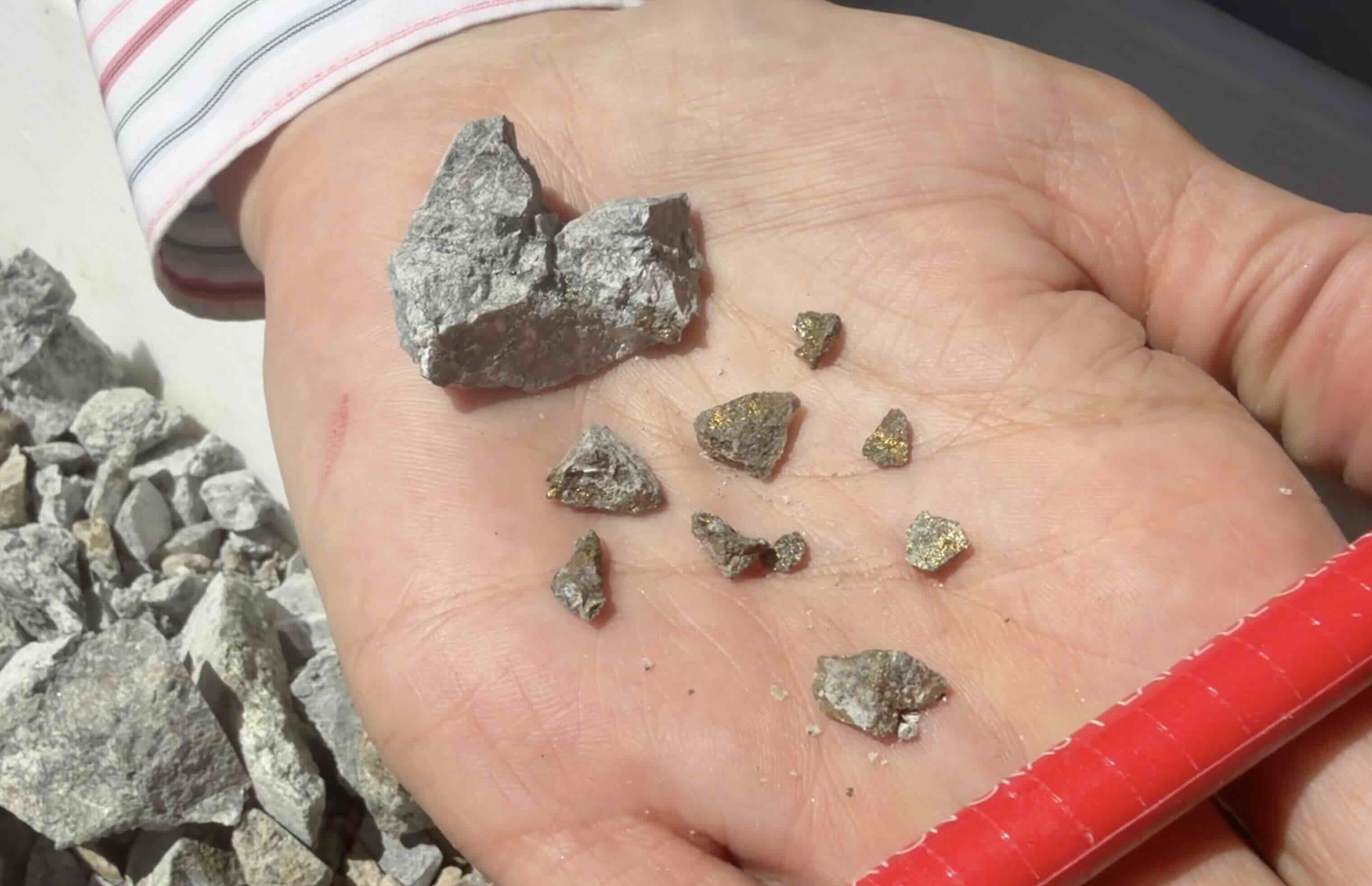
She also flagged visible gold in the core itself, a detail not present in every high-grade porphyry intercept. Importantly, the deposit's underlying consistency was framed as a strength rather than a limitation. McNaughton summed up the pattern seen across dozens of holes as "boringly repetitious" - in this type of system, boring is exactly what you want, since it means the model holds up wherever the drill goes. He called the recent hole a standout "in any camp in the world," simply "spectacular."
Conclusion & Future Outlook
The visit to Gabbs left a strong impression of a project with genuine scale, infrastructure already largely solved, and a team that has built mines before and is moving with intent:
"The infrastructure is phenomenal here. We drove here on a brand new highway, surfaced road - water on site, and energy on site, everything you need for easy mining."
Combined with a team that has built mines before and is working on an expedited basis, the project checks a rare number of boxes simultaneously: known geology, secured infrastructure, and a defined permitting path. Between the throughput increase to 12 million tonnes per year, the accelerated mill timeline, and a Lucky Strike zone that keeps surprising to the upside, management is actively pushing the project's potential beyond the numbers in its original PEA. With a feasibility study due by year-end, full permitting targeted by the end of 2027, and first production guided toward 2029 via a staged heap-leach start, Gabbs stands out as a project with near-term catalysts and multi-year growth potential still ahead of it, at a moment when the market is actively looking for projects capable of delivering "100, 150 and beyond" thousand ounces of gold.
FAQ's (AI Generated)
Analyst's Notes





Subscribe to Our Channel







Stay Informed






















