




NexMetals Eyes Re-Rating With Strong Metallurgy, Expansion Drilling, and PEA Ahead


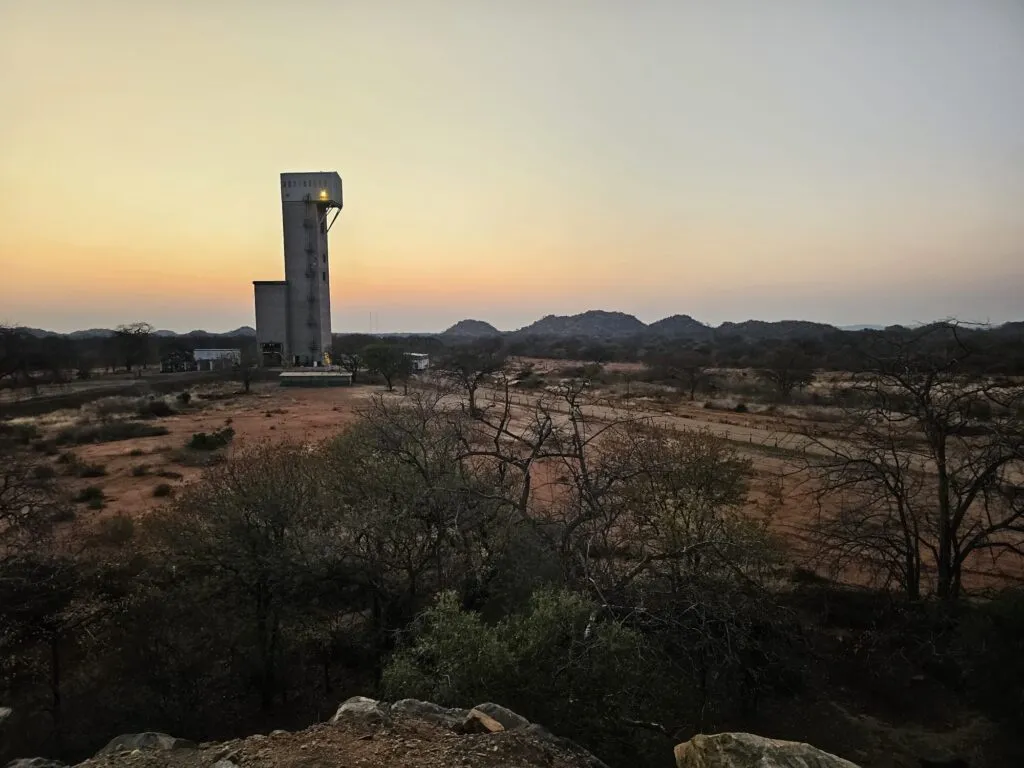
NexMetals achieves metallurgical breakthrough enabling lower-capital concentrate production from Botswana copper-nickel projects; aggressive drilling expands resources.
- NexMetals Mining CEO Sean Whiteford discusses breakthrough metallurgical results enabling production of separate sellable copper and nickel concentrates, dramatically reducing capital requirements compared to building a smelter
- Company's Selebi and Selkirk copper-nickel-PGM deposits in Botswana contain ~28 million tons at 3%+ copper equivalent, with aggressive expansion drilling targeting significant resource growth through newly discovered "flexure zone"
- Improved metallurgical recoveries (88% copper vs. 70% previously assumed; 78.5% palladium vs. 59%) expected to increase net smelter return values and lower cutoff grades in upcoming resource update
- Analyst price targets range from $8.50 to over $12, suggesting significant undervaluation at current levels; company advancing toward maiden PEA to demonstrate project economics
- Strategic optionality includes potential Selkirk spin-out or joint venture to unlock value; Botswana's mining-friendly jurisdiction offers permitting advantages and existing infrastructure from past production
NexMetals Mining is advancing two past-producing copper-nickel deposits in Botswana through a combination of technical innovation and aggressive exploration. In a detailed discussion, CEO Sean Whiteford outlined how recent metallurgical breakthroughs and ongoing resource expansion drilling are transforming the company's development pathway while positioning the assets for potential restart within a compressed timeline compared to greenfield projects.
Leadership Credentials Support Transformative Financing
Sean Whiteford brings substantial experience to NexMetals, having worked as a geologist and executive across major mining companies including nearly five years with BHP and approximately fifteen years with Rio Tinto. His background spans all stages of mining development from exploration through construction to production across multiple commodities and jurisdictions. Whiteford joined NexMetals' board in 2022 before transitioning to president in 2023 to oversee Botswana operations, and subsequently became CEO.
The company completed a significant financing round in November, raising $80 million. This capital injection served multiple purposes: eliminating debt from the balance sheet, enabling simultaneous advancement of both the Selkirk and Selebi projects, and funding the second installment payment toward achieving 100% ownership of both assets. The payment structure involves three installments, with the second completed in December following the financing.
Metallurgical Breakthrough: The Concentrate Solution
A fundamental shift in the company's development strategy centers on metallurgical processing. Historically, both deposits fed ore to a smelter complex that ceased operations in 2015. The conventional redevelopment scenario would involve building either a new smelter or a hydrometallurgical plant. Whiteford noted that the only known hydromet plant for copper-nickel ores was Long Harbour for Voisey's Bay, with final costs exceeding $5 billion. Both smelter and hydromet options present substantial capital requirements and execution risks for a junior mining company.
The alternative approach involves producing separate, sellable copper and nickel concentrates rather than a bulk concentrate. This processing route had not been previously demonstrated for these specific deposits. The company successfully developed metallurgical flowsheets for both Selkirk (announced the previous year) and Selebi (results released the week prior to the interview), with both demonstrating the ability to produce high-grade copper and nickel concentrates suitable for sale to third-party smelters.
This represents a significant de-risking milestone. Concentrators are standard infrastructure at base metal operations, making the technology substantially more conventional than smelter construction. The capital outlay and execution risk profile are considerably more favorable for a development-stage company pursuing this concentrate-based pathway.
Systematic Drilling Unlocks the Flexure Zone Discovery
The 2024 mineral resource estimate reported approximately 28 million tons of indicated and inferred resources grading over 3% copper equivalent across both projects. This figure already approaches the historical production tonnage from the deposits, but aggressive expansion drilling aims to substantially grow the resource base, particularly at Selebi Main.
A significant recent discovery involves what the technical team terms the "flexure zone" at Selebi Main. This target area emerged only six months prior to the interview through systematic data-driven drilling and geophysical interpretation. The zone covers approximately 700 meters by 700 meters and exhibits what geophysicists characterise as a "superconductor" response on borehole electromagnetic surveys. Whiteford explained that superconductor responses indicate thick sequences of massive sulfides or multiple mineralised horizons.
Recent drilling in this area has utilised 200-meter step-outs between holes, a spacing appropriate for defining inferred resources. Successful intersections at this wide spacing enable rapid tonnage additions to the resource base. The company has reoriented its five surface drill rigs entirely toward Selebi Main expansion, with 100% of current drilling focused on resource growth for the upcoming mineral resource estimate update.
Interview with Sean Whiteford, CEO, NexMetals Mining
Data-Driven Geophysical Targeting Strategy
The company's exploration strategy relies heavily on borehole electromagnetic surveying, which Whiteford described as highly predictive in this geological setting. The deposits consist of magmatic nickel-copper sulfides where massive sulfides are the only conductive material in the surrounding host rocks. This creates unambiguous geophysical targets.
The exploration workflow follows a systematic approach: drill a hole, conduct borehole EM surveying on that hole, interpret the geophysical response to model subsurface conductors, then plan the next drill hole accordingly. This data-driven methodology has proven consistently successful, with the company hitting massive sulfides in virtually every hole drilled toward modeled targets unless deliberately testing the edges of mineralisation to define boundaries.
This represents a significant advantage over historical operations at these deposits, which did not employ borehole EM technology and consequently had limited ability to project mineralisation ahead of mining. Modern exploration techniques have unlocked additional resource potential that previous operators could not effectively delineate.
Metallurgical Testing Reveals Superior Project Economics
Recent metallurgical testwork produced results substantially better than the assumptions used in calculating the 2024 mineral resource estimate's net smelter return values. For copper, actual metallurgical testing achieved 88% recovery compared to the 70% recovery assumed in resource calculations. For palladium, testing demonstrated 78.5% recovery versus the 59% assumption.
Additionally, the metallurgical programs identified payable metals not included in the 2024 resource estimate. Both Selkirk and Selebi contain approximately 0.6% cobalt in the nickel concentrate. Gold and silver are also present in concentrates but were not assayed or credited in the resource calculation.
These improved recoveries and additional payable metals should increase the calculated net smelter return value per ton of ore. Higher NSR values typically enable the economic extraction of lower-grade material, which would lower the resource cutoff grade and potentially add tonnage to the updated mineral resource estimate. The combination of better recoveries, additional payable metals, and metal price increases since the 2024 estimate should positively impact project economics in the forthcoming preliminary economic assessment.
Pathway to Production with Strategic Optionality
The company faces questions about restart timelines for these past-producing assets. Whiteford acknowledged this depends significantly on financing availability but outlined a potential pathway for Selkirk specifically. With adequate capital, Selkirk could advance to a prefeasibility study within approximately one year, as it already has sufficient drilling density. A bulk sample for metallurgical confirmation represents the critical path item. Following PFS, an additional year of work including geotechnical drilling, groundwater studies, and further metallurgy could support a bankable feasibility study. Construction would likely require two years, suggesting a potential four-to-five-year timeline to production under optimal financing conditions.
The company is actively considering strategic alternatives for Selkirk to unlock value that Whiteford believes is not reflected in the current share price. Analyst coverage attributes only 18% or less of the company's value to Selkirk. Options under evaluation include spinning out Selkirk as a separate entity, finding a joint venture partner, or pursuing an intermediate structure. Operating and financing two projects simultaneously presents challenges, and enabling a partner to advance Selkirk while the company focuses on Selebi could optimise capital allocation.
Both projects benefit from existing infrastructure and permits. The mines possess mining leases, avoiding the often lengthy permitting challenges that plague projects in Canada, the United States, and Australia. Selebi already has approximately two years of underground development within the resource area, as the previous operation ceased due to smelter failure rather than ore depletion. These advantages could compress restart timelines relative to greenfield projects.
Operating in a Mining-Friendly Jurisdiction
Botswana presents several advantages as a mining jurisdiction. The country has an established mining history, most notably through the Debswana joint venture between the Botswana government and De Beers for diamond production. Recent diamond price weakness has impacted government revenues, creating increased policy support for diversification into base metals, gold, rare earths, and other mineral sectors.
The government actively encourages mining development through mechanisms including special economic zones that provide tax incentives for processing facilities. Several copper mines in northwestern Botswana currently export copper concentrate, demonstrating established logistics pathways. The company has examined transportation options for concentrate sales, with Durban to the south representing a probable destination for high-grade concentrates to reach smelters and refineries.
Botswana offers an experienced mining workforce and supportive regulatory environment across federal and local levels. For companies evaluating African jurisdictions, Botswana's political stability, transparent governance structures, and pro-mining policies differentiate it from higher-risk African mining destinations.
Valuation Perspective and Upcoming Catalysts
The company is covered by three equity research analysts. Raymond James recently initiated coverage with an $8.50 price target, while Cormark and Scion Capital Partners maintain targets exceeding $12 per share. These analysts have conducted site visits and underground inspections. The disconnect between current trading levels and analyst targets suggests potential undervaluation, though Whiteford acknowledged this is a commonly claimed characteristic among development-stage mining companies.
Near-term catalysts include the updated mineral resource estimate incorporating recent drilling from both Selebi North infill/expansion and the extensive Selebi Main expansion program. Following the MRE update, the company plans to deliver its maiden preliminary economic assessment. As the company enters its fourth year since acquiring the assets, demonstrating project economics through the PEA represents an overdue milestone that management has prioritised for the coming months.
The PEA will incorporate the lower-capital concentrate production scenario rather than smelter construction, providing investors with the first comprehensive economic analysis of the restart scenario. This study should clarify capital requirements, operating costs, production profiles, and financial returns under current metal prices and the improved metallurgical recovery parameters.
Conclusion
NexMetals Mining offers exposure to the critical minerals supply chain through copper-nickel-cobalt assets in one of Africa's most stable mining jurisdictions. Copper demand fundamentals remain robust driven by electrification, grid infrastructure, and renewable energy buildout, while nickel and cobalt serve battery supply chains. Botswana's geopolitical stability distinguishes it from higher-risk African mining regions and increasingly contentious jurisdictions elsewhere. The government's active encouragement of mining diversification away from diamonds creates supportive policy conditions.
As Whiteford noted, Botswana provides tax incentives for processing and is very supportive of mining investment. The combination of past-producing infrastructure, modern exploration techniques unlocking additional resources, and metallurgical de-risking positions the company to potentially restart production on compressed timelines compared to greenfield development. With copper mines in northwestern Botswana already exporting concentrate and established logistics infrastructure, the pathway from resource definition through production appears increasingly viable.
TL;DR: Executive Summary
NexMetals Mining has achieved critical metallurgical breakthroughs enabling production of separate copper and nickel concentrates from its Botswana projects, eliminating the need for multi-billion-dollar smelter construction and dramatically reducing capital requirements and execution risk. The company is aggressively expanding resources at Selebi Main with promising results from a newly discovered flexure zone, while improved metallurgical recoveries (88% copper vs. 70% assumed; 78.5% palladium vs. 59% assumed) should enhance project economics in the upcoming maiden PEA. With analyst price targets suggesting 2-3x upside, existing infrastructure from past production, and a compressed potential timeline to restart, the company offers de-risked exposure to copper-nickel-PGM mineralisation in a mining-friendly African jurisdiction.
FAQs (AI Generated)
Analyst's Notes





Subscribe to Our Channel





Stay Informed


