




Astra Exploration Secures $15M to Unlock High-Grade Gold Potential in Argentina



Astra Exploration raises $15M to drill high-grade gold-silver convergence zones at La Manchuria, Argentina. Institutional backing validates dual-target model. Assays July 2026.
- Astra Exploration closed its largest financing of $15 million near all-time high share price, with $12.5 million from institutional investors including Schroders and Terra Capital, completed without warrants
- The La Manchuria project in southern Argentina features both a bulk tonnage disseminated gold-silver system near surface and a high-grade feeder zone thesis at depth, with drilling focused on demonstrating vein convergence
- Phase 3 program targeting 5,000-7,000 meters currently underway, with potential for 20,000-30,000 meters over the next 12-18 months depending on results
- Project benefits from proximity to two existing processing facilities in care and maintenance that need feed, plus favorable topography with surface mineralisation on a hilltop offering excellent strip ratio potential
- The financing's institutional quality and lack of warrants signals strong confidence in the geological model, with investors backing the company's methodical approach to expanding the 750-meter West Feeder zone and testing convergence at depth
Astra Exploration has secured its largest financing to date, raising $15 million near the company's all-time high share price to advance its flagship La Manchuria gold-silver project in southern Argentina. The financing, which was heavily oversubscribed and completed without warrants, represents a significant validation of the company's geological model by sophisticated institutional investors. With drilling already underway and a strategic focus on high-grade feeder zones alongside bulk tonnage potential, Astra is positioning itself for an aggressive exploration campaign over the next 12-18 months.
Institutional Capital Backs Geological Model
The $15 million financing demonstrates strong institutional confidence in Astra's approach. CEO Brian Miller revealed that the offering was launched as a $10 million bought deal and was oversubscribed before markets opened. The deal was subsequently upsized, with that portion also oversubscribed before the announcement could be released. Of the total, $12.5 million came from institutional investors, including notable names like Schroders and Terra Capital.
Miller emphasised the significance of the investor quality:
"These are institutions that are very well known in the industry, sophisticated, large institutions that have the capacity and the reputation for being long-term supportive shareholders of successful stories."
The absence of warrants in the financing structure further underscores institutional confidence in the company's trajectory and geological potential.
The La Manchuria Geological Model
La Manchuria is a high-grade gold-silver epithermal system in southern Argentina that presents two distinct but complementary exploration targets. The project has demonstrated consistent expansion in every spatial dimension, with the addition of new host rock units that have proven fertile. This dual-target approach allows Astra to pursue both near-term bulk tonnage potential and higher-risk, higher-reward feeder zone opportunities simultaneously.
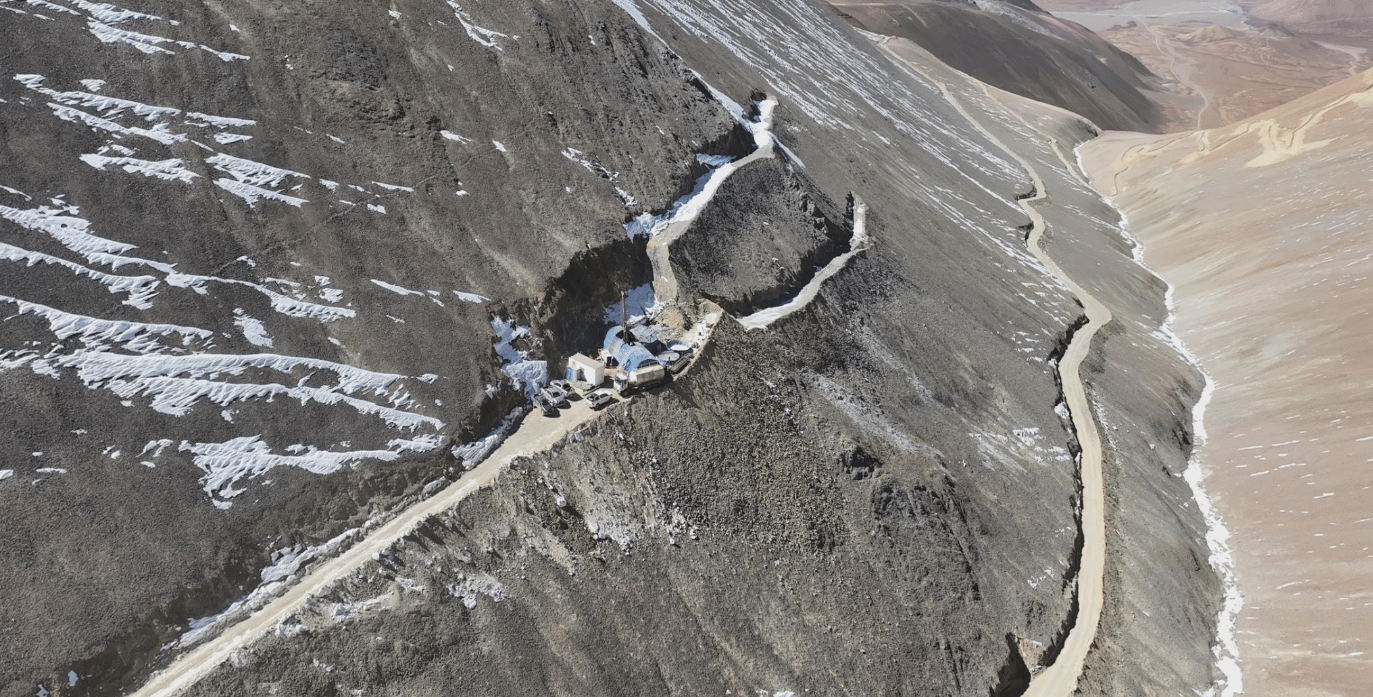
The existing resource stands at 146,000 gold equivalent ounces at an average grade of nearly 2 grams per tonne, considered respectable for open-pit mining. However, Miller notes that the near-surface disseminated footprint remains wide open, and if the grade holds over a larger deposit of one to three million ounces, it would represent a significant discovery. The project's topography - mineralisation starting at surface on a hilltop - provides exceptional strip ratio advantages.
High-Grade Feeder Zone Thesis
The high-grade feeder zone concept represents what Miller describes as a potential "gamechanger for the company." The company is observing convergence of veins at shallow depth, particularly between the West and East Feeder zones. This convergence pattern suggests the presence of a high-grade plumbing system feeding the disseminated mineralisation above.
Miller drew comparisons to Cerro Negro, operated by Newmont, noting geological similarities and parallel discovery evolution: "The initial discovery in both cases was a relatively small disseminated deposit near surface. And it was the underground feeder system, the converging main structure that really changed that story." He noted that while Cerro Negro's bulk disseminated system will eventually be mined, the operation will first target "the jewelry store in the basement" - the high-grade feeder zone.
Current projections suggest vein convergence could occur at 400-500 meters vertical depth, though epithermal systems can be unpredictable. The West Feeder zone currently extends approximately 750 meters along strike and remains open, with the northwest extension appearing less structurally complex than the southeast, making it an attractive target for efficient resource expansion.
Interview with Brian Miller, CEO, Astra Exploration
Strategic Approach to Drilling Programs
Astra is taking a methodical approach to drilling, balancing aggressiveness with quality target selection. Miller explained the company's philosophy:
"The market wants drill drill drill and the thinking there is that the more meters that are drilled the higher probability of success. That only remains true as long as your quality of drill targets doesn't diminish."
The current Phase 3 program targets a minimum of 5,000 meters, potentially extending to 6,000-7,000 meters if weather and productivity cooperate. The company expects to pause for a couple of months before launching a larger program in September-October. With solid continued results, Astra could deploy 20,000-30,000 meters over the next 12-18 months.
The drilling program will incorporate both deeper targets (250-300 meters) to test the feeder zone thesis and shallower targets to extend vein strike length. Miller noted that extending strike on shallow targets provides "good bang for buck" and demonstrates size potential. The company also conducted geophysical surveys that performed well and may be refined to generate regional targets, which could significantly expand the opportunity beyond the known mineralised system.
Near-Term Catalyst Timeline
Drilling for Phase 3 commenced in early May 2026, with the program well underway. Weather conditions in southern Argentina allow year-round drilling with the exception of June through September, when wind can significantly reduce productivity. Miller noted that wind in the region is severe enough to move rocks, not just tumbleweeds, occasionally requiring drilling pauses.
The first batch of assay results is expected around July 2026. These results will be critical in guiding the subsequent drilling program planned for September-October and will help determine the allocation between deeper feeder zone targets, shallow strike extensions, and potential regional scout drilling.
Miller also mentioned ongoing low-cost pre-targeting work on Chilean projects, noting strong demand for Chilean assets following recent elections and suggesting these assets could add value over the next 6-12 months.
Management's Strategic Approach
Miller emphasised a disciplined approach to exploration that prioritises target quality over drilling volume. The company works closely with its geological team, led by Diego Guido, to ensure each drill hole maximises information value. This approach appears to resonate with the institutional investors who participated in the financing, as they typically focus on geological models rather than individual assay results.
The CEO's vision involves "beginning with the end in mind" - considering whether a mine can be built and what it might look like before making exploration decisions. This forward-looking perspective incorporates infrastructure, strip ratio, and bulk tonnage potential alongside high-grade discoveries. Miller stated:
"Oftentimes that is what's missed in the beginning. You have to ask yourself- number one, can you build a mine here? And if you do, what might it look like?"
The Investment Thesis for Astra Exploration
- Institutional Quality Financing: $15 million raise with 83% from sophisticated institutions (Schroders, Terra Capital) completed without warrants near all-time highs, signaling strong conviction in geological model and long-term value creation potential
- Dual-Target Optionality: Exposure to both near-surface bulk tonnage target (146,000 oz AuEq at ~2 g/t, wide open for expansion) and high-grade feeder zone thesis with vein convergence observed at shallow depths
- Capital Efficiency with Scale Potential: Methodical drilling approach prioritising target quality over volume, with runway for 20,000-30,000 meters over 12-18 months if results continue to support aggressive exploration
- Infrastructure Advantage: Two existing processing facilities in care and maintenance nearby requiring feed, exceptional topography with surface mineralisation on hilltop providing superior strip ratio, significantly de-risking potential development economics
- Geological Model Validation: Consistent system expansion in all dimensions with comparison to Cerro Negro (Newmont) discovery evolution, where underground feeder system transformed economics beyond initial disseminated discovery
- Regional Consolidation Potential: Surrounded by major operators (Newmont, AngloGold Ashanti, Pan American Silver) in a jurisdiction experiencing renewed investment interest, creating multiple value realisation pathways
- Near-Term Catalysts: Phase 3 drilling (5,000-7,000m) underway with first assays expected July 2026, testing critical convergence thesis at 250-300m depth that could validate high-grade feeder zone model
- Exploration Upside Beyond Core Asset: Geophysical surveys generating regional targets that could expand system significantly, plus Chilean assets benefiting from post-election investment rush with low-cost pre-targeting work underway
- Proven Management Discipline: Focus on quality over quantity in drilling, transparent communication with market, and strategic capital deployment that resonates with institutional investors seeking long-term value rather than headline-driven exploration
Macro Thematic Analysis
Argentina's mining sector is experiencing renewed momentum following policy reforms, attracting increased institutional capital to high-quality exploration stories. Astra Exploration exemplifies this trend, having secured $15 million in institutional financing for its La Manchuria gold-silver project during a period when investors are reassessing Argentine mining opportunities. The company's dual-target strategy - combining near-surface bulk tonnage potential with high-grade feeder zone discovery upside - aligns with institutional preferences for geological models offering both base-case value and transformative discovery potential. The presence of existing infrastructure and proximity to major operators (Newmont, AngloGold Ashanti) further enhances the project's strategic value in a consolidating regional landscape. As CEO Brian Miller noted:
"If we would in the best case scenario discover something that's world class, I think it's a build it and they shall come scenario."
Its reflects confidence in Argentina's improving investment climate and the region's demonstrated capacity to support world-class mining operations.
TL;DR
Astra Exploration raised $15 million (83% institutional) without warrants to advance its La Manchuria gold-silver project in Argentina, where drilling targets both bulk tonnage expansion and high-grade feeder zone convergence at depth. With 5,000-7,000 meters of Phase 3 drilling underway and assays expected in July, the company is testing a geological thesis comparable to Cerro Negro's evolution, backed by exceptional infrastructure proximity and disciplined capital allocation. The financing quality and strategic positioning create significant rerating potential if convergence thesis validates.
FAQs (AI Generated)
Analyst's Notes





Subscribe to Our Channel





.jpg)
Stay Informed






















