




Perseus Mining's US$755 Million Cash Balance Positions the Company Among the Stronger Balance Sheets in Mid-Tier Gold



Perseus Mining's US$755M cash balance and zero debt position it among mid-tier gold's strongest balance sheets, funding growth without dilution or leverage.
- Gold prices remain elevated, but investor outcomes increasingly depend on how producers manage cash, costs, and capital rather than price exposure alone.
- Perseus Mining reported US$755 million in cash and bullion as of December 2025, alongside zero debt and US$400 million in undrawn credit facilities.
- This liquidity has been built through operating cash flow, not asset sales or equity issuance, despite ongoing development spending and dividend payments.
- Strong margins, even amid quarterly cost volatility, have allowed Perseus to self-fund growth projects and reduce dilution risk during construction phases.
- For investors, the company offers a practical case study in how balance sheet strength can lower execution risk, improve flexibility, and support valuation stability in the gold sector.
Why Balance Sheets Matter More Than Ever in Gold Investing
Previous gold cycles rewarded companies that expanded production rapidly, often through debt financing, equity dilution, or streaming arrangements that sacrificed long-term value for near-term growth. The result was a generation of producers that delivered ounces but destroyed shareholder returns through value leakage at the corporate level.
In previous gold cycles, many companies expanded production rapidly using debt, share issuances, or streaming deals that exchanged future cash flows for upfront capital. These approaches often increased ounce output while reducing returns to shareholders through interest costs, dilution, or permanent revenue-sharing obligations.
Investors now place greater weight on free cash flow - the cash remaining after operating costs and capital expenditure - along with net cash positions and dividend capacity. Companies demonstrating margin stability and internal funding ability often trade at higher valuations than larger producers carrying significant debt which reflects a straightforward lesson from past cycles: rising gold prices do not guarantee shareholder returns if costs rise in parallel or if debt servicing absorbs cash flow.
Current Market Conditions
Higher gold prices have coincided with rising royalties and fiscal pressure across key mining jurisdictions. Inflation in labour, power, and consumables has compressed margins even as revenue has increased. Meanwhile, equity markets for miners have tightened, making external capital more expensive and dilutive.
Companies that can fund operations and growth internally face fewer constraints than those requiring external capital.
How Perseus Mining Built Its Cash Position
As of December 2025, Perseus reported US$755 million in cash and bullion, comprising US$683 million in cash and US$72 million in bullion inventory which represents accumulated operating cash flow generated across its portfolio of producing assets in West Africa.
Operating margins have underpinned this accumulation. Perseus has maintained consistent cash generation through disciplined cost management and strategic mine sequencing, allowing the company to absorb development capital requirements while continuing to build financial reserves.
Liquidity Without Leverage
Perseus carries zero debt, maintaining US$400 million in undrawn credit facilities, which can be accessed if needed without current interest costs. This funding structure avoids two common trade-offs in mining finance. Equity raises during construction or expansion increase share count, reducing each existing shareholder's proportional ownership. Streaming and royalty agreements provide upfront capital but permanently transfer a percentage of future production revenue to the financing party.
Speaking after the September 2025 quarter, Craig Jones, Managing Director and Chief Executive Officer of Perseus Mining, addressed the company's capital position:
"We've got over $800 million of money in the bank. So we're covering our costs at the same time as having some headroom as well. At this stage there's no need for us to take any debt on. We can fund all of our aspirations through the cash that we have on the balance sheet."
Understanding Costs, Margins & Cash Flow Together
Cost metrics in gold mining require careful interpretation. All-in sustaining cost, while useful as a standardised measure, can obscure the underlying margin dynamics that ultimately determine cash generation capacity and financial resilience.
Why AISC Alone Can Be Misleading
All-in sustaining cost represents the total cost per ounce required to maintain current production levels, including direct mining costs, processing, administration, sustaining capital, and royalties. While this metric enables peer comparison, quarter-to-quarter changes can reflect factors unrelated to structural cost competitiveness.
Grade sequencing, where planned variations in ore grade through the mine plan affect per-ounce costs, creates predictable volatility that does not indicate operational problems. Royalty structures linked to gold prices increase reported costs when revenue increases, masking actual margin expansion. The December 2025 quarter highlighted Sissingué production declining 42% to 32,045 ounces due to lower head grades during an ore source transition, while Edikan production increased 58% to 18,491 ounces as higher-grade material from the Enkasura pit entered the feed.
Margin Resilience as the Key Metric
Margins translate directly into the financial outcomes that matter for shareholders: earnings before interest, taxes, depreciation, and amortisation; free cash flow generation; and capacity to absorb inflationary pressures without compromising returns.
Craig Jones addressed the company's approach to balancing operational performance with shareholder returns:
"The plan as it is and the plan as it stands is to continue to run a safe and efficient business that delivers strong cash flows so that we can continue to return capital to our shareholders whilst at the same time delivering our growth aspirations."
Self-Funded Growth & the Reduction of Execution Risk
The Nyanzaga Gold Project in Tanzania represents Perseus's primary development initiative. The project is targeting first gold pour in January 2027, with the December 2025 quarterly report confirming the project remains on track. As of that report, US$262 million had been committed, representing 50% of the approved budget.
This funding approach matters for several reasons. It avoids the dilution that erodes per-share value when companies issue equity to fund construction. It preserves the full net present value of the project for existing shareholders. It eliminates the execution risk associated with raising capital in potentially adverse market conditions.
Craig Jones provided context on project progress:
"The Nyanzaga project is progressing very well, on time, on budget, which is what we like. We're looking at ramp-up gold production in January 2027 and everything's heading on track for that at the moment. Fabrication of the ball mills and the SAG mills is progressing well. That's the critical path for the project. They're actually ahead of schedule."
CMA Underground & Mine Life Extension
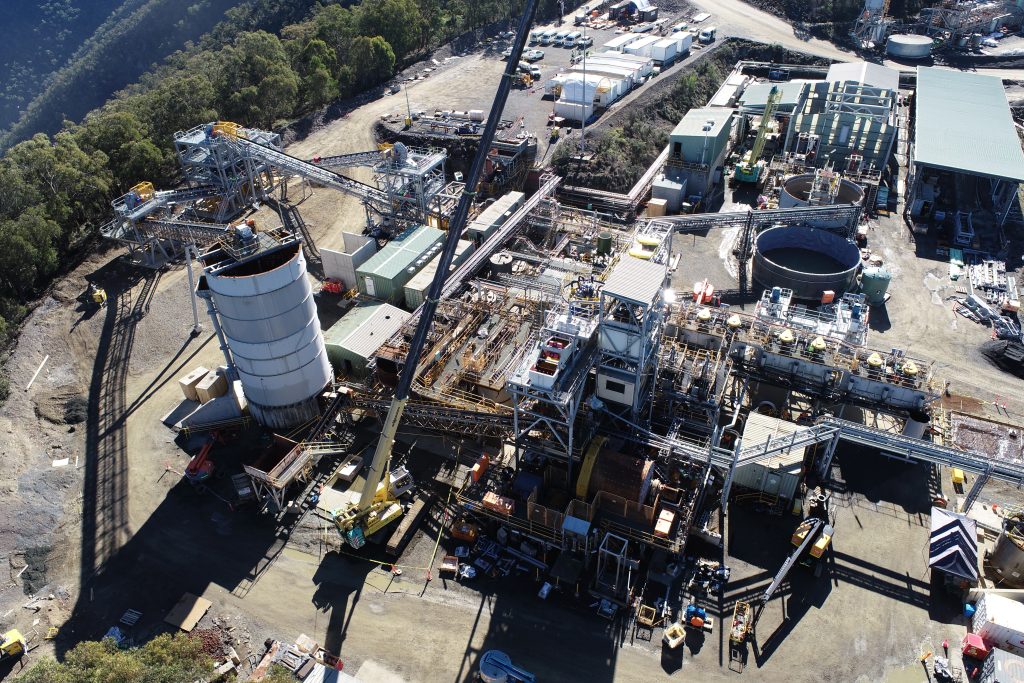
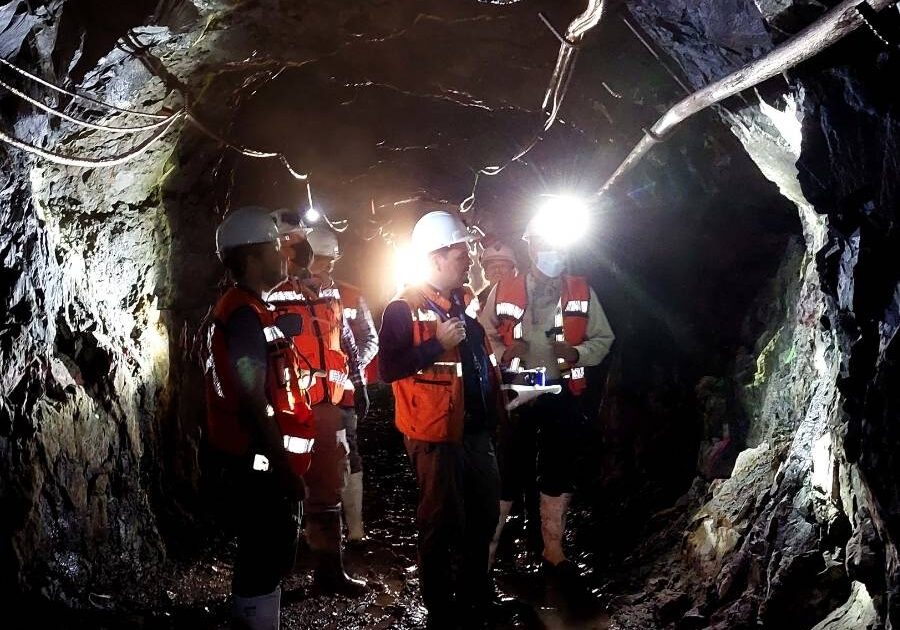
Beyond greenfield development, Perseus is executing an underground expansion at its Yaouré operation in Côte d'Ivoire. The CMA Underground development achieved a significant milestone in January 2026 with first ore mined from the Blika portal. Surface infrastructure is complete, with 800 metres of development achieved across four declines.
Underground mining typically delivers higher grades than open-pit operations, improving unit economics and supporting sustained cash generation over extended periods.
Craig Jones commented on underground development:
"We're seeing very good cycle times already and the quality of the rock and the quality of the mining is very good. So it's all looking positive for CMA Underground."
Jurisdictional & ESG Considerations Investors Should Weigh
Operating across multiple jurisdictions creates both diversification benefits and specific risk exposures that require evaluation. Perseus maintains operations in Ghana, Côte d'Ivoire, and Tanzania, each with distinct fiscal and regulatory frameworks.
Operating Across Multiple African Jurisdictions
Jurisdictional diversification reduces concentration risk but introduces complexity. Each operating country presents different royalty regimes, taxation structures, and regulatory requirements. Notably, Perseus disclosed in its December 2025 quarterly report that a 2% royalty increase in Côte d'Ivoire affecting Yaouré and Sissingué is currently under negotiation with the government, illustrating the ongoing nature of fiscal risk in the sector.
Craig Jones addressed the company's geographic focus:
"We are an African gold mining company. That's how the company has been built and that's where our strengths really lie. That's where our focus will continue to be. The company's earned its reputation of being able to build and operate mines in Africa, not to mention the great balance sheet that the company has."
Why Financial Strength Matters
The current gold market features relatively few producers with the combination of scale, cash generation, and balance sheet strength that Perseus demonstrates.
Scarcity of Net-Cash Gold Producers
Gold producers that carry debt from previous development cycles and hedge books l limit upside exposure, or streaming arrangements that transfer cash flow to third parties. The combination of zero debt, minimal hedging, and substantial cash reserves positions Perseus favourably within its peer group.
Craig Jones explained the company's hedging philosophy:
"I think our hedging policy is prudent. Even more recently, we've been focusing on just buying put options because they've been relatively cheap. We're finding ways of having more exposure to the upside but at the same time protecting the downside moving forward."
Capital Returns
During the December 2025 quarter, Perseus paid US$45 million in dividends to shareholders. A net cash position provides management with choices unavailable to debt-funded peers: funding acquisitions without issuing shares, increasing dividends, repurchasing stock, or accelerating mine development. Whether Perseus pursues any of these options remains a management decision. The cash position means external financing would not be required to do so.
The Investment Thesis for Perseus Mining
- Internal funding capacity reduces reliance on volatile capital markets and eliminates financing risk during development phases.
- Growth funded without equity issuance preserves per-share value and allows existing shareholders to capture full project returns.
- High operating margins support sustained cash generation even during periods of cost pressure or commodity price moderation.
- Net cash positions combined with undrawn credit facilities enable disciplined growth or opportunistic acquisitions without leverage constraints.
- Financial resilience has become increasingly favoured by institutional investors seeking quality exposure in the gold sector.
- Jurisdictional diversification across established mining regions provides operational flexibility while requiring ongoing monitoring of fiscal developments.
- Prudent hedging strategies that protect downside while maintaining upside exposure align risk management with shareholder interests.
Perseus Mining reported US$755 million in cash and bullion as of 31 December 2025. This balance was generated from mine operations during a period when the company paid dividends, funded development capital, and carried no debt. Whether this financial position translates into superior shareholder returns depends on how management allocates capital going forward. What the balance sheet does provide is funding flexibility that reduces reliance on external capital markets.
TL;DR
Perseus Mining reported US$755 million in cash and bullion as of December 2025, with zero debt and US$400 million in undrawn credit facilities. This financial strength enables the company to self-fund its Nyanzaga Gold Project (targeting first gold in January 2027) and the CMA Underground expansion at Yaouré without equity dilution or debt financing. The company paid US$45 million in dividends while building cash reserves from operating margins. In a sector where previous cycles saw shareholders suffer from debt, dilution, and streaming arrangements, Perseus's balance sheet discipline offers reduced execution risk and full project value retention for existing shareholders.
FAQs (AI-Generated)
As of December 2025, Perseus Mining reported US$755 million in cash and bullion, comprising US$683 million in cash and US$72 million in bullion inventory, alongside US$400 million in undrawn credit facilities.
Perseus funds development entirely through operating cash flow rather than debt, equity issuance, or streaming arrangements. This approach preserves per-share value and eliminates financing risk during construction phases.
Perseus is targeting first gold pour at Nyanzaga in January 2027. As of December 2025, US$262 million had been committed, representing 50% of the approved budget, with the project reported on time and on budget.
Perseus operates gold mines across three African jurisdictions: Ghana, Côte d'Ivoire (Yaouré and Sissingué), and Tanzania (Nyanzaga development project).
Perseus maintains a prudent hedging strategy focused on buying put options to protect downside while preserving upside exposure to gold prices, rather than locking in prices through forward sales.
Analyst's Notes





Subscribe to Our Channel



Stay Informed






















