




Peru's Copper Push Arrives Too Late for a 530,000-Tonne Concentrate Deficit



Peru's permit cuts may add copper by 2032, but falling grades and community disputes limit supply now. See why operating mines and advanced developers differ.
- Peru plans to remove 27 permit requirements and aims to produce about 1 million more tonnes of copper a year by 2031-2032. Any new supply is years away, so the plan is unlikely to change the 2026 copper market.
- CERA's 2026 concentrate deficit of about 530,000 tonnes and LME backwardation point to a current shortage, best captured through producers with operating mines.
- Declining grades and social conflict, neither on the permit list, hold Peru's 2026 output below its 2025 record. Developers with signed community agreements and completed environmental studies are the ones positioned to benefit.
- Peru has yet to remove the permit requirements, and talks with potential buyers are not offers. Its copper developers remain a longer-term investment prospect.
Peru Permit Reform Targets New Copper Supply as LME Prices Signal a Shortage
Peru's Minister of Energy and Mines, Guillermo Shinno, told Reuters on 24 September that the government has identified 27 of roughly 100 mining permitting requirements for removal. It is also targeting about 1 million tonnes of added annual copper output within five to six years. About 20 miners, including Chinese and US groups, have approached President Keiko Fujimori's two-month-old administration.
The added tonnes equal about 4% of the 23.6 million tonnes of world mine output the International Copper Study Group (ICSG) forecast for 2026 in April. They arrive in 2031 to 2032, but the shortage is current. S&P Global puts the 2026 concentrate deficit at about 530,000 tonnes. LME cash copper settled at $14,740/t on 25 September, $93 above the three-month price. That backwardation, where metal for immediate delivery costs more than metal for later delivery, signals short nearby supply.
Falling Ore Grades and Social Conflict Hold Peru Copper Output Below Its 2025 Record
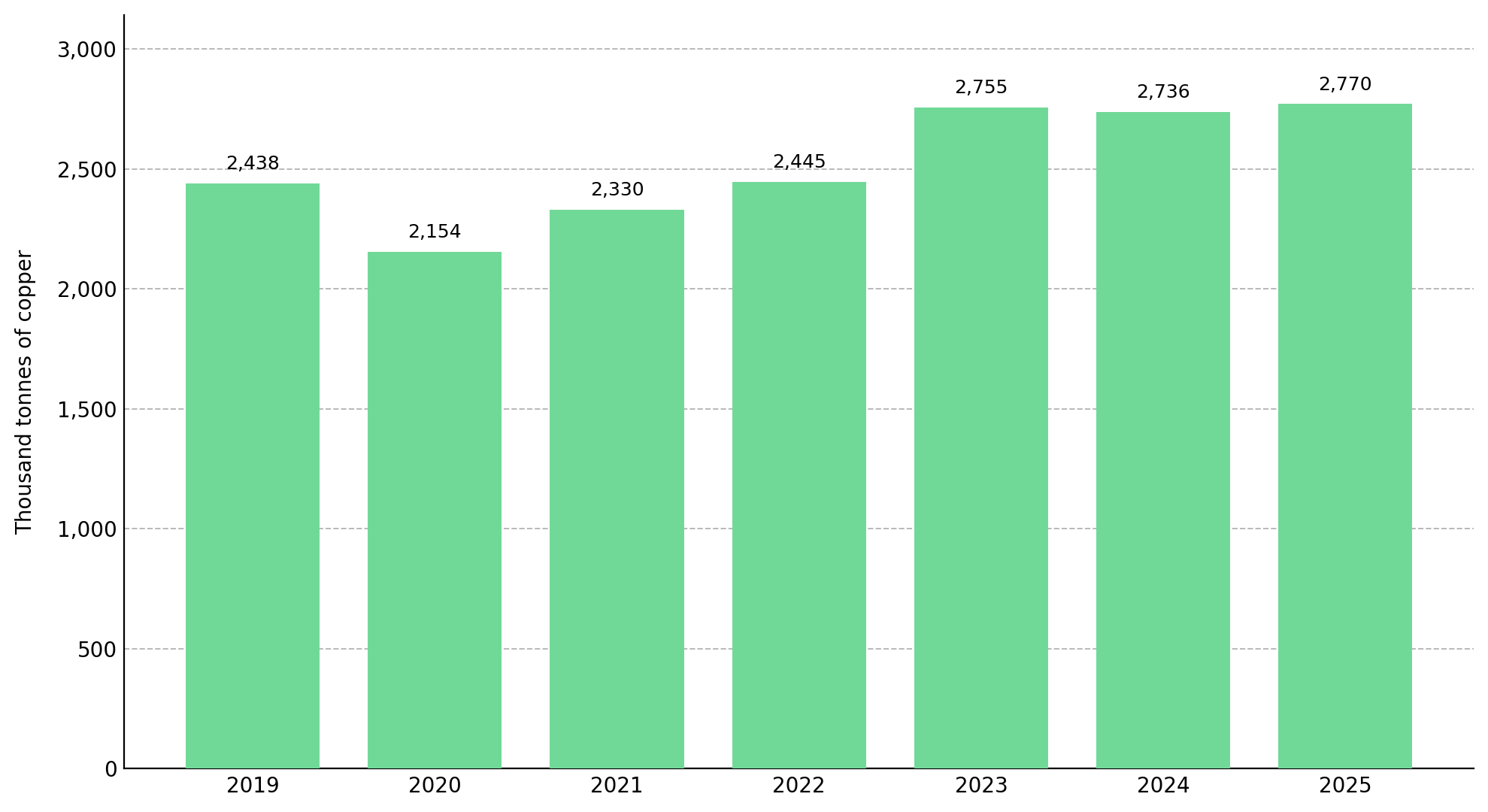
Peru, the world's third-largest copper producer, mined 2.755 million tonnes in 2023, 2.736 million in 2024 and a record 2.770 million in 2025. Minister Shinno puts 2026 output at 2.5 to 2.7 million tonnes, citing declining ore grades and recurring social conflicts. Lower grades mean more rock milled per tonne of copper. As a result, most of the roughly $7 billion of mining investment slated for 2026 sustains existing mines rather than adding tonnes.
Capital is competing for Peruvian projects anyway. China is Peru's largest copper customer, and the US signed a critical minerals cooperation agreement with Peru in February. The supply pressure extends beyond Peru: ICSG cut its 2026 world mine growth forecast to 1.6% from 2.3%, citing the DRC, Chile and Indonesia.
Permit Cuts Reprice Paperwork Risk, Leaving Community Risk With Peru Copper Developers
ICSG forecast in April that tight concentrate would hold 2026 refined output growth to 0.4%, leaving custom smelters to absorb the squeeze. Peru-focused developers collect none of it. Their valuations turn on permitting and buyer appetite, and that appetite is already in evidence. Chinalco bought Los Calatos in July while the project was still in environmental studies. First Quantum wants to advance La Granja, a $2.4 billion project on government estimates, according to Minister Shinno.
The 27 removals take effect, and paperwork-delayed projects gain time, while CERA's concentrate deficit keeps prices supported. Social conflict keeps stalled projects in place, output stays within guidance, and any re-rating on the permit headline reverses.
The reform's value comes down to three questions. Does the project's next approval appear on the 27-permit list? Are its community agreements signed? Are its environmental studies complete? Developers that clear all three are the assets Chinese and US buyers are circling. Those still awaiting community consent gain nothing from the headline.
The permits remain identified rather than repealed, and ministry meetings are not bids, so no takeover premium is yet on offer. Near-term copper exposure is better held through producers with operating mines, with Peru developers sized as long-dated options
Copper Supply Scarcity Rewards Peru Projects That Clear Community Hurdles
Peru's reform changes the copper supply picture for the 2030s, not for 2026. The constraints holding output flat are geological and social, and no permit list removes either.
Value sits in permitted scale and signed community agreements. Chinese and US interest puts two groups of buyers behind projects that clear those hurdles. The IEA's projected 25% copper supply deficit for 2035 belongs in their valuations as long-dated price support.
Each year without new tonnes raises the scarcity value of the projects that do reach construction. That value goes to patient holders of developers with a secured social license.
Analyst's Notes





Subscribe to Our Channel




Stay Informed


