




Gold’s Inflation Hedge Falters as Oil Lifts Fed Bets, Highlighting Low-Cost Miners’ Margin Edge


Gold beat its usual 21-day return after more than half of 44 Fed hikes; falling real yields and a weaker dollar would strengthen the rebound case.
- On September 28, spot gold fell 3% to $4,156.45/oz, its lowest since August 5, as higher oil strengthened Fed hike bets.
- After the US rejected Iran’s Hormuz proposal, Brent rebounded; CME FedWatch put the October hike probability at 70.3% on September 28, making interest-paying bonds more attractive than gold.
- Gold was 8.9% below the World Gold Council’s August 31 close of $4,563/oz. Its June 4 review found gold beat its usual one-month return after more than half of 44 Fed hikes, leaving room for a rebound if the dollar and real yields fall.
- For an unhedged producer selling at spot, September 28’s 3% drop implies about $128 less revenue per ounce at unchanged sales volume; lower-cost producers have more margin to absorb that loss.
- If October-hike odds fall below 50% before the October 27–28 Fed decision, weaker rate pressure would improve the case for a gold rebound.
Oil Rebound Lifts Fed Hike Odds & Drives Gold to Seven-Week Low
Reuters reported spot gold down 3% to $4,156.45/oz at 08:14 GMT on September 28, its lowest since August 5. Brent rebounded after the US rejected Iran’s Hormuz proposal, raising inflation concerns as CME FedWatch put the probability of an October Fed hike at 70.3%. Higher rates make interest-paying bonds more attractive than gold.
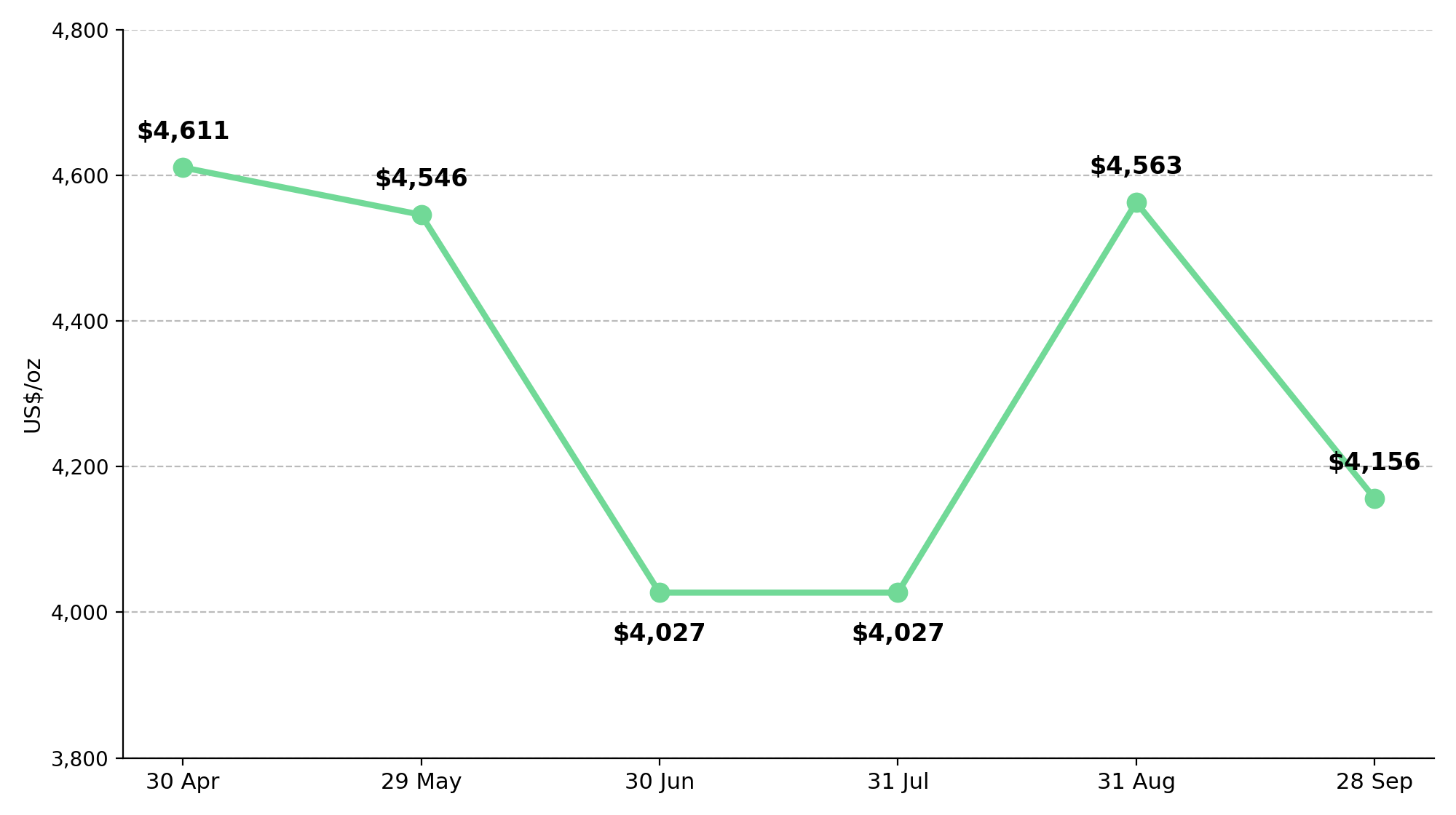
The World Gold Council recorded a 13% August gain and a month-end close of $4,563/oz; the September 28 spot quote was 8.9% lower. At unchanged sales volume, an unhedged producer selling at spot would receive roughly $128 less per ounce than before the drop. Low-cost producers retain more margin to withstand further weakness while keeping exposure to a gold rebound.
Energy Inflation Raises Treasury Yields & the Cost of Holding Gold
Brent’s rebound can raise US energy costs and inflation expectations, increasing the odds of another Fed hike. If those expectations lift Treasury yields, interest-paying bonds become more attractive than gold; a stronger dollar also makes gold costlier for buyers using other currencies.
The Fed’s September 16 policy statement raised its target range by 0.25 percentage point to 3.75%-4.00%, showing how inflation concerns have translated into tighter policy. Beth Hammack, Cleveland Fed President, warned that the public could come to accept elevated inflation as normal, a concern that supports keeping rates restrictive. Failed Hormuz talks could sustain oil and rate pressure, while progress that lowers oil could improve the case for a gold rebound.
Fed Hike Repricing Keeps Gold Under Pressure Until the October Decision
Giovanni Staunovo, UBS analyst, warned that higher oil and Fed hike bets could keep inflation-adjusted US bond yields and the dollar elevated, weighing on gold ahead of the October 27-28 Fed meeting.
The World Gold Council reviewed 44 Fed hikes since 1997 and found that hikes tended to hurt gold when real yields and the dollar rose together. If gold remains lower during fourth-quarter sales, unhedged high-cost producers risk larger percentage margin declines than low-cost peers. Yet gold beat its usual 21-day return after more than half of those hikes, leaving room for a rebound if yields and the dollar fall.
August personal consumption expenditures inflation on September 30, September payrolls on October 2 and September consumer prices on October 14 could change hike odds before the meeting. A drop below 50% on CME FedWatch would weaken one source of pressure; falling real yields or a softer dollar would strengthen the rebound case.
Rate-Driven Gold Sell-Off Squeezes High-Cost Producer Margins More Than Diesel
High-cost unhedged gold producers lose a larger share of their per-ounce margin when gold falls. The World Gold Council’s August 24 cost review put average first-quarter 2026 all-in sustaining cost (AISC) at $1,785/oz, up 16% year over year for the 28th straight quarter of annual cost increases. It also reported that US diesel ended the quarter 54% above the prior quarter and that some smaller Western Australian mines suspended activity amid fuel shortages.
Fuel exposure differs by producer. Orla Mining’s May 11 first-quarter results put diesel at 4% of operating costs and estimated that a $10/bbl oil rise would add about $2.50/oz to 2026 AISC. Orla’s reported AISC of $1,668/oz was below the industry average, so its estimate illustrates fuel sensitivity at one producer.
For a producer selling unhedged gold at spot, September 28’s roughly $128/oz price drop would reduce per-ounce margin by about $128 if costs stayed fixed. Lower-cost producers with reliable fuel supply retain more margin at $4,156.45/oz while keeping exposure to a gold rebound.
Supply-Driven Inflation Turns Gold Into a Rate Trade & Shifts Producer Value
Gold is trading as a rate asset, not an inflation hedge, while the inflation comes from an energy supply shock that the Fed answers with hikes. The August rally did not survive the first oil rebound after the September hike.
For high-cost unhedged gold producers, the revenue line now carries the risk and the fuel line is secondary. Value sits with low-cost operators and royalty holders, whose margins absorb a lower price without an operating cost base behind them. The assumption that inflation lifts gold no longer holds when inflation is supply-driven and policy tightens against it.
The long-horizon read runs the other way. Rising costs and weaker prices defer marginal projects, which thins future mine supply, while central bank buying continues outside the rate cycle.
Analyst's Notes





Subscribe to Our Channel





Stay Informed






















