Rio2 Fenix Nears Fenix Commercial Production as Condestable Delivers, Two Expansion Studies Due by Year-End


Rio2 targets up to 25,000 tpd at Fenix Gold as December expansion studies on Fenix and Condestable frame its funding options after a weather-hit quarter.
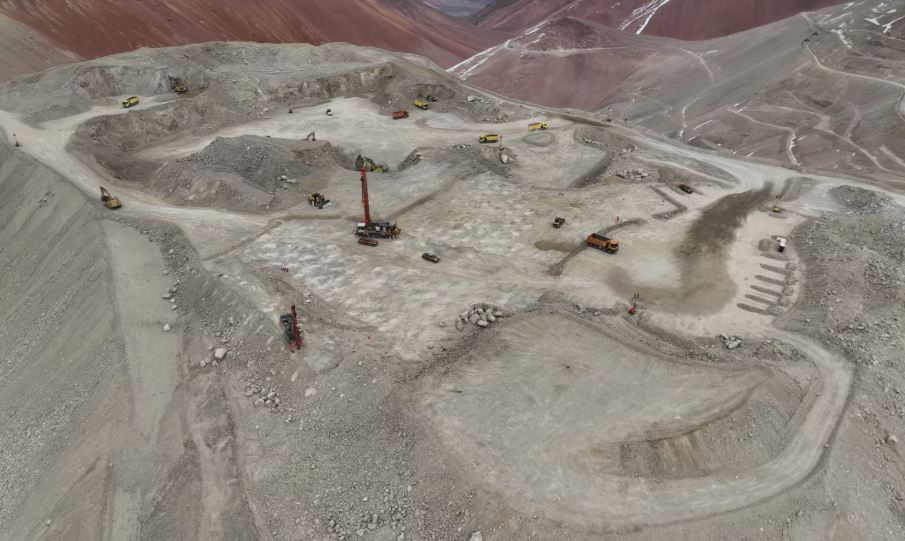
- Rio2 Limited is targeting commercial production at its Fenix Gold mine in Chile in the fourth quarter of 2026, with a run rate of 20,000 to 25,000 tonnes per day.
- The company can aim above the 20,000 tonnes per day design rate at Fenix because higher moisture in the ore means the heap leach process needs less water than expected.
- The Condestable copper mine in Peru produced 9.6 million pounds of copper in the third quarter of 2026, while severe snowstorms held Fenix to 8,500 ounces of gold.
- Rio2 expects a pre-feasibility study on the Fenix Phase 2 expansion and an amended technical report on the Condestable expansion by December 2026.
- Rio2 had $26.8 million in cash and $96.2 million in total debt, and Executive Chairman Alex Black named equity, debt and consolidation as the options for funding its growth.
Rio2 Limited (TSX:RIO) is closing its first year as a dual-asset producer with both mines heading into a study-heavy December. The Fenix Gold heap leach mine in Chile is targeting commercial production in the fourth quarter of 2026, and a pre-feasibility study (PFS) on its Phase 2 expansion is due before year-end. An amended technical report covering expansion options at the Condestable underground copper mine in Peru is expected around the same time.
Both operations are producing. Fenix is leaching at roughly 5,000 meters (m) above sea level, Condestable delivered steady copper output through the third quarter, and the company is targeting a Fenix run rate above its design capacity. The financing route for the next phase is less settled after a sharp pullback in metal prices and persistent cost inflation. All figures are in US dollars unless stated otherwise.
Fenix Gold Works Through a Weather-Disrupted Third Quarter
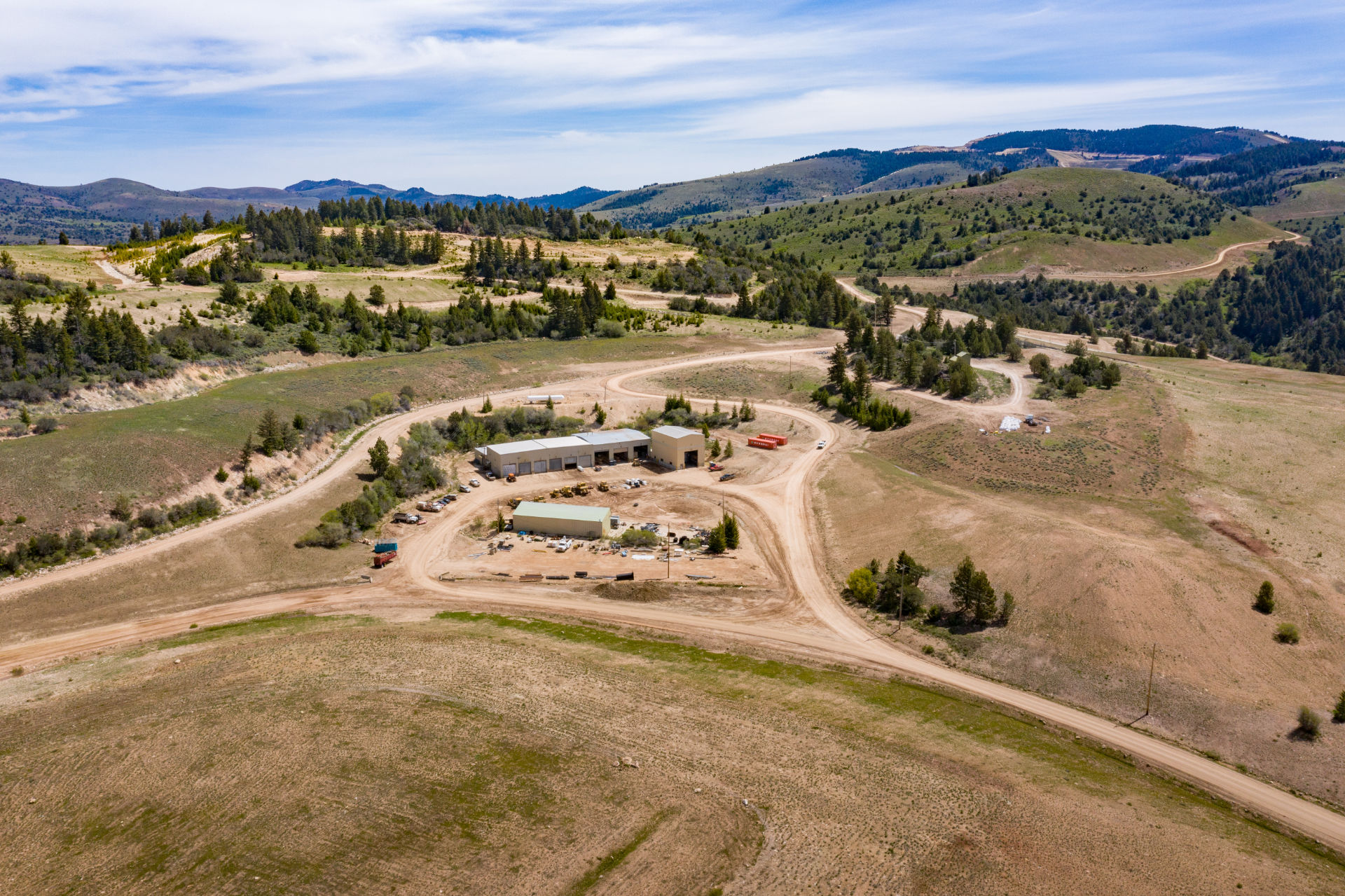
Fenix entered the third quarter after ramp-up gains in the second quarter, and severe weather then stalled that progress. Two major snowstorms in July and August, followed by further snowfall and high winds in September, left up to 5 m of snow across the site and disrupted access to Fenix South and the leach pad. The leach pad and the adsorption, desorption and recovery plant kept operating throughout.
Fenix produced 8,500 ounces (oz) of gold in the quarter at a cash cost of $2,370/oz sold and an all-in sustaining cost (AISC) of $2,615/oz, according to the company's November 10, 2026 results release. Rio2 added back $5.472 million of abnormal winter weather standby costs in its adjusted earnings. The company withdrew its 2026 gold production guidance after the storms and plans to issue guidance for 2027.
Rio2's sExecutive Chairman Alex Black said ground conditions at Fenix have changed the mine's water balance in the company's favour:
"We're targeting between 20,000 and 25,000 tons a day. And the reason we can do that is because we're not using as much water on the leach process as we thought, because there's more humidity in the ground than what we'd measured initially."
Snowmelt also meant Fenix did not need trucked water for a couple of months, Black said. He reported leach recoveries of 75%. Fenix South has a sulfide profile closer to surface than the rest of the deposit, which he described as manageable. Mining at Fenix Central is now opening, with North to follow, and Black expects both to behave as standard oxide material. Rio2 continues to target the 20,000 tonnes per day (tpd) design rate and commercial production in the fourth quarter of 2026.
Condestable Supplies Stability & a Second Growth Path
Condestable, acquired on January 30, 2026, supplied the steady output Fenix could not in the third quarter. The mine produced 9.6 million pounds (lb) of copper, 3,807 oz of gold and 93,854 oz of silver, with C1 cash costs of $2.62/lb and AISC of $3.40/lb. The existing precious metals stream added $1.08/lb to that cash cost. Production remains in line with guidance of 21,500 to 23,500 tonnes of payable copper equivalent for January 30 to December 31, 2026.
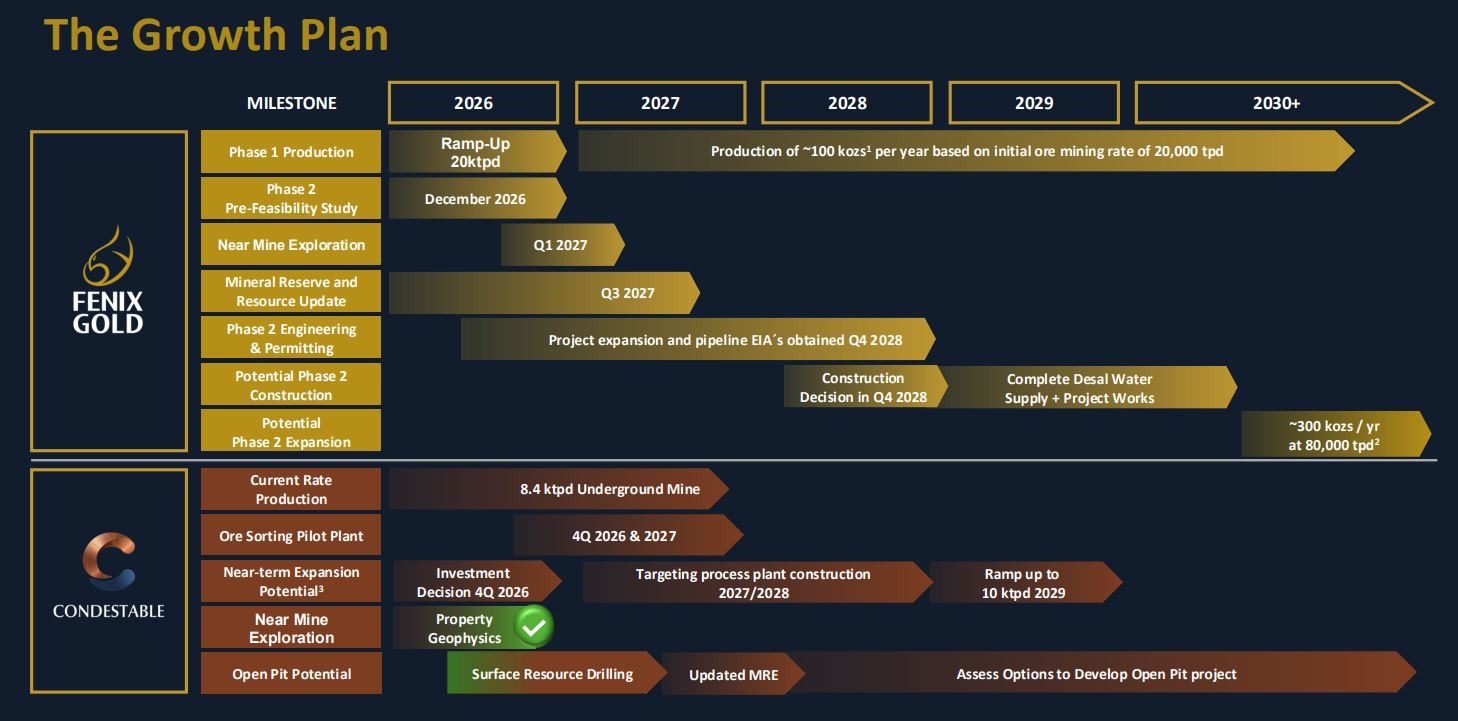
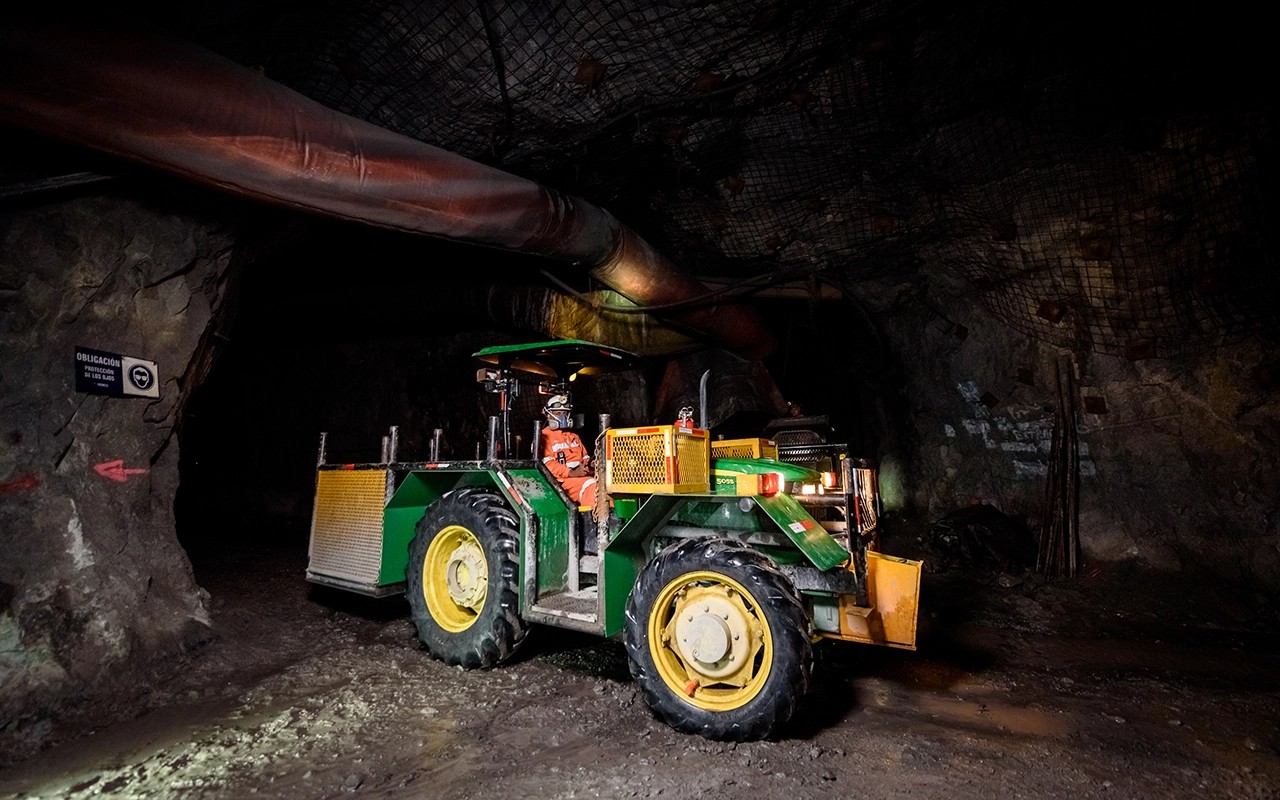
Black described Condestable as producing 25,000 to 27,000 tonnes of copper equivalent a year from one of the few underground copper mines in Peru, about a 90-minute drive from Lima. Rio2 has received approval through a modified environmental permit for a permitted increase to 10,000 tpd and intends to study 12,000 tpd. Rio2 is targeting an investment decision in the fourth quarter of 2026, process plant construction in 2027 and 2028, and a ramp-up to 10,000 tpd.
Rio2 is also running the first surface exploration programme at Condestable in 50 years, according to Black, aimed at near-surface resources that would cost less to mine than ore 900 m underground. An ore sorting pilot plant arrived on site in November to test roughly 10 million tonnes of mineralized waste on surface. Black said a credible path from about 25,000 tonnes to 50,000 tonnes of annual copper output would draw interest from larger copper producers that would not consider the current scale.
Interview with Alex Black, Executive Chairman of Rio2 Ltd.
Quarter Financials & Copper-Led Revenue
Consolidated revenue reached $115.4 million in the third quarter, split between copper sales of $55.921 million, gold sales of $53.931 million and silver sales of $5.623 million. Adjusted earnings before interest, tax, depreciation and amortization (EBITDA) were $50.0 million, and adjusted net income was $22.4 million.
Reported EBITDA was a loss of $1.8 million, and net loss attributable to shareholders was $28.452 million. Both figures include a non-cash $41.1 million fair value loss on the Condestable stream obligation. Rio2 attributed that loss to updated forecasts incorporating the 10,000 tpd expansion, an extension of production to 2041 and higher forecast gold and silver prices.
Operating cash flow was $22.5 million against $21.3 million used in investing and $23.5 million used in financing. Cash and equivalents fell to $26.8 million at September 30, 2026, from $46.4 million at December 31, 2025. The company has a total debt of $96.2 million.
Funding the Next Stage: Equity, Debt & Consolidation
Black named the balance sheet as a weakness and said Rio2 lacks the multi-mine history that lets larger producers lean on one asset while another slows. The original plan assumed internal cash flow would fund growth at steady metal prices. He said copper has fallen about $1/lb, from $6.50/lb to $5.50/lb, which leaves less margin to reinvest.
He listed three routes to capital. Equity remains available. Debt is harder because the company already has two streams, and security would need to be shared among lenders. Consolidation is the third, possibly with a larger company. Black, a large shareholder, called this a response to current conditions and said he would act in shareholders' best interest. The register includes BlackRock, Fidelity, Vanguard and Eric Sprott.
Costs remain the operating risk. Black cited labour in Chile, where a small company must recruit people suited to a junior's pace, and fuel supply uncertainty tied to Iran. Condestable unit costs ran about 8% above budget in the quarter on fuel and supplier pressure, constraints on the high-volume haulage fleet and lower treated tonnes in July. At Fenix, Black said small trucks suit current throughput, while a fleet of 793-class haul trucks would fit an 80,000 tpd operation.
Two Studies Due in December
Rio2 is assessing 80,000 tpd of ore and about 300,000 oz of gold a year in the Phase 2 PFS, against roughly 100,000 oz a year from Phase 1. Black said he hopes it lands in mid-December. Phase 2 depends on desalinated water, and Rio2 has signed memoranda of understanding with potential suppliers. Rio2 based its 2023 feasibility study on a gold price of $1,800/oz, Black said, so cost inflation rather than metal price is the main pressure on the numbers.
Fenix holds 1.8 million oz of reserves, 4.8 million oz of measured and indicated resources and 1.0 million oz of inferred resources. Rio2 is targeting near-mine exploration in the first quarter of 2027, a reserve and resource update in the third quarter of 2027, and a potential Phase 2 construction decision in the fourth quarter of 2028.
The Investment Thesis for Rio2
- Fenix Gold is leaching at 75% recoveries at roughly 5,000 meters above sea level, and Rio2 is targeting 20,000 to 25,000 tonnes per day as lower water use frees up throughput.
- Condestable produced 9.6 million pounds of copper in the third quarter at an all-in sustaining cost of $3.40 per pound and is tracking within its 2026 guidance.
- The Phase 2 pre-feasibility study, expected in December 2026, will show whether Fenix can move to 80,000 tonnes per day and about 300,000 ounces of gold a year.
- The Condestable technical report amendment and a fourth-quarter investment decision will define the route from 8,400 to 10,000 tonnes per day.
- Cash of $26.8 million against total debt of $96.2 million leaves equity, debt and consolidation as the funding options management has named.
- Catalysts include commercial production at Fenix, 2027 gold guidance and the cost assumptions in both December studies.
Rio2 has two producing assets and two studies arriving within weeks of each other. The December results will set the capital requirement that the funding decision has to meet.
Macro Thematic Analysis
Gold and copper producers spent much of the past two years with rising prices covering rising costs. Black said the past few weeks changed that picture, as precious and base metal prices fell. Costs have kept rising, with Black citing labor and fuel and Rio2 reporting supplier cost pressure at Condestable. Copper's move from $6.50/lb to $5.50/lb cuts directly into the margin Rio2 had planned to reinvest at Condestable.
The cost side is the larger issue for development-stage gold projects. Black noted that Rio2 based the Fenix feasibility study on $1,800/oz gold, a price well below recent levels, yet higher input costs still squeeze the expansion case. Financings that were close to completion for other developers will now look different from two months ago, he said.
Black, whose team sold its previous company Rio Alto, framed the downturn in terms of industry structure:
"I think one of the good things that comes out of all this controversy of inflation and metal prices is consolidation has to happen at a more rapid pace in this business, because there's just too many companies. [...] I just think this is a good time for companies to take a step back and look at the consolidation picture because it's essential for this business"
He said institutional holders back management teams that act on assets, and that mergers at the junior end stall when management teams wait for share prices to recover. In Chile, Black said only two gold companies have built mines, Rio2 and Gold Fields. This gives Rio2 operating credibility in a jurisdiction where larger producers have bought into existing mines. Copper-gold exposure at Condestable gives Rio2 a second commodity lever. A larger copper buyer would look at a 50,000-tonne-a-year operation that it would pass over at 25,000 tonnes, Black said. The Condestable expansion study is the first test of that case.
TL;DR:
Rio2 is targeting commercial production at Fenix Gold in the fourth quarter of 2026 and a run rate of 20,000 to 25,000 tonnes per day, helped by lower-than-expected water use. Fenix produced 8,500 ounces in a storm-disrupted third quarter, while Condestable delivered 9.6 million pounds of copper in line with guidance. Adjusted earnings before interest, tax, depreciation and amortization were $50.0 million. A pre-feasibility study on Fenix Phase 2 (80,000 tonnes per day, about 300,000 ounces a year) and an amended Condestable technical report are due in December. With $26.8 million in cash and $96.2 million in debt, Executive Chairman Alex Black named equity, debt and consolidation as funding options.
FAQs (AI-Generated)
Analyst's Notes





Subscribe to Our Channel





Stay Informed