




Rising Energy Costs Put PGM Recovery Tests in Focus as Platinum Falls 9.1%



Higher energy costs highlight how efficient PGM recovery can support returns through lower consumption and more saleable metal.
- Platinum’s October 2026 average price fell 9.1% from September, while Brent crude and European natural gas averages rose 7.0% and 12.1%, respectively, making energy costs a priority when assessing returns from platinum group metals (PGMs) projects.
- Explorers can use processing tests to compare metal recovery with operating costs and capital expenditure (capex), helping identify which development options merit further funding.
- Lower metal content in used catalysts can increase processing costs per recovered ounce of platinum, palladium, or rhodium, making tests on the intended feedstock essential to recycling cost estimates.
- Local electricity rates and power contracts shape operating costs, while connection requirements affect upfront spending, making site-specific assumptions essential to project comparisons.
- Processing improvements support returns when additional metal revenue or lower operating costs justify the required capex across a range of metal and energy prices.
Platinum’s Pullback Makes Processing Economics More Consequential
Platinum averaged US$1,621 per troy ounce in October 2026, down 9.1% from September, according to the World Bank Group. Over the same period, average Brent crude and European natural gas prices rose 7.0% and 12.1%, respectively. These changes can narrow projected margins where a project’s energy costs rise while the selling price of its recovered platinum falls.
Using less energy to produce the same saleable output reduces energy costs at a given power or fuel price. Recovering more metal from the same feed can increase operating cash flow when the additional revenue exceeds the extra treatment costs. Project returns must also account for the capex required to achieve those gains. Platinum, palladium, and rhodium require separate price and recovery assumptions because each metal contributes differently to revenue.
How Local Power Prices Shape PGM Processing Returns
Energy costs per saleable ounce depend on consumption, metal recovery, and the electricity or fuel price payable at the proposed site. Local tariffs, supply contracts, and connection requirements therefore determine how processing efficiency translates into projected costs.
US Electricity Price Differences Increase the Importance of Site Selection
The US Energy Information Administration (EIA), in its October 23, 2026, Electric Power Monthly, reported an average industrial electricity price of 9.64 cents per kilowatt-hour (kWh) for August 2026, a calculated increase of 7.3% from August 2025. State industrial averages included 7.21 cents per kWh in Texas and 20.03 cents per kWh in Massachusetts. These preliminary figures provide context for site comparisons but do not establish a proposed facility’s electricity rate.
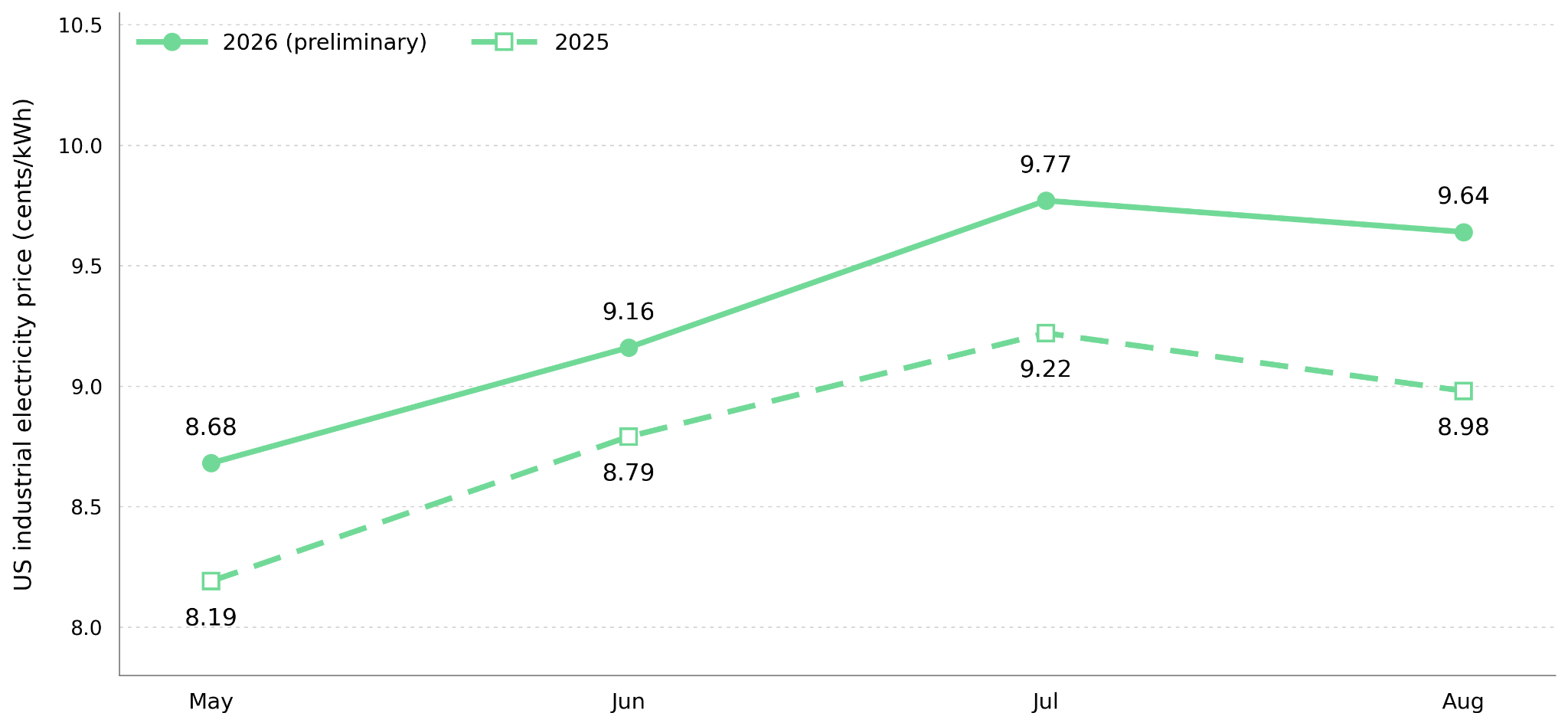
Process comparisons should measure electricity use per saleable ounce, since lower consumption per metric ton can be offset by lower recovery. Feasibility studies should also identify connection spending, supply reliability, and whether power prices are fixed or market-linked, because these conditions affect capex and operating cash flow.
Brazil’s Green Tariff Flag Limits November Electricity Surcharges
Brazil’s National Electric Energy Agency (ANEEL) announced on October 30, 2026, that November would retain the green tariff flag, with no surcharge under the tariff-flag system. Increased rainfall supported hydropower generation, reducing the need for more expensive thermal generation. Project studies still require site-specific electricity rates to estimate processing costs, because the decision concerns one bill component for a single month.
Local Energy Prices Determine the Savings From Efficient PGM Recovery
Reducing energy use per saleable ounce can improve PGM project returns when the resulting savings justify the required capex. Higher international energy benchmarks increase the potential value of efficiency improvements where those price changes feed through to project costs.
Research Partnerships Broaden PGM Processing Options
Technische Universität Bergakademie Freiberg (TUBAF) describes limited conventional recovery from the unconventional, oxidized, or low-sulfide ores being studied in BioPlat. Running from September 2026 through August 2029, the program investigates pretreatment using microorganisms to expose PGM-bearing minerals before chemical leaching dissolves the metals for subsequent recovery. Planned pilot-scale testing, environmental assessment, and economic evaluation will examine the approach’s potential for further development.
ValOre Metals’ November 10, 2026, memorandum of understanding (MoU) with the German Federal Institute for Geosciences and Natural Resources (BGR) brings specialist expertise to processing research at Pedra Branca, initially focused on weathered material. The work can help compare recovery options before further development spending.
More Complex Scrap Makes PGM Recycling Returns Depend on Recovery Efficiency
The World Platinum Investment Council (WPIC) estimated second-quarter 2026 recycled platinum supply at 466,000 ounces, up 9% year over year. The report identified lower PGM content, older catalysts, and harder-to-process material as factors causing recovered-metal growth to lag growth in physical catalyst volumes.
Variable Feedstock Makes Recovery Testing Essential to Cost Estimates
Lower recoverable metal content per metric ton means a plant must process more material to produce the same saleable metal output, potentially increasing handling and treatment costs per ounce. Testing the intended commercial feedstock, including variations in its composition, supports the recovery and cost estimates used in feasibility studies.
Where feedstock payments precede product sales receipts, the recycler needs cash to fund the processing cycle. Higher PGM prices can increase both sales revenue and feedstock costs, making procurement terms, processing expenses, and payment timing essential to assessing cash flow.
Lifezone Metals is incorporating potential processing improvements identified in an internal review into plant design and feasibility work for its proposed US platinum, palladium, and rhodium recycling facility. Feasibility-study completion and a final investment decision (FID) are targeted for the first quarter of 2027. Further testing and negotiations on a preferred existing industrial site can help define the costs and operating assumptions behind that decision.
Price Volatility Strengthens the Case for Testing PGM Recovery Economics
In its October 2026 Commodity Markets Outlook (CMO), the WBG projects a 32% year-over-year increase in its energy price index for 2026, followed by an 11.5% decline in 2027. It forecasts annual average platinum prices of US$1,950 per troy ounce in 2026 and US$1,750 in 2027.
Lower energy prices reduce the cash savings from a given reduction in consumption, potentially lengthening the time needed to recover the improvement’s capex. Higher recovery can still add operating cash flow at lower metal prices when additional sales revenue exceeds the extra treatment costs.
Economic studies should test how changes in recovery, local energy prices, feedstock terms, and capex affect projected cash flow. Staging development spending around completed testing can then direct further funding toward processing options supported by stronger recovery and cost estimates.
The Investment Thesis for Platinum Group Metals
- Explorers with repeatable processing results can compare recovery options against operating costs and capex, providing a firmer basis for allocating development funding.
- Proposed recyclers need tests on intended commercial feedstock, defined procurement terms, and feasibility studies to estimate saleable PGM output and cash flow after feedstock purchases and processing costs.
- Larger-scale trials can test whether laboratory recovery results and energy requirements remain achievable as throughput rises, strengthening the estimates used to assess construction spending.
- Local power prices, supply reliability, and connection requirements shape the operating costs and capex used to compare development options.
- Processing improvements support project value when additional revenue or cost savings justify their capex under a range of PGM prices and local energy costs.
Efficient recovery can expand future PGM supply while improving the cash generated from mineral deposits and recycled materials. Exploration and recycling offer complementary routes to that opportunity, creating value when additional metal revenue or lower processing costs justify development spending. Projects that demonstrate these benefits across different metal and energy prices provide a stronger basis for committing capital, with returns supported by processing performance alongside exposure to commodity prices.
TL;DR
Efficient PGM recovery can improve project economics when additional metal revenue or energy savings justify operating costs and development spending. Explorers use processing research to compare recovery options, while proposed recyclers need testing that reflects their intended commercial feedstock. Local electricity prices, supply contracts, and connection requirements determine actual energy exposure. Recovering more metal does not automatically improve returns, particularly when processing or procurement costs also rise. The strongest investment case combines repeatable testing, credible cost estimates, and projected cash flow that supports development across different metal and energy prices.
FAQs (AI-Generated)
Analyst's Notes





Subscribe to Our Channel













Stay Informed


