




Dune Oil Targets First Oil From 27.6M-Barrel M47 & Raises Fund for C-1 Sidetrack


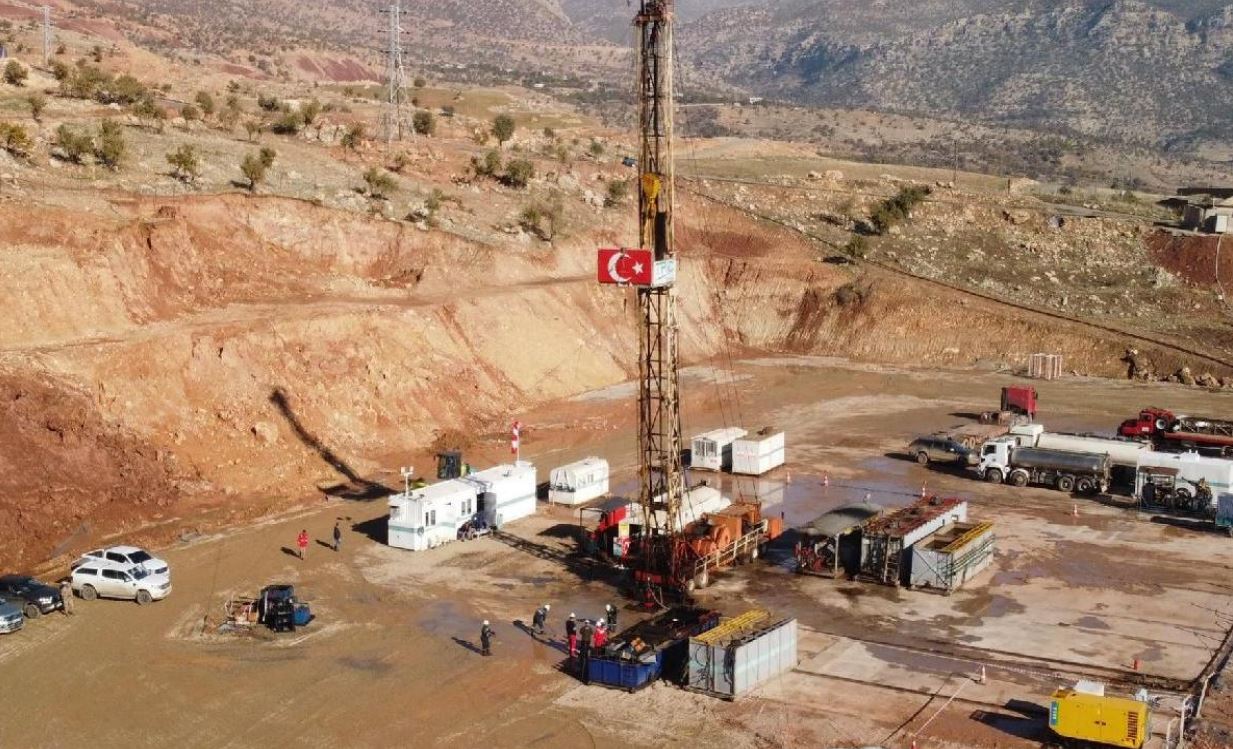
Dune Oil puts C-1 sidetrack production first as TPAO adds Gaziler and Çardaklı discoveries north of Block M47 and seismic moves to execution.
- Turkish Petroleum announced the Gaziler and Çardaklı oil discoveries, including a field directly north of Dune Oil’s Block M47.
- Dune Oil is putting its first capital into a sidetrack of the C-1 discovery well, aiming to build cash flow before taking exploration risk.
- Management attributes C-1’s earlier production problems to 3 failed cement jobs and plans a lateral completion across the fractured crest.
- At a US$72 oil price, the company estimates a US$50 per barrel netback, using a 130-kilometer truck route to a domestic refinery.
- A raise of up to C$8.3 million funds seismic and drilling, with seismic completion targeted for February 2027.
The Cudi-Gabar region of southeastern Türkiye has gone from no oil output in 2021 to 83,300 barrels per day (bbl/d), and state operator Turkish Petroleum (TPAO) is targeting more than 100,000 bbl/d in 2027. Dune Oil (CSE:DUNE) is earning a 29% working interest in Block M47, a light-oil discovery in the middle of that trend. An independent evaluation by Chapman Hydrogen and Petroleum Engineering assigns the North Field a best-estimate contingent resource (2C) of 27.6 million barrels (MMbbl), company gross.
TPAO announced 2 new discoveries, including a field directly north of M47. A day later, Dune Oil awarded the contract for its 2026 seismic programme. Management is putting the first drilling dollars into the well where oil has already been found, funded by a brokered offering of up to C$8.3 million.
TPAO’s New Discoveries Extend the Trend North of M47
The Gaziler and Çardaklı discoveries raise TPAO’s producing fields in Cudi-Gabar from 8 to 10. Gaziler lies directly north of M47, with its first well about 4 to 5 kilometers (km) from the block. TPAO reports roughly 135 MMbbl of oil-in-place potential across the area under evaluation and plans 40 new wells across Gaziler and Çardaklı. Oil in place is not a recoverable volume.
Closer still, Turkish publication Enerji Günlüğü reported in August 2026 that TPAO had identified 22 well locations in its Mehmet İrfan Güler oil field, on licences 1 to 2 km north of Dune Oil’s C3 and C4 licences. Management said the new northern and northwestern discoveries de-risk, on an exploration basis, a section of M47 the company had not been targeting before this news.
The geological argument rests on traps and charge. In this terrain the anticlines that form traps are visible at surface, and they continue onto the M47 side of the line. Every regional field produces from the same fractured carbonates, and oil charge is proven 2 to 4 km north of the block. Those structures on M47 are undrilled, and neighboring results are not necessarily indicative of M47.
Production First: Sequencing the C-1 Sidetrack
Dune Oil ranks its spending by certainty. Chapman’s 2C estimate for the North Field carries an unrisked net present value at a 10% discount rate (NPV10%) of US$734 million to Dune Oil’s share, or US$594 million risked at an 81% chance of development. Neither figure is fair market value.
The top priority is a sidetrack of the C-1 discovery well, where oil was brought to surface, logs are strong, and Dune Oil’s technical team and consultants agree it is an oil well. The next well would step out about 200 meters (m) east or west and target the same reservoir. The northwestern areas near TPAO’s discoveries come later, and the South Lead, 10 to 15 km south, is a secondary target that may or may not be drilled.
President and Chief Executive Officer of Dune Oil, Scott Lower, tied the order of work to the size of the budget:
“The first priority is getting the wells that we have discoveries on producing. That’s always the first priority because capital is scarce. Capital is limited. We don’t have the half a billion dollar budget. We want to prove to investors that we can produce from the wells we have drilled already.”
TPAO has spent about half a billion dollars drilling in the region and brought on 150 producing wells in 4 years. Lower said production of about a million dollars a month would get the company going. The work programme also includes a re-entry of the C-2 well for deepening and testing.
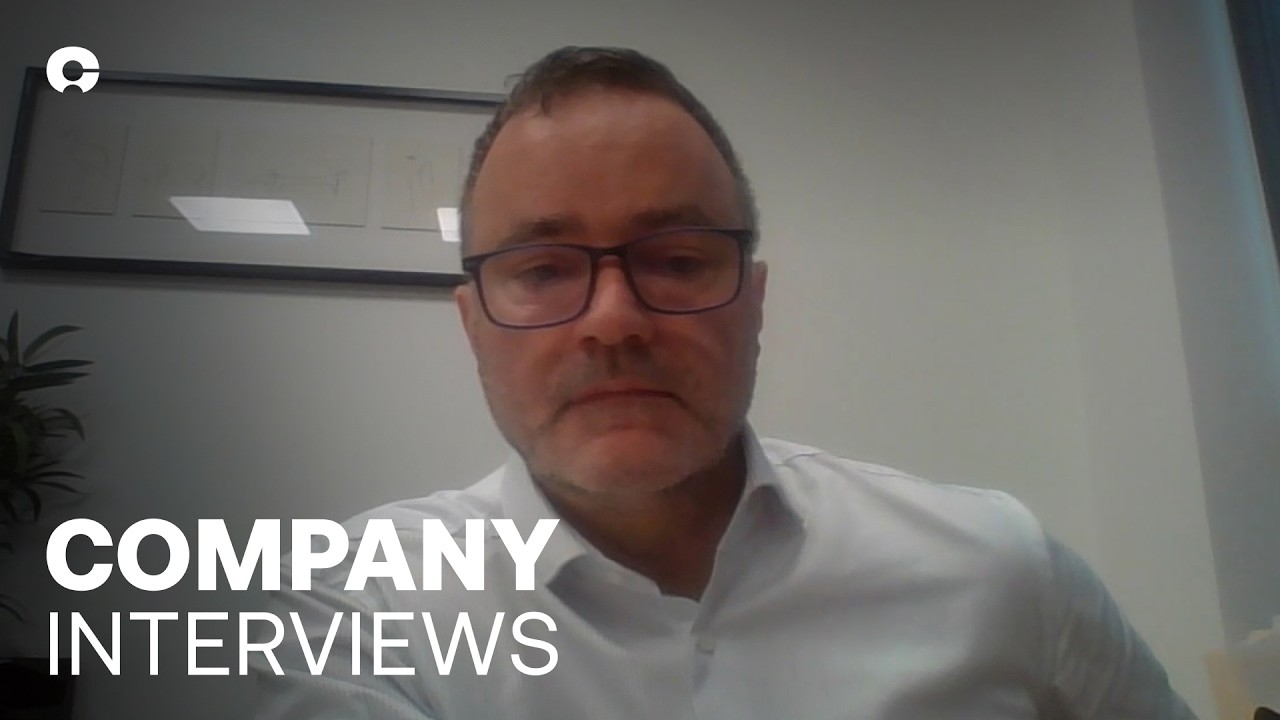
Interview with Scott Lower, CEO of Dune Oil
A Completion Problem, Not a Reservoir Problem
C-1 has not yet delivered sustained production, which management attributes to well mechanics. Lower said 3 failed cement jobs made it impossible to isolate and produce the zone, a fault that can be repaired, unlike a poor reservoir. The well encountered more than 70 m of gross oil pay and 38 m of net pay in 32.4° API light oil.
Completion design drives deliverability in these tight carbonates, which produce through fractures. Lower ranked a vertical well as the weakest completion, a well deviated at 45 degrees through the carbonate as second, and a horizontal lateral of 200 to 300 m as best. Anticlines fracture most at the crest, then on the forelimb, so a lateral drilled across the crest and into the forelimb intersects more fracture networks.
The plan has been peer-reviewed by 4 consulting engineers with experience in 30 countries. The same carbonate reservoirs produce in Oman, Saudi Arabia, Iraq, and Iran, and Dune Oil intends to apply completion methods proven there. The company named 2 engineering advisors to plan the C-1 and C-2 re-entries with fractured-carbonate experience.
Netbacks & an Established Route to Market
Türkiye imports more than 85% of the roughly 1 million bbl/d it consumes, so a domestic barrel has a buyer. Oil from M47 can be trucked about 130 km to the Tüpraş refinery in Batman for around US$5 a barrel, and the government royalty is fixed at 12.5%.
At a US$72 oil price, the company estimates a netback of US$50 per barrel after a US$9 royalty, US$8 of operating cost, and US$5 of trucking. It also estimates a well payback of about 2 months and a first-year netback of US$5.5 million per well. The netback rises to US$75 at US$100 Brent. A pipeline completed in 2026 into the Esma Çevik field adds more than 150,000 barrels of oil equivalent per day of capacity.
Operating cost per barrel falls as volume rises, while royalty and trucking stay fixed. Dune Oil plans to twin C-1 and build a small well battery around it, so tanks are paid for once and a single truck route serves every well.
Funding the 2027 Work Programme
The offering is the gating item for this sequence. Dune Oil is raising up to C$8.3 million at C$0.10 per unit, each unit comprising 1 share and 1 warrant exercisable at C$0.125 for 36 months. Units are sold under the listed issuer financing exemption, so the shares are free trading. Lower put the financing at about a C$16 million market capitalisation. Dune Oil’s corporate presentation compares its US$0.90 per 2C barrel with a US$1.79 median for international non-producing peers.
Legacy convertible debentures converted into shares at C$0.15, leaving 2 or 3 funds as large shareholders. The only other obligation Lower cited is a C$1 million promissory note paid from proceeds, leaving about C$7.3 million at a full raise. Dune Oil allocates C$5.7 million to seismic and drilling.
Dune Oil’s share of the next 2 wells is up to 80% of cost, which Lower called the upper threshold, with other parties in discussions to contribute. His estimates are about US$1.3 million net for the C-1 work, US$500,000 to US$600,000 for seismic, and about US$2.2 million for the company’s interest in a new well, roughly US$4 million to US$4.5 million in total. The seismic programme covers about 45 km across 6 lines, with mobilization in November 2026 and completion targeted for February 2027. US$200,000 of its estimated US$600,000 net budget has been advanced.
The Investment Thesis for Dune Oil
- Dune Oil is earning a 29% working interest in a light-oil discovery with an independently evaluated best-estimate contingent resource of 27.6 million barrels.
- Turkish Petroleum has added the Gaziler and Çardaklı discoveries, and identified 22 well locations within 1 to 2 kilometers of the block.
- Management is directing capital to the C-1 sidetrack and nearby step-out wells first, so cash flow from proven oil can fund later exploration.
- The company estimates a netback of US$50 per barrel at a US$72 oil price, supported by a 130-kilometer truck route to a domestic refinery in a country that imports more than 85% of its oil.
- The financing of up to C$8.3 million clears the remaining promissory note and funds seismic and drilling, at a cost of material dilution.
- Monitor the C-1 sidetrack test results and seismic completion targeted for February 2027 as the next re-rating markers.
The thesis turns on a single well test. A sustained flow rate from C-1 would support moving contingent resources toward reserves, while a weak test would leave the valuation tied to exploration.
Macro Thematic Analysis
Türkiye spends about US$35 billion a year importing oil, with about 56% of crude sourced from Russia and about 16% from Iraq. Domestic output covers roughly 1 in 10 barrels consumed. The Cudi-Gabar region now supplies more than half of Türkiye’s onshore output and about 8% of national demand, and cumulative production has passed 50 MMbbl since 2021.
TPAO is targeting a roughly 30% increase in Cudi-Gabar production through its field development programme. The Gaziler and Çardaklı discoveries bring its regional producing fields to 10, and the 40 planned wells add drilling activity directly adjacent to M47.
Lower tied M47’s pricing advantage to refining capacity inside the country:
“There’s a refinery 130 kilometers up the road and that’s critical because you can truck the oil 130 kilometers for about $5 a barrel, which is insignificant compared to the $90 a barrel oil prices we have today.”
He contrasted this with Argentina and Colombia, where remote barrels can be hard to move or must be exported at a large discount. In Türkiye, he said, a Gabar producer sells to a domestic refinery at full price, with no discount. For Dune Oil, the remaining constraint is subsurface delivery.
TL;DR:
Dune Oil is earning a 29% working interest in Block M47, a light-oil discovery in southeastern Türkiye’s Cudi-Gabar region, where output has reached 83,300 barrels per day. Turkish Petroleum’s November 9, 2026 Gaziler and Çardaklı discoveries and 22 well locations 1 to 2 kilometers (km) north extend proven oil charge toward the block. Management is putting capital into a C-1 sidetrack first, attributing past flow problems to 3 failed cement jobs, not the reservoir. The company estimates a US$50 per barrel net back at US$72 oil via a 130 km truck route to a domestic refinery. A raise of up to C$8.3 million funds seismic and drilling, with seismic completion targeted for February 2027.
FAQs (AI-Generated)
Analyst's Notes





Subscribe to Our Channel



Stay Informed


