



Brazil's Bid to Diversify PGE Supply Turns on a Proposed Barcarena Smelter


Brazil hosts 2 platinum and palladium developers in the global pipeline, and a proposed smelter at Barcarena could give them a domestic buyer for concentrate.
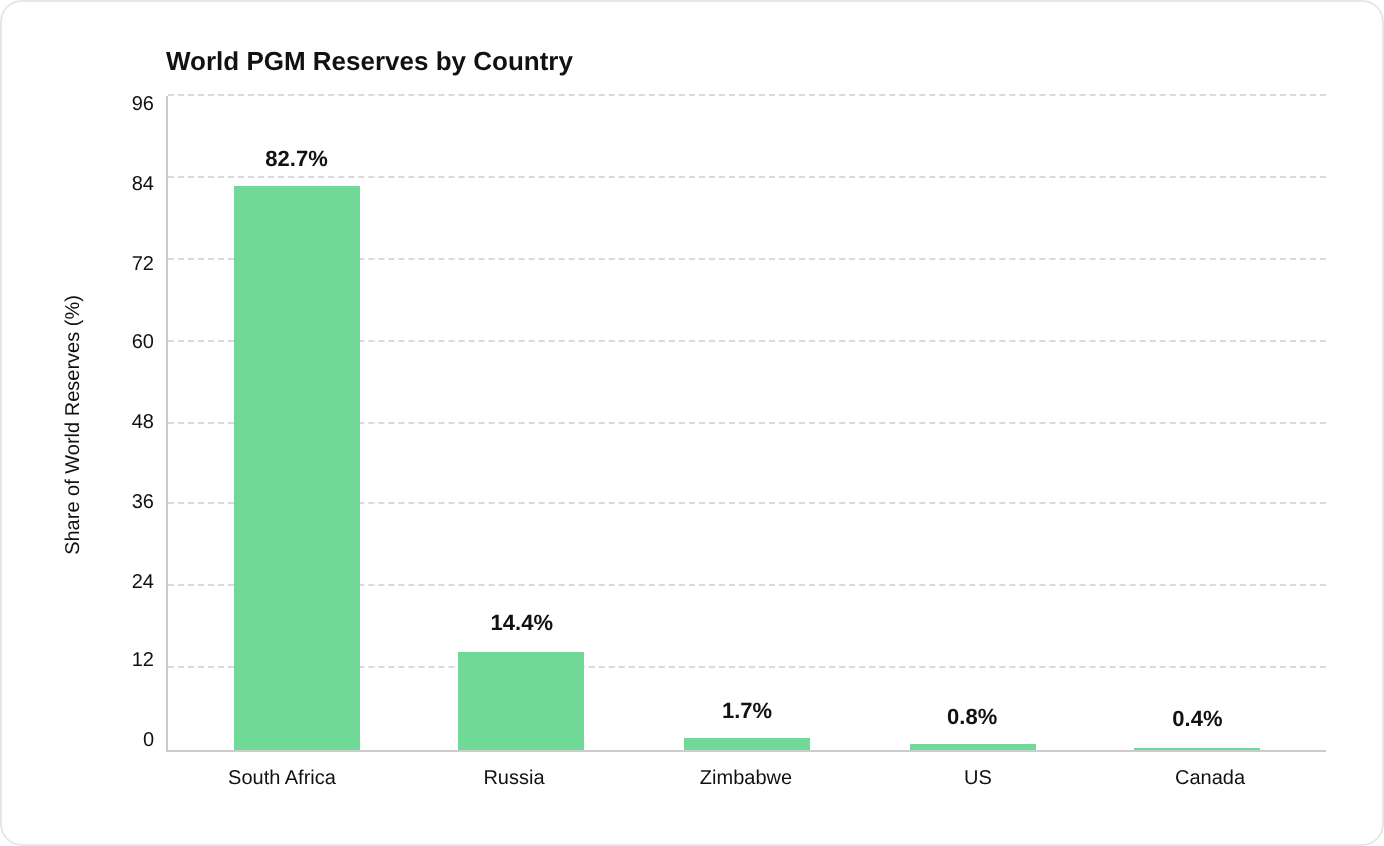
- South Africa and Russia hold 97.1% of world platinum group metal reserves, according to the US Geological Survey's Mineral Commodity Summaries 2026.
- Multi-year platinum and palladium deficits have cut above-ground stocks by 42%, leaving less than 5 months of coverage.
- Bravo Mining is pursuing export zoning at the port of Barcarena in Pará State, and a smelter complex to process its platinum group element concentrate.
- ValOre Metals' Pedra Branca project in Ceará State hosts a 2.2 million ounce near-surface platinum, palladium and gold resource, with its fresh ore tested through conventional flotation.
- ValOre is targeting a preliminary economic assessment (PEA)for Pedra Branca in the fourth quarter of 2026, with market studies among its workstreams.
Platinum and palladium are among the most geographically concentrated critical metals. About 90% of world supply comes from South Africa, Zimbabwe and Russia, and each of those jurisdictions has its own operating constraints. Russia is a difficult place to do business, while South African operations, both deep-level underground mines and large open pits, depend on electricity and diesel supplies that have come under pressure.
Reserves are more concentrated still. South Africa holds 82.7% of world platinum group metal reserves and Russia 14.4%, with Zimbabwe at 1.7%, the US at 0.8% and Canada at 0.4%. Since 2016, several major platinum operations have closed or been suspended, and only 2 major greenfield platinum group element (PGE) mines have near-term production.
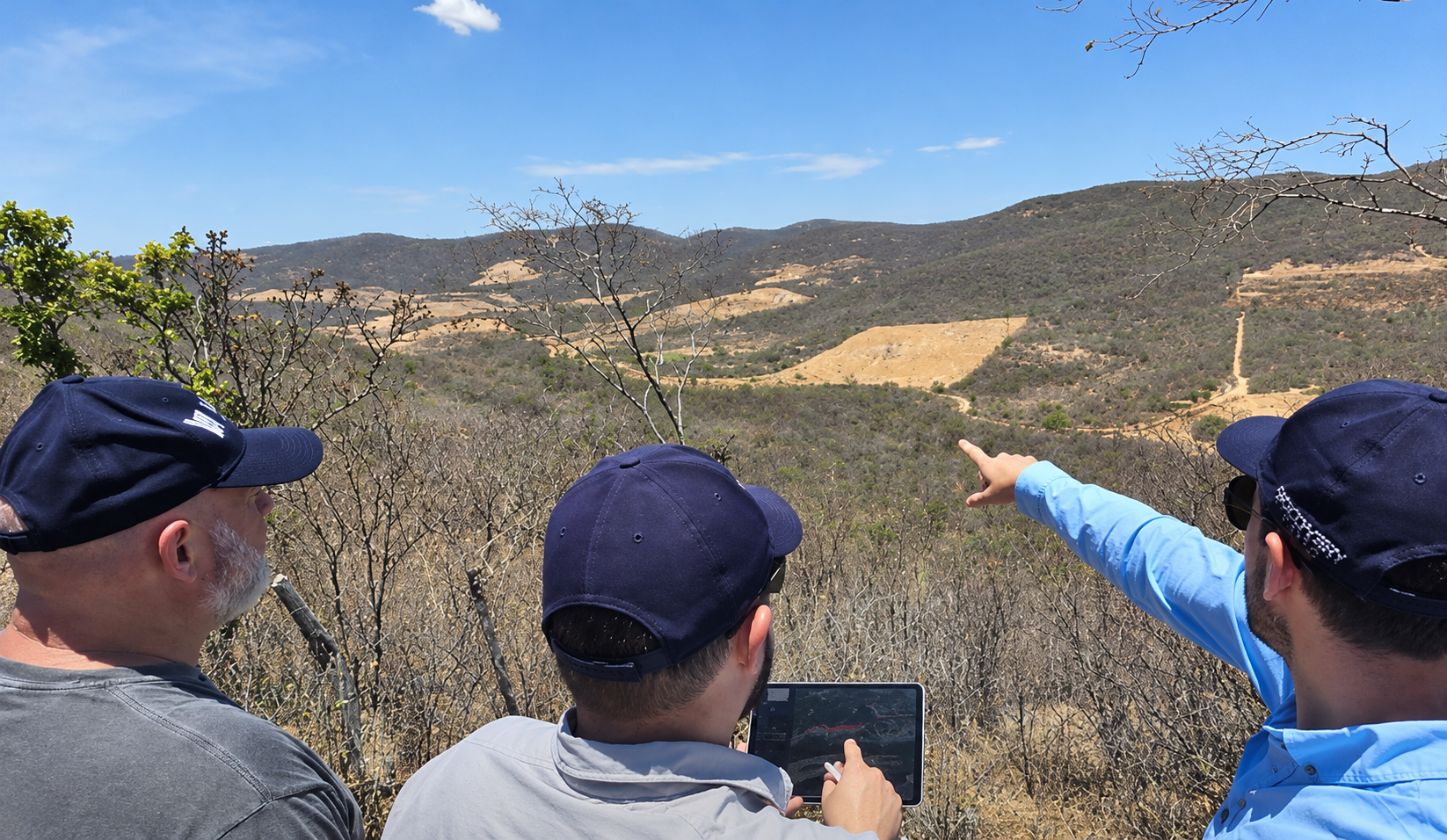
Brazil is home to 2 of the projects in the development pipeline outside that base: Bravo Mining's Luanga project in Pará and ValOre Metals' (TSX-V: VO | OTCQB: KVLQF) Pedra Branca project in Ceará. A deposit does not make a supply base on its own. Concentrate has to be smelted and sold, and Bravo's proposal for a smelter complex at Barcarena would give Brazilian PGE projects a potential processing route inside the country. The smelter is at the planning stage, and neither Brazilian project has reached production.
A Market Drawing Down Its Stocks
Automotive catalytic converters remain the largest source of PGE demand, accounting for about 40% of platinum demand and about 80% of palladium and rhodium demand, according to World Platinum Investment Council data. Battery electric vehicles use neither metal, but hybrids use 10% to 20% more PGEs than internal combustion engine (ICE) vehicles. Global new vehicle sales in 2025 split 55% ICE, 25% electric and 20% hybrid, with hybrids the fastest-growing segment, and Ford, Honda, Volkswagen and Porsche have scaled back electric vehicle plans to focus on hybrids.
Supply has not kept pace. Platinum and palladium have each run multi-year consecutive deficits, put at 500,000 to 700,000 ounces. Above-ground stocks have fallen by 42% and now cover less than 5 months of demand. Investment demand adds to the draw: Chinese purchases of physical platinum bars and coin grew from nearly zero in 2019 to more than 400,000 ounces in 2025.
Platinum traded at US$1,701 per ounce on October 12, 2026, up 88% since the end of 2024, after reaching a record of about US$2,920 per ounce on January 26, 2026. Palladium traded at US$1,157 per ounce on the same date, up 27% since the end of 2024.
Emerging Practices & Industry Progress
The development pipeline outside South Africa, Zimbabwe and Russia now covers Australia, Canada, the US, Finland and Brazil. Generation Mining's Marathon project in Ontario completed a feasibility study in 2025 with production estimated for 2027, while Chalice Mining's Gonneville project in Western Australia, at 17.0 million ounces of platinum, palladium and gold, completed a pre-feasibility study (PFS) in 2025. Anglo American's Sakatti project in Finland has a PFS under way, with production estimated for 2030.
Near-surface deposits bring their own processing question. Weathered, oxidized material is more difficult to float than fresh rock, so ValOre is testing hydrometallurgical leaching for the weathered horizon at Pedra Branca and standard flotation for the fresh ore below it. Leaching opens a further choice between heap leaching, with lower capital intensity and generally lower recoveries, and vessel leaching, with higher capital intensity and higher recoveries.
Development sequencing is a second area of change. Rather than funding a full-scale mine before first production, ValOre is planning a phased build at Pedra Branca, proving the process in Phase 1 with the ability to add Phases 2 and 3 later. The approach is designed to bring the production date forward without needing to show full scale from day one.
Remaining Challenges
The new pipeline is early. Each of the projects named above reports a resource that includes Inferred material, and grades, metal baskets and equivalence methods vary by issuer, so project figures are not directly comparable. Bravo's Luanga resource of 15.4 million ounces is stated in palladium-equivalent terms, while Pedra Branca's 2.2 million ounces count platinum, palladium and gold.
Processing remains the main technical test. Laboratory recoveries may not be representative of commercial-scale performance, and the heap-versus-vessel decision will set both the capital cost and the recovery rate for oxidized material. At Pedra Branca, the scale of the first build is being traded off against the investment needed in infrastructure, water and energy; energy supply also constrains South African operations.
Route to market is the third gap. A flotation concentrate needs a smelter. Bravo's Barcarena plan points to the potential for a facility that processes and smelts PGE concentrates inside Brazil, which would shorten the route from mine to buyer, but the complex has not been built.
Company & Project Examples
Bravo Mining's Luanga project in Pará is the larger and more advanced of the 2 Brazilian PGE projects, with 15.4 million ounces palladium equivalent across 236 million tonnes of Measured, Indicated and Inferred resources at 2.03 grams per tonne, and production estimated after 2029. Bravo is pursuing export zoning at the Barcarena port and a smelter complex there to process its concentrate.
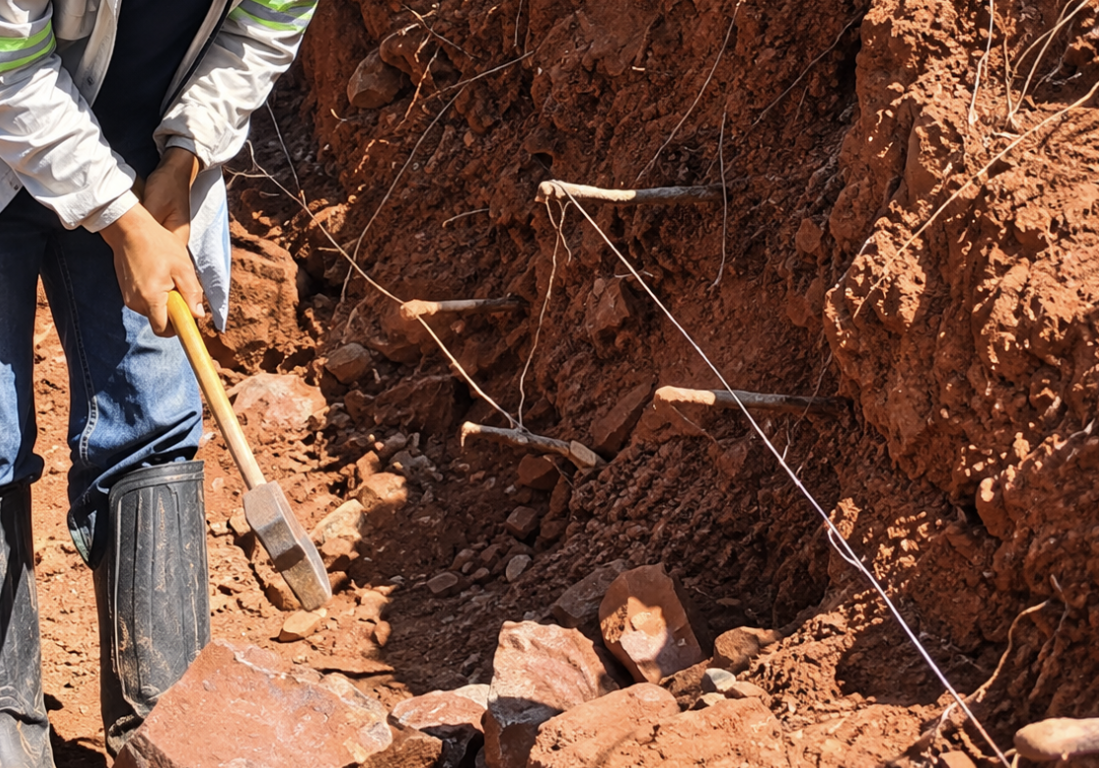
ValOre Metals holds 100% of Pedra Branca, an NI 43-101 Inferred resource of 63.6 million tonnes at 1.08 grams per tonne containing 2.2 million ounces of platinum, palladium and gold across 7 near-surface deposits along an 80 km trend, with an effective date of March 8, 2022. The company acquired the project at 1.1 million ounces, with a historical dataset from former owners Anglo American and Anglo Platinum, and has doubled the resource since, with 5,000 to 6,000 meters drilled since the 2022 estimate to feed an updated resource. Testwork returned 83% platinum and 71% palladium recoveries from fresh material, about 70% of the resource, through conventional flotation, and 73% platinum and 74% palladium from weathered material, about 30% of the resource, through bio-pretreatment and cyanide leaching.
Pedra Branca's fresh ore would produce a flotation concentrate, which links the project's economics to where that concentrate can be smelted. Chief Executive Officer of ValOre Metals, Nick Smart, who spent 21 years with Anglo American and De Beers, described what a Barcarena smelter would mean for the company:
"For us looking at route to market, having a potential customer so close to us up at the port of Barcarena in Pará State is logistically very attractive to us."
Regional Perspective: Brazil
Brazil enters the PGE sector with an existing precious metals base. The country ranks among the top 10 gold producers globally, with production of about $3.8 billion a year that is projected to exceed $6 billion by 2030, according to Grand View Research. It now graduates more mining engineers than the US and Canada combined, according to MiHR, and its automotive manufacturing sector makes it a major end-user of PGEs.
Capital-markets links are also forming. Programs running through Brazil's B3 exchange include tie-ups with the TSX Venture Exchange, and a large Brazilian delegation presented projects at PDAC 2026. Local supplier capacity and the technology available inside the country have developed alongside the workforce.
Policy is moving the same way. Smart outlined the government's approach to critical minerals:
"And then you've got Brazil developing their own critical minerals frameworks, looking at how they're going to fast-track permitting and licensing to support companies doing investments into the country."
Industry Outlook
The next test for Brazil as a PGE jurisdiction comes from the studies. ValOre is targeting an NI 43-101 preliminary economic assessment (PEA) for Pedra Branca in the fourth quarter of 2026, covering a resource review, mine plan, processing flowsheet, site infrastructure with water and power supply, market studies, and capital, operating and economic analysis. The company is weighing several plant throughput options and plans to recommend one for optimization in a later PFS, with a phased build that opens Phase 1 through a licensing route and leaves room for Phases 2 and 3.
The PEA will assess concentrate sales globally, with Barcarena as one option. Smart explained how the domestic route fits the study:
"At this PEA stage we're looking at marketability of the products globally, so we look at all the options, but certainly this is one."
Brazil's case as a supply base outside southern Africa and Russia will depend on 3 outcomes: whether the Barcarena smelter proceeds, whether near-surface flowsheets hold their laboratory recoveries at scale, and whether the country's fast-track permitting frameworks shorten licensing for PGE developers. With platinum stocks covering less than 5 months of demand and only 2 major greenfield mines near production, progress on those 3 fronts would add supply from outside the 2 countries that hold 97.1% of reserves.
FAQs (AI-Generated)
Analyst's Notes


Subscribe to Our Channel







Stay Informed


