




Palladium’s 33% Discount to Platinum Gives Automakers a Reason to Revisit Catalyst Designs


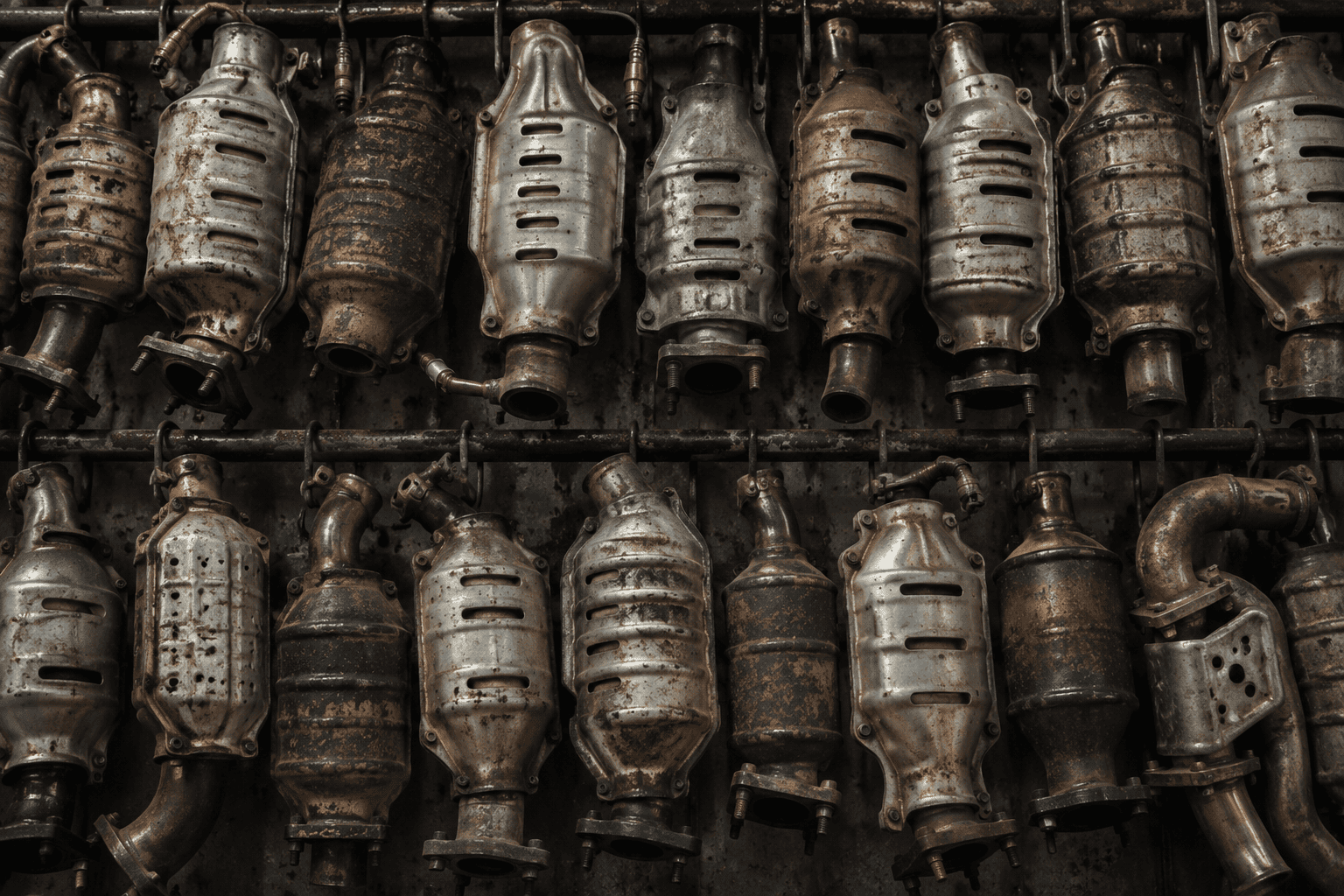
Catalyst qualification and vehicle production shape palladium demand, while metal recoveries and costs determine how projects are exposed to the shift.
- Palladium traded 32.6% below platinum on November 4, 2026, giving automakers an incentive to substitute palladium where doing so reduces catalyst costs.
- A lasting palladium discount to platinum could encourage automakers to use more palladium in future catalysts, provided revised designs pass emissions and durability tests.
- Substitution can support palladium demand while reducing platinum use, even as battery-electric vehicle growth can lower total automotive platinum group metal (PGM) consumption.
- Explorers’ potential revenue depends on how much of each metal can be recovered and sold, making recovery rates and development costs essential to assessing resource value.
- Recyclers’ margins depend on recovery rates, feedstock prices, processing costs, and financing costs, while new catalyst formulations enter scrap supplies only after vehicles are retired.
Palladium’s Discount Gives Automakers an Incentive to Change Catalyst Mix
Palladium’s discount to platinum can encourage manufacturers to change catalyst formulations where substitution lowers total costs without compromising emissions performance. This can shift demand toward palladium within an existing automotive application.
Reuters’ November 4, 2026, market update quoted spot platinum at US$1,461.58 per troy ounce and palladium at US$985.64, a calculated palladium discount of 32.6%.
That discount does not translate directly into an equivalent reduction in catalyst costs, because metal quantities, performance requirements, and durability also affect the total. Substitution delivers savings only when lower metal costs outweigh the expense of redesigning, testing, and introducing the revised catalyst.
Catalyst Qualification Limits How Quickly Automakers Can Switch to Palladium
Existing catalyst designs can keep automakers buying platinum after palladium becomes cheaper, because replacement formulations must be tested and qualified before entering production.
Johnson Matthey’s May 2026 PGM Market Report states that some European Union (EU) Euro 7 catalysts were selected when palladium was more expensive, favoring platinum as those systems enter production. Those earlier design choices delay the response to current prices, while subsequent programs could use more palladium to reduce costs.
The World Platinum Investment Council (WPIC) identifies substitution back toward palladium in its June 2026 outlook as a potential reduction in automotive platinum demand. Its January 22, 2026, outlook estimated earlier substitution into platinum at 845,000 ounces annually and modeled roughly two-thirds reversing by 2030 under a platinum price premium. That is an earlier scenario, not a measured increase in palladium demand or an updated June volume forecast.
Lower Vehicle Output Offsets Palladium Substitution Gains in the 2026 Forecast
Replacing some platinum with palladium can increase palladium use per catalyst, but a decline in the number of vehicles requiring exhaust catalysts can offset that demand gain.
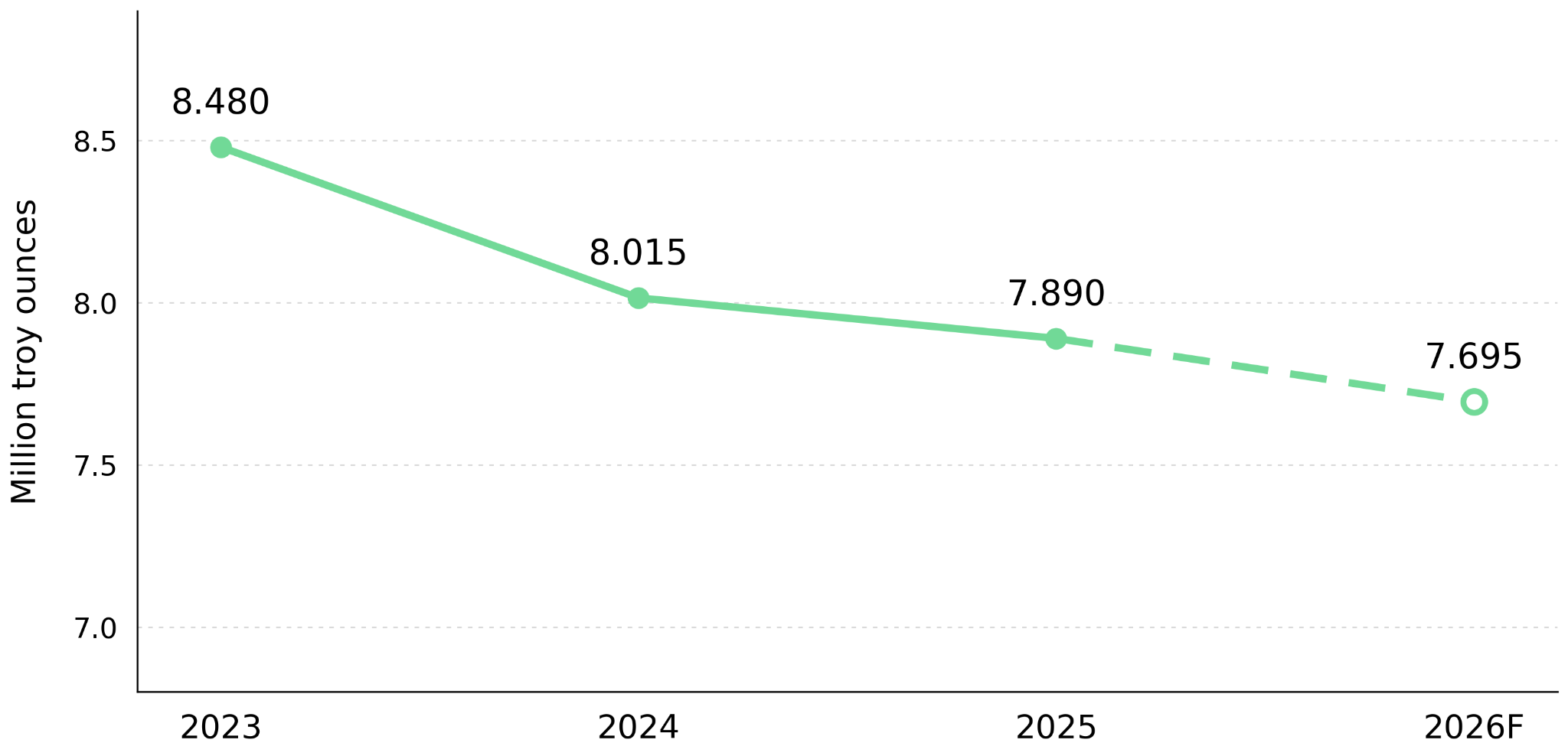
The September 2026 Palladium Standard, published by Heraeus Precious Metals with SFA (Oxford) Limited (SFA), forecasts automotive palladium demand of 7.695 million ounces in 2026, down from 7.890 million in 2025, a calculated decline of approximately 2.5%. The forecast includes substitution toward palladium, but lower production of combustion-engine and hybrid vehicles more than offsets that gain.
The European Automobile Manufacturers’ Association (ACEA) reported that hybrids accounted for a combined 46.4% of new EU car registrations in January–September 2026, compared with 22.7% for battery-electric vehicles. Hybrids retain combustion engines and exhaust catalysts, preserving a market for PGMs within electrified vehicle sales. The International Energy Agency’s (IEA) 2026 forecast of 23 million electric-car sales includes plug-in hybrids, so that total cannot be treated as vehicles without catalyst-related PGM demand.
Changing Metal Demand Makes Recoverable Ounces Central to Exploration Value
Substitution affects a mineral project through the platinum and palladium it can recover and sell. Processing studies establish that metal mix, while economic assessments test whether revenue can justify mining, processing, and development costs. A higher-recovery process adds value only if the extra metal revenue justifies any additional capital and operating costs.
ValOre Metals is advancing processing studies at Pedra Branca to support a Preliminary Economic Assessment (PEA), targeted for completion by the end of 2026 in its July 30, 2026, disclosure. The work should clarify processing options for its 2022 inferred resource of 2.198 million combined platinum, palladium, and gold ounces and provide a basis for assessing its economic potential.
Nick Smart, Chief Executive Officer of ValOre Metals, explains how metal recovery informs the economic model:
“Economics have obviously changed, and then the other assumptions that we've got in that model relate to the metallurgical recovery which has been a big focus of work for us as well, which is the metallurgy.”
Changing Catalyst Mix Makes Recovery Economics Central to Recycling Value
Recovering both platinum and palladium allows recyclers to process different catalyst compositions, while margins depend on feedstock purchase terms, recovery rates, processing costs, and financing costs. Greater palladium use in new catalysts would change scrap composition gradually as those vehicles reach the end of their service lives.
Lifezone Metals reported more than 99% platinum and palladium recovery from a one-ton pilot campaign using US spent autocatalysts. Its October 29, 2026, release targets an updated feasibility study for the first quarter of 2027, with a Final Investment Decision (FID) anticipated in the same period. These milestones should clarify the proposed US facility’s economics and commercial development requirements.
Buying feedstock before selling recovered metal creates a working-capital requirement, so longer processing or payment cycles can increase financing costs. Lower palladium prices can reduce both feedstock costs and metal sales revenue, making purchase terms and price exposure during processing central to margins.
Catalyst Approvals & Metal Purchases Show Whether Substitution Is Taking Hold
Approved catalyst designs and subsequent metal purchases provide more direct evidence of substitution than the palladium-platinum price gap alone. A lasting shift in purchasing would strengthen the demand case by showing that manufacturers are converting the price advantage into greater palladium use.
WPIC’s September 9, 2026, Platinum Quarterly, prepared by Metals Focus, forecasts automotive platinum demand of 2.904 million ounces in 2026, down 4% from 2025, and a 265,000-ounce market surplus. These figures describe platinum’s demand and overall balance, which also responds to investment flows and recycled supply; they do not isolate the volume switched to palladium.
The Investment Thesis for Platinum Group Metals
- A lasting palladium discount could increase its use in eligible catalysts, even if lower vehicle production reduces overall automotive palladium demand.
- Explorers’ recovery studies and cost estimates help establish whether saleable metal could generate enough revenue to cover mining, processing, and development costs.
- Recyclers need repeatable recoveries, dependable feedstock, and sufficient working capital to fund purchases and processing until recovered metal is sold.
- Linking major capital commitments to completed studies and required permits can limit spending before a project’s costs and construction requirements are defined.
- Economic studies should show how metal prices, recovery rates, and costs affect project returns, helping distinguish operating improvements from assumed price gains.
Palladium’s price advantage can shift demand within the PGM market as automakers seek lower catalyst costs, creating opportunities across exploration and recycling. Project value depends on supplying the required metals at costs that support profitable production. Prioritize processing progress backed by economic studies and staged development spending, connecting the opportunity in changing metal demand with a route to commercial returns.
TL;DR
Palladium’s 32.6% discount to platinum on November 4, 2026, gives automakers a reason to reconsider catalyst formulations, but redesign and qualification requirements delay adoption. Substitution could support palladium’s share of automotive platinum group metal (PGM) demand even as electrification reduces total consumption. Hybrids preserve demand for exhaust catalysts, while exploration value depends on recoverable metal, costs, and economic studies. Recycling opportunities depend on recovery rates, feedstock access, purchase terms, and working capital. Approved catalyst designs and sustained metal purchases provide stronger evidence of substitution than prices alone.
FAQs (AI-Generated)
Analyst's Notes




Subscribe to Our Channel










Stay Informed


