




Semiconductor Demand Drains Tin Stocks With No New Supply Before 2029



A 48% price rally favors producers with controlled costs, while permitted deposits offer a faster path to cash flow than early-stage projects.
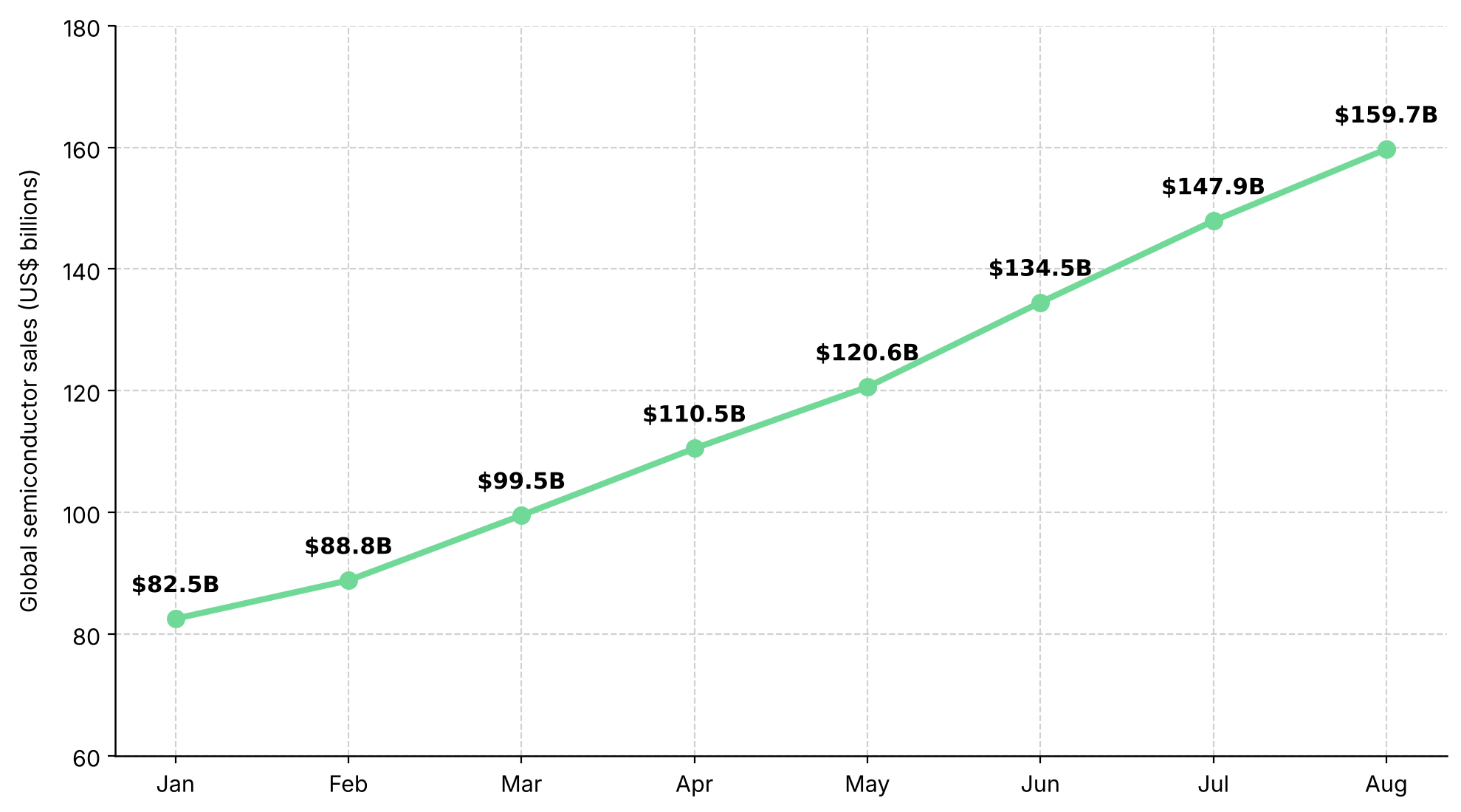
- Global semiconductor sales reached $159.7 billion in August 2026, up 144.3% year over year and 8% from July, bringing year-to-date sales above $1 trillion for the first time.
- Solder accounts for more than half of global tin demand, while each gigawatt of AI data center capacity requires 1,200 to 1,500 tons of tin, more than three times the amount used by conventional data centers.
- Combined London Metal Exchange (LME) and Shanghai Futures Exchange (SHFE) tin inventories fell 42% from a February 2026 peak of 22,600 tons to 13,100 tons, reducing the buffer against supply disruptions.
- Global tin mine production fell to an estimated 290,000 tons in 2025, down from 294,000 tons in 2024 and 305,000 tons in 2023.
- No currently financed hard-rock tin project is targeting production before the first half of 2029, limiting near-term supply growth despite higher prices.
Semiconductor Growth Supports Tin Prices Above $54,000
Global semiconductor sales reached $159.7 billion in August, up 8% from July and 144.3% year over year, pushing year-to-date sales above $1 trillion and supporting tin demand for solder. LME three-month tin traded at $54,184 per ton, up 48% over 12 months but below its $56,816 record, increasing revenue potential for tin producers.
Solder accounts for more than half of global tin consumption, compared with about 11% for tinplate packaging, linking semiconductor growth to tin demand. Combined LME and SHFE tin inventories, including LME off-warrant metal, fell 42% from 22,600 tons to 13,100 tons, reducing the buffer against supply disruptions.
AI Server Growth Raises Demand as Mine Output Falls
AI servers require up to 5 tons of tin versus about 500 kg for conventional servers, while a 10,000-card AI computing center needs 2.5 to 3.2 tons of circuit-board solder. Each gigawatt of AI data center capacity consumes 1,200 to 1,500 tons of tin, increasing demand despite years of efforts to reduce tin use in electronics. Hybrid bonding is unlikely to significantly reduce solder demand before the 2030s, supporting longer-term demand for tin.
Global tin mine production fell to an estimated 290,000 tons in 2025 from 294,000 tons in 2024 and 305,000 tons in 2023, limiting supply growth as AI-related demand rises. Myanmar’s output fell to 12,000 tons from 20,000 tons because of mining restrictions in Wa State, while the Democratic Republic of the Congo produced 27,000 tons, leaving about 13% of global mine supply exposed to disruptions in two conflict-affected countries.
Declining Inventories Narrow LME Discount to $105
The LME cash-to-three-month discount narrowed from over $400 to $105 per ton as combined LME and SHFE tin inventories fell to 13,100 tons. US refined tin consumption rose 24% to 43,000 tons in 2025 amid 77% net import reliance. Tom Langston, Senior Market Analyst at the International Tin Association, attributed tin price gains primarily to macroeconomic factors and increased market activity in China.
48% Price Rally Favors Producers
Tin prices rose 48% over 12 months, widening producer margins where diesel and labor costs increased more slowly. Smelters and solder manufacturers face margin pressure as higher tin costs take effect before electronics contract prices adjust.
A hard-rock tin developer targeting a mid-2026 feasibility study and September investment decision still targets first production in the first half of 2029, delaying revenue despite higher tin prices. This gap favors permitted mines closer to production over undeveloped resources that cannot generate near-term cash flow.
Myanmar’s Wa State has changed mining policy without notice since 2023, leaving the Man Maw restart date uncertain and future tin supply at risk. Exchange inventories offer a more reliable basis for sizing tin equity positions than an unpredictable restart. Both producers and developers carry the risk of total capital loss, while developers face additional exposure from lacking operating cash flow.
What Gives Permitted Tin Deposits an Edge
Permitted tin deposits face fewer development hurdles than earlier-stage projects, making time to production and cash flow central to their valuation rather than higher prices alone.
A decade of low tin prices discouraged exploration, leaving fewer projects available to supply smelters. Developers with defined deposits could secure offtake agreements as smelters seek future feedstock, improving revenue visibility and access to project financing.
Analyst's Notes





Subscribe to Our Channel





Stay Informed


