




Silver’s 4.5% Forecast Upgrade Raises Future Mine Value Potential



Flat silver mine supply and shrinking reserves sharpen the focus on mine expansions, new resources, and the costs of bringing future production online.
- Higher silver forecasts increase future mine revenue potential, with S&P Global reporting a 4.5% upward revision to 2029-2030 consensus silver price forecasts.
- Production timing matters for mine valuations, with 2026-2028 silver forecasts revised down 0.2% while longer-term expectations improve for 2029-2030.
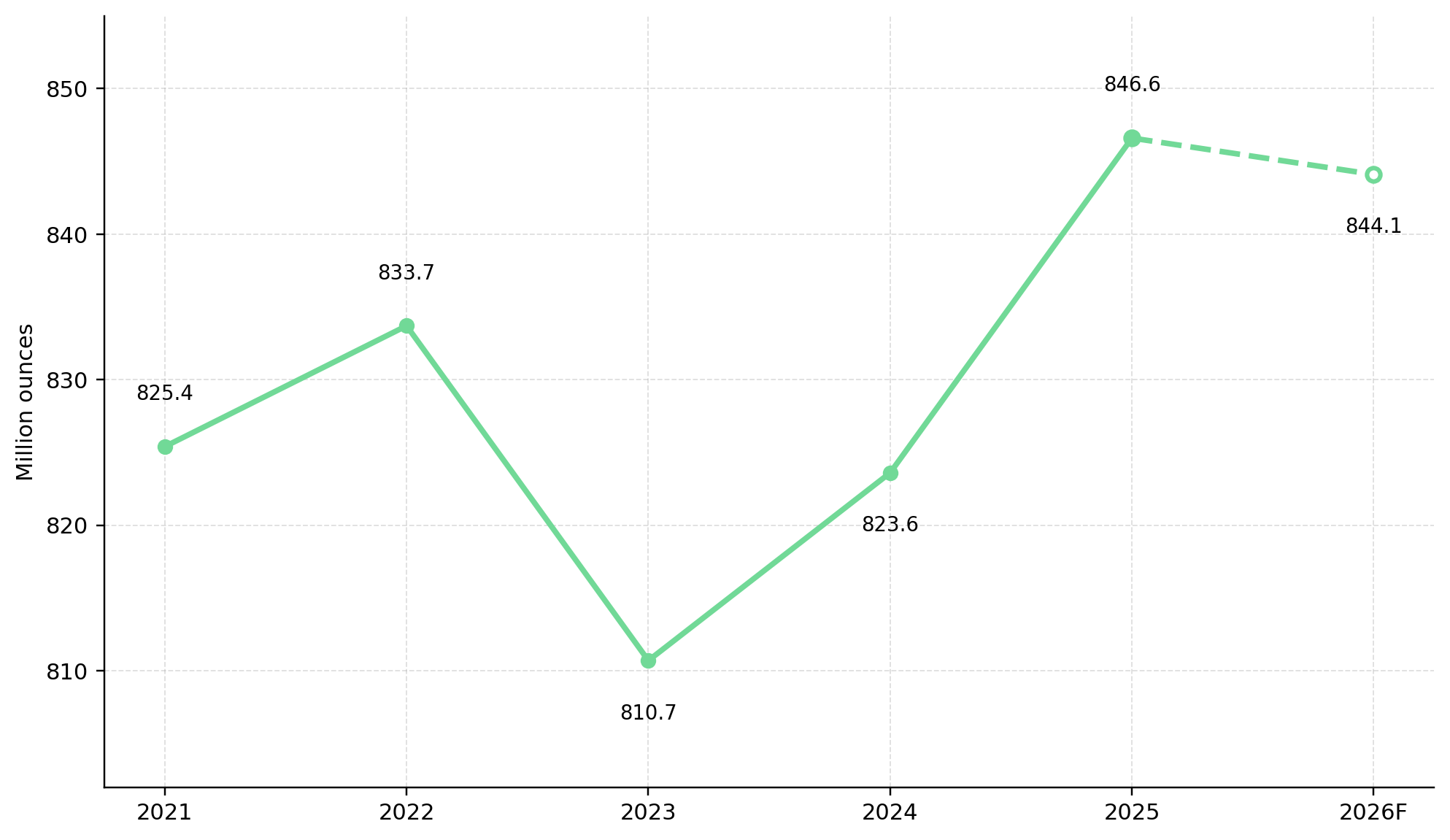
- Silver mine supply remains nearly flat, with the Silver Institute forecasting a 0.3% decline to 844.1 million ounces in 2026, limiting near-term supply growth.
- Higher silver prices support mine reinvestment, with free cash flow among seven major primary silver producers rising 226% and capital expenditure increasing 12% in 2025.
- Silver reserve depletion increases the need for resource expansion, with primary silver reserves declining by 50 million ounces in 2025 as depletion exceeded additions.
Higher Silver Forecasts Could Expand Economically Viable Resources
S&P Global reported an average 4.5% upward revision to consensus silver price forecasts for 2029-2030, while forecasts for 2026-2028 declined 0.2%. These changes reflect revised broker estimates, not actual silver-price gains, and could increase projected revenues and mine valuations for production scheduled beyond 2028.
Higher long-term silver price assumptions can also make lower-grade mineralization economically viable, potentially increasing the value of existing resources. This creates opportunities for producers extending mine life, developers approaching production, and explorers expanding resources, provided drilling results, processing recoveries, and operating costs support their economic potential.
Flat Mine Supply Increases the Need for New Production
According to the Silver Institute's World Silver Survey 2026, global silver mine production increased 3% to 846.6 million ounces in 2025 but is forecast to decline 0.3% to 844.1 million ounces in 2026. Expected production gains in Mexico are projected to be offset by declines elsewhere, increasing the importance of mine expansions and new projects capable of adding future silver supply.
Non-primary mines produced 625.5 million ounces of silver in 2025, accounting for 74% of global output, including 237.3 million ounces from copper mines and 249.1 million ounces from lead-zinc operations. With primary silver mines contributing a record-low 26%, higher silver prices alone may not increase supply significantly because most production depends on the economics of other metals.
Primary silver reserves declined by 50 million ounces in 2025, from 3,812 million to 3,762 million ounces, as 170 million ounces of depletion exceeded 120 million ounces of additions. With reserve expansion and resource conversion programs typically requiring at least 18-24 months, investment in drilling and mine extensions becomes increasingly important for replacing depleted reserves and supporting future silver production.
Rising Producer Cash Flow Supports Mine Upgrades for Production Growth
Higher silver prices have strengthened producers' ability to fund mine expansions through operating cash flow. According to the World Silver Survey 2026, seven major primary silver producers increased free cash flow by 226% to US$4.3 billion in 2025, while capital expenditure rose 12% to US$1.9 billion. This stronger financial position provides greater capacity to upgrade existing mine infrastructure and increase silver production without relying entirely on external financing.
Americas Gold & Silver is targeting 3.2-3.6 million ounces of silver production in 2026, up from 2.65 million ounces in 2025. Upgrades at Galena have increased shaft hoisting rates from 40 to 105 tonnes per hour, while its planned 64,000-meter drilling program and ongoing development at Crescent could support further production growth using existing infrastructure. The company’s 25.8 million ounces of Proven and Probable silver reserves and 115.7 million ounces of Measured and Indicated silver resources provide a substantial inventory for future mine planning and expansion.
Paul Andre Huet, Chief Executive Officer of Americas Gold & Silver, explains why better recoveries strengthen future silver revenues:
“We're doing the mill upgrades. So, we know the ounces are there. We know they're in the ground. The reality is we're likely going to sell them at a higher metal price, but we know this for sure with a high level of certainty that we will get a 90% recovery instead of sacrificing an 80%.”
Higher Price Forecasts Raise Revenue Potential for Funded Mine Projects
S&P Global's 4.5% upward revision to 2029-2030 silver price forecasts increases potential revenue upside for development projects targeting production during those years. Higher long-term silver price assumptions can improve projected cash flows and project valuations without requiring additional production. Projects with completed feasibility studies and available funding have a clearer path toward converting that potential into future earnings.
Vizsla Silver is advancing its Pánuco silver-gold project in Mexico, targeting first production in the second half of 2028. Its November 2025 feasibility study projects a 9.4-year mine life, averaging 20.1 million payable silver-equivalent ounces annually during the first five years, with an estimated post-tax net present value (NPV) of US$1.802 billion. Backed by US$411 million in cash and short-term investments as of July 31, 2026, the company has funding to advance development while pursuing additional resource growth.
Declining Exploration Budgets Favor Funded Resource Expansion
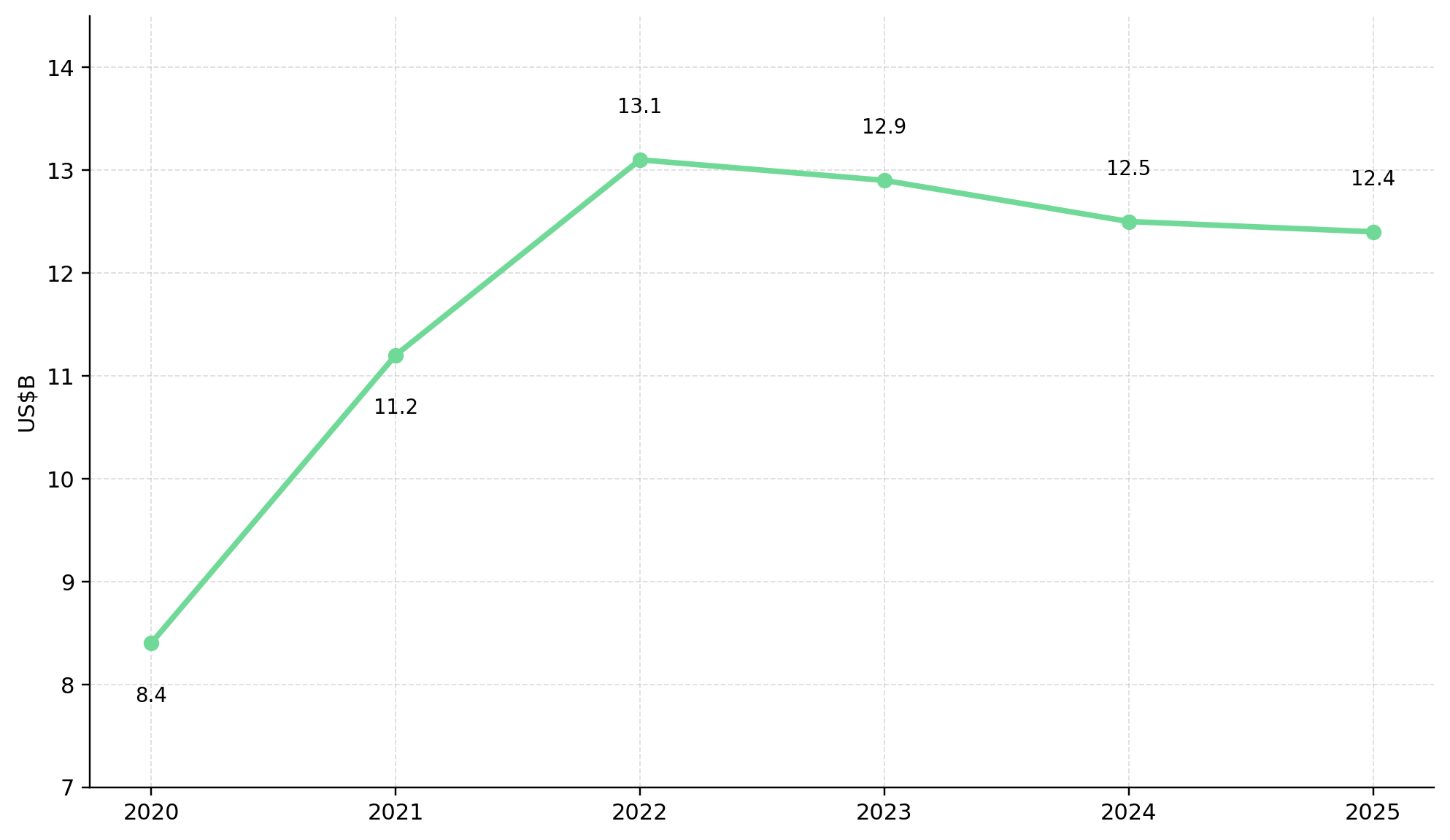
S&P Global reports that global nonferrous exploration budgets fell to US$12.4 billion in 2025, with grassroots exploration accounting for a record-low 21% of spending. Meanwhile, its 4.5% upgrade to 2029-2030 silver price forecasts could improve the economic potential of newly defined silver resources. This increases the importance of well-funded exploration programs that can expand resources and advance projects toward economic assessments, creating opportunities for future project value growth.
GR Silver Mining is advancing its Plomosas silver project in Mexico, with 55 million ounces of Indicated and 22 million ounces of inferred silver resources reported in 2023. Its ongoing 20,000-meter drilling program has delivered a 45.1-meter intercept grading 1,623 grams per tonne of silver at San Marcial, indicating potential for further resource growth. With C$26 million in cash as of June 30, 2026, the company is targeting an updated resource estimate and preliminary economic assessment (PEA) in the first half of 2027 to better define the project's economic potential.
Eric Zaunscherb, Chairman and Chief Executive Officer of GR Silver Mining, discusses industrial demand alongside declining physical silver inventories:
“With regard to the industrial uses, we continue to see growth in silver consumption in photovoltaics, solar cells, and in EVs. So, I think that the outlook is pretty good for silver. Finally, I'd point out that silver physical inventories have declined dramatically.”
Rising Mining Costs Limit Project Valuation Upside
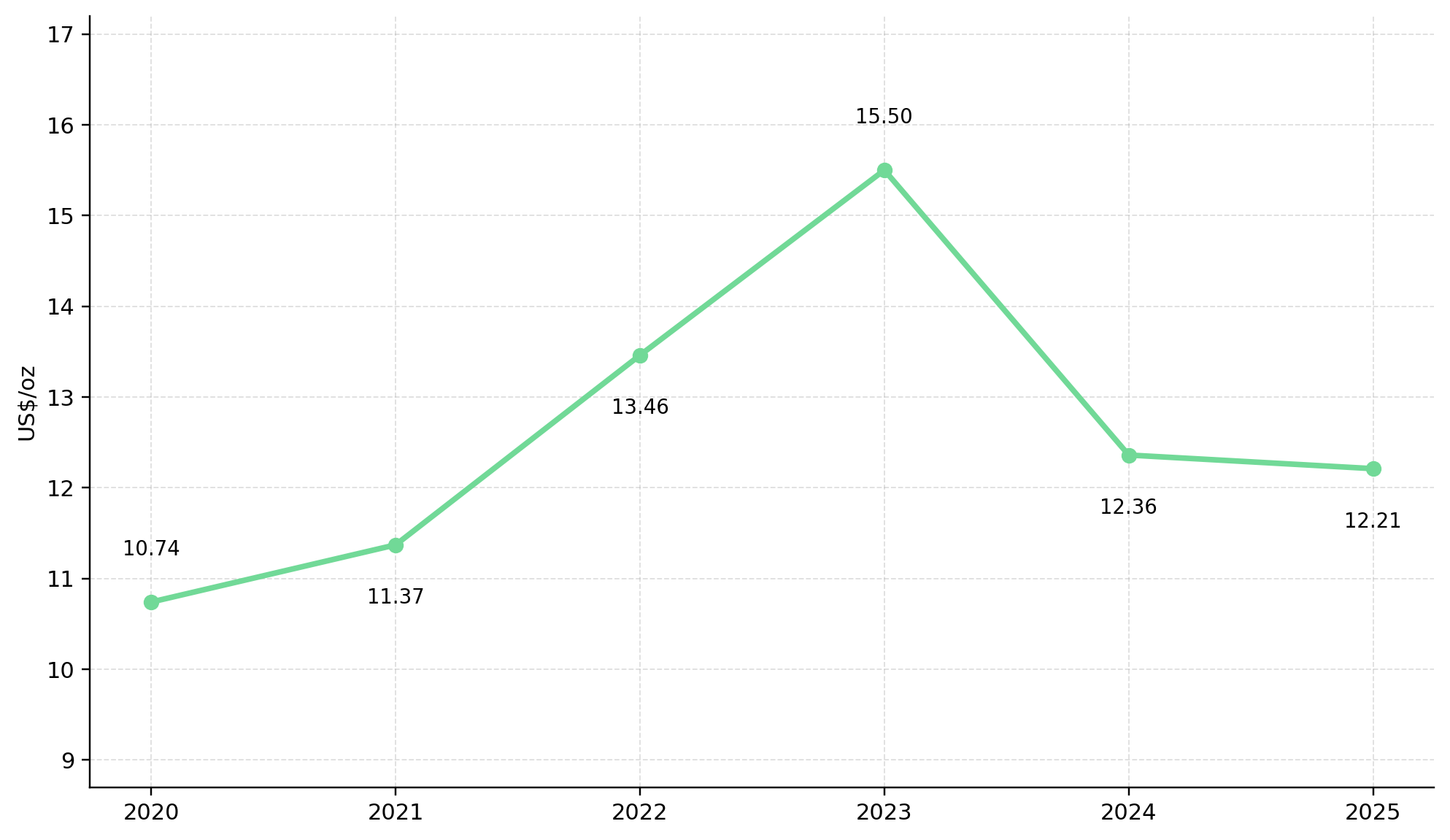
S&P Global's January 2026 mine-cost outlook projects global weighted-average silver all-in sustaining costs (AISC) rising 3.8%, from US$22.59/oz in 2025 to US$23.44/oz in 2026. Regional forecasts show a 0.8% increase to US$19.84/oz in Mexico, compared with a 14.2% increase to US$25.16/oz in Peru. These cost differences can affect how much additional silver revenue translates into mine cash flow.
Silver trading near US$60.18/oz on October 8, 2026, amid US dollar movements and elevated Treasury yields. Higher financing costs can further reduce project valuations, particularly for mines requiring substantial capital before production. The 4.5% upward revision to 2029-2030 consensus silver forecasts therefore offers potential revenue upside, but its effect on project value depends on operating costs, capital requirements, and production timing.
The Investment Thesis for Silver
- Higher long-term silver price forecasts can increase projected mine revenues and valuations, particularly for projects targeting production beyond 2028.
- Producers can reinvest operating cash flow into mine expansions and reserve replacement, increasing production capacity while reducing reliance on external financing.
- Developers with feasibility studies and available funding can move closer to production, with construction progress and permitting determining when projected revenues can be realized.
- Explorers can increase resource value through successful drilling and resource expansion, with economic studies determining whether discoveries can support future production.
- Silver supply remains dependent on other metals, with by-product mines accounting for 74% of global output in 2025, limiting the production response to higher silver prices.
- Rising operating and financing costs can offset higher silver revenues, making capital discipline and cost control essential to project cash flows and valuations.
Silver's stronger long-term price outlook increases the economic importance of future mine production as supply growth remains limited and reserves require replacement. Higher price expectations can improve the value of mineral resources, support longer mine lives, and strengthen future cash flows as additional production becomes economically viable. The broader investment opportunity lies in securing profitable silver supply capable of generating sustained cash flow and long-term asset value.
TL;DR
S&P Global reported a 4.5% average upward revision to consensus silver price forecasts for 2029-2030, potentially improving future mine revenue and project valuations. Global silver mine production is forecast to decline slightly in 2026, while 74% of 2025 output came from mines where silver is a by-product, limiting the supply response to higher prices. Declining primary silver reserves further increase the importance of exploration and mine expansion. Stronger producer cash flows are supporting reinvestment, while funded development and exploration projects offer potential future supply growth. However, rising operating and financing costs remain important factors in determining future project profitability.
FAQs (AI-Generated)
Analyst's Notes





Subscribe to Our Channel









Stay Informed






