U.S. Gold Corp Secures $31.2 Million in Growth Capital & Accelerates the Path to Construction



U.S. Gold Corp secures $31.2M from Franklin Templeton & Mackenzie Investments, advancing fully permitted CK Gold Project toward 2028 production in Wyoming.
- U.S. Gold Corp. closed a $31.2 million private placement on 23 December 2025, materially strengthening its balance sheet at a critical inflection point in the project development cycle.
- Institutional participation from Franklin Templeton, Mackenzie Investments, and Libra Advisors signals external validation of both asset quality and execution credibility.
- The financing extends runway through feasibility completion and early development activities at the CK Gold Project in Wyoming, reducing near-term capital risk.
- With major permits already secured, the capital raise meaningfully shifts the investment narrative from permitting risk toward execution and construction readiness.
- The transaction reinforces scarcity value in US-based gold-copper development assets, particularly those operating outside federal permitting complexity.
Why Late-Stage Mining Financing Matters in the Current Market
Capital flows in the mining sector have become increasingly discriminating. Generalist investors have largely retreated from early-stage exploration, redirecting attention toward assets with defined resources, secured permits, and visible paths to production. This selectivity has created a bifurcated market where late-stage developers with institutional backing command premium valuations relative to peers still navigating regulatory uncertainty.
Capital Selectivity Returns to the Mining Sector
The availability of development capital now correlates strongly with project maturity. Early-stage exploration financing remains constrained, with investors demanding greater certainty before committing funds. In contrast, assets demonstrating clear permitting status, defined reserves, and near-term construction optionality attract disproportionate interest.
Financing as a Signal, Not Just a Cash Event
The composition of a financing syndicate often reveals more than the quantum raised. Institutional participation functions as a proxy for technical diligence, jurisdictional comfort, and confidence in both cost estimates and development timelines.
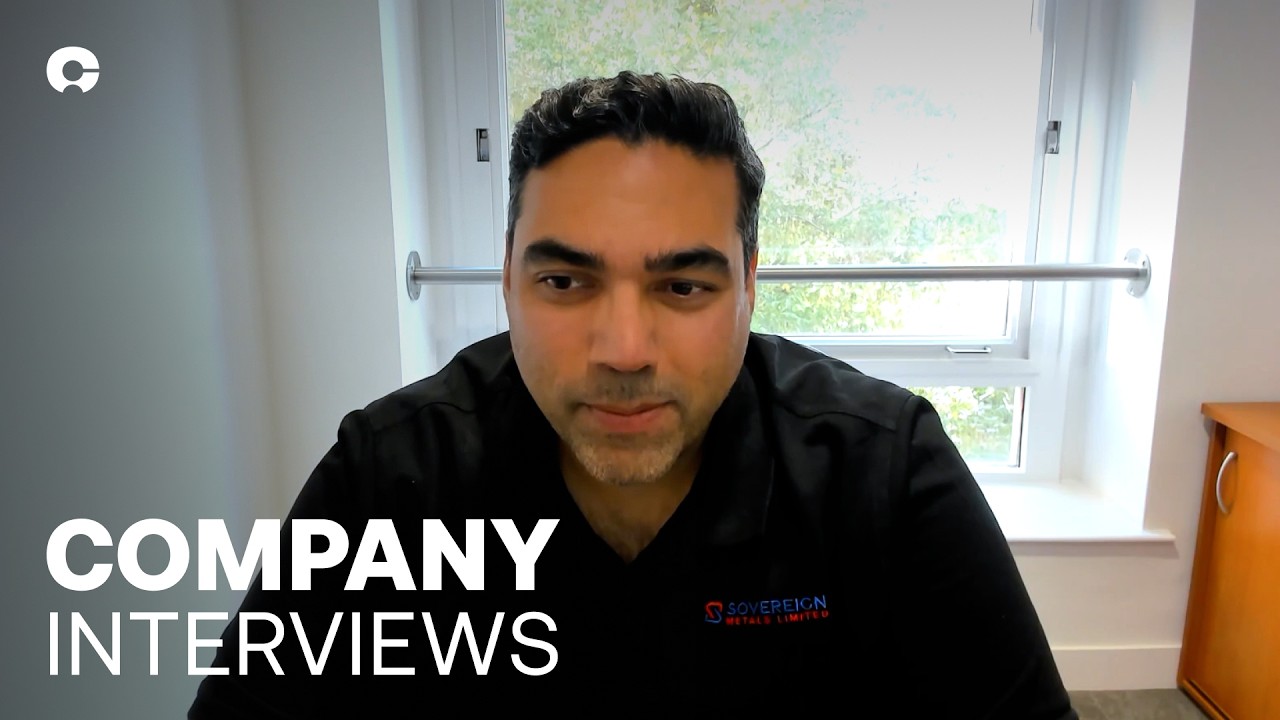
George Bee, President, Chief Executive Officer, and Director of U.S. Gold Corp., emphasizes the project's readiness and jurisdictional advantages:
"We've been very busy developing CK Gold Project. We're fully permitted, we're ready to go... You can count on one hand the number of fully permitted projects in a safe jurisdiction like the United States."
Dissecting the $31.2 Million Private Placement
The financing structure provides insight into market perception of U.S. Gold Corp.'s near-term trajectory. Pricing discipline, warrant terms, and post-financing share count each carry implications for existing shareholders and prospective investors evaluating entry points.
Pricing Discipline & Market Validation
The private placement involved 1,922,159 shares priced at $16.25 per share. In a market where development-stage financings frequently execute at discounts of 15 to 25 percent, the tight pricing reflects strong demand and investor confidence in upcoming catalysts.
Share Count, Dilution & Leverage
As of 1 January 2026, U.S. Gold Corp. has 16,442,395 common shares outstanding. This share count positions the company with meaningful leverage to positive feasibility outcomes, construction decisions, and commodity price movements. Both gold and copper exposures within the CK Gold deposit create dual sensitivity to precious metals and base metals price environments.
Institutional Capital as a De-Risking Mechanism
The identity of financing participants often matters as much as the capital they provide. Institutional involvement introduces governance expectations, technical scrutiny, and registry quality that influence future capital access and strategic optionality.
Why Institutional Investors Matter at This Stage
Franklin Templeton and Mackenzie Investments represent substantial asset management platforms with rigorous due diligence processes. Their participation signals confidence in asset durability, management capability, and the probability of successful project execution.
Registry Quality & Future Capital Access
A high-quality shareholder registry improves future financing optionality across multiple dimensions. Subsequent capital raises benefit from established institutional relationships and demonstrated market interest. Cost of capital typically declines as registry quality improves, reflecting reduced execution risk perceived by lenders and equity investors.
CK Gold Project: From Permitted Asset to Build-Ready Project
The CK Gold Project in Wyoming represents the primary value driver within U.S. Gold Corp.'s portfolio. Understanding the resource base, metallurgical characteristics, and economic parameters provides context for evaluating the significance of the recent financing.
Resource Base & Geological Characteristics
The project hosts proven and probable mineral reserves of 1.672 million gold equivalent ounces, comprising gold, copper, and silver, as documented in the SK-1300 Technical Report Summary dated 10 February 2025. The deposit remains open at depth and along strike, with a high proportion of drill holes terminating in mineralization.
George Bee provides perspective on the production profile and asset quality:
"We're going to be producing about 110,000 gold equivalent ounces per year for that 10-year period. It gets bigger. We bottom out in mineralization, so there are additional resources."
Metallurgy, Flowsheet Simplicity & Cost Control
Clean and simple mineralogy with low overall sulfide content creates processing advantages that influence both operating costs and capital requirements. The metallurgical characteristics support conventional flotation processing with favorable recovery rates.
George Bee describes technical innovations incorporated into project planning:
"We looked at the Jameson cells, the Glencore technology. It has demonstrated itself to give us a little bit more recovery. It's a smaller footprint in the plant, so we save a little bit on the capital costs, and the power costs are a little lower."
Economics That Withstand Price Volatility
The project's economic parameters from the February 2025 pre-feasibility study demonstrate resilience across commodity price scenarios. At base case assumptions of $2,100 per ounce gold and $4.10 per pound copper, the project generates a post-tax net present value at a 5 percent discount rate of $356 million and a post-tax internal rate of return of 30 percent. All-in sustaining cost of $937 per gold equivalent ounce positions the operation in the lower half of the industry cost curve.
George Bee addresses cost inflation considerations:
"We anticipate seeing a little bit of inflation on some of the capital cost numbers, but that's more than offset by the increase in metal prices."
Permitting Advantage & Jurisdictional Scarcity
Permitting status represents one of the most significant differentiators among development-stage mining assets. The regulatory pathway completed by U.S. Gold Corp. materially alters the project's risk profile relative to competitors navigating federal permitting processes.
Why Wyoming Matters in a US Mining Context
Projects located on state land in Wyoming operate under a fundamentally different regulatory framework than those requiring federal oversight. State-level permitting involves fewer agencies, clearer accountability, and more predictable timelines. The project footprint does not impact waters of the United States, meaning there is no direct federal involvement via the US Army Corps of Engineers.
George Bee explains the permitting structure:
"We've stuck to an initial 10-year mine plan. Ten years means that we don't involve Army Corps of Engineers or the federal government in any way."
Permits Secured & What That Changes for Investors
The company secured its Mine Operating Permit in April 2024 for a 10-year renewable term, with the Industrial Siting Permit approved in June 2023 and extended through 2026. These approvals transition the investment narrative from regulatory risk to execution risk.
Infrastructure & Local Support
Proximity to established infrastructure reduces capital requirements and operational complexity. The project is located four miles from a paved state road with access to available power and a local labor pool in Cheyenne.
George Bee describes the infrastructure advantages:
"You land in Denver International Airport and an hour and a half later you're on the project. We have the interstate highway system. The power line is going to come in from a local substation, and the power providing company is footing the bill."
Capital Allocation & Strategic Optionality
The $31.2 million financing provides flexibility across near-term development requirements and longer-term strategic initiatives.
Near-Term Use of Proceeds
Capital will support initial development activities, feasibility study completion, and early site preparation. The company is exploring both traditional and non-traditional funding for construction financing, including vendor financing options, with financing targeted for the first half of 2026.
George Bee outlines the catalyst timeline:
"What we will be seeing in the short term is our feasibility study…January you should see that in the public domain… We're treasury at the moment. We're fine. We're going to be building the access road out of treasury... Towards the end of 2027, we're starting the commissioning, so production comes in at 2028."
The company is targeting feasibility study publication in early 2026, with commissioning targeted for late 2027 and first production in 2028.
Exploration & Portfolio Upside
Beyond CK Gold, the company maintains exploration assets including the Keystone Project in Nevada along the Cortez Trend, a district-scale system with approved drilling plans, and the Challis Gold Project in Idaho.
George Bee discusses the exploration portfolio:
"I look at our Keystone asset just 11 miles away from the Cortez complex. We've got all the same kind of parameters, the same geology. With CK Gold up and running, turn our attention back to Nevada because quite frankly that's where the huge prizes really are."
Management Track Record & Execution Considerations
The transition from permitted asset to operating mine requires execution capability that extends beyond technical planning.
Mine-Build Experience at the Helm
George Bee brings over 40 years of mining industry experience, including tenure as Senior Vice President at Barrick Gold, with construction and commissioning experience at major operations.
George Bee addresses execution capability:
"I've been in the business for 40 years building mines... I've worked in the majors for many years. Our team, and I have built mines before. We're just focused on bringing our CK project into operation."
What Still Needs to Go Right
Successful project delivery requires execution across multiple workstreams. Feasibility study completion must confirm economic parameters within acceptable ranges. Cost inflation management remains an ongoing challenge across the mining industry. Construction sequencing and schedule discipline will determine whether production timelines are achieved.
The Investment Thesis for U.S. Gold Corp.
The following factors frame the investment opportunity following the $31.2 million financing:
- Late-stage de-risking through secured major permits and feasibility nearing completion reduces regulatory uncertainty and accelerates the path to construction decision.
- Capital strength from the financing extends runway through feasibility and early development without excessive dilution to existing shareholders.
- Institutional validation from Franklin Templeton and Mackenzie Investments improves registry quality, enhances credibility, and supports future capital access at favorable terms.
- Robust project economics including all-in sustaining cost of $937 per gold equivalent ounce and 30 percent internal rate of return provide margin protection across commodity price scenarios.
- Jurisdictional scarcity positions the company among a limited group of fully permitted US-based gold-copper development projects operating outside federal permitting complexity.
- Optional upside through exploration assets in Nevada and Idaho creates asymmetric return potential beyond base case economics.
Why This Financing Changes the Investment Equation
The $31.2 million financing establishes a clear relationship between capital availability, execution certainty, and valuation re-rating potential. With major permits secured and feasibility completion approaching, the investment narrative shifts from speculative development risk toward measurable delivery milestones.
Institutional participation signals confidence in asset quality and management capability. Pricing discipline reflects market recognition of near-term catalysts. The capital structure provides runway through construction decision without compromising shareholder value through excessive dilution. U.S. Gold Corp. presents a differentiated opportunity as it advances from permitted asset toward targeted production in 2028.
TL;DR
U.S. Gold Corp closed a $31.2 million private placement in December 2025, with institutional backing from Franklin Templeton and Mackenzie Investments validating the CK Gold Project's investment thesis. The fully permitted Wyoming project hosts 1.672 million gold equivalent ounces and targets annual production of 110,000 ounces over a 10-year mine life. With all-in sustaining costs of $937 per gold equivalent ounce and a 30% internal rate of return, the project demonstrates robust economics across commodity price scenarios. State-level permitting eliminates federal regulatory complexity, positioning CK Gold among rare build-ready US gold-copper assets. Feasibility completion is expected in early 2026, with first production targeted for 2028.
FAQs (AI-Generated)
The $31.2 million private placement attracted institutional investors including Franklin Templeton and Mackenzie Investments, signaling external validation of asset quality and management credibility while extending capital runway through feasibility completion and early development activities.
The company targets commissioning in late 2027 with first production in 2028, following feasibility study publication in early 2026.
The project demonstrates a post-tax NPV of $356 million, 30% internal rate of return, and all-in sustaining costs of $937 per gold equivalent ounce at base case metal prices.
State-level permitting involves fewer agencies and predictable timelines, with no federal involvement required. The company secured its Mine Operating Permit in April 2024.
The project targets approximately 110,000 gold equivalent ounces annually over a 10-year mine life from proven and probable reserves of 1.672 million gold equivalent ounces.
Analyst's Notes





Subscribe to Our Channel



Stay Informed