





Atlas Salt Inc.

Company Overview

Atlas Salt is positioned to become North America’s first new salt mine in nearly three decades through the development of the Great Atlantic Salt Project in St. George’s, Newfoundland and Labrador. The 51,096-hectare site benefits from established regional infrastructure, deep-water port access at nearby Turf Point, and strong community and government support. With over 40% insider ownership, Atlas Salt maintains tight alignment between management and shareholders, reinforcing a disciplined, long-term growth mindset.
The Great Atlantic Salt Project represents a rare, high-purity and high-margin industrial mineral opportunity. The deposit hosts Proven and Probable (2P) reserves of 95.0 million tonnes grading 95.9% NaCl, ranking among the highest in North America. Located at shallow depths of 200-250 meters, it can be accessed by decline rather than deep shaft development, reducing both technical and financial risks. The Updated Feasibility Study (September 2025) highlights robust economics of after-tax NPV8 at $920 million, IRR of 21.3%, and a 4.2-year payback period, based on a 4 Mtpa production rate over a 24.3-year mine life. Environmental assessment approval was granted in April 2024, clearing a major regulatory hurdle and positioning Atlas Salt to begin early works in 2026. Initial production is targeted for 2030, with full ramp-up in the early 2030s.
Beyond its strong project fundamentals, Atlas Salt benefits from Newfoundland’s reputation as a top-tier jurisdiction for resource development. Ranked ninth globally by the Fraser Institute, the province offers supportive permitting frameworks, clean hydropower, and deep mining expertise. These conditions combine to de-risk development while lowering both capital and operating costs. As an underground operation with no tailings and minimal chemical processing, the Great Atlantic Salt Project also stands out as an environmentally responsible model for modern resource development.
Opportunity
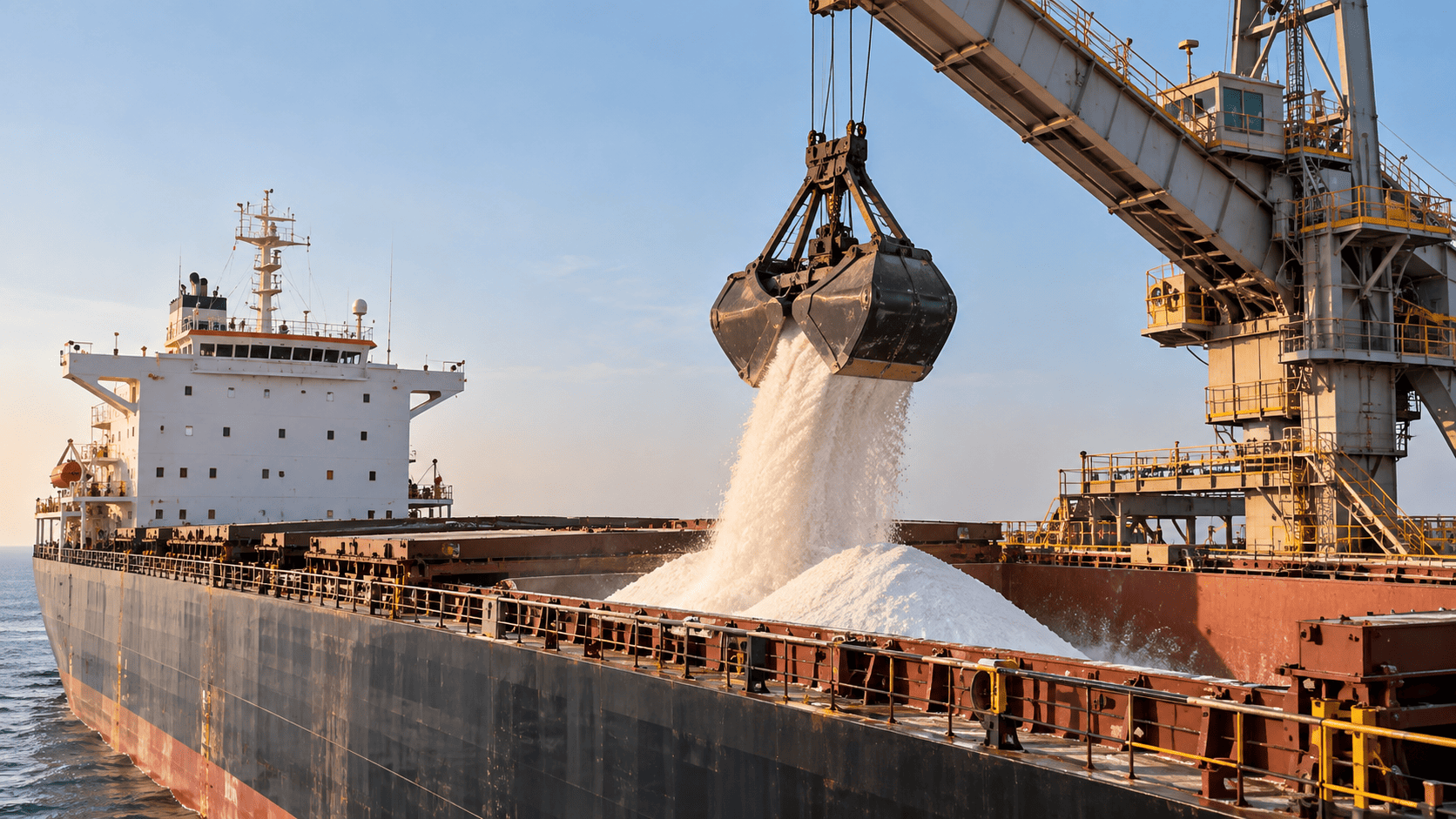
The investment thesis for Atlas Salt centers on meeting a critical supply gap in the North American salt market. The continent imports 8-10 million tonnes of de-icing salt annually from distant suppliers such as Chile, Egypt, and Mexico. These imports face high transportation costs, lengthy shipping times, and rising geopolitical and environmental pressures. Atlas Salt’s proximity to major East Coast markets, reaching Boston in three days versus over two weeks from overseas, gives it a durable competitive advantage, reinforced by rising “Buy North American” sentiment and demand for secure, sustainable supply chains.
The Updated Feasibility Study projects average annual post-tax cash flow of $188 million and pre-tax operating cash flow (EBITDA) of $325 million, demonstrating the project’s strong cash-generation potential. With a base-case price of $81.67/t and AISC of $34.90/t FOB Turf Point, the project maintains significant operating margins and robust downside protection. Sensitivity analysis shows that even at 10% lower pricing ($73.50/t), the project retains an after-tax NPV8 of $500 million. The project’s shallow depth, proven room-and-pillar design, and established infrastructure all contribute to its cost efficiency and technical resilience.
Significant expansion potential remains through 868 million tonnes of inferred resources (95.2% NaCl) located outside the current mine plan. These zones exhibit excellent continuity and contain concentrations exceeding 98% NaCl purity, offering optionality for premium-grade markets. Over time, this inferred resource base can extend mine life or increase output capacity, supporting future growth and valuation re-rating.
Market fundamentals are highly supportive. The North American de-icing salt market is valued at $2.3-2.9 billion annually, with historical price growth of 4.2% CAGR from 2000-2024. As legacy mines close or approach end-of-life, such as Cargill’s Avery Island mine (2.5 Mtpa), and import costs rise, new domestic supply like the Great Atlantic Salt Project becomes critical to ensuring reliable road safety and supply security for municipalities and industrial users.
Management
Atlas’s leadership team combines technical depth, operational execution, and capital markets experience. President and CEO Nolan Peterson (MBA, P.Eng., CFA) has over 20 years in mine development and finance, previously advancing over $1 billion in asset value at World Copper. His dual technical and financial background ensures strategic decision-making grounded in project economics and risk management.
VP Engineering and Construction Robert Booth contributes over 30 years of engineering expertise and has delivered more than $1.5 billion in mine builds for Newmont and Hudbay. Project Director and General Manager Andrew Smith brings more than a decade of underground construction experience, having led over $500 million in mine builds at Dumas. CFO Jeffrey Kilborn, with two decades in mining finance and corporate advisory roles, provides strong financial governance and capital-markets discipline.
The Board includes Chairman and Founder Patrick Laracy, who brings 30+ years in resource exploration and development, and Rowland Howe, a veteran salt executive who led Compass Minerals’ Goderich mine to record annual output of 7.5 Mtpa. Together, this management and board composition ensures both technical credibility and operational excellence.
Growth Strategy
Atlas’s near-term strategy is focused on securing financing and moving the Great Atlantic Salt Project through construction toward first production. The company is working closely with Endeavour Financial on project financing options and exploring partnerships with institutional investors, equipment financiers, and potential offtakers. Its Memorandum of Understanding with Scotwood Industries for 1.25-1.5 Mtpa of salt supply provides tangible demand visibility, covering roughly one-third of projected output. A $73 million equipment financing agreement with Sandvik Mining and Rock Solutions further validates the project’s technical and commercial feasibility.
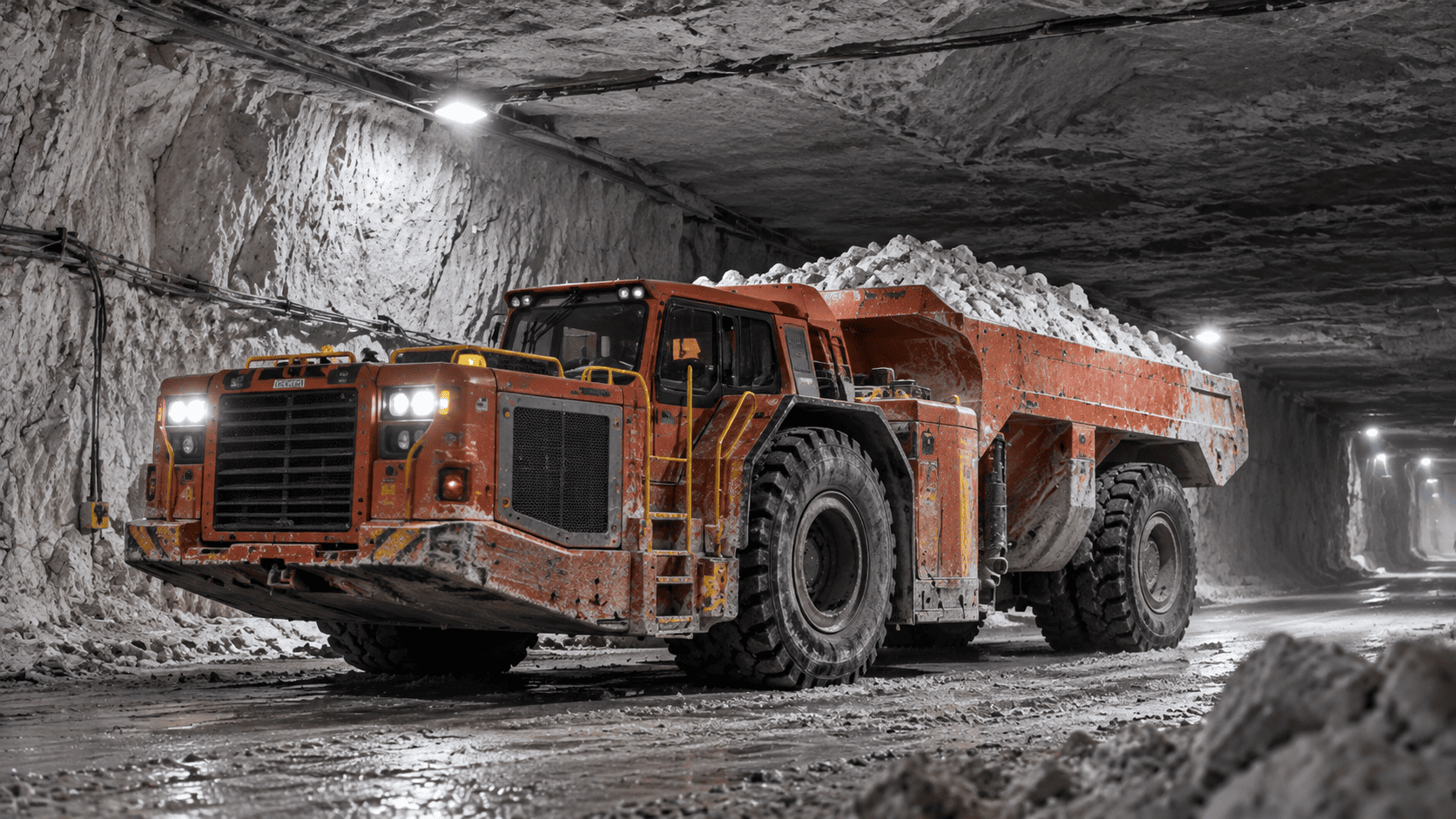
Atlas Salt’s mine design employs a simple and proven room-and-pillar method, previously validated at Irish Salt Mining’s Kilroot Mine. The deposit’s shallow geometry allows efficient access via decline, avoiding the capital intensity of deep-shaft mining. Infrastructure advantages include direct conveyor transport to Turf Point port, all-season road access via the Trans-Canada Highway, and grid connectivity to clean hydroelectric power. These factors collectively reduce operating costs and environmental impacts.
Beyond mine construction, Atlas Salt is building a broader value platform in industrial minerals. The combination of shallow depth, clean power, and high-purity resource creates the potential to diversify into higher-value salt products and downstream processing. As the project advances toward production, additional offtake discussions and engineering partnerships are expected to further strengthen the company’s financing structure and de-risk execution.
Financial Overview
As of October 2025, Atlas maintained $11.4 million in cash following an $8.7 million financing, with no significant debt and 108.2 million basic shares outstanding. The clean capital structure and ongoing investor support underscore the company’s credibility in capital markets.
The project’s financial metrics underscore its exceptional economic resilience. Over the life of mine, post-tax free cash flow is projected at $3.9 billion on total net revenue of $9.9 billion. Sustaining capital totals $609 million, with initial capex of $589 million. The 4.2-year payback highlights the project’s efficient capital recovery, while leverage to pricing remains moderate. The company’s enterprise value of $69 million (≈0.08× P/NAV) reflects a steep discount to feasibility-stage valuation peers, creating significant re-rating potential as it secures financing and begins construction.
Atlas Salt’s product portfolio will include bulk rock salt for de-icing, fine salt for industrial use, and potential high-purity grades for specialized applications. The potential Scotwood Industries offtake provides immediate access to retail de-icing markets across the US, while additional agreements under negotiation target municipal and industrial customers throughout eastern North America.
Risk Factors and Mitigation
- Commodity Price Volatility: Salt prices are relatively stable, but revenue depends on seasonal demand and contract renewals. Atlas Salt mitigates this through conservative pricing assumptions ($81.67/t base) and long-term offtake contracts.
- Financing Risk: The $589M initial capex requires diversified funding. Engagement with Endeavour Financial, Sandvik’s equipment financing, and offtake agreements reduce dependence on equity financing.
- Construction Risk: Cost overruns and delays are mitigated by an experienced technical team with proven track records and the use of a validated mine design.
- Regulatory Risk: Provincial EA approval and stakeholder engagement minimize permitting uncertainty. Newfoundland’s top-tier jurisdictional ranking supports predictable governance.
- Market Competition: Proximity to major East Coast markets, low transport costs, and North American branding provide durable competitive advantage against legacy and overseas suppliers.
- Environmental & Social Risks: Fully electric, low-impact design and community integration plans minimize ESG exposure.
Conclusion
Atlas Salt offers a clear industrial minerals investment opportunity with near-term production potential, high-grade resource quality, and resilient economics. As North America’s first new salt mine in nearly three decades, Atlas Salt is uniquely positioned to supply a structurally undersupplied market with secure, low-carbon, and cost-competitive domestic production.
With feasibility-level economics already validated, strong leadership, and a clear development pathway, Atlas Salt stands out among industrial mineral developers. The Great Atlantic Salt Project’s combination of operational simplicity, and strategic location positions it for long-term value creation and strategic appeal to consolidators and institutional investors seeking stable, cash-generative exposure to essential materials.
Atlas Salt Inc. Analyst Notes




Company Resources
Charts
Stay Informed

