




Salt Market Insight with Atlas Salt


Atlas Salt develops N. America's first new salt mine in 30yrs, targeting 8-10M ton annual import deficit with shallow deposit, port proximity, govt customers & recession-proof demand.
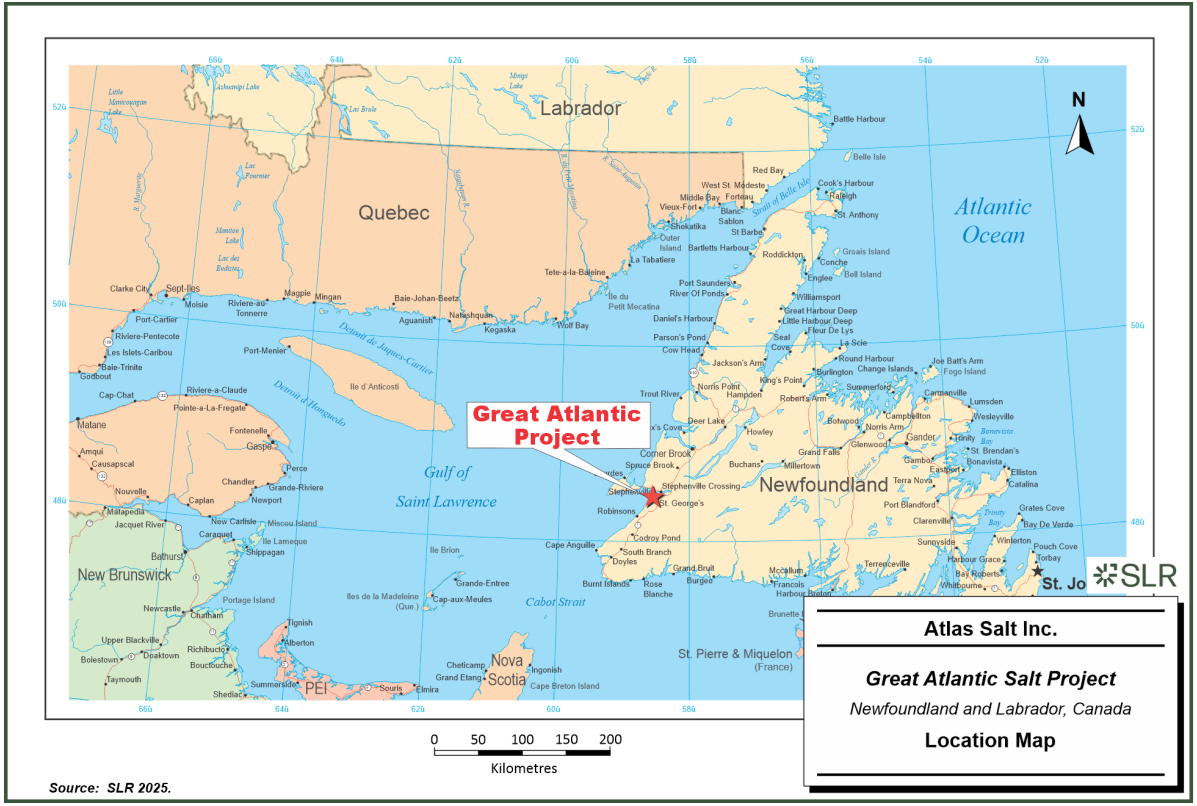
- Atlas Salt is developing North America's first new salt mine in nearly 30 years at Great Atlantic Salt Project in Newfoundland, targeting the structurally deficit de-icing road salt market worth US$26 billion globally
- The company has significant competitive advantages: shallow 200-meter depth versus typical 500-600 meters, proximity to existing port (3km), lower operating costs, hydropower access, and experienced local labor
- North American de-icing market imports 8-10 million tons annually; Atlas would need only 30-40% of imports at full 4 million ton production capacity to be economically viable
- Simple production process with no chemical processing, tailings, or refining - just mechanical crushing of 96% grade salt creates lower capital/operating costs and faster environmental approval (2 months provincial EA)
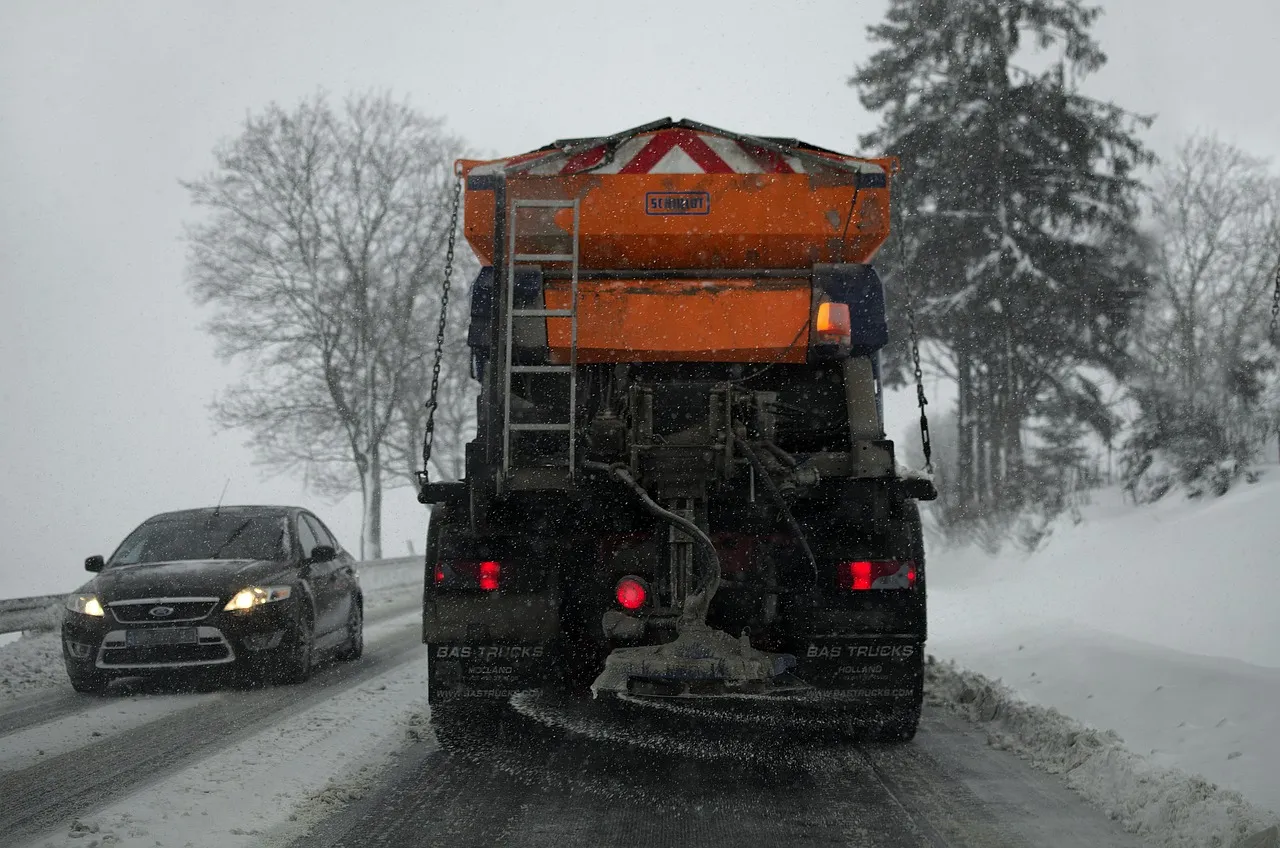
- Non-cyclical, recession-proof demand with government customers legally required to salt roads; spot prices surged from $65-75/ton to $190/ton in Ontario January 2026 during supply shortages
The salt industry remains one of North America's most overlooked yet critical infrastructure commodities. While most investors associate salt solely with table seasoning, a US$26 billion global market operates largely beneath public awareness, serving essential functions in chemical processing, water treatment, oil and gas drilling, agriculture, food flavoring, and - most critically for North American markets - road de-icing. As severe winter weather creates acute supply shortages across the northeastern United States and Canada, Atlas Salt (TSXV:SALT) is positioning itself to address a structural deficit that has persisted for decades. The company's Great Atlantic Salt Project in western Newfoundland represents the continent's first new salt mine construction in nearly 30 years, targeting a market characterised by aging infrastructure, legal mandates for usage, and an import dependency that creates both vulnerability and opportunity.
Understanding the North American Salt Market Structure
The North American de-icing road salt market operates as a regionally bounded industry despite global salt trade. Transportation and logistics costs create natural market boundaries, making it economically impractical for salt produced in North America to compete in Asian or African markets, and vice versa. Atlas Salt CEO Nolan Peterson explains the company's focus:
"We as a company are targeting the North American de-icing road salt market primarily and some of our salt may end up in other applications but because of that regional market bounded by transportation and logistics costs which are very influential in the salt market, that's kind of our playground that we are talking about."
The market serves diverse customers including major cities (Boston, New York, Philadelphia, Montreal, Ottawa, Toronto), state and provincial highway networks, retail consumers purchasing for residential use, and private businesses requiring parking lot maintenance. Critically, many jurisdictions legally mandate road salting for safety and liability reasons, creating inelastic baseline demand regardless of weather conditions. Cities and municipalities stockpile salt throughout the year, with procurement typically occurring through annual tenders issued in spring, though spot markets can see dramatic price movements during severe weather events.
Why North America Faces a Structural Salt Deficit
The structural shortage traces to several interconnected factors. Existing North American salt mines date predominantly from the mid-20th century - Goderich discovered in 1866 with industrial mining beginning in 1959, others established in 1906, 1955, 1966, and 1982. These aging facilities operate at 500-600 meter depths, often beneath lakes, requiring higher operating costs and substantial sustaining capital expenditures to maintain production standards.
Expansion of existing mines proves economically and regulatorily challenging. Peterson notes that regulatory agencies may require complete facility upgrades to current standards if operators seek permits for new mine sections, creating prohibitive compliance costs that mining companies avoid. Meanwhile, developing entirely new salt mines in North America has proven uneconomical for decades due to thin historical margins, permitting difficulties common to all mining projects, and the absence of deposits with favorable characteristics.
During the 25-year period without new mine construction, North American population growth continued, road networks expanded, and vehicle numbers increased, steadily widening the gap between domestic production capacity and consumption requirements. Some existing operations even face environmental pressure from advocacy groups seeking closures despite the market's deficit condition.
Atlas Salt's Competitive Advantages
Atlas Salt's Great Atlantic Salt Project differentiates itself through multiple structural advantages that together create economic viability where other potential projects fail. The deposit's shallow depth - beginning at approximately 200 meters versus the typical 500-600 meters - proves transformative for project economics. This allows access via drift (horizontal tunnel) rather than vertical shaft construction, dramatically reducing both capital costs and development timelines.
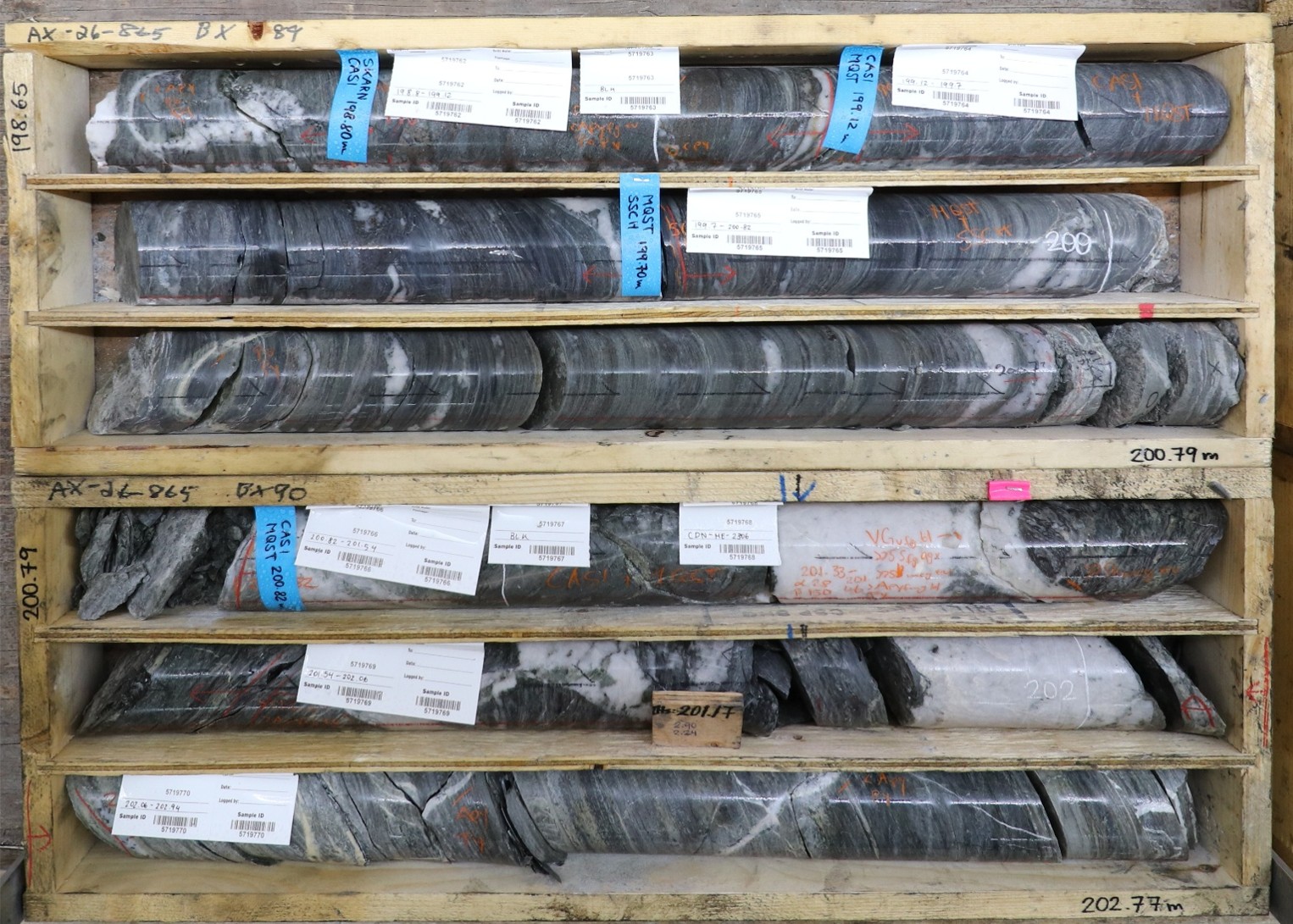
The deposit's pillow-shaped geometry provides predictable, continuous mineralisation rather than narrow veins or irregular ore bodies requiring selective mining. At 96% grade, the salt requires no upgrading, chemical processing, or refining beyond mechanical crushing to size specifications.
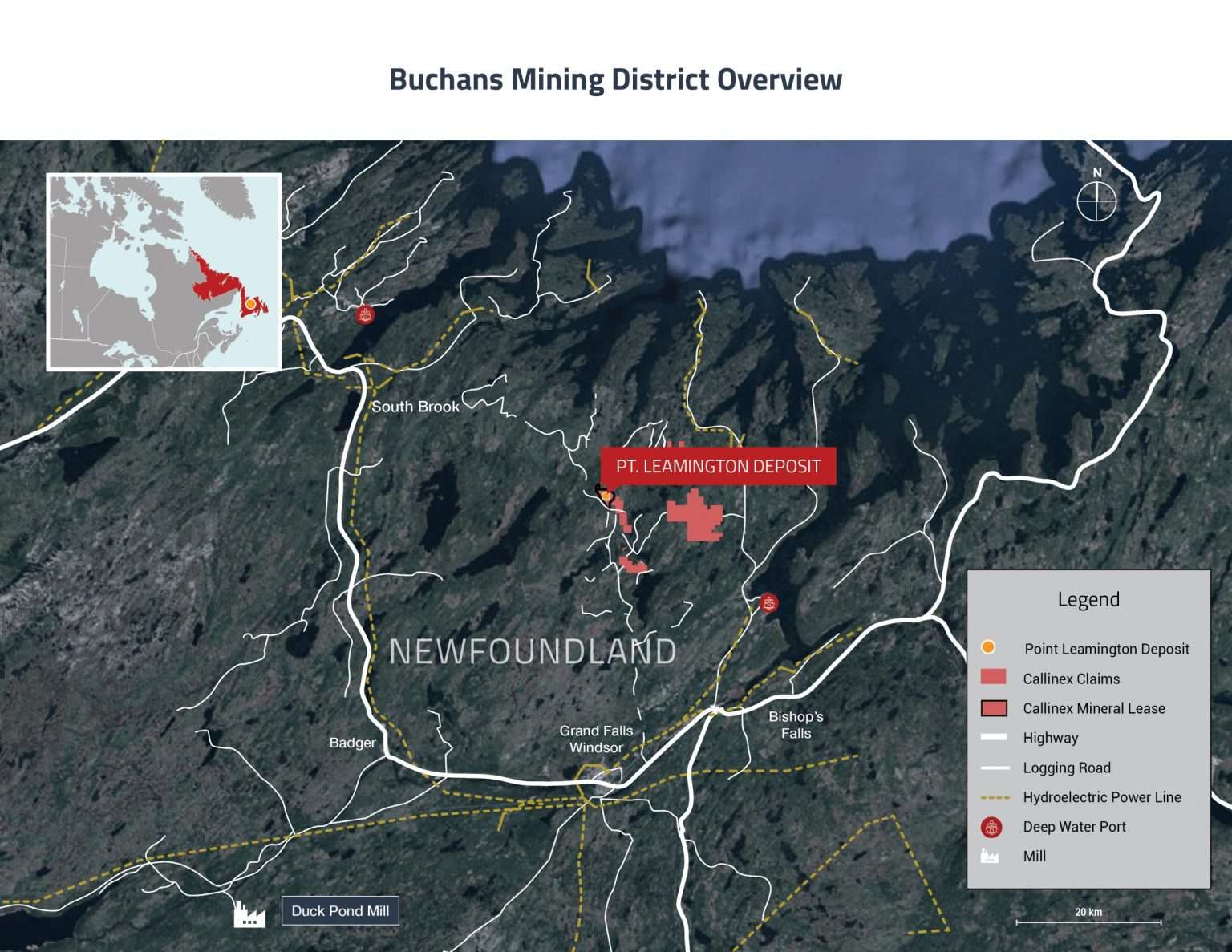
Location provides perhaps the most critical advantage. Situated just three kilometers from an existing port facility in western Newfoundland, the project gains access to Atlantic Ocean shipping lanes, the eastern seaboard, and the St. Lawrence Seaway network. This proximity to tidewater positions Atlas Salt competitively against both imports and landlocked domestic producers whose logistics costs limit market reach to roughly 50-100 kilometer radiuses.
Operational advantages include Newfoundland's hydropower connectivity, lower regional labor costs, and an experienced mining workforce currently traveling for work but seeking closer-to-home opportunities. These factors combine to project operating costs well below existing North American producers while maintaining pricing advantages against foreign imports even after accounting for their shipping costs.
The Salt Show, with Nolan Peterson, CEO of Atlas Salt
Production Process Simplicity & Environmental Profile
Unlike conventional hard rock mining requiring crushing, grinding, flotation, leaching, and refining processes with associated chemical inputs, water management, and tailings storage, salt mining - at least in Atlas Salt's configuration - operates with remarkable simplicity.
"We mine the salt not with drilling and blasting as is common with other hard rock mines. This salt is soft enough that it can be essentially sheared off the face with a continuous miner, which the best way to think about it is like a parmesan cheese grater that you'd see in the restaurant."
Mined salt passes through mechanical crushing to achieve desired sizing, then moves via conveyor belt directly to the port facility. The only additive is an anti-caking agent to improve flow characteristics. No chemical processing, smelting, refining, or water treatment occurs. No tailings storage facilities, waste rock piles, or heap leach pads exist. No pipelines transport hazardous chemicals through communities.
This simplified process delivered rapid environmental assessment approval - just two months from the provincial government, with federal authorities determining no federal EA process was necessary. The project's minimal surface footprint, absence of diesel fuel or chemical inputs, and potential for electrification create a dramatically different permitting and regulatory pathway compared to conventional mining projects.
Market Dynamics & Pricing Volatility
While salt demand remains fundamentally non-cyclical and recession-proof, weather volatility creates price dynamics that work in producers' favor. Cities and municipalities purchase relatively consistent salt quantities year-over-year regardless of weather forecasts, driven by legal obligations, budget-use-it-or-lose-it dynamics, and the recognition that shortages create immediate public safety and political consequences.
The inelastic nature of demand was dramatically illustrated in January 2026 when Ontario spot market prices surged from $65-75 per ton to over $190 per ton during severe winter conditions. These events make national news - New York Times and CBC coverage - reflecting the commodity's critical infrastructure status. When cities cannot secure adequate salt supplies, driving and walking conditions deteriorate, economic activity slows, and public outcry intensifies.
Most salt trades through annual contracts established via municipal tenders issued each spring, providing moderate price visibility. However, spot markets activate during shortage conditions, and multi-year contracts exist primarily at the business-to-business distribution level rather than government procurement. The combination of legal usage mandates, stockpiling requirements, and shortage-driven price spikes creates a price floor that only moves upward, with historical pricing demonstrating 4% annual growth above inflation over the past 30 years.
Path to Production & Financing Strategy
Atlas Salt has completed its feasibility study and received environmental assessment approval, positioning the project for near-term construction commencement. Early works permits authorise site clearing, pad preparation, and lay down area development. The company raised capital in fall 2025 and is working with London-based Endeavour Financial to structure the broader debt financing package, with due diligence already completed.
At full production capacity of 4 million tons annually - reached after a 2-3 year ramp-up period - the project would need to capture only 30-40% of current import volumes if displacing exclusively foreign production, or less than 10% of total North American consumption if displacing a combination of imports and higher-cost domestic production. This relatively modest market share requirement reduces execution risk.
The company has established a memorandum of understanding with Sandvik for equipment supply and potential equipment financing. Additional discussions continue with government entities and other financing partners. Peterson emphasises that debt lenders view the project through an infrastructure lens - similar to financing airports, power plants, or transportation networks - given the government customer base, legal demand mandates, and long-term sales visibility.
Investment Considerations for Different Investor Classes
Atlas Salt positions itself for two distinct investor constituencies. Resource sector investors seeking development-stage opportunities can evaluate the project through traditional metrics: current market capitalisation versus potential value at production, takeover probability, and execution risk relative to commodity exposure. The project offers leverage to a critical infrastructure commodity with structural supply deficits and non-cyclical demand.
Simultaneously, the project appeals to conservative investors and debt financiers seeking low-risk, steady returns.
"There's another class of investors and more importantly debt lenders and financers who also take a lens of this as a very surefire investment. We are working with lenders who consider this and view this as a kind of investing into an airport or a power plant or a highway or a subway - something that has long-term sales baked in because you're selling your product to governments, citizens and people."
This dual appeal reflects the commodity's unique characteristics: infrastructure-critical with legal usage mandates, yet offering resource sector upside through weather-driven price volatility and structural supply constraints. The combination of low downside risk with substantial upside potential in shortage scenarios creates an asymmetric risk-reward profile uncommon in mining development.
The Investment Thesis for Atlas Salt
- Structural Market Deficit: North America imports 8-10 million tons of deicing salt annually; Atlas requires only 30-40% market share of imports at 4M ton full production capacity
- Competitive Cost Position: Shallow 200m depth vs. industry standard 500-600m reduces capex and development timeline; 3km port proximity eliminates landlocked logistics disadvantages; Newfoundland hydropower and labor advantages create sustained operating cost benefits
- Non-Cyclical Demand with Upside Volatility: Legal mandates for road salting create price floor; government customers provide payment reliability; weather-driven shortages push spot prices 3x higher (Jan 2026: $65-75 to $190/ton in Ontario)
- Simplified Production = Lower Risk: No chemical processing, tailings, or refining required; 96% grade salt needs only mechanical crushing; 2-month environmental assessment approval demonstrates regulatory pathway; minimal surface footprint and no hazardous inputs
- First-Mover in Generation: North America's first new salt mine in 30 years targets market where existing producers face aging infrastructure (mines from 1906-1982), expansion economics challenges, and environmental pressures
- Infrastructure-Grade Financing Appeal: Government customer base and legal demand mandates attract debt lenders viewing project as infrastructure investment similar to utilities or transportation assets; dual appeal to resource sector upside seekers and conservative income investors
- Proven Feasibility with Clear Path: Completed feasibility study, environmental assessment approved, early works permits received, equipment financing MOU established, debt package in due diligence; multiple catalysts approaching
- Price Appreciation Track Record: Historical salt pricing shows 4% annual growth above inflation over 30 years; current supply constraints and aging producer infrastructure suggest continued pricing support
Macro Thematic Analysis
North America's deicing salt market exemplifies a broader infrastructure vulnerability emerging across developed economies: critical commodity supply chains constrained by aging production assets, regulatory barriers to new development, and import dependencies that create strategic risks. The salt deficit mirrors challenges in domestic mineral production more broadly, where decades of underinvestment in new capacity combined with population and economic growth create structural shortages that periodic weather volatility or geopolitical disruption can rapidly transform into acute crises.
The January 2026 price surge - nearly tripling in Ontario markets, demonstrates how weather events expose supply fragility in commodities taken for granted during normal conditions, creating investment opportunities in projects addressing structural deficits with demonstrable competitive advantages in critical infrastructure markets.
TL;DR: Executive Summary
Atlas Salt's Great Atlantic Salt Project addresses North America's structural 8-10 million ton annual deicing salt deficit with the continent's first new mine in 30 years. Competitive advantages include shallow 200-meter depth reducing capex, 3-kilometer port proximity enabling tidewater logistics, and simplified production requiring no chemical processing or tailings. At 4 million tons full capacity, the project needs only 30-40% of import displacement, targeting non-cyclical government customers legally mandated to purchase while benefiting from weather-driven price volatility that recently tripled Ontario spot markets to $190/ton.
FAQ's (AI Generated)
No economically viable deposits were discovered with the necessary combination of shallow depth, port proximity, and favorable permitting environment. Most potential sites face prohibitive logistics costs, deep deposits requiring expensive shaft development, or regulatory challenges that don't justify historically thin margins.
Budget constraints, storage limitations, and municipal budget-year cycles prevent multi-year stockpiling. Cities face "use-it-or-lose-it" budget dynamics where requesting less funding one year makes it harder to justify increased budgets later. Physical storage also deteriorates over extended periods.
Cities purchase relatively consistent quantities regardless of weather forecasts due to legal obligations and stockpiling requirements. Mild winters don't reduce purchases significantly - unused salt carries forward while shortages in severe winters drive overbuying the following year, creating stable baseline demand.
Yes, salt for chemical processing, water treatment, and food applications offers higher margins. However, Atlas focuses resources on the largest, most predictable deicing market to minimise execution risk and avoid diluting management attention across multiple market development efforts during the critical development phase.
Conveyor transport offers dramatically lower operating costs per ton-kilometer than trucking or rail, with minimal labor requirements and energy costs. This advantage compounds over the mine life, creating a sustained competitive moat that landlocked producers cannot replicate regardless of their mining costs.
Analyst's Notes





Subscribe to Our Channel




Stay Informed


