




Atlas Salt: Execution, ESG, & Utility-Style Cash Flows Position the Project for Re-Rating


Atlas Salt combines utility-style cash flows, high debt leverage, low-cost geology, ESG design, and port logistics to position the project for infrastructure-style valuation re-rating.
- Atlas Salt targets utility-style, GDP-independent cash flows driven by non-discretionary winter road safety demand, supporting infrastructure-style valuation frameworks.
- A 60-80% debt-funded capital structure for the CAD$600M build preserves equity, with stable procurement demand enabling higher leverage than typical mining projects.
- Shallow, dry, high-purity geology with decline access lowers capex, technical risk, and sustaining costs while maximizing saleable tonnage and operating margins.
- Conveyor-to-port logistics and Newfoundland proximity create a delivered cost advantage over imports, improving lead times, reliability, and customer working capital cycles.
- ESG design featuring battery-electric mining, hydro-powered operations, and rapid permitting broadens institutional capital access and lowers cost of equity, with debt closure as the key re-rating catalyst.
The Case for Utility-Style Cash Flows in Industrial Minerals
Institutional investors are increasingly distinguishing between cyclically exposed commodities and assets with GDP-independent demand, with road salt falling into the latter due to procurement driven by winter severity and public safety rather than economic cycles. This creates a revenue profile closer to regulated infrastructure than traditional mining, encouraging valuation frameworks that prioritize duration and cash-flow stability over price leverage. As returns in cyclical commodities compress and development risk rises, long-life bulk producers such as salt, potash, and aggregates are competing for infrastructure capital, supported by project finance, sovereign wealth, and pension participation. Salt’s non-discretionary, weather-linked, and regionally captive demand profile underpins debt-heavy financing structures aligned with income-focused institutional mandates.
Atlas Salt's Development Model: Execution Before Narrative
Project development in the mining sector is often characterized by staged capital commitment and phased de-risking. Atlas Salt has followed a methodical pathway through feasibility and environmental assessment before committing to construction capital, a sequencing that reduces the technical and regulatory unknowns that typically discount developer valuations.
Completion of the feasibility study and environmental assessment removes key technical and permitting uncertainties, while the appointment of Hatch as lead engineer provides independent validation of design and capital assumptions. The parallel engagement of Endeavor Financial to structure project debt signals a lender-facing financing process consistent with infrastructure-style development. A two-year pre-construction engineering program has informed equipment sizing and capital allocation to reduce ramp-up risk and improve schedule credibility, with construction expected to begin in the near term, ahead of finalizing the debt package.
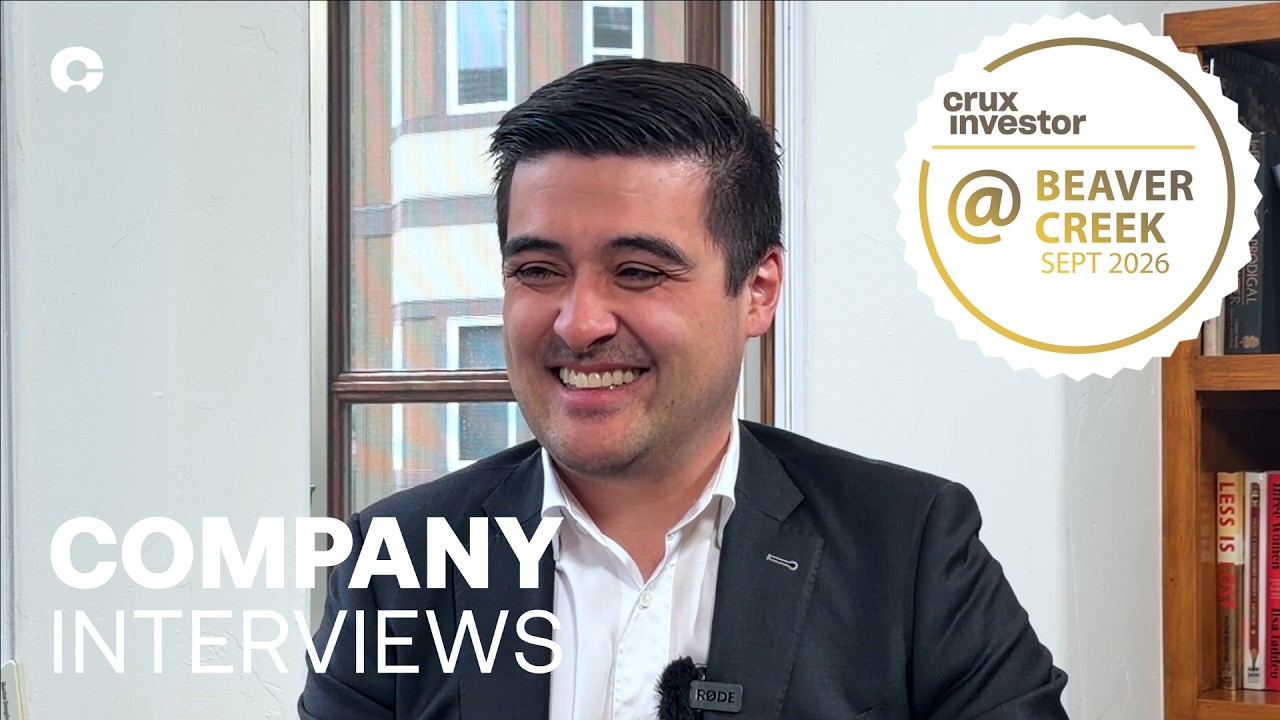
As Chief Executive Officer of Atlas Salt, Nolan Peterson noted:
“We've already engaged Hatch as our lead engineering partner. They believed this is a project they wanted to attach their name to.”
Capital Structure & Financing Strategy
The capital structure of a mining project is among the most consequential determinants of equity value at the development stage. How a project is financed determines the dilution profile, the cost of capital, and the ultimate net asset value per share available to early-stage equity holders.
High Debt Capacity Supported by Stable Demand
Atlas Salt is targeting 60-80% debt funding for its CAD$600M CAPEX, a higher leverage ratio than typical precious or battery metals projects, where price volatility constrains lender confidence. Salt’s non-discretionary, procurement-driven demand supports infrastructure-style credit assessments, attracting infrastructure funds, sovereign wealth, and project finance banks. Letters of intent from two major financing partners, received and publicly announced, reduce structuring execution risk. Peterson stated:
“We are targeting in the summer, Q2, to have a lockdown financing package for 60 to 80% of our financing needs that will come from debt.”
Equity Preservation, Alignment, and Re-Rating Pathway
A tight share structure (<110M shares) and >40% insider ownership limit dilution risk and enhance Net Asset Value (NAV) per share relative to equity-funded builds, while strengthening governance alignment for institutional investors. Securing the targeted debt package would remove a key development uncertainty, shifting valuation from a developer discount toward construction-stage or near-production multiples as financing, cost, and execution risks are progressively de-risked.
Geology & Cost Structure: Shallow, Dry, High-Purity Advantage
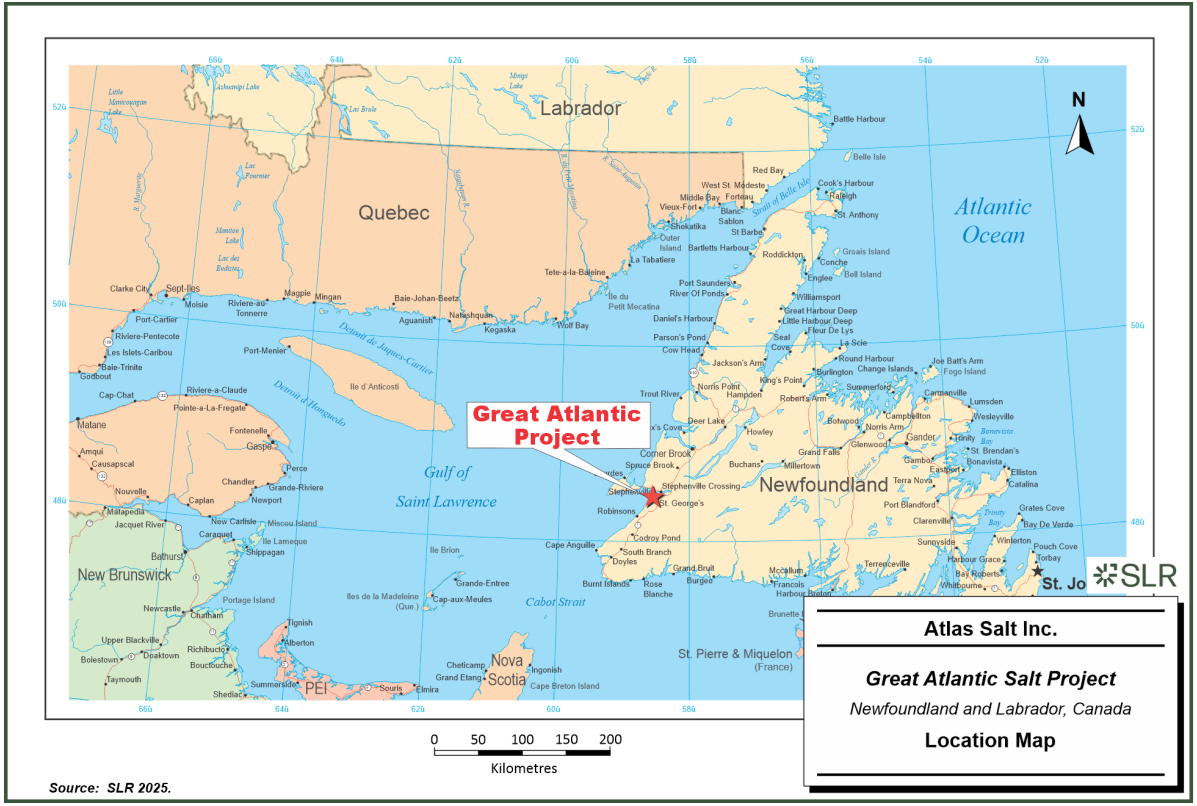
The Great Atlantic Salt Project’s economics are anchored in a shallow (~200m), decline-accessed, dry deposit that avoids the high-capex shaft infrastructure and water ingress risks typical of 500-600m deep, under-lake operations, reducing development time, technical complexity, and sustaining capital. With 95-96% purity, virtually every tonne mined is saleable, eliminating processing losses, tightening the production-to-revenue conversion, and supporting a lower all-in sustaining cost position through simplified flowsheet design and operating leverage. Feasibility study figures, with free cash flow expressed in US dollar terms, underpin the project's infrastructure-style valuation case. Peterson noted:
“The NPV is CAD $920 million, the IRR after tax 21.3%, and most importantly, the after-tax free cash flow is $188 million a year, for the 25-year mine life.”
Logistics Infrastructure: Port Access & Delivered Cost Advantage
In bulk commodities, margin is determined by delivered cost, making proximity to port and transport efficiency critical. Atlas Salt’s design centers on a 3km covered, insulated conveyor linking the underground mine directly to a deep-water, ice-free port, removing the need for road haulage between mine and port, reducing handling and emissions, and enabling reliable year-round shipments in a seasonal market where delivery certainty supports premium contracts.
North American markets currently import 30-40% of supply from Egypt and Chile, requiring longer transit times and higher working capital for buyers. Newfoundland’s location allows Atlas to serve the same northeastern ports using comparable vessel classes but with materially shorter lead times and lower freight costs, improving inventory cycles and customer reliability. Peterson stated:
"Our port proximity and our presence in Newfoundland allow us to move the same types of boats that foreign salt does to the same markets in 15 to 20%, or sometimes even less the time and the cost, and that gives us a huge advantage for shipping and delivery."
ESG Positioning & Access to Capital
Environmental, social, and governance criteria have shifted from disclosure frameworks to active capital allocation variables. Institutional mandates increasingly restrict investment in high-emissions assets or require ESG performance thresholds as conditions of participation. The Great Atlantic Salt Project has been designed with this capital market context in mind.
Electrification & Low-Carbon Power: Reducing Emissions and Operating Costs
Atlas Salt will operate 100% battery-electric equipment underground, eliminating diesel consumption, cutting Scope 1 emissions, and reducing ventilation requirements, which lowers operating and sustaining costs over the mine life. Combined with Newfoundland’s primarily hydro-powered grid for surface operations, the project sits at the low end of the mining sector’s carbon intensity, broadening access to ESG-focused institutional investors and reducing the cost of equity within its high-debt financing structure.
Community & Permitting Alignment
The environmental assessment was completed in approximately two months, reflecting alignment between the project's design parameters and regulatory requirements. Community and Indigenous stakeholder support reduces social license risk, a factor that has caused significant delays and value destruction at other mining projects in North America. The combination of a clean permitting record and active stakeholder alignment supports the project's ESG narrative for lenders and equity investors alike.
Valuation Framework & Risk Sensitivities: Re-Rating Pathway Defined
Development-stage assets trade below NAV until financing, construction, and ramp-up risks are retired. Atlas Salt's projected CAD $920 million NPV and 25-year cash flow profile currently sit at a discount consistent with this stage. Public comparables such as Compass Minerals and private transactions, including the 2022 acquisition of K+S American salt assets at 13x Earnings Before Interest, Taxes, Depreciation, and Amortization (EBITDA) and the December 2024 sale of US Salt at 17x EBITDA, indicate sustained market appetite for stable salt earnings, implying multiple expansion potential as the project advances through debt closure, build-out, and first production. Duration characteristics are comparable, though not equivalent, to infrastructure assets.
Execution Risks: Financing, Construction & Demand Variability
Equity returns remain sensitive to debt terms, coupon, tenor, and covenants, where higher financing costs compress NAV per share despite supportive lender confidence from non-discretionary demand. Underground ramp development, contractor performance, and conveyor-to-port commissioning introduce schedule and throughput risks during the construction and ramp-up phase. Salt pricing retains seasonal exposure to winter severity despite multi-year municipal contracts; recent Ontario shortages are supportive but not structural.
The Investment Thesis for Atlas Salt
- The project’s long-life production profile provides low-decline, utility-style cash flows that offer duration and revenue stability, differentiating Atlas Salt from cyclically exposed metals.
- Targeting 60-80% debt funding of CAD $600 million capital expenditure, the non-discretionary, procurement-driven demand allows higher leverage while preserving equity upside during construction.
- The shallow, dry, decline-accessed deposit avoids high-capex vertical shafts and water ingress, lowering upfront capital intensity, sustaining costs, and technical risk relative to deep-shaft peers.
- A 3-kilometre covered conveyor to a deep-water, ice-free port provides a durable delivery and cost advantage over imports from Egypt and Chile, reducing lead times, freight costs, and inventory risk for customers.
- Using 100% battery-electric underground equipment combined with hydro-powered surface operations positions the project at the low end of the mining sector’s carbon intensity, broadening ESG-focused investor access and lowering the cost of equity.
- Rapid environmental assessment completion and strong Indigenous and community support reduce social license and regulatory risk, enhancing confidence for both debt and equity investors.
- The debt package closure and imminent construction represent the primary milestones expected to shift the valuation from a development-stage discount toward construction or producing-asset multiples, creating potential for equity re-rating.
Atlas Salt’s investment case is defined by execution rather than commodity price upside or resource discovery, and its combination of deposit quality, capital structure discipline, logistics efficiency, ESG credentials, and clearly defined near-term milestones creates a differentiated, infrastructure-style, cash-flow-generating proposition for investors seeking stable, non-correlated exposure within a mining equity structure.
TL;DR
Atlas Salt offers infrastructure-like, long-life cash flows supported by non-discretionary salt demand, high debt capacity, low-cost geology, logistics advantages, and ESG alignment, with financing and construction milestones expected to drive a valuation re-rating from development discount to cash-flow multiples.
FAQs (AI-generated)
Atlas Salt targets stable, weather-driven road salt demand rather than commodity price cycles, creating predictable, infrastructure-style cash flows with lower earnings volatility.
Non-discretionary municipal procurement and long-term demand visibility allow lenders to underwrite cash flows with greater confidence, enabling a 60-80% debt funding structure that reduces equity dilution.
A shallow, dry, high-purity deposit accessed by decline eliminates costly shafts and water management, lowers capex and sustaining costs, and ensures most mined material is saleable.
Direct conveyor transport to a deep-water, ice-free port reduces handling, emissions, and haulage costs while enabling faster delivery than overseas imports, strengthening margins and contract reliability.
Securing the debt package, starting construction, and progressing toward first production are expected to reduce development risk and move the project toward infrastructure-style valuation multiples.
Analyst's Notes





Subscribe to Our Channel


.jpg)


Stay Informed


