



.png)
Condor Energies Inc
NYSE: CLOSED
TSE: CLOSED
LSE: CLOSED
HKE: CLOSED
NSE: CLOSED
BM&F: CLOSED
ASX: CLOSED
FWB: CLOSED
MOEX: CLOSED
JSE: CLOSED
DIFX: CLOSED
SSE: CLOSED
NZSX: CLOSED
TSX: CLOSED
SGX: CLOSED
NYSE: CLOSED
TSE: CLOSED
LSE: CLOSED
HKE: CLOSED
NSE: CLOSED
BM&F: CLOSED
ASX: CLOSED
FWB: CLOSED
MOEX: CLOSED
JSE: CLOSED
DIFX: CLOSED
SSE: CLOSED
NZSX: CLOSED
TSX: CLOSED
SGX: CLOSED

By Metal or Resource

By Project Stage
By Exchange
By Geography
By Investment Theme

Dune Oil

Crux Investor Index
5
–
Market Cap (USD)
4716733
Symbol
CSE:DUNE
DUNXF
Stage of development
Exploration
Primary COMMODITY
Oil & Gas
Additional commodities
No items found.
Company Overview
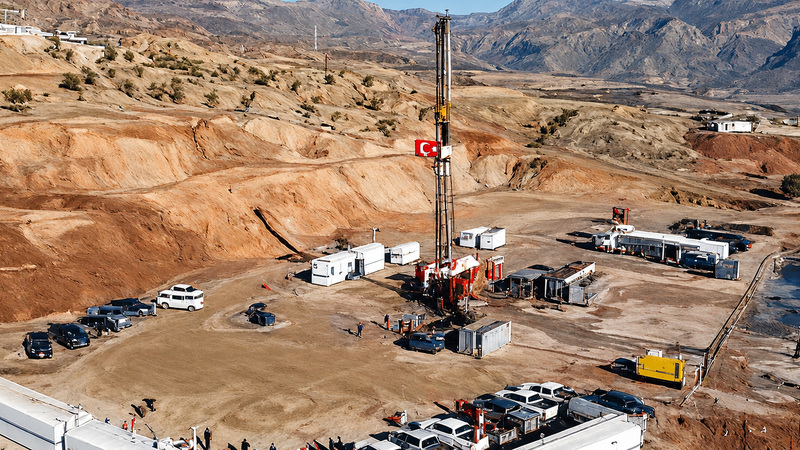
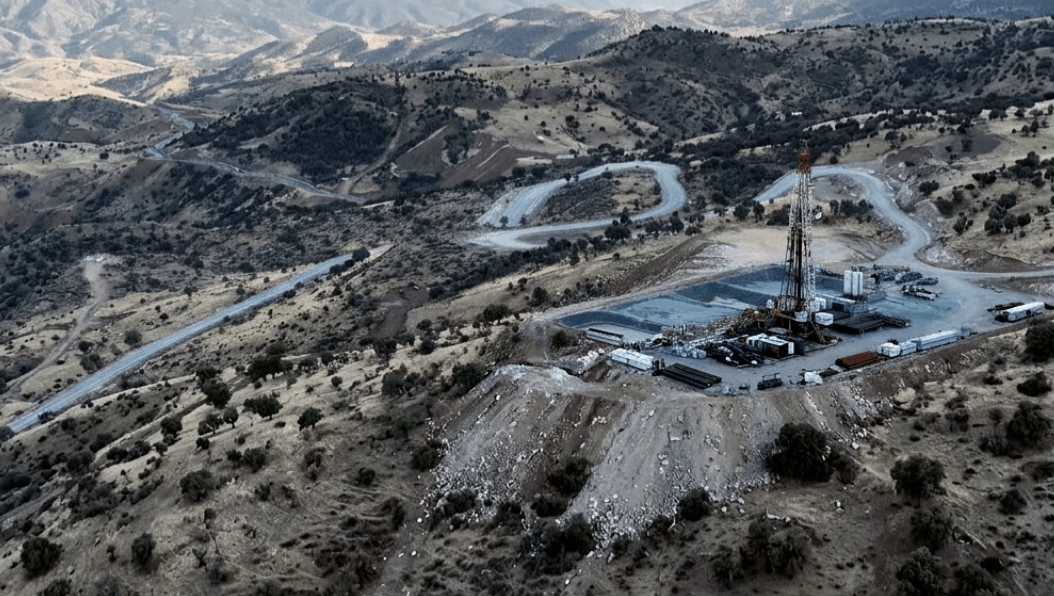
Dune Oil Corp. (CSE: DUNE; OTCQB: DUNXF; FSE: Z62), formerly Trillion Energy International Inc., is a junior oil and gas company focused on a conventional light oil discovery on Block M47 in the Gabar region of southeastern Türkiye, part of the Zagros Basin. The discovery was made in 2025, and the company is now advancing the asset toward commercial production. Dune Oil holds a 29% working interest in the M47 C3 and C4 licences alongside Derkim, the block licensor and operator with a 51% interest, and GYP (Güney Yıldızı), a farm-in partner and local driller holding the remaining 20%. The company is headquartered in Vancouver with an operations office in Ankara.
The company's current focus reflects a strategic pivot away from its earlier offshore natural gas operations in the Black Sea, which produced approximately 7.1 MMcf/d net at their peak before operatorship reverted to the state partner in 2024, after which production declined. In the second quarter of 2026, the company closed the sale of the Black Sea business, with the purchaser assuming its assets and liabilities and the company retaining a 7% gross overriding royalty on any future production, completed a 5-for-1 share consolidation, restructured its convertible debentures, and raised approximately $3 million in new equity, repositioning the company entirely around the onshore M47 discovery. On August 4, 2026, the company changed its name from Trillion Energy to Dune Oil Corp. and its CSE ticker to DUNE to reflect that focus; the OTCQB and Frankfurt symbols were unchanged.
Opportunity
The central investment case for Dune Oil rests on a confirmed, appraised light oil discovery in an established and rapidly growing regional oil fairway, combined with a valuation that sits at a substantial discount to comparable international peers. An independent resource evaluation prepared by Chapman Petroleum Engineering, effective December 31, 2025, assigns the North Field a 2C contingent resource of 27.6 million barrels net to Dune Oil's 29% working interest, with an unrisked NPV10 of US$734 million and a risk-adjusted NPV10 of US$594 million based on an 80% chance of development.
The oil is light, testing at 32.4 degrees API, and the C-1 discovery well produced 63 barrels during testing from the Mardin and Beloka Group fractured carbonate system, with net pay of 38 meters and roughly 150 meters of additional reservoir left undrilled due to a mechanical issue, a lost-circulation event, rather than a geological limitation. On a gross block basis, the Chapman evaluation assigns the North Field 1C, 2C and 3C recoverable resources of 28.1, 95.3 and 154.9 million barrels respectively, or 8.1, 27.6 and 44.9 million barrels net to Dune Oil. Beyond the confirmed North Field, Dune Oil holds exposure to further exploration upside: a Mid Lead prospect estimated at 47 million barrels of oil in place (best estimate, net to Dune Oil) and a South Lead prospect estimated at 28.7 million barrels. Chapman assigns the first Mid and South prospects unrisked prospective resources of 13.1 and 7.9 million barrels net (P50), with unrisked NPV10 of US$413 million and US$247 million respectively (US$127 million and US$88 million risked). A May 2026 third-party discovery approximately 500 meters off the M47 block line is understood, based on gravity and surface anticline data, to extend onto Dune Oil's acreage; the second Mid and South lead areas are not yet in the resource report and will be assessed after the 2026 seismic program.
The regional setting reinforces the opportunity: fields adjacent to Block M47 collectively grew from zero to more than 80,000 barrels of oil equivalent per day over five years, with the Turkish energy ministry reporting a regional record above 83,000 barrels per day in August 2026. TPAO-operated neighbours include Şehit Aybüke Yalçın at about 33,000 boe/d with a reported one billion barrels in place, Şehit Esma Çevik at 24,000 boe/d on trend with the South Lead, MİG at 13,000 boe/d northwest of the block boundary, Bulmuşlar at 8,000 boe/d on trend with the Mid Lead with 20 new wells planned for 2026, Ağaçyurdu and Yağızoymak, and TPAO's 2026 East Fındık discovery adjacent to the South Lead. Türkiye imports more than 85% of the oil it consumes, spending approximately US$35 billion annually with roughly 72% of crude sourced from Russia and Iraq, creating a structural gap that domestically produced oil from fields like M47 is positioned to help fill.
Management
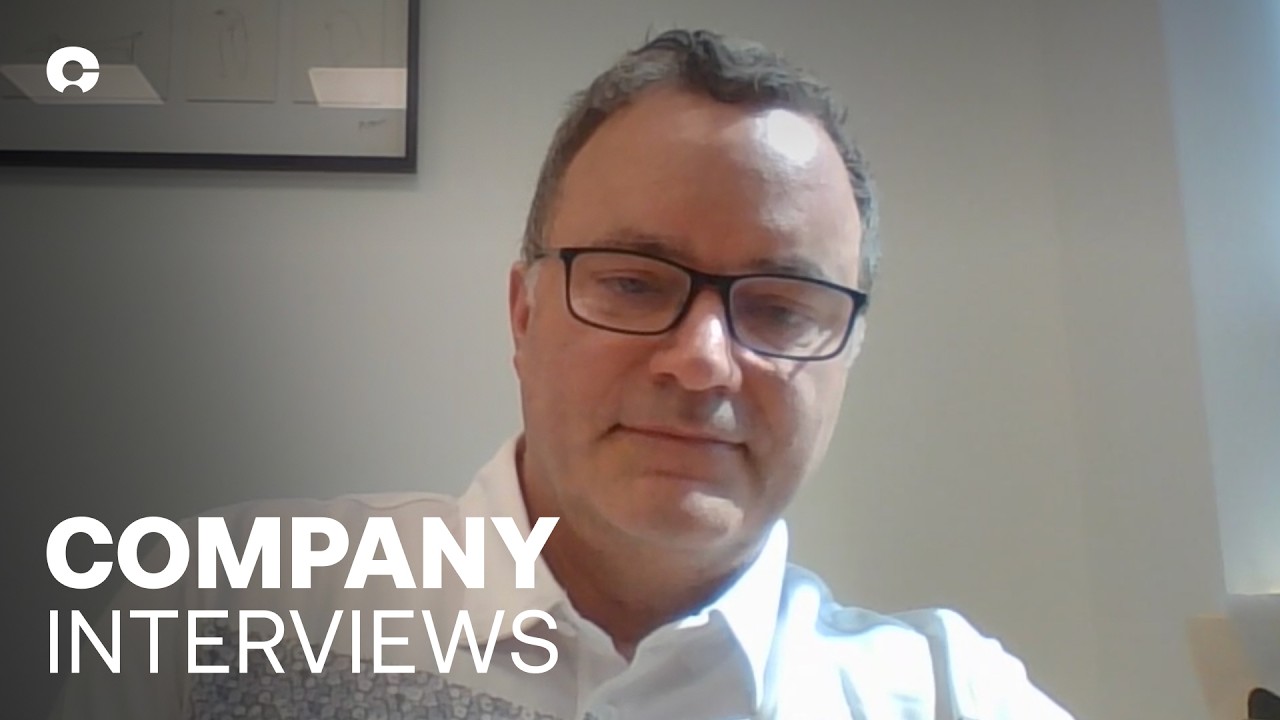
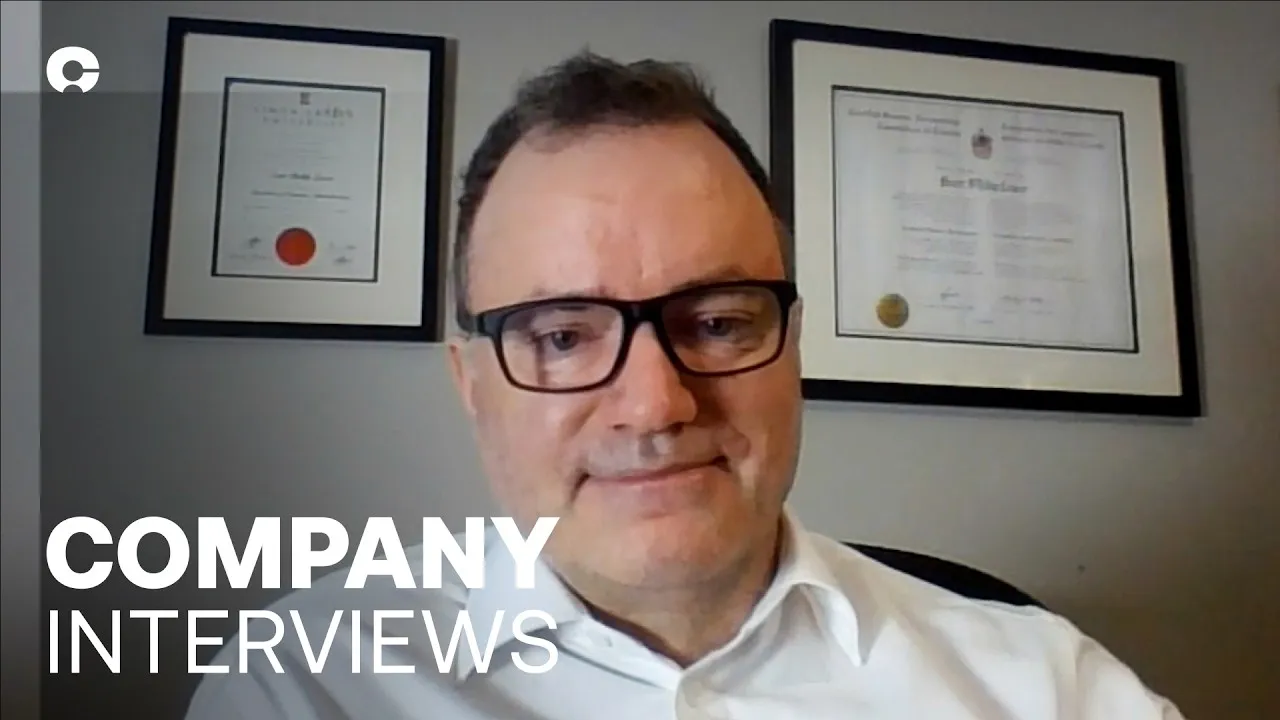
Dune Oil is led by Scott Lower, CPA, President, Chief Executive Officer and Director, who was appointed CEO on August 27, 2026 after serving as President. A Chartered Professional Accountant with a Bachelor of Business Administration from Simon Fraser University, he brings 15 years of oil and gas experience across consulting and public-markets roles and has been the day-to-day driver of the company's M47 strategy and financing. Sean Stofer, P.Eng., Chairman of the Board, served as Interim CEO through the company's transition and brings more than 20 years of energy leadership, having founded and directed energy development, engineering-procurement-construction and datacenter energy supply companies. Jordan Coleman, appointed Chief Operating Officer on August 27, 2026, has more than 18 years of international operations experience across the United States, Chad, Argentina and Paraguay, most recently as COO of CG International, an exploration company with assets in Chad, following operations, production and engineering roles with Schlumberger and President Energy. David Thompson, CFO, Director and Audit Committee Chair, brings 30 years of financial experience in oil and gas, having overseen Turkmenistan production operations that discovered producing reserves of 365 million barrels of oil and 2 TCF of gas, and previously served as Founder, President and CEO of Sea Dragon Energy.
Jay Park, KC, a Director, is an energy lawyer who has worked on upstream oil and gas transactions in more than fifty countries, including Türkiye, and previously served as CEO and then Chairman of ReconAfrica. Neil Maedel, appointed an independent Director on August 27, 2026, has more than 45 years of capital-markets, investment-banking and international resource-sector experience, including roles at RBC Dominion Securities and Haywood Securities, founding Zurich-based ProTrader Finanz AG, and serving as Director of Business Development for Manas Petroleum, for which more than US$250 million was raised through equity financings and farm-outs. The board is to be set at six directors at the annual general meeting scheduled for November 16, 2026.
The technical team includes Mokhles Ahmad, a geoscientist with more than 25 years of exploration and development experience serving as G&G Manager, Burak Tolga Terzi, General Manager for Türkiye with more than 18 years of experience including roles at Valeura Energy and the State Oil Company of Azerbaijan, and Barry Wihak, VP Business Development, who brings 45 years of oil and gas experience in engineering and business development, including a role in closing a US$100 million farm-out and acquisition deal with Equinor and Transatlantic Petroleum in Türkiye.
Growth Strategy
Dune Oil's near-term growth strategy centers on generating first cash flow from the existing C-1 well before pursuing broader field development. The initial work program, scheduled for the fall of 2026, involves re-entering and sidetracking the C-1 well using managed-pressure drilling to reach the undrilled portion of the reservoir, completing and testing the well zone by zone, and producing through a rented Early Production Facility with oil trucked to the Tüpraş Batman refinery approximately 130 kilometers away, allowing sales during testing without waiting for permanent infrastructure. First production is targeted for around the end of 2026 or early 2027, subject to funding and operations. Company estimates put the netback at approximately $50 per barrel at $72 per barrel oil, based on a realized price less royalty, operating costs and trucking costs, with an estimated well payback of around two months.
A pipeline expected to be completed in 2026, with capacity exceeding 150,000 barrels of oil equivalent per day into the nearby Esma Çevik system, is intended to provide scale-up capacity beyond initial trucking. Under Dune Oil's earn-in commitment, the company is funding US$15 million of work-program capital over two years to reach its 29% interest, of which $800,000 has been spent to date, covering 80% of the costs of the next three wells and a US$2.75 million back-cost contribution to Derkim. The commitment is payable in two tranches: approximately US$4.3 million in 2026 for one to two new wells, the C-1 re-entry, early production equipment and a 40-kilometer staged 2D seismic program over the Mid and South leads, and approximately US$8 million in 2027 for a minimum of three further wells, potentially including horizontal wells. GYP contributes a further US$2.5 million in each tranche, bringing the minimum combined program to approximately US$20 million over 24 months for at least four production wells and one exploration well; Derkim and GYP have committed US$7 million and US$8 to 9 million respectively to the block, most of it already spent. The seismic program was tendered in August 2026, contractor site visits at the block have been completed, and acquisition is scheduled to begin in September 2026 to mature the Mid and South Lead prospects and add further drilling locations.
Beyond the initial wells, the company's conceptual development plan for the North Field under the 2C case involves 82 total wells drilled through 2031, each vertical well assumed to recover approximately 1.16 million barrels gross at an initial rate of 500 to 1,000 barrels per day and to generate roughly US$5.5 million of first-year netback on company estimates, building toward a targeted net production rate of 8,816 barrels of oil per day by 2030, with a nearer-term target of 600 to 1,000 barrels of oil equivalent per day net to Dune Oil by the end of the two-year work program.
Financial Overview
Dune Oil's enterprise value works out to approximately $0.21 per 2C barrel on a working-interest basis today, and management estimates this would increase to approximately $0.91 per barrel following a contemplated US$27 million capital raise that combines debt conversion and new equity. The share count has two bases: approximately 60 million shares issued as of mid-2026, which at roughly $0.16 per share implies a market capitalization near C$10 million, and approximately 113 million shares on the as-converted basis used in the September 2026 corporate presentation, which assumes conversion of the remaining convertible debentures and implies a market capitalization of approximately C$20 million (approximately 128 million shares fully diluted).
By comparison, peer companies operating in similar geological settings or development stages trade at higher multiples, including ShaMaran Petroleum in Kurdistan Iraq, in the same Zagros carbonate play as M47, at $3.41 per barrel of combined 2P and 2C reserves and resources, Vaalco Energy at $3.32, and among exploration and early-stage peers Sintana Energy at $2.58 per 2C barrel, representing the peer median, and TAG Oil at $1.45. On this basis, Dune Oil's own analysis positions its valuation at a 92% to 94% discount to these comparables even after the contemplated raise.
Net capital expenditure under the 29% working interest for the North Field's 2C development case is estimated at approximately $90 million, with an operating cost of $8.00 per stock-tank barrel before royalty. The company's June 30, 2026 interim financial statements, filed August 31, 2026, show the balance sheet after the restructuring: cash of approximately US$324,000, total assets of approximately US$1.1 million including about US$508,000 of capitalized M47 exploration spending, and total liabilities of approximately US$9.4 million, down from US$42 million at December 31, 2025, comprising about US$1.4 million of payables, US$3.8 million of loans and US$4.2 million of remaining convertible debentures. The debenture settlement announced March 27, 2026, produced a US$7.9 million non-cash gain on extinguishment in the first half, and the company remains pre-revenue with a stockholders' deficiency of approximately US$8.3 million.
Risk Factors and Mitigation
- Commodity Price Volatility: Project economics depend on realized oil prices, and the company's own netback sensitivity shows a range from $44 per barrel at $65 Brent to $61 per barrel at $85 Brent. The netback is reported to hold in relative terms across this pricing range, meaning the trucking and early-production model remains viable across a reasonable band of oil prices rather than depending on a single price assumption.
- Regulatory & Permitting Risks: Operations in Türkiye are subject to a 12.5% royalty rate and a 25% corporate tax rate, as well as changes in law or in their application by the Turkish government, including tax and environmental requirements. The region has an established, active TPAO-operated production base with multiple neighboring fields already in commercial operation, which is cited as evidence of a workable regulatory and operating environment for oil development in this specific basin.
- Technical & Operational Risks: The C-1 well's incomplete penetration of the Mardin reservoir resulted from a lost-circulation event rather than a geological failure, and roughly 100 meters of the best pay interval remains undrilled; the planned sidetrack is designed to use managed-pressure drilling specifically to address this mechanical cause. Similarly, the Fındık-1 well targeting the South Lead stopped short of its target formation due to a comparable lost-circulation issue, and the follow-up Fındık-2 well is also planned to use managed-pressure drilling to overcome it, indicating the operational issue has been identified and a specific technical response designed around it.
- Environmental & Social Risks: Oil and gas operations in a mountainous onshore setting entail standard environmental considerations associated with drilling, water handling, and infrastructure construction, and the company notes that early production does not require water separation, simplifying initial environmental handling requirements at the wellsite.
- Financing Risk: Dune Oil's growth plan depends on completing a contemplated capital raise, described as a combination of debt conversion and a new equity raise, to fund its remaining earn-in obligations and further seismic and drilling work; approximately $14.2 million of the $15 million total earn-in commitment remains outstanding against cash of approximately US$324,000 at June 30, 2026. The company raised approximately C$2.5 million over the summer of 2026, largely for the seismic program, and management has stated publicly that it is raising additional equity to fund the 2026 tranche. The company's netback economics and short estimated well payback of around two months are cited as supporting the case that early production cash flow can help fund the subsequent, larger development program.
- Execution Risk: The earn-in structure requires Dune Oil to fund its own drilling and seismic commitments on a defined schedule, and the Mid and South Lead prospects remain undiscovered prospective resources in the current resource report, with the second lead areas not yet assessed pending the seismic program scheduled to begin in September 2026. The company has stated multiple near-term catalysts, including the fall 2026 seismic program, the C-1 re-entry and flow test, North Field first production, Mid or South Lead drilling in late 2026, the ongoing capital raise, and the annual general meeting on November 16, 2026, each of which represents a point where execution against the stated timeline can be assessed.
Conclusion
Dune Oil presents a company with a confirmed, independently evaluated light oil discovery in an actively developing regional oil fairway in southeastern Türkiye, alongside additional prospective resources in the Mid and South Lead areas that remain to be tested through further seismic work and drilling. The North Field carries an unrisked NPV10 of US$734 million against a current market capitalization in the tens of millions of dollars, and the company's own analysis positions its valuation at a substantial discount to peer companies operating in comparable geological settings or development stages.
The near-term plan of re-entering and sidetracking the existing C-1 well and producing via trucking to a nearby refinery is designed to generate cash flow ahead of a larger, multi-year development program, with first production targeted for around the end of 2026 or early 2027, while a contemplated capital raise is intended to fund the company's remaining earn-in obligations. Investors should weigh the technical uncertainties inherent in the still-unconfirmed Mid and South Lead prospects, the financing dependency of the broader development plan, and standard oil and gas operational and regulatory risks against the combination of a confirmed discovery, a newly strengthened management and technical team, and a stated valuation gap relative to comparable companies.
Article
Dune Oil Analyst Notes

No analyst notes
Charts
Similar Companies
Stay Informed
Sign up for our FREE Monthly Newsletter, used by +45,000 investors
By clicking send you'll receive occasional emails from Crux Investor. You always have the choice to unsubscribe within every email you receive.

