





E-Tech Resources
NYSE: CLOSED
TSE: CLOSED
LSE: CLOSED
HKE: CLOSED
NSE: CLOSED
BM&F: CLOSED
ASX: CLOSED
FWB: CLOSED
MOEX: CLOSED
JSE: CLOSED
DIFX: CLOSED
SSE: CLOSED
NZSX: CLOSED
TSX: CLOSED
SGX: CLOSED
NYSE: CLOSED
TSE: CLOSED
LSE: CLOSED
HKE: CLOSED
NSE: CLOSED
BM&F: CLOSED
ASX: CLOSED
FWB: CLOSED
MOEX: CLOSED
JSE: CLOSED
DIFX: CLOSED
SSE: CLOSED
NZSX: CLOSED
TSX: CLOSED
SGX: CLOSED

By Metal or Resource

By Project Stage
By Exchange
By Geography
By Investment Theme

Namibia Critical Metals Inc

Crux Investor Index
5
–
Market Cap (USD)
33948321
Symbol
TSXV:NMI
Stage of development
Exploration
Primary COMMODITY
REE
Additional commodities
Copper
Nickel
Lead
Zinc
Vanadium
Gold
Company Overview
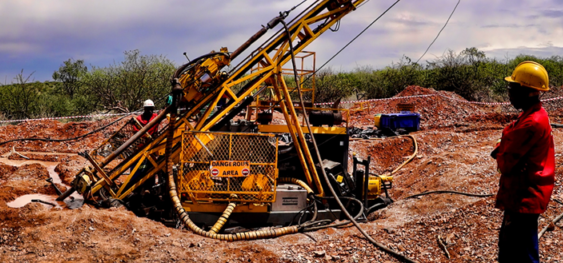
Namibia Critical Metals Inc. is a Canadian-based exploration and development company advancing the Lofdal Heavy Rare Earth Project in Namibia, one of the world's largest undeveloped xenotime-hosted heavy rare earth deposits. With a measured and indicated mineral resource of 58.5 million tonnes at 0.16% TREO containing 5,440 tonnes of dysprosium oxide and 745 tonnes of terbium oxide, Lofdal represents a globally significant source of critical heavy rare earth elements.
The project is fully permitted under a 25-year mining license (ML200) granted in July 2021 and is being developed through a strategic joint venture with Japan Organization for Metals and Energy Security (JOGMEC).
Namibia Critical Metals is listed on the TSX Venture Exchange (TSXV: NMI) and OTCQB (NMREF), with a market capitalization of CAD$10 million as of June 2025.
Opportunity
Namibia Critical Metals offers a compelling investment opportunity in the critical minerals sector through its Lofdal Heavy Rare Earth Project, which is positioned to supply approximately 5% of global dysprosium and terbium demand. The project's preliminary economic assessment demonstrates robust economics with a 16-year mine life producing 2,000 tonnes of TREO annually, including 117 tonnes of dysprosium and 17.5 tonnes of terbium per year. With an after-tax NPV of US$391 million at a 5% discount rate and an IRR of 28%, Lofdal delivers exceptional returns supported by an initial capital requirement of only US$207 million.
The project's low operating costs of US$27.9 per tonne and simple xenotime mineralogy provide a significant competitive advantage over complex rare earth projects worldwide. Located in Namibia, Africa's top mining investment destination with a #26 ranking on the Fraser Institute Policy Perception Index, Lofdal benefits from excellent infrastructure, strong rule of law, and government support for critical mineral development.
Management
Namibia Critical Metals is led by a highly experienced management team with deep expertise in African mining, rare earth geology, and project development. Chairman William L. Price brings decades of Wall Street investment management experience as former Chairman and Global CIO of Dresdner RCM Global Investors.
President Darrin Campbell, a Chartered Professional Accountant, has 20 years of executive financial management experience and previously served as CFO of Ressources Appalaches, bringing Nova Scotia's first gold mine into production in 14 years.
Vice President Exploration Rainer Ellmies, PhD, EurGeol, provides in-country management from Windhoek with over 30 years of experience and direct involvement in significant discoveries including Lofdal HREE, Opuwo Cobalt, and Ondoto LREE deposits.
Chief Geologist Gideon Kalumbu contributes 15 years of Namibian exploration experience, while Metallurgical Advisor Barbara Mulcahy, Pr.Eng, brings 25 years of process engineering expertise. Legal and ESG affairs are managed by Uda Nakamhela, LL.M., with over 20 years of experience in Namibian mining sector governance.
Growth Strategy
Namibia Critical Metals is executing a focused development strategy to advance Lofdal from PEA to production while maximizing resource value and operational efficiency. The company is completing a pre-feasibility study in October 2025, following successful pilot-scale flotation and hydrometallurgical test work that confirmed process scalability and potential opex reductions. Development plans include infill drilling to upgrade resource categories, optimization of flotation circuits for finer particle sizes, and testing of XRT sorting technology to upgrade low-grade stockpile material.
The project timeline targets DFS completion in 2026, with construction to follow. Strategic partnerships remain central to the growth strategy, with JOGMEC having invested US$16.7 million to date and earning a 40% interest, with an option to increase to 51% by funding to production. The company is also exploring opportunities for a rare earth separation plant in Namibia through the Rare Earth Alliance Namibia, which would capture additional downstream value.
Financial Overview
Namibia Critical Metals maintains a lean corporate structure while advancing its fully-funded development program through the JOGMEC joint venture. Total project expenditures to date exceed CAD$40.7 million, with JOGMEC contributing CAD$16.7 million since 2020 to earn its 40% interest. The Lofdal PEA demonstrates strong financial returns with an after-tax NPV of US$391 million and 28% IRR at base case rare earth prices of US$587/kg for dysprosium oxide and US$2,493/kg for terbium oxide.
The project requires initial capital of US$207 million including 30% contingency, with sustaining capital of US$11.4 million over the mine life. Average annual free cash flow is projected at approximately US$50 million over 16 years, with a capital payback period of just 3.2 years after tax. The company benefits from strong shareholder support, with Bannerman Energy holding 43% and insiders owning 22% of issued shares. With JOGMEC funding the PFS and DFS, Namibia Critical Metals is positioned to minimize dilution while retaining significant upside exposure.
Risk Factors and Mitigation
Namibia Critical Metals actively manages key development risks through strategic partnerships, technical excellence, and strong stakeholder relationships. Commodity price risk is mitigated by Lofdal's low operating costs and focus on dysprosium and terbium, which face structural supply shortages and growing demand from electric vehicles and wind turbines. Permitting risk is minimized as the project holds a fully executed 25-year mining license and environmental clearance certificate, with JOGMEC's involvement providing additional government relations support.
Technical risks associated with fine-grained xenotime mineralization have been addressed through 10 years of metallurgical test work involving over 160 flotation tests and successful pilot-scale confirmation. Funding risk is reduced by the JOGMEC joint venture structure, which provides staged investment through to production, while the company's carried interest option protects against dilution below 21%.
Environmental and social risks are managed through comprehensive ESG programs, long-term community agreements with two Traditional Authorities and Conservancies, and a thorium off-take MOU with Copenhagen Atomics for responsible radioactive waste management.
Conclusion
Namibia Critical Metals Inc. represents a unique investment opportunity in the critical minerals sector, with its Lofdal Heavy Rare Earth Project positioned to become a significant global supplier of dysprosium and terbium outside China. The combination of a large, high-grade resource, simple xenotime mineralogy, fully permitted status, and strategic Japanese government partnership through JOGMEC creates a compelling, de-risked development story. With a PEA demonstrating 28% after-tax IRR, low capital intensity, and strong ESG credentials in Africa's top mining jurisdiction, Namibia Critical Metals is well-positioned to deliver exceptional shareholder value.
As the company advances through PFS completion in October 2025 toward DFS and production, it offers investors leveraged exposure to structural deficits in heavy rare earth supply while maintaining a responsible, community-focused approach to development.
Article
Namibia Critical Metals Inc Analyst Notes

No analyst notes
Company Resources
Submitted by
Namibia Critical Metals Inc
Charts
Similar Companies
Stay Informed
Sign up for our FREE Monthly Newsletter, used by +45,000 investors
By clicking send you'll receive occasional emails from Crux Investor. You always have the choice to unsubscribe within every email you receive.

