




Namibia Critical Metals Reports Positive Pre-Feasibility Study for Lofdal Heavy Rare Earths Project


Namibia Critical Metals reports PFS results for Lofdal project with NPV of $275.5M to $747.9M and IRR of 19.0% to 34.8%, targeting dysprosium, terbium and yttrium production.
- After-tax net present value of $275.5 million (Base Case) to $747.9 million (Divergent Case) at 5% discount rate with internal rates of return of 19.0% to 34.8%
- Annual production target of 1,478 tonnes total rare earth oxides including 119 tonnes dysprosium, 17.8 tonnes terbium and 841 tonnes yttrium over 13-year mine life
- Total capital requirement of $347.9 million with capital payback period of 2.75 to 4.2 years
- High temperature acid bake process achieves 94% dissolution rates for terbium and dysprosium
- Mining licence valid through 2046 and joint venture partnership with Japan Organisation for Metals and Energy Security
Namibia Critical Metals Inc. (TSXV: NMI, OTCQB: NMREF) is a Canadian mineral development company focused on the Lofdal Heavy Rare Earths Project in Namibia. The company holds a 95% interest in the project through its subsidiary, with 5% held by Philco One Hundred Ninety-Six for historically disadvantaged Namibian participation. The project is located 450 kilometres northwest of Windhoek with road access to Walvis Bay port. The company has completed exploration programmes totalling 58,000 metres of drilling across 411 boreholes. Namibia Critical Metals operates under joint venture arrangements with JOGMEC, which is earning towards a 50% project interest.
Pre-Feasibility Study Results and Project Economics
The Pre-Feasibility Study presents two economic scenarios based on different rare earth pricing assumptions. The Base Case assumes partial supply normalisation whilst the Divergent Case reflects sustained supply constraints affecting global rare earth markets.
The Base Case generates pre-tax NPV of $389.2 million and after-tax NPV of $275.5 million using a 5% discount rate. Internal rate of return reaches 21.7% pre-tax and 19.0% after tax. Life of mine cash flows total $709.6 million pre-tax and $513.1 million after tax, with capital payback within 4.2 years. Base Case pricing assumes dysprosium oxide at $663 per kilogramme, terbium oxide at $2,880 per kilogramme and yttrium oxide at $60 per kilogramme.
The Divergent Case projects pre-tax NPV of $1,245.6 million and after-tax NPV of $747.9 million. Internal rates of return reach 44.1% pre-tax and 34.8% after tax, with cumulative cash flows of $2,027.4 million pre-tax and $1,242.3 million after tax. Capital payback occurs within 2.75 years. This scenario uses dysprosium oxide pricing of $855 per kilogramme, terbium oxide at $3,712 per kilogramme and yttrium oxide at $130 per kilogramme. Total capital costs remain at $347.9 million across both scenarios, including $57.4 million contingency. The project targets processing 3.01 million tonnes annually, comprising 1.10 million tonnes high-grade ore and 1.91 million tonnes lower-grade material. Proven and Probable Reserves total 32 million tonnes at 0.176% total rare earth oxide grade.
President Darrin Campbell stated:
"Lofdal is well positioned as one of very few advanced major Dy/Tb and Y projects outside China, with a supportive jurisdiction, a mining licence, fully environmentally permitted, an excellent relationship with the communities and a key strategic JV partner (JOGMEC)."
Technical Processing and Metallurgical Achievements
The processing flowsheet incorporates ore sorting, flotation and hydrometallurgical extraction. The design eliminates several unit operations from previous studies, reducing reagent consumption.
XRT sorting testing using TOMRA equipment with OBTAIN technology achieved upgrade factors of 2.3 to 2.7 on low-grade ore. The programme involved 200 test runs on 300 tonnes of material. Rare earth recoveries ranged from 60% to 70%. This pre-concentration enables economic processing of lower-grade material.
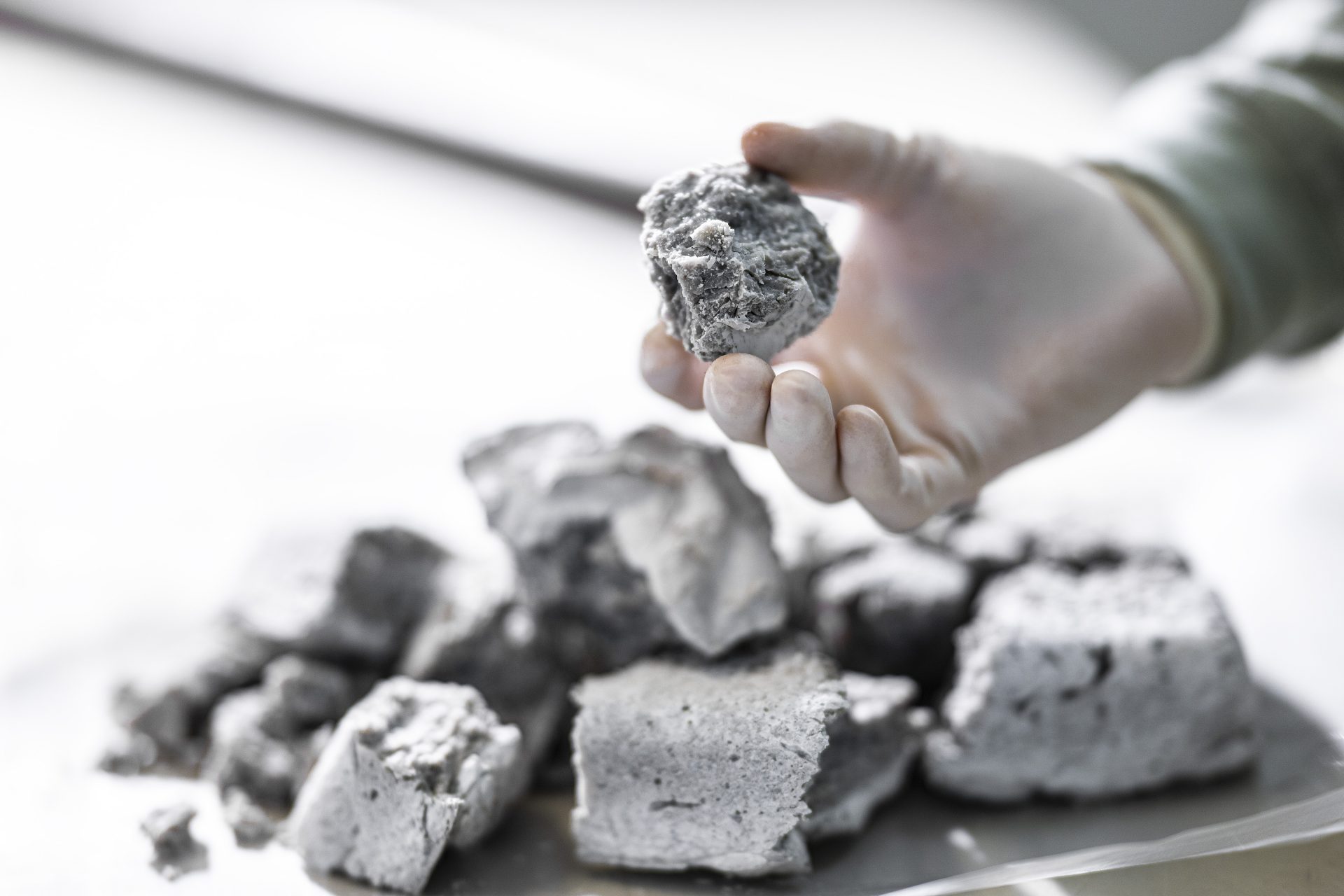
Pilot plant flotation testing processed five tonnes of ore over 105 hours, producing concentrate grading 4% to 6% total rare earth oxides with 70% overall recovery. Heavy rare earth elements achieved recovery rates of 58% to 75%. Hydrometallurgical processing uses acid bake at 600 degrees Celsius, achieving 94% dissolution of terbium and dysprosium. The process produces mixed rare earth carbonate containing 40% to 50% yttrium oxide.
Market Pricing Environment and Heavy Rare Earth Supply Dynamics
The rare earth market shows pricing differences between China domestic and ex-China supply sources. Export controls and supply security considerations contribute to this pricing structure.
Benchmark Minerals reports that heavy rare earth markets have experienced pressure since April 2025. Spot prices for ex-China dysprosium oxide reached $900 per kilogramme and terbium oxide $3,625 per kilogramme for European Union imports. Chinese domestic pricing stands at approximately $240 per kilogramme for dysprosium oxide and $1,000 per kilogramme for terbium oxide. The US Department of War established a floor price of $110 per kilogramme for neodymium-praseodymium oxides through investment in MP Materials.
Yttrium oxide European spot prices increased to $270 per kilogramme as of the referenced period.
Mr. Campbell noted:
"The Project's economic case is now underpinned by three value pillars: Dy/Tb high-temperature magnet demand, Yttrium demand from aerospace, semiconductors and turbine industry and Nd/Pr magnet demand. This diversified critical material exposure increases the strategic attractiveness of Lofdal for OEMs and governments."
Sensitivity analysis indicates metal prices represent the primary value driver, with 20% price variation generating the largest NPV impact. The project maintains positive economics across tested sensitivity ranges.
Project Development and Future Milestones
Namibia Critical Metals will file the complete NI 43-101 technical report on SEDAR within 45 days. The company has recommended infill drilling at Area 2B to convert Inferred Resources into higher confidence categories. Reconnaissance drilling at Area 5 identified heavy rare earth intercepts over a four-kilometre strike length. Development of satellite deposits would enable supply of different ore grades to optimise plant throughput.
Water supply infrastructure includes six boreholes capable of delivering 1.7 million cubic metres annually. Electrical infrastructure is designed for 94,361 megawatt hours annual consumption through grid connection and solar power. JOGMEC has completed its second funding term, earning a 40% project interest through $10 million in expenditures. Total approved project funding reaches $17.4 million towards the $20 million requirement for 50% interest. JOGMEC holds first right of refusal to fund the project through commercial production and purchase output at market prices.
Analyst's Notes





Subscribe to Our Channel






Stay Informed



