




Aluminum Prices Erase War Premium as LME Stocks Hit Century Low


.png)
Gulf smelter outages push aluminum’s shortage into regional premiums, lifting returns for non-Gulf smelters as Chinese and Indonesian exports fill the gap.
- London Metal Exchange (LME) three-month aluminum traded just above $3,000 per tonne on 14 October 2026, its early-February level, even though Gulf outages have removed almost 3 million tonnes of annual capacity.
- Gulf output ran 2.6 million tonnes a year below pre-war levels in August, and Chinese and Indonesian exports filled the gap mostly as alloy and semi-finished product rather than exchange-grade ingot.
- LME registered inventory fell to 238,625 tonnes, the lowest of the 21st century, as high regional premiums pull metal out of exchange warehouses.
- European buyers paid roughly $3,614 per tonne all-in on 12 October against a headline LME cash price of $3,055, a gap captured by primary smelters outside the Gulf selling on all-in prices.
- A smelter valuation built on the LME price alone understates current revenue, yet the regional premium counts as a cyclical uplift rather than permanent.
Gulf Smelter Outages Leave LME Aluminum Prices Back at Pre-War Levels
London Metal Exchange (LME) three-month aluminum traded just above $3,000 per tonne on 14 October 2026, its level in early February before US and Israeli strikes on Iran, Reuters' Andy Home reported. Iranian missile strikes on Gulf smelters and the closure of the Strait of Hormuz have removed almost 3 million tonnes of annual capacity, yet the price carries no war premium. LME cash settlement fell 6.1% from $3,254 per tonne on 25 September to $3,055 on 12 October, according to LME data compiled by Westmetall.
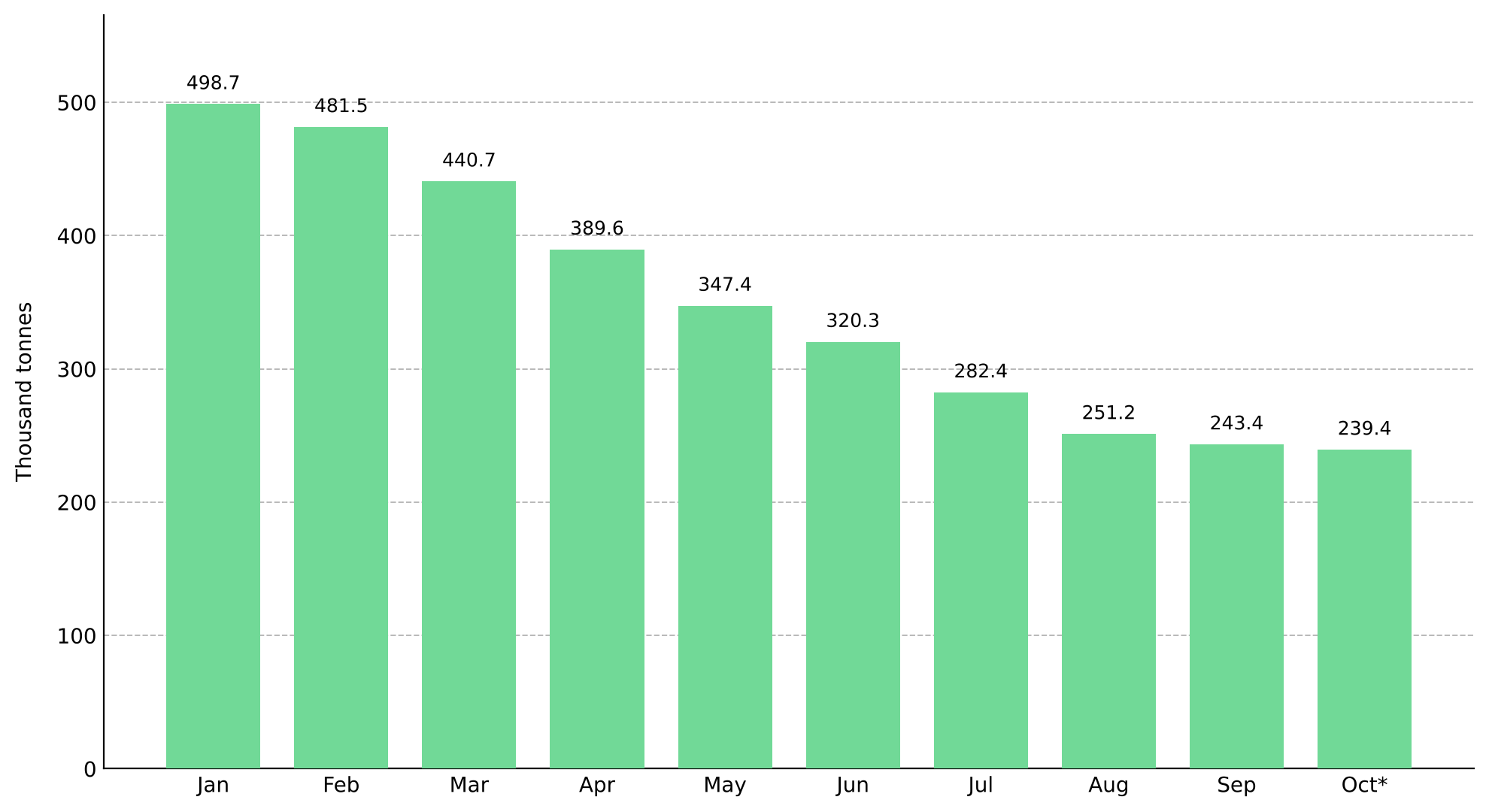
The calm price hides a shortage working its way through the physical market. LME registered inventory, metal available for delivery against exchange contracts, stands at 238,625 tonnes, the lowest of the 21st century. Buyers in Europe and Japan pay regional premiums well above pre-war levels for ingot.
Chinese & Indonesian Exports Replace Gulf Supply but Drain Exchange Stocks
Gulf primary aluminum output fell by an annualized 2.8 million tonnes between February and May, according to the International Aluminum Institute (IAI), after Emirates Global Aluminum shut its Al-Taweelah smelter and Aluminum Bahrain's plant took damage. Repairs lifted the August regional run-rate to 3.5 million tonnes a year, still 2.6 million tonnes short of pre-war output. Chinese alloy exports doubled year on year to 349,000 tonnes in January to August, avoiding a 30% duty on primary metal, and semi-finished product exports rose 774,000 tonnes to 4.46 million tonnes. Indonesia shipped a record 114,000 tonnes of primary metal in July.
Much of the replacement supply arrives as alloy and semi-finished product rather than exchange-grade ingot, so consumers bid for spot ingot through regional premiums. High premiums pull metal out of LME sheds. Off-warrant stocks of 73,509 tonnes are the lowest since the LME began reporting the category in 2020, and most remaining registered metal is Russian, which most Western buyers avoid.
Slow Gulf Restarts Keep Physical Premiums Above Pre-War Levels
Physical tightness outlasts the price recovery because lost capacity returns slowly, and new smelters outside China need long-term power and policy commitments. Charles Johnson, President and Chief Executive Officer of The Aluminum Association, made the investment case arguing smelters, manufacturers and recyclers all need the confidence, and certainty, to invest in the US for the long term.
Completed Gulf repairs and full Hormuz shipping would pull regional premiums back toward pre-war levels, such as the $200 per tonne Japanese premium at the start of the war, with LME prices holding near $3,000. Stalled restarts would keep premiums high and reopen backwardation, where cash metal trades above three-month metal, toward the $100-plus spread recorded in June.
The monthly IAI primary production release shows which outcome is playing out through the first quarter of 2027. The reversal trigger is LME registered stock rebuilding above 300,000 tonnes in the daily LME stock report, a level last held as a monthly average in June 2026, per Westmetall. Above it, smelters relying on elevated premiums lose pricing power.
High Regional Premiums Shift Aluminum Margins Toward Non-Gulf Smelters
Primary smelters outside the Gulf selling on the LME price plus a regional premium gain from the shortage; semi-fabricators buying spot ingot absorb the cost. A European buyer paying LME cash plus the $559 duty-paid premium paid roughly $3,614 per tonne on 12 October, against a headline quote of $3,055. The US Midwest premium of $2,312 per tonne reflects 50% import tariffs as much as shortage, per Reuters.
Japanese buyers settled a fourth-quarter premium of $255 per tonne, down 35% from the prior quarter, according to Reuters, so a smelter selling on quarterly Japanese terms banks less each quarter as Asian supply improves. A smelter selling spot into Europe still captures a premium double its end-February level.
Non-Gulf smelters selling into Europe and Japan bank above-pre-war premiums through year-end. Gulf restart timing sits outside any holder’s control, and retail holders of non-Gulf smelter shares carry the risk of loss when premiums fall back as Gulf output returns. Products tracking the LME price carry no premium exposure. Position size is the variable a holder controls.
Physical Premiums Set Aluminum Smelter Returns
The exchange price has regained its pre-war calm while the physical market has not. The shortage has moved off the LME screen and into regional premiums and depleted warehouses, where the headline quote no longer measures it.
Value has shifted to non-Gulf smelters selling on all-in prices, and to Chinese and Indonesian exporters who took Gulf market share. A smelter valuation built on the LME price alone understates current revenue, yet the premium belongs in a valuation as a cyclical uplift, not a permanent one.
A low exchange price discourages new Western smelting capacity even as The Aluminum Association cites demand growth of 80% by 2050, leaving a thinner supply pipeline for the next cycle.
Analyst's Notes





Subscribe to Our Channel



.png)


Stay Informed


