




Aluminum Stocks Hit Their Lowest Since 2022, Keeping Physical Markets Tight Despite Middle East Uncertainty


Aluminum inventories hit their lowest since 2022 as supply tightens, supporting prices despite Middle East uncertainty and highlighting key market signals.
- Fear over Middle East supply has dominated headlines, but tightening inventories continue to support aluminum prices.
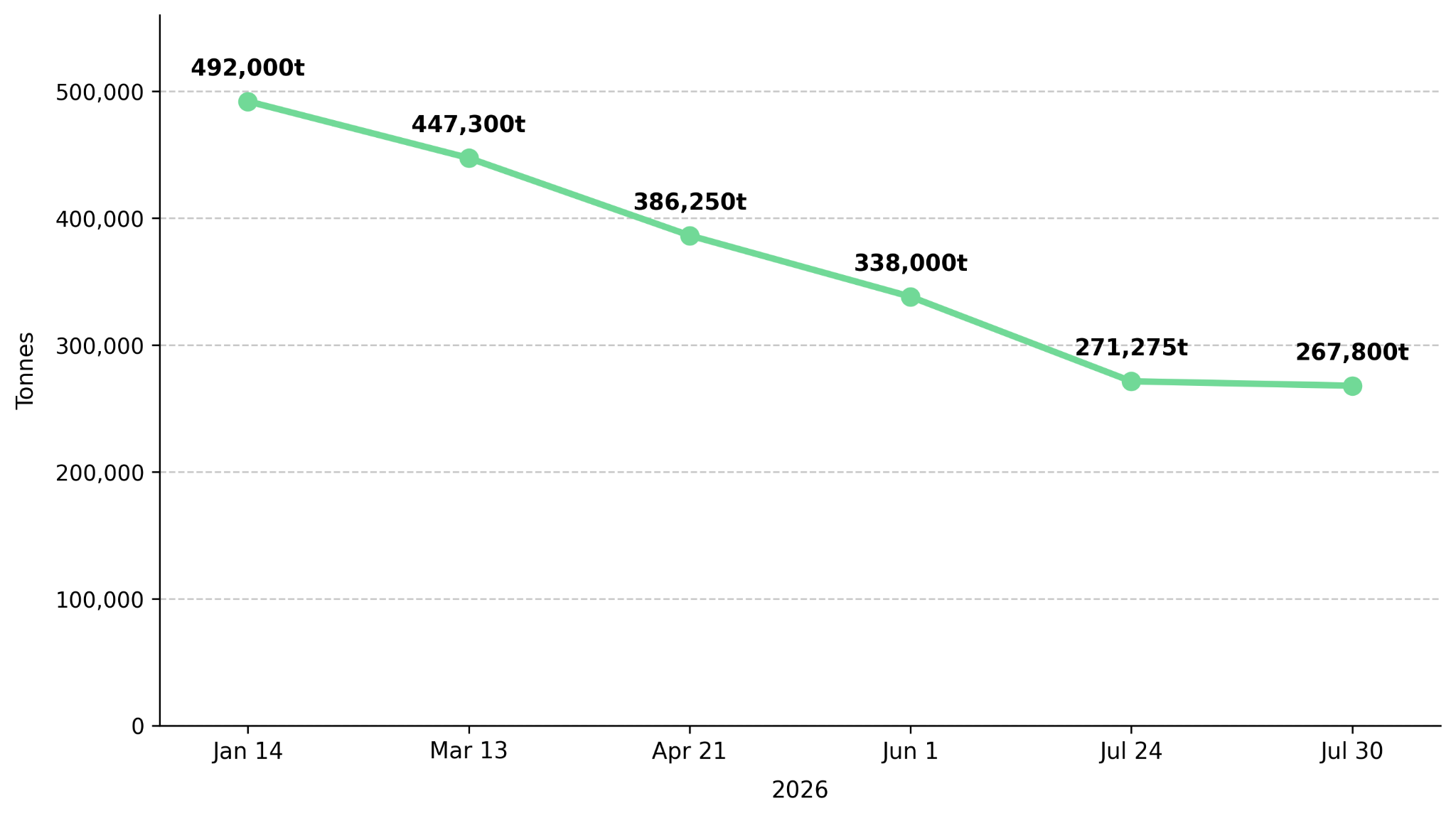
- LME cash aluminum rose 0.75% to USD 3,229 per tonne as LME stocks fell to 267,800 tonnes, their lowest level since September 2022.
- LME stocks have dropped more than 40% since late January, lifting cash aluminum USD 111 per tonne above the December 2027 contract and signaling ongoing physical scarcity.
- China's aluminum inventory also fell 53,000 tonnes below 1 million tonnes for the first time this inventory cycle, reinforcing the supply squeeze.
- US Q2 GDP growth of 1.5% and lower PCE inflation reduced expectations for additional Fed rate increases, supporting commodity financing conditions. Reversal signal:
- Cancelled warrants would need to recover toward 22,450 tonnes to indicate destocking has paused.
Inventory Drawdowns Push Aluminum Prices Higher, Confirming Physical Supply Tightness
LME stocks fell 0.56% to 267,800 tonnes, extending a drawdown of more than 40% since late January to their lowest level since September 2022. LME aluminum cash prices then rose 0.75% as the bid increased to USD 3,229 per tonne and the three-month reference price climbed 0.49% to USD 3,195.5 per tonne. Bid-offer spreads held at USD 2 per tonne, indicating strong physical demand rather than thin trading.
Shipping Disruptions & China's Production Cap Restrict Aluminum Supply, Supporting Higher Prices
The Platts alumina price held at USD 337.38 per tonne while aluminum prices rose 0.75%, widening margins for integrated bauxite-to-aluminum producers. Emirates Global Aluminium's Al Taweelah refinery resumed production after a three-and-a-half-month outage, but the restart highlights that new alumina supply takes months to reach the market.
At the same time, shipping through the Strait of Hormuz, which carries roughly 9% of global aluminum supply from the Persian Gulf, remained constrained after the US-Iran ceasefire collapsed. China's 45 million-ton production cap further limits the industry's ability to replace disrupted Gulf supply, keeping the physical market tight.
USD 111 Per Tonne Backwardation Defines the Bull and Bear Cases for Aluminum
Al Taweelah's three-and-a-half-month outage shows alumina supply takes months, not days, to recover. China's downstream operating rate fell to 60.2%, down 0.9 percentage points month on month, yet inventories continued to decline, indicating supply constraints remain stronger than seasonal demand weakness.
Bull case: Further inventory declines in China and lower cancelled warrants tighten physical availability, lifting the three-month aluminum price above USD 3,200 per tonne.
Bear case: Higher Al Taweelah output and restored Hormuz shipping increase available supply, narrowing backwardation as forward and cash prices converge.
SMM's twice-weekly inventory updates and the LME's daily warehouse data provide the quickest confirmation of whether the supply squeeze is strengthening or fading.
Higher Aluminum Prices Flow Through the Supply Chain, Favoring Integrated Producers
Higher aluminum prices are flowing through the supply chain as SMM A00 spot rose to 23,630 yuan per tonne, scrap gained 100 to 200 yuan per tonne, and ADC12 alloy rose about 100 yuan per tonne. A slower Fed tightening cycle reduces inventory financing costs, supporting prices while physical supply remains constrained. Rising aluminum costs are also passing through to automakers and packaging companies.
Integrated bauxite-to-aluminum producers capture more of the price increase because internal alumina costs remain largely unchanged while aluminum prices rise. Standalone smelters buying third-party alumina capture less of that margin expansion.
Off-warrant inventory remains difficult to measure, and the timing of Hormuz shipping recovery is uncertain. Aluminum prices can fall despite a 23.14% year-on-year gain. The stronger evidence-based approach is to monitor inventory trends, warehouse data, and position size instead of reacting to geopolitical headlines.
USD 3,085 Per Tonne Breaks the Aluminum Rally: Watch Inventory Data for Confirmation
LME stocks below 270,000 tonnes and cancelled warrants below 22,450 tonnes continue to support aluminum prices by limiting available physical supply. As long as those conditions persist, cash aluminum should maintain its USD 111 per tonne premium over the December 2027 contract.
USD 3,085 per tonne is the key support level for the current rally. A sustained break below that level, combined with rising cancelled warrants and higher LME inventories, would indicate that physical supply is recovering, reducing backwardation and compressing margins for integrated producers.
Key indicators: Monitor the LME's daily warehouse and warrant reports alongside SMM's twice-weekly inventory updates. Cancelled warrants above 22,450 tonnes and aluminum below USD 3,085 per tonne would provide stronger evidence that supply conditions, not geopolitical headlines, have shifted.
Analyst's Notes





Subscribe to Our Channel





Stay Informed


