




US Aluminum Incentives Arrive Before New Supply as the LME Signals a Tight Market


US aluminum incentives target long-term smelter investment as LME backwardation and weaker China scrap imports signal persistent near-term supply tightness.
- Trump signed a proclamation adjusting Section 232 tariffs on aluminum imports and directing the Commerce Department to create a smelter investment incentive program.
- Companies with Commerce Department-approved onshoring plans can import matching volumes of primary aluminum at half the standard Section 232 tariff rate, lowering import costs while the government finalizes program approvals.
- LME cash aluminum closed at $3,155/t versus $3,140/t for the three-month contract, with a $120/t backwardation to the December 2029 forward, signaling tight near-term supply.
- China's aluminum scrap imports fell 16.9% year over year to 133,000 metric tons in June 2026, marking a third straight monthly decline and reducing recycled feedstock available to smelters.
- Monitor the Commerce Department's implementing rules and SMM's mid-August customs data to determine whether aluminum backwardation and lower scrap imports continue, as both would indicate that near-term supply remains tight.
US Smelting Capacity Falls Short of Demand While Aluminum Prices Signal Near-Term Tightness
President Trump signed a proclamation adjusting Section 232 tariffs on aluminum imports after the White House said US demand for primary aluminum exceeds domestic smelting capacity. LME cash aluminum closed at $3,155/t versus $3,140/t for the three-month contract, leaving cash prices above futures and signaling tight near-term supply.
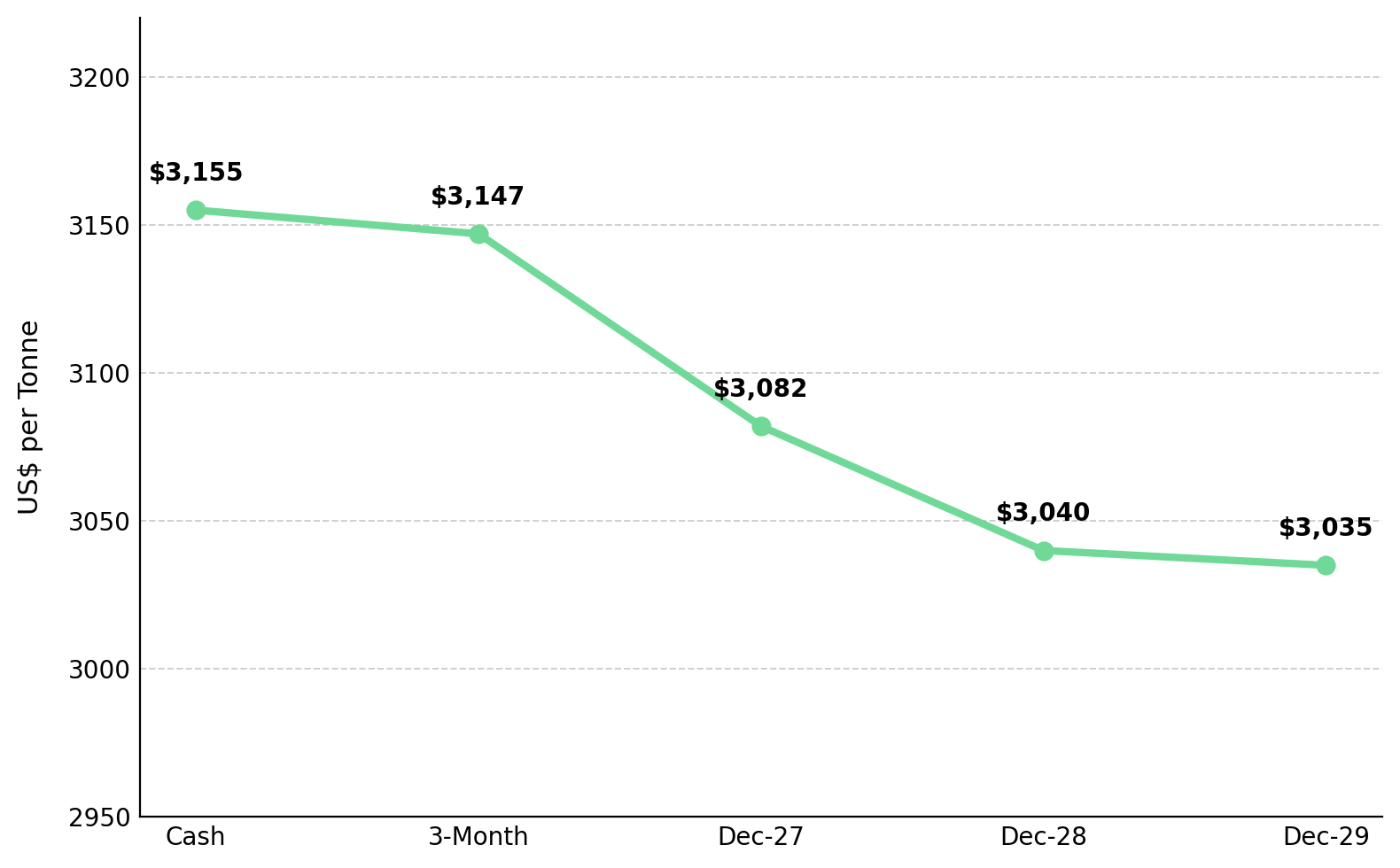
A $120/t spread between cash and long-dated aluminum contracts points to tight near-term supply. The LME forward curve falls from $3,147.50/t for the three-month contract to about $3,035/t for December 2029, leaving long-dated contracts 3.8% below cash prices. Cash prices above every forward contract through 2029 show the market expects supply constraints to persist longer than new smelter capacity can be added.
Section 232 Encourages Smelter Investment While New Capacity Remains Years Away
The policy targets a domestic smelting capacity gap rather than weak aluminum demand. US smelters cannot meet domestic primary aluminum demand, although the proclamation does not quantify the shortfall. Because tariffs raise import costs without increasing production capacity, the administration paired Section 232 with a capital incentive to accelerate domestic smelter investment.
Section 232 of the Trade Expansion Act of 1962 authorizes the president to adjust imports deemed a national security threat. The proclamation directs the Commerce Department to establish an incentive program allowing companies to build, expand, or refurbish US smelters. Approved projects can import matching volumes of primary aluminum at half the standard Section 232 tariff rate, lowering import costs while new capacity is developed, although the proclamation does not specify when approvals will begin.
Policy Changes Leave Physical Aluminum Supply Constrained While Capacity Builds
The proclamation does not increase US aluminum supply immediately because new smelter capacity takes years to develop. Instead, the policy encourages multi-year investment rather than additional aluminum output in the near term. The package also limits critical mineral tariff waivers for China, showing the aluminum measures are part of a broader strategy to expand domestic industrial capacity and reduce import dependence.
If the Commerce Department publishes rules for the smelter incentive program, although no timeline has been announced, the LME's $15/t cash-to-three-month backwardation could narrow as the market anticipates additional domestic supply. If China's scrap imports fall for a fourth straight month after June's 16.9% year over year and 12.5% month over month declines, the LME's $120/t cash-to-December 2029 spread could widen further as reduced recycled feedstock adds to the domestic supply gap.
Importers Face Higher Aluminum Costs While Domestic Producers Gain Policy Support
Aluminum consumers, including packaging, beverage can, and construction suppliers, face higher input costs unless their suppliers qualify for the Commerce Department's reduced Section 232 tariff rate, while importers without approved onshoring plans continue paying the full tariff. US primary aluminum producers could benefit if approved projects reduce import competition and support domestic capacity expansion, although the proclamation does not identify eligible companies.
Companies with US primary smelting capacity are better positioned to benefit from the policy than importers or fabricators. LME warehouse data also points to near-term supply conditions, with cancelled warrants totaling 33,875 metric tons against opening stocks of 280,100 metric tons, or about 12% of available inventory, indicating continued demand for physical metal.
$120/t Aluminum Backwardation Holds Until New Supply or Weaker Demand Shifts the Market
LME cash aluminum trades above every forward contract through December 2029, leaving a $120/t, or 3.8%, backwardation that signals the market expects near-term supply constraints to persist. The structure is unlikely to normalize until new supply enters the market or physical demand weakens.
A return to contango, with the LME three-month aluminum price moving above the cash price, or a decline in cancelled warrants below 12% of opening stocks would indicate that near-term supply tightness is easing. Until those signals emerge, the current backwardation continues to support the view that physical aluminum supply remains constrained.
Monitor the LME's daily cash-to-three-month spread for signs that the current backwardation is easing, and SMM's monthly China scrap import data to assess whether recycled feedstock supply is recovering. Together, those indicators will show whether the supply constraints supporting aluminum prices are beginning to unwind.
Analyst's Notes





Subscribe to Our Channel
.png)





.png)

Stay Informed


