




Philippine Nickel Exports May Turn Indonesia’s Quota Cut Into a Surplus


.png)
INSG forecasts a 2026 nickel surplus as weather-sensitive Philippine ore imports fill the gap left by Indonesia’s ore quota cuts.
- The International Nickel Study Group (INSG) forecast a 19,000-tonne primary nickel surplus for 2026 on October 13, reversing its April call for a 32,000-tonne deficit.
- Indonesia set 2026 ore quotas at 260 to 270 million tonnes, below smelter needs of 340 to 350 million tonnes, and smelters filled the gap with Philippine ore imports, which rose 65% in the first half.
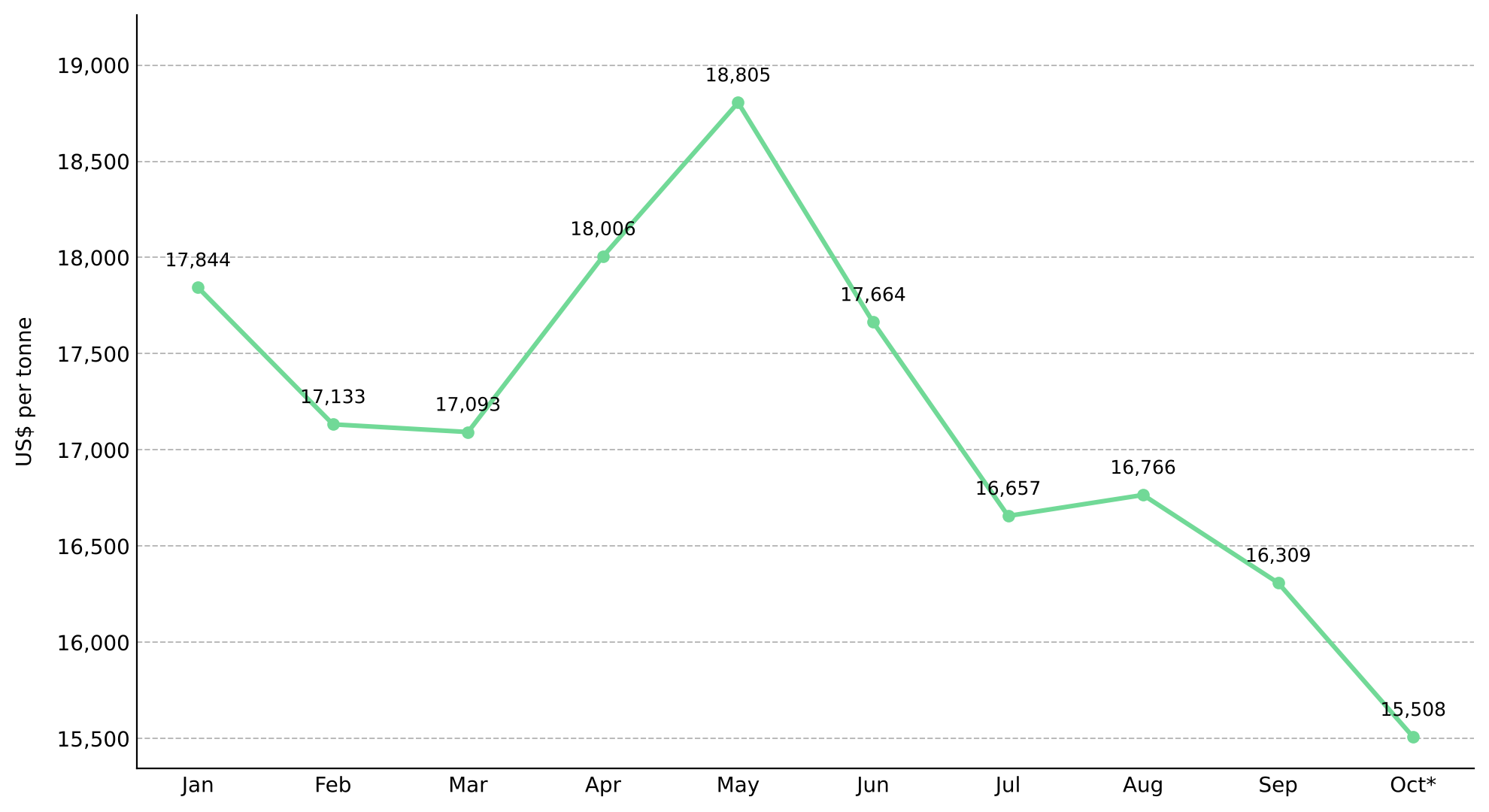
- LME cash nickel averaged $15,508/t from October 1 to 12, 17.5% below the May average, as the INSG projects the surplus widening to 70,000 tonnes in 2027.
- Philippine ore supply is weather-sensitive, shipments fell sharply in the fourth-quarter last year with loadings dropped to 17 vessels from 126 in October.
- Applications for Indonesia’s 2027 ore quotas close November 15, and Indonesia allows mid-year revisions, leaving next year’s ore supply to smelters unset.
INSG Flips 2026 Nickel Outlook to Surplus as LME Price Slides
The International Nickel Study Group (INSG) forecast on October 13, after two days of meetings in Lisbon, a 2026 primary nickel surplus of 19,000 tonnes, with production of 3.87 million tonnes against demand of 3.85 million tonnes, Reuters reported. In April, the group had forecast a 32,000-tonne deficit, which would have been the first annual shortfall since 2021. On the Shanghai Futures Exchange, the most-traded contract rose 0.70% to 118,640 yuan/t at the October 13 midday close, a move SMM attributed to traders cutting positions rather than to new demand.
The revision lands after Indonesia's tightest ore policy in years. LME cash nickel averaged $15,508/t from October 1 to 12, 17.5% below the May average of $18,805/t, according to LME settlement data compiled by Westmetall. The INSG projects the surplus widening to 70,000 tonnes in 2027.
Philippine Ore Imports Bypass Indonesian Quota Cuts, Keeping Smelter Output High
Indonesia set 2026 ore quotas, known as RKAB, at 260 to 270 million tonnes, Director General of Minerals and Coal Tri Winarno told Reuters in March, against 2025 output of 320.37 million tonnes. Smelters need 340 to 350 million tonnes to run their capacity, according to the Indonesian Nickel Industry Forum (FINI). Plants filled the gap from the Philippines: imports reached 8.57 million tonnes in the first half, up 65%, Statistics Indonesia data show, with Weda in North Maluku taking 60.7%.
Capacity keeps rising regardless. FINI puts installed processing capacity at 3.07 million tonnes of nickel in 2026, up from 2.78 million. On October 8, President Prabowo Subianto launched four projects worth $3.4 billion at the Weda Bay industrial park, with six more worth $6.8 billion to follow, Reuters reported. Chinese operators have warned the president of tighter quotas and higher taxes, lifting costs. The quota raises the cost of each tonne without removing the tonne.
Wet-Season Ore Supply and the 2027 Quota Decide the Size of the Surplus
Imports do not arrive on demand. Surigao mining and shipments fall sharply once the fourth-quarter rainy season begins, SMM reported on November 7, 2025, as November loadings dropped to 17 vessels from 126 in October. The smelter lobby’s chairman flagged the same limit.
The INSG base case assumes imports keep Indonesian output rising, producing the 70,000-tonne 2027 surplus. The counter-scenario is FINI's estimate of utilization falling to 70% to 75% from about 90%. The two-part question is whether Philippine ore keeps covering the ore gap. The surplus equals about 2.3% of Indonesia's installed capacity, a Crux Investor calculation, so small utilization losses erase it.
The 2027 quota decides between them: applications close November 15, monthly Statistics Indonesia data track imports, and the INSG updates in April 2027. The consequence lands in the first quarter of 2027, as the wet season and new quota coincide. A 2027 quota approved below 260 million tonnes by the Ministry of Energy and Mineral Resources would pull the balance back toward deficit and lift prices for higher-cost producers outside Indonesia.
Indonesia’s Quota Cuts Lift Philippine Ore Sales as Nickel Surplus Caps Prices
Philippine ore exporters gain volume, since every tonne Indonesia removes from its own quota is a tonne its smelters seek abroad. Higher-cost nickel developers outside Indonesia lose the deficit their financing cases relied on, with cash nickel at $15,515/t on October 12. Retail holders of Philippine ore exporters still carry exposure to one buyer country, wet-season revenue gaps and Indonesian policy they cannot forecast.
Holders cannot know the 2027 quota before the ministry publishes it, and Indonesia allows mid-year revisions. Shares in single-asset exporters and pre-production developers can fall sharply on one announcement. Sizing exposure to Philippine ore exporters on volume growth, while treating a nickel price recovery as unconfirmed until the quota lands, matches what the data currently support.
Indonesian Quota Policy Favors Well-Funded Developers
With smelter capacity growing and import routes open, Indonesia's ore quota works as a cost lever, not a supply cap. The tightest Indonesian ore policy in years coincided with a forecast swing from deficit to surplus.
Value has moved to ore holders outside the quota system, led by Philippine exporters, but the rainy season makes the gain seasonal, so exporter revenue belongs in valuations as dry-season cash flow. Indonesian smelters absorb higher ore costs, and nickel developers elsewhere lose the deficit behind their valuations, leaving a nickel price recovery as a possibility.
Indonesia’s quota protects a finite ore base, and cheap nickel deters the capital future supply outside Indonesia will need. Developers with the balance sheet to wait out low prices hold the scarcer asset over a decade, while developers relying on a near-term price recovery carry the risk the surplus has raised.
Analyst's Notes





Subscribe to Our Channel
.png)



.png)




Stay Informed


