ATHA Energy: The Undervalued Uranium Explorer Sitting on Canada's Next Big Discovery


ATHA Energy holds 7M+ acres of Canadian uranium land, a 31km Nunavut discovery, and free carried-interest upside, all at C$269M enterprise value as uranium hits $86/lb.
- ATHA Energy (TSXV: SASK) holds over 7 million acres across Canada's top uranium jurisdictions, the largest exploration land package in the country.
- Its flagship Angilak Project in Nunavut has defined a 31 km mineralized trend with district-scale potential after back-to-back breakthrough drill programs in 2024 and 2025.
- The company's enterprise value sits at just C$269 million, a fraction of developer peers NexGen (C$11.8B) and Cameco (C$70.3B).
- A 10% carried interest in NexGen and IsoEnergy land gives ATHA cost-free upside to two of the most actively explored corridors in the Athabasca Basin.
- The U.S. NRC's first commercial reactor construction permit in nearly a decade, paired with a uranium spot price at $86.37/lb as of March 8, 2026, signals the start of a new nuclear build cycle and a structural tailwind for uranium demand.
Nuclear Is Back. Who Supplies the Fuel?
When the U.S. Nuclear Regulatory Commission approved TerraPower's Natrium reactor in Wyoming in March 2026, the nuclear energy industry exhaled. It was the first commercial reactor construction permit issued in approximately a decade, and the first non-light-water design to win approval in more than four decades. The policy freeze on nuclear is decisively thawing.
For uranium investors, the question has shifted from if nuclear returns to who supplies the fuel. That question leads, with increasing urgency, to Canada and to one company quietly assembling the most comprehensive uranium exploration portfolio the country has ever seen.
ATHA Energy Corp. is not a household name. It produces nothing, mines nothing, and generates no revenue. What it holds instead is something arguably more valuable in the early stages of a commodity supercycle: optionality, scale, and discovery momentum in the world's highest-grade uranium jurisdiction.
Why Canada, Why Now, & Why ATHA
ATHA Energy trades on the TSX Venture Exchange under the ticker SASK. As of February 26, 2026, the company's enterprise value stands at C$269 million against a share price of C$0.89 and 346.3 million basic shares outstanding. The company's land spans more than 7 million acres across three of Canada's most prospective uranium basins: 3.8 million acres in Saskatchewan's Athabasca Basin, 3.1 million acres across the Angikuni and Thelon Basins in Nunavut, and 267,795 acres in Newfoundland and Labrador's Central Mineral Belt. Canada's uranium mine grades average 16.36% U3O8, compared to 2.64% in Niger and less than 0.1% in Australia, making it the most strategically valuable uranium district on earth.
"ATHA delivered one of the largest exploration programs in the uranium sector in 2024 over one of the most comprehensive uranium exploration portfolios in Canada."
Saskatchewan, which hosts the bulk of ATHA's Athabasca Basin land, was ranked third globally for mining investment attractiveness by the Fraser Institute in 2025. The regulatory environment, infrastructure, and partnership frameworks in the province are mature and well-established, a meaningful distinction in an era where political risk has derailed projects in Africa, Central Asia, and parts of South America.
The Angilak Project: 76% Still Untested, 100% Hit Rate
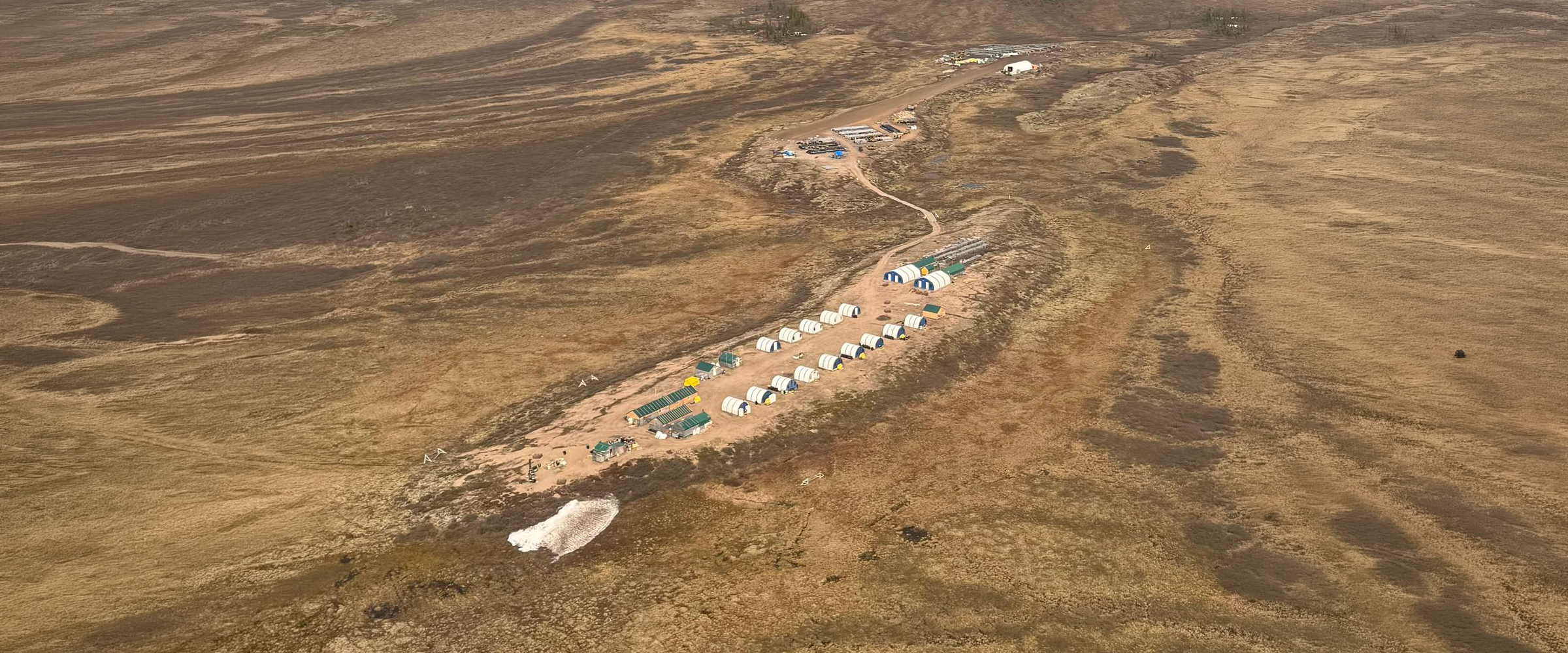
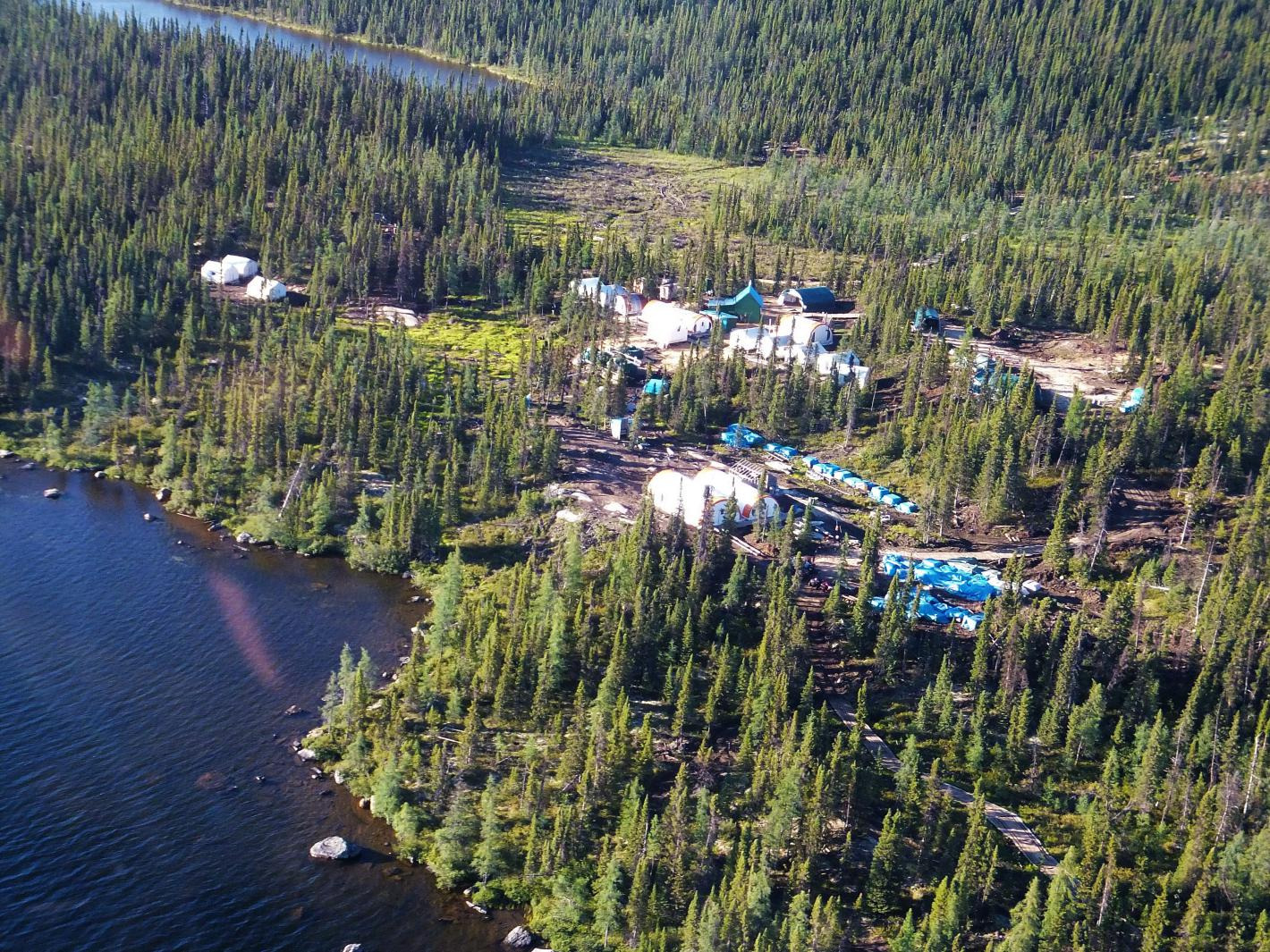
The real investment case for ATHA lives in Nunavut, at the Angilak Project. Situated in the Angikuni Basin, a geological analogue to the Athabasca Basin that has only recently been systematically explored for uranium, Angilak is 100% owned by ATHA and has absorbed over C$115 million in cumulative investment. The project's anchor asset is the Lac 50 Deposit, a 21 km corridor hosting one of the largest high-grade uranium deposits in Canada outside the Athabasca Basin. Only approximately 24% of that corridor has been drill-tested to date, meaning the majority of the trend remains open along strike and at depth.
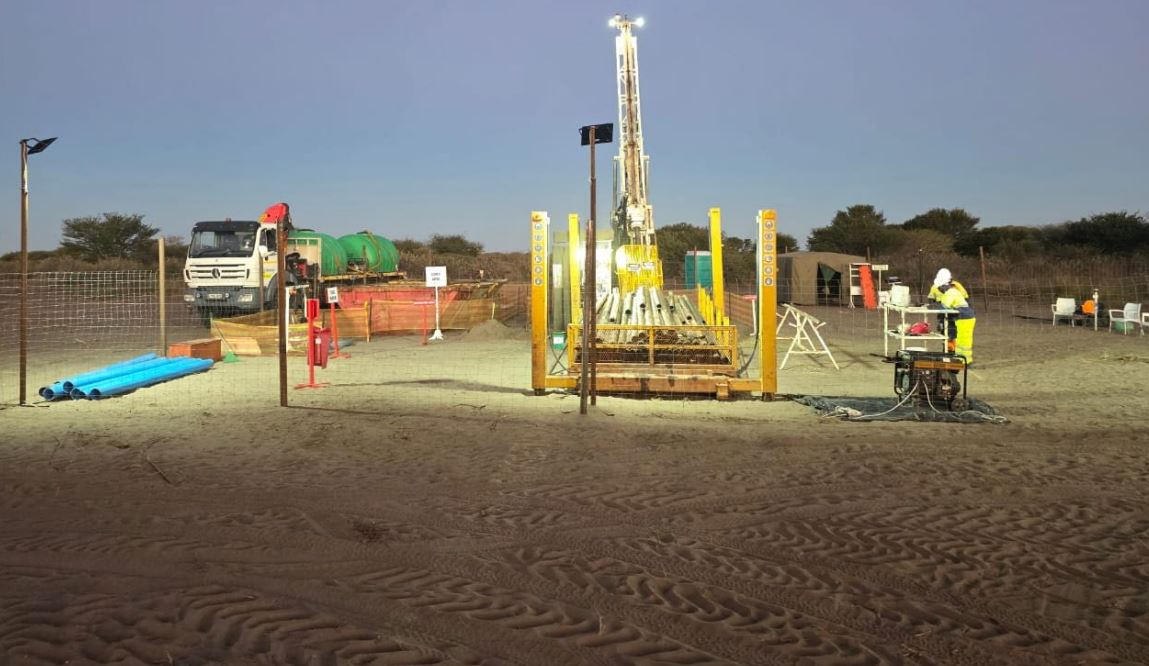
The 2024 program established a conceptual exploration target of 60.8 million to 98.2 million pounds of U3O8 at an average grade range of 0.37% to 0.48%. Then came 2025. ATHA's drill teams discovered the Mineralized RIB Corridor (MRC), an entirely new 18 km corridor running parallel to the Lac 50 trend. Four separate discoveries were confirmed across a 12 km strike: RIB North, East, West, and South. Every drill hole returned uranium mineralization, a 100% hit rate. Drill hole RIBN-DD-001 intersected 34.7 metres of composite uranium mineralization, including a 0.5-metre interval grading 8.16% U3O8. A third zone, the KU-Nine Iron Corridor, returned grades up to 1.56% U3O8 across a 14 km trend.
"In addition to the Lac 50 Deposit, ATHA's 2024 program at its 100%-owned Angilak Project outlined a 31 km mineralized trend, with 2025 work confirming multiple new zones and supporting a potential district-scale uranium opportunity. ATHA is carrying forward the strongest results in Angilak's history from 2025 into a focused 2026 exploration strategy and scaled up drilling program at the project, underpinned by over $115M of investment to date and technical groundwork."
Carried Interest: Upside in NexGen & IsoEnergy at Zero Cost
Among the most financially meaningful features of ATHA's structure is its 10% carried interest in certain land parcels held by NexGen Energy and IsoEnergy in Saskatchewan. NexGen, advancing the Arrow deposit, carries an enterprise value of C$11.8 billion. IsoEnergy's land under ATHA's carried interest sits in the most actively developed zone of the Athabasca Basin. A carried interest means ATHA participates in 10% of any economic returns from those parcels without bearing exploration costs, a cost-free option on two of the best-resourced uranium programs in the world.
"ATHA holds upside in key land held by NexGen and IsoEnergy via 10% carried interest."
The valuation arithmetic is striking. ATHA's entire enterprise value of C$269 million is roughly 2.3% of NexGen's alone. If Arrow advances toward production, the carried interest could represent value in excess of ATHA's current market cap from that single asset relationship.
Supply Is Falling. Demand Is Doubling. Prices Are Rising.
The numbers tell a clear story. Uranium's spot price stands at $86.37 per pound as of March 8, 2026, up from a 2025 low of $63 per pound, with long-term contract prices at $90 per pound, their highest level since 2008. On the supply side, Kazatomprom, which accounts for roughly 40% of global primary uranium supply, has slashed its 2026 output ambitions from 85 million pounds down to approximately 62 million pounds, while Cameco cut McArthur River's 2025 guidance from 18 million pounds to between 14 and 15 million pounds. On the demand side, the WNA projects global reactor uranium requirements to grow from 68,920 tU in 2025 to over 150,000 tU by 2040, with installed nuclear capacity nearly doubling from 398 GWe to 746 GWe over the same period.
"A uniquely-equipped uranium exploration company designed for an unprecedented uranium cycle."
Why ATHA Belongs in Your Portfolio
- ATHA's C$269M enterprise value against billion-dollar developer peers represents a potential re-rating opportunity if Angilak progresses toward a formal resource estimate.
- The 31 km mineralized trend at Angilak, with 76% of the Lac 50 corridor still untested, means the discovery arc has significant remaining runway.
- The 10% carried interest in NexGen and IsoEnergy land gives shareholders cost-free exposure to two of the most sophisticated uranium exploration programs in the world.
- With uranium spot prices at $86.37/lb and long-term contract prices at $90/lb, the highest since 2008, exploration-stage equities like ATHA typically offer the most leveraged upside in a rising price environment.
- Watch the 2026 Angilak drill program closely, as a high-grade intercept or initial formal resource estimate could serve as the primary near-term re-rating catalyst.
- Use ATHA as a portfolio complement to larger-cap producers like Cameco to capture exploration optionality without duplicating production-stage risk.
The Bottom Line for Investors
ATHA Energy is a disciplined exploration company operating at exactly the right moment. Uranium spot prices stand at $86.37/lb, long-term contract prices have reached their highest level since 2008 at $90/lb, and the world's largest producer, Kazatomprom, is cutting output from an expected 85 million pounds to approximately 62 million pounds in 2026 alone. Against that supply shock backdrop, ATHA controls more than 7 million acres in Canada's best uranium districts, has drilled 48 holes across more than 20,000 metres at Angilak, and is carrying C$115 million in prior investment into a 2026 program targeting what may be one of the most significant undeveloped uranium trends in Nunavut.
The risks are real. Exploration is inherently uncertain, capital will be required, and uranium price cycles are difficult to time. But for investors who believe the nuclear revival is structural rather than cyclical, ATHA Energy offers a rare combination of scale, discovery momentum, and institutional-grade management at a valuation that has not yet caught up with the story unfolding in the field.
TL;DR
ATHA Energy is Canada's largest uranium explorer by land, advancing a 31 km discovery trend at Angilak in Nunavut while holding a cost-free 10% carried interest in NexGen and IsoEnergy lands, trading at C$269 million enterprise value as uranium spot prices sit at $86.37/lb and the WNA projects global reactor demand to more than double by 2040.
FAQs (AI-Generated)
ATHA owns the Angilak Project in Nunavut, 3.8M acres in the Athabasca Basin, 3.1M acres in Nunavut, 267,795 acres in Labrador's Central Mineral Belt, and a 10% carried interest in select NexGen and IsoEnergy land parcels in Saskatchewan.
The conceptual target is 60.8 million to 98.2 million pounds U3O8 at an average grade range of 0.37% to 0.48%, though this remains conceptual and has not been defined as a formal NI 43-101 mineral resource.
The uranium spot price stood at $86.37/lb on March 8, 2026; the long-term contract price hit $90/lb, its highest since 2008, and the WNA projects global reactor uranium demand to more than double to over 150,000 tU by 2040.
ATHA receives 10% economic participation in any discoveries or developments on NexGen and IsoEnergy land without funding the exploration costs, a cost-free option on two of the best-resourced uranium programs in the world.
Exploration-stage uncertainty, the need for ongoing capital funding, uranium price volatility, and the long timeline from discovery to formal resource definition and eventual production.
Analyst's Notes





Subscribe to Our Channel





Stay Informed