Eagle Nuclear Energy to Commence Summer Drilling Program at America's Largest Uranium Deposit


Eagle Nuclear Energy holds the largest US uranium deposit at 32.75Mlbs indicated, is fully funded to PFS, and targets production into a widening domestic supply deficit.
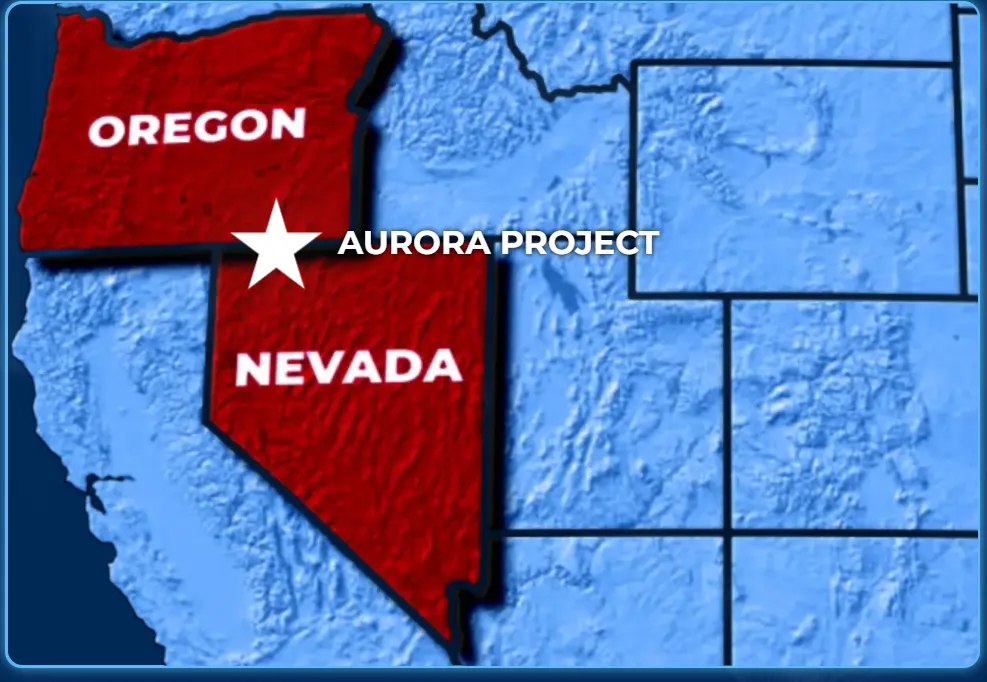
- Eagle Nuclear Energy holds the largest minable measured and indicated uranium deposit in the United States, with 32.75 million pounds of indicated and 5 million pounds of indicated uranium resource at its Aurora Uranium project within the McDermott Caldera in southeastern Oregon.
- The company is fully funded with $30 million in cash and allocating $4.7 million for its 47-hole, 27,000-foot drill programme commencing by summer 2026 and a pre-feasibility study targeted for completion by end of 2027.
- The deposit is characterised by shallow, flat, tabular mineralisation suited to conventional open-pit mining, with a high-grade zone of 400–500 ppm uranium sitting above a lower-grade halo at a 100 ppm cut-off grade.
- Internal estimates indicate a potential production rate of one to four million pounds of uranium per year over a 14-year mine life, positioning the project to address the widening domestic supply deficit projected to deepen into the early 2030s.
- Beyond its uranium resource, Eagle holds early-stage proprietary SMR technology and unquantified lithium mineralisation above 1,200 ppm in the deposit's overburden, providing secondary optionality across multiple aspects of the nuclear and critical minerals landscape.
The United States consumed approximately 50 million pounds of uranium in 2024 across its 94 operating reactors, yet domestic production that same year totalled just 677,000 pounds. By 2025, that figure had risen only to around two million pounds, still a fraction of annual national demand. Against this backdrop, Eagle Nuclear Energy (NASDAQ:NUCL) is advancing what it characterises as the largest minable measured and indicated uranium deposit in the country, located in southeastern Oregon. CEO Mark Mukhija outlined the company's asset base, development timeline, capital position, and the strategic rationale for building a domestic uranium producer at scale.
McDermott Caldera Scale and Geology
Eagle's flagship project is the Aurora Uranium project, the largest mineable measured and indicated uranium resource in America. The asset in within the McDermott Caldera system in southeastern Oregon, and was acquired in late 2024 from Aurora Energy Metals. The deposit was first discovered in the late 1970s through radiometric surveying and has since been the subject of more than 600 drill holes. The current resource stands at 32.75 million pounds (Mlbs) in the indicated category and approximately 5Mlbs inferred, based on both a JORC-compliant report completed under the prior owner and a subsequent SK-1300 technical report completed by Eagle.
The high-grade zone, running at 400–500 ppm uranium, sits above a lower-grade halo exceeding 100 ppm, with a cut-off grade of 100 ppm applied to the resource. The geological configuration is considered favourable for conventional open-pit mining, with manageable strip ratios and near-surface access.
The McDermott Caldera also hosts significant lithium mineralisation containing lithium in the overburden at grades above 1,200 ppm. Thacker Pass, one of North America's most advanced lithium projects, sits to the southwest, and Jindalee Lithium operates in the same county. The company has not yet defined a formal lithium resource however, yet does not regard it as a near-term priority.
Interview with Mark Mukhija, Director & CEO of Eagle Nuclear Energy
The Work Programme and Development Timeline
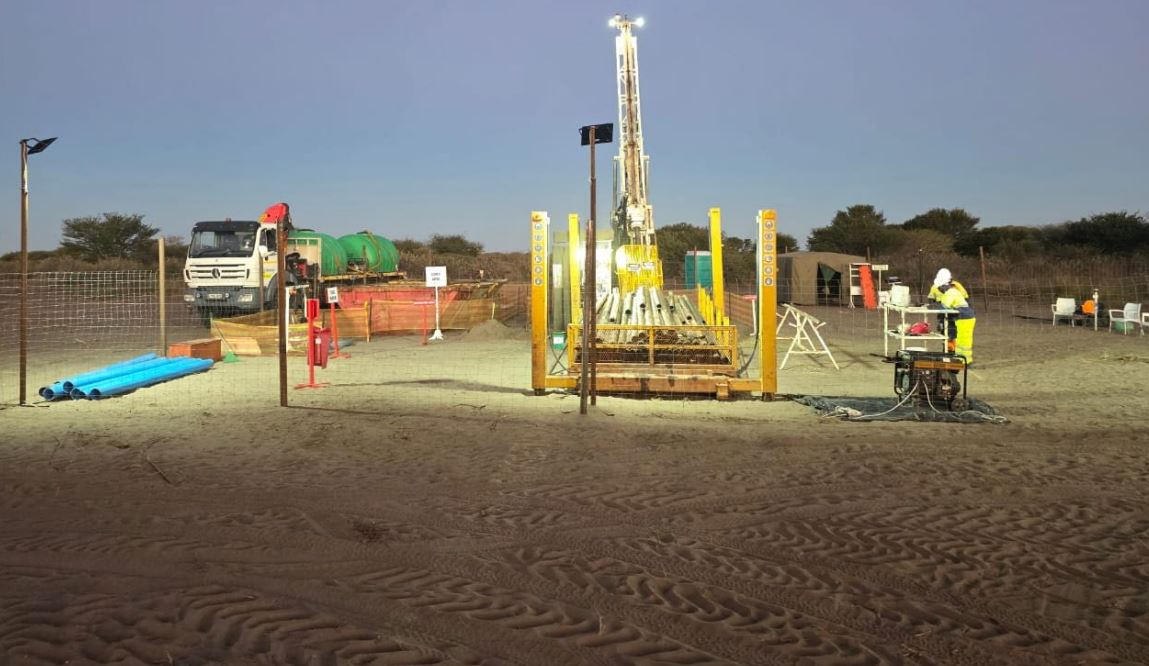
Eagle intends to commence a 27,000-ft drill programme in summer 2026, comprising 47 holes and a cost of $4.7 million. The programme has multiple objectives: metallurgical sampling to inform processing plant design, hydrogeological assessment to understand water flows through the deposit, rock mechanics testing to evaluate pit slope stability, and a degree of step-out and infill drilling to test for resource expansion. Several historical holes are noted to have terminated in mineralisation, suggesting potential to extend the resource at depth.
The drill results will feed into a pre-feasibility study (PFS) to be initiated by the year end, with completion targeted by end of 2027. Mukhija confirmed the company is fully funded to complete both the drill programme and the PFS from its current cash position of approximately $30 million. Baseline environmental, cultural, and permitting studies are running concurrently under the management of SLR Consulting, the firm that handled permitting for the Grassy Mountain gold project in the same county.

On permitting, Eagle holds notice-level drilling permits required for the summer programme. A broader mine plan of operations, which requires federal BLM approval alongside state permitting, is in preparation but has not yet been submitted.
Production Potential and Economics
Eagle has not yet published formal economic studies. However, Mukhija provided internal estimates suggesting a potential production rate of one to four million pounds of uranium per year, with a mine life of approximately 14 years. These figures are preliminary and will be refined through the PFS process.
"We're sitting on 600-plus holes that have been drilled here already," Mukhija noted. "So just a wealth of information on that front. Having these holes that we're doing now as a cross-section of the entire deposit will give us that confidence around designing the flow sheet."
The company's intention is to develop the asset independently rather than supply ore or concentrate to a third-party processor. Eagle has identified private land in Nevada as the potential site for a processing facility, separate from the mine site in Oregon.
The SMR Component
In addition to the uranium deposit, Eagle holds proprietary small modular reactor technology. Mukhija described this asset as being in the concept validation and component testing phase, with a phased and gated development approach planned over the coming years. The SMR technology is not a near-term revenue driver and is not the basis for the current market valuation, but it is positioned as strategic optionality, covering both ends of the nuclear fuel cycle from fuel supply to power generation.
Mukhija's background spans mining engineering at BHP and Ekati Diamond Mine, followed by nearly seven years running Asia Pacific operations for a mining technology company focused on AI, machine learning, and computer vision. The company's VP of Operations Vishal Gupta brings a professional geology background combined with capital markets and corporate development experience, while the company's Head of SMR Licensing Ben Egnew brings two decades of nuclear regulatory experience.
SLR Consulting has been engaged for environmental and permitting work, and as the company aims of keeping Nuclear Regulatory Commission (NRC) requirements in view throughout the SMR research and development process.
Market Positioning and Government Engagement
Eagle has held preliminary discussions with the US Department of Energy and other federal agencies involved in energy security and domestic resource development. Mukhija noted that while specific financial support mechanisms for uranium such as equity investments or price floors have not yet materialised in the way they have for some other critical minerals, he expects increased federal engagement as the domestic supply gap widens.
"When you start doing the numbers and seeing that the 94 reactors in the country consume 50 million pounds yet in 2024 the United States only produced 677,000 pounds, you begin to see just how weak that supply chain is domestically."
The timing for first production is broadly aligned before 2030, a period Mukhijaa identified as likely to see the uranium supply deficit widen further and term contract pricing rise from current levels. Eagle has not entered into any forward contracts or off-take agreements, choosing to preserve optionality while the PFS is completed and market conditions develop.
The Investment Thesis for Eagle Nuclear Energy
- Largest domestic uranium resource: At 32.75 million pounds indicated, Eagle holds the largest minable measured and indicated uranium deposit in the United States, a rare and strategically valuable position given chronic underproduction domestically.
- Fully funded to PFS: With approximately $30 million in cash, the company is funded through a $4.7 million drill programme and the subsequent pre-feasibility study without near-term dilution risk.
- Conventional, low-complexity mining profile: The deposit is shallow, flat, and tabular which is suited for conventional open-pit extraction thus reducing technical risk relative to underground or complex heap-leach operations.
- Strategic timing: The early 2030s target for production aligns with the period most analysts associate with a widening uranium supply gap, improving the probability of stronger term contract pricing when Eagle would be seeking off-take.
- Government tailwinds: The US government's focus on domestic critical mineral and energy supply chain security creates a plausible pathway for financial support mechanisms, loans, equity participation, or price floors, that could reduce cost of capital.
- SMR optionality: The proprietary SMR technology, while early-stage, provides additional long-term value that is not currently priced into the company and could become material as the SMR sector matures.
- Lithium in overburden: Grades above 1,200 ppm lithium in the deposit's overburden represent unquantified but potentially material by-product value.
Macro Thematic Analysis: The US Uranium Supply Imperative
The structural gap between US uranium demand and domestic production has become one of the more significant unresolved challenges in American energy policy. With 94 reactors consuming roughly 50 million pounds of uranium annually, and domestic production at around two million pounds in 2025, the United States is heavily dependent on imports from Kazakhstan, Canada, Australia, and Russia. The US Prohibiting Russian Uranium Imports Act accelerated the urgency of rebuilding domestic supply chains, and a series of executive orders in early 2025 placed nuclear energy and uranium supply at the centre of the administration's energy dominance agenda.
The uranium supply deficit that most market analysts project will deepen into the late 2020s and early 2030s, precisely the window in which developers advancing projects today would expect to reach production. As Mihalj summarised:
"Having the size and scale of our operation in the United States is quite rare.We see the deficit that's coming in the early 2030s. We need to make a dent in that if we want to be one of the players in the country."
Eagle Nuclear Energy is an early-stage uranium developer with an asset of genuine domestic strategic significance. The revival of nuclear power as a serious component of the clean energy transition driven by AI data centre power demand, the decarbonisation commitments of major technology companies, and growing bipartisan political support, has added a new dimension to uranium demand that was not widely anticipated three years ago. Several large technology companies have signed power purchase agreements with nuclear operators, and interest in advanced reactor designs, including SMRs, has moved from theoretical to contractual in some cases.
For investors, the macro case for uranium is grounded in supply-demand arithmetic. The question for individual companies is whether they can execute technically and financially within the relevant time window.
TL;DR
Eagle Nuclear Energy (NASDAQ:NUCL) is developing the largest minable measured and indicated uranium deposit in the United States at a time when domestic production covers less than 4% of national reactor demand. With 32.75 million pounds indicated in southeastern Oregon, approximately $30 million in cash, a drill programme starting summer 2026, and a pre-feasibility study due by end of 2027, the company is fully funded through its next major value inflection point. Internal estimates suggest one to four million pounds of annual production over a 14-year mine life. SMR technology and lithium in the overburden provide secondary optionality. Significant work remains before formal economics are established, but the asset scale, conventional mining profile, and US policy tailwinds make Eagle Nuclear one of the more substantive domestic uranium stories currently in development.
Frequently Asked Questions (FAQs) AI-Generated
Eagle Nuclear Energy's flagship asset is the Aurora Uranium project, located within the McDermott Caldera in southeastern Oregon. The project holds 32.75 million pounds of indicated uranium resource and approximately five million pounds inferred, making it the largest minable measured and indicated uranium deposit in the United States. The deposit was first discovered in the late 1970s and has been the subject of more than 600 drill holes over its history.
The company holds approximately $30 million in cash, which fully funds both the upcoming $4.7 million drill programme — comprising 47 holes and 27,000 feet of drilling commencing summer 2026 — and the subsequent pre-feasibility study targeted for completion by end of 2027. Management has confirmed no near-term equity dilution is required to reach these milestones.
The Aurora deposit is shallow, flat, and tabular, hosted in altered clays and volcanic tuffs near surface. This geological configuration makes it amenable to conventional open-pit mining, which is among the simpler and lower-risk extraction methods available. The high-grade zone of 400–500 ppm uranium sits above the lower-grade halo, which is favourable for early project economics and payback periods.
Eagle Nuclear has held preliminary discussions with the US Department of Energy and other federal agencies. While specific financial support mechanisms for uranium such as equity investments or price floors have not yet been announced, the company believes growing focus on domestic energy supply chain security creates a plausible pathway for government involvement. The US Prohibiting Russian Uranium Imports Act and a series of executive orders in early 2025 have raised the strategic profile of domestic uranium producers.
The deposit's overburden contains lithium at grades above 1,200 ppm, within the same caldera system as Thacker Pass and Jindalee Lithium, though no formal lithium resource has been defined. Eagle also holds proprietary small modular reactor technology, currently in the concept validation and component testing phase. Neither asset is a near-term revenue driver; both represent secondary optionality that management intends to develop in a disciplined, phased manner alongside the core uranium programme.
Analyst's Notes





Subscribe to Our Channel







Stay Informed