




Atlas Salt Nepheline Syenite Testwork Returns 0.01 to 0.03 wt.% Iron Oxide


.jpg)
Atlas Salt testwork cut nepheline syenite iron oxide to 0.01 to 0.03 wt.%, ahead of Black Bay drilling targeted for the fourth quarter of 2026.
- Magnetic separation lowered iron oxide, the principal impurity in nepheline syenite, from 2.84 weight % (wt.%) in the feed to between 0.01 and 0.03 wt.% in the Black Bay test products.
- Combined mass recovery reached 87.7 wt.% of the feed, and dry magnetic separation was identified as the preferred method over flotation.
- The samples meet typical published industry chemical specifications for glass and ceramic use, and the finer filler grade returned brightness of 87.4%, above the typical 85% specification.
- Atlas Salt is advancing a maiden diamond drilling program of up to 1,500 meters at Black Bay, the first test of the occurrence at depth, with drilling targeted to begin in the fourth quarter of 2026.
- Black Bay is a non-core asset funded separately from the Great Atlantic Salt Project, and it has no mineral resource or economic study.
Company Overview
Atlas Salt (TSXV: SALT | OTCQX: SALQF | FSE: 9D00) is developing North America's next salt mine and is committed to responsible and sustainable mining practices. With a focus on innovation and efficiency, the company is positioned to make significant contributions to the North American salt market while upholding its values of environmental stewardship and community engagement.
Testwork Results & Iron Removal
Atlas Salt reported positive results from a bench-scale beneficiation program on nepheline syenite from its Black Bay property in southern Labrador. Dorfner Anzaplan GmbH (Anzaplan) of Hirschau, Germany completed the work, which targeted iron oxide, the principal impurity in nepheline syenite deposits.
Atlas Salt retained Anzaplan on June 8, 2026, and shipped approximately 105 kilograms of material drawn from a 3.5-ton bulk sample collected during the 2017 outcrop channel sampling program. Head analysis of the feed returned 58.3 weight % (wt.%) silica, 22.6 wt.% alumina, 9.82 wt.% sodium oxide, and 4.72 wt.% potassium oxide, with iron oxide at 2.84 wt.%.
Dry and wet magnetic separation reduced iron oxide to 0.01 wt.% in the coarse product and 0.03 wt.% in the fine product. Anzaplan reports both results as significantly better than typical industry limits and substantially better than all comparable commercial reference products. An optimized dry test held iron oxide at 0.03 wt.% and lifted stage mass recovery to 90.0 wt.%, for a combined overall mass recovery of 87.7 wt.% of the feed.
Dry Magnetic Separation Preferred Over Flotation
Anzaplan identified dry magnetic separation as the preferred beneficiation method. It produces a high-quality product, allows the coarse fraction to be treated strictly dry using belt magnetic separators, and is operationally less complex than flotation.
Chief Executive Officer and Director of Atlas Salt, Nolan Peterson, commented on the testwork results:
"The results of this beneficiation program, carried out by Anzaplan, are the results we were hoping for when we sent this sample to Germany. A simple magnetic circuit - no flotation and no acid - took the iron down to a tenth of the maximum limits the glass and ceramic markets will accept, and it held close to 88% of the mass while doing it. Nepheline Syenite deposits are geologically uncommon on a global scale and where favorably located. High purity, low iron deposits of significant commercial interest - North America has one nepheline syenite mine in production."
Glass, Ceramic & Filler Specifications
Anzaplan reports that the samples meet the chemical requirements typically specified for glass-grade nepheline syenite. The chemical composition also meets typical published industry specifications for ceramic use. Anzaplan reports that alumina above 23 wt.% and total alkali content of 15 wt.% (sodium oxide plus potassium oxide) enable a lower melting temperature and reduced energy consumption in glass melting and ceramic firing.
The combined product was ground into 2 filler grades, which returned brightness of 84.6% and 87.4%. The finer grade exceeds the typical industry specification of 85%, with oil absorption below the typical industry range.
Iron oxide concentrations of 0.01 to 0.03 wt.% are substantially lower than those reported for all reference products and significantly below typical industry standards. The company describes this as a potential competitive advantage, since iron in glass applications can cause discoloration, reduce optical quality, and limit a product's suitability for demanding uses.
Maiden Drilling, Funding & Permitting
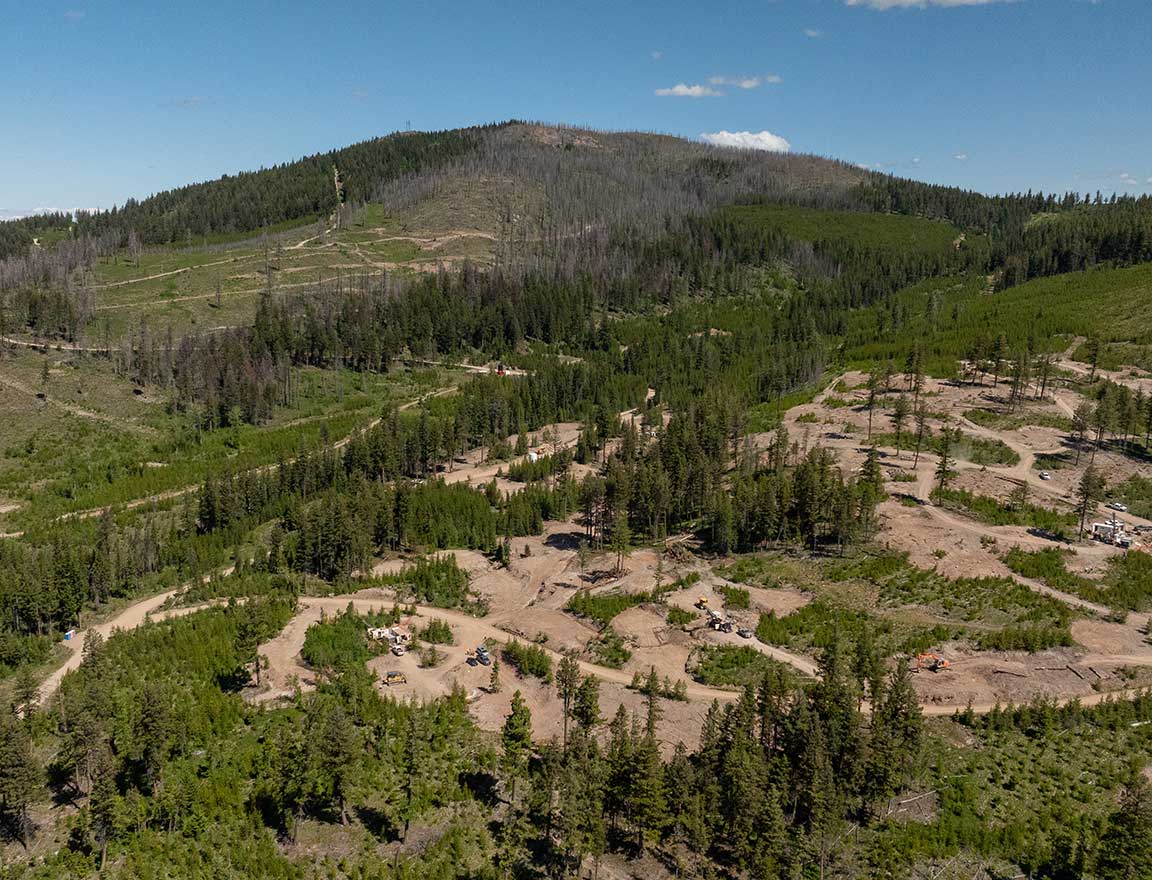
The Black Bay claims have never been drilled, and the program is the first test of the occurrence at depth. Atlas Salt staked the ground in 2016 based on a surface showing, and all results reported to date come from surface material. The program comprises up to 1,500 meters of diamond core drilling, designed to establish whether the grades and mineralogy measured at surface continue at depth, to collect data for a possible future mineral resource estimate, and to provide material from across the occurrence for the variability and customer qualification testwork Anzaplan recommended. The company will log the core and transport it to its facility in St. George's, Newfoundland, for sampling.
The Department of Energy and Mines has issued Exploration Approval for diamond drilling. Site access work is underway, and the company has engaged a diamond drilling contractor, with drilling targeted to begin in the fourth quarter of 2026. The $1.25 million flow-through private placement completed in May 2026 funds the program, together with funding approved under the Province of Newfoundland and Labrador's Junior Exploration Assistance 2026 program. Atlas Salt has engaged with the NunatuKavut Community Council and Nunacor Development Corporation on the proposed drilling and intends to continue that engagement as the program proceeds.
Portfolio Position & Site Access
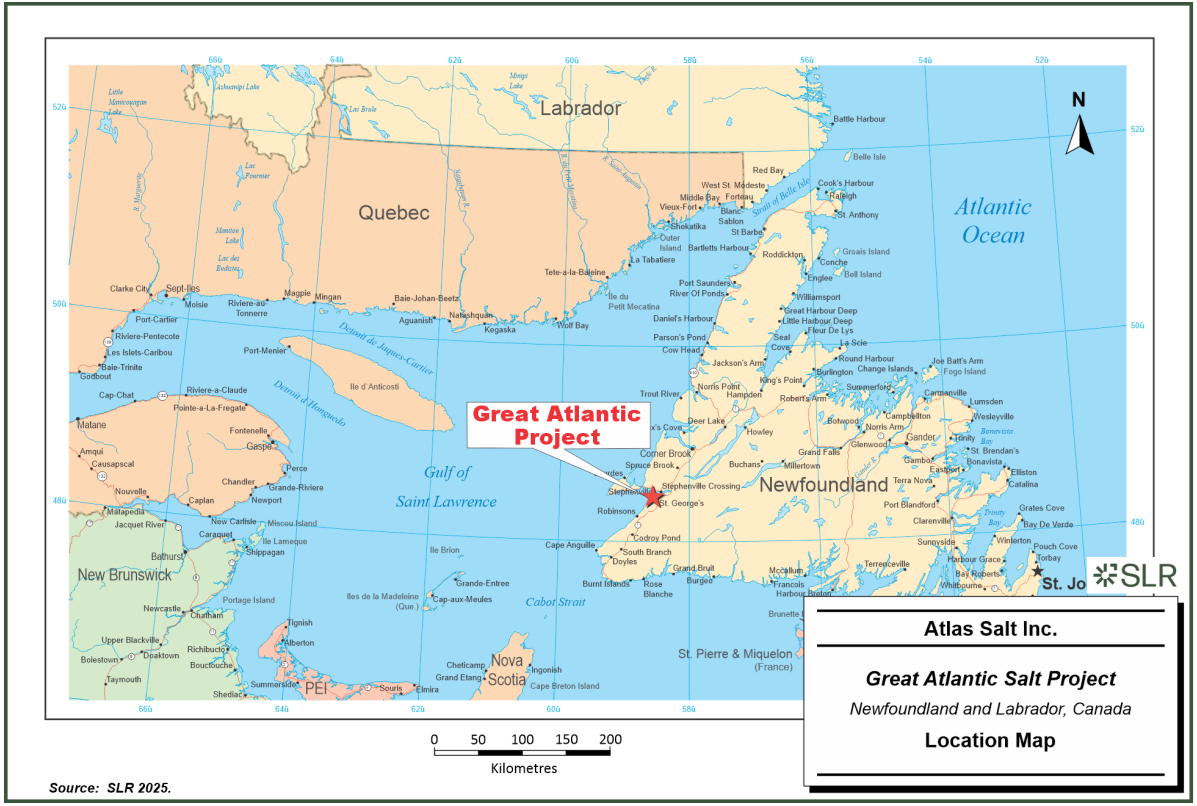
Atlas Salt describes Black Bay as a non-core but high potential asset, and management attention remains on the Great Atlantic Salt Project. The Black Bay program is funded through its own dedicated exploration budget. Nepheline syenite is used as a source of alumina and alkalis in glass, ceramics, and functional fillers; commercial deposits are uncommon, and North America has 1 mine in production. The property is located on the Trans Labrador Highway in southern Labrador.
Peterson pointed to the property's logistics:
"Black Bay sits six kilometers from tidewater on a paved highway providing excellent access."
Scope of the Results
The testwork was carried out at bench scale on a single bulk sample collected from the surface, and the results may not represent the occurrence as a whole. Black Bay is an early-stage exploration property with no mineral resource or mineral reserve estimated and no economic study completed, and nothing in the results establishes that the occurrence is economically viable.
The company lists failure or delay in obtaining permits, approvals, or site access; the lack of an established market or offtake for any product; and the earlier planning and deferral of the drilling program among its risk factors.
Next Steps
- Drilling of up to 1,500 meters is targeted to begin in the fourth quarter of 2026, with core logged and transported to St. George's for sampling.
- Anzaplan has recommended variability testwork, a heavy mineral identification program, and a market study before advancing process design.
- Atlas Salt intends to continue engagement with the NunatuKavut Community Council and Nunacor Development Corporation as the program proceeds.
FAQs (AI-Generated)
Analyst's Notes





Subscribe to Our Channel




Stay Informed


