




Australia's Only Pure Play Silver Mine Advances to Production



Australia's only pure silver mine: $1.2B NPV, 93% IRR, 11-month payback. Shallow low-cost deposit in tier-one jurisdiction. $170M Market cap vs $260M capex. Debt-funded development underway.
- Investigator Silver is developing the Paris Silver Project in South Australia, Australia's only pure play silver mine, with a recent DFS showing NPV of $1.2B at $80/oz silver and 93% IRR
- The project features robust economics even at conservative pricing ($618M NPV at $60/oz), 11-month payback period, and low capital requirement of $260M AUD, deliberately designed for financeability rather than maximum NPV
- MD, Lachlan Wallace, who previously built the Kanmantoo underground mine on-time and on-budget, is leading execution with focus on 3 key de-risking work streams: infill drilling, permitting advancement, and detailed engineering
- The operation leverages a shallow, flat, tabular ore body ideal for low-cost open pit mining, with high-grade zones front-loaded in the mine plan (130 g/ton average in first two years versus 90 g/ton life-of-mine)
- At current A$170M market cap with $65M cash, the company trades at significant discount to project value, with pure silver exposure providing direct leverage to structurally supported silver markets facing supply deficits
Investigator Silver (ASX:IVR) is advancing Australia's only pure play silver mining project at a time when silver markets face structural supply deficits and rising demand from global electrification. The Paris Silver Project in South Australia has recently completed a definitive feasibility study (DFS) demonstrating strong economics across multiple price scenarios, positioning the company to move from development into execution phase.
MD, Lachlan Wallace, who joined Investigator approximately 8 months ago, brings proven mine-building credentials to the project. Wallace previously served as CEO & MD of Hillgrove Resources, where he led the Kanmantoo underground mine from early-stage exploration through permitting, funding, and development into free cash generation, completing the project on-time and on-budget in 2024.
The company's current market capitalisation of approximately A$170 million, with $65 million cash in the bank - representing a significant discount to the project's demonstrated value potential. With 2.5 billion shares on issue trading at roughly six cents, the company faces typical challenges of Australian junior miners that have survived a difficult decade for silver, but now stands positioned to capitalise on improved market fundamentals.
Robust Project Economics Designed for Financeability
The Paris Silver Project DFS presents compelling economics across multiple silver price scenarios. At spot pricing of $80 US per ounce at the time of the study, the project delivered an NPV pre-tax of approximately $1.2 billion over an 11-year mine life (nine years mining, two years construction), with a 93% internal rate of return and an 11-month payback period.
Importantly, even at the more conservative long-term consensus price of $60 US per ounce, the project maintains strong metrics with an NPV of $618 million, 61% IRR, and 13-month payback. This demonstrates the project's robustness across a range of pricing environments.
Wallace emphasised that the project was deliberately designed for financeability rather than maximising headline NPV:
"We really did not size this operation to maximise headline NPV. We resized it to be financeable. We designed a pit using a silver price of about $70 Aussie. So, we're talking about $48 US, which is obviously materially below current spot."
The plant has been sized at 1.5 million tons per annum, positioned in the middle of a range that can comfortably achieve lending metrics under financial stress conditions including lower prices, lower grades, higher costs, and reduced ramp-up rates. This conservative approach aims to meet lender requirements around debt service coverage ratios and reserve tail.
Geological Advantages & Mining Strategy
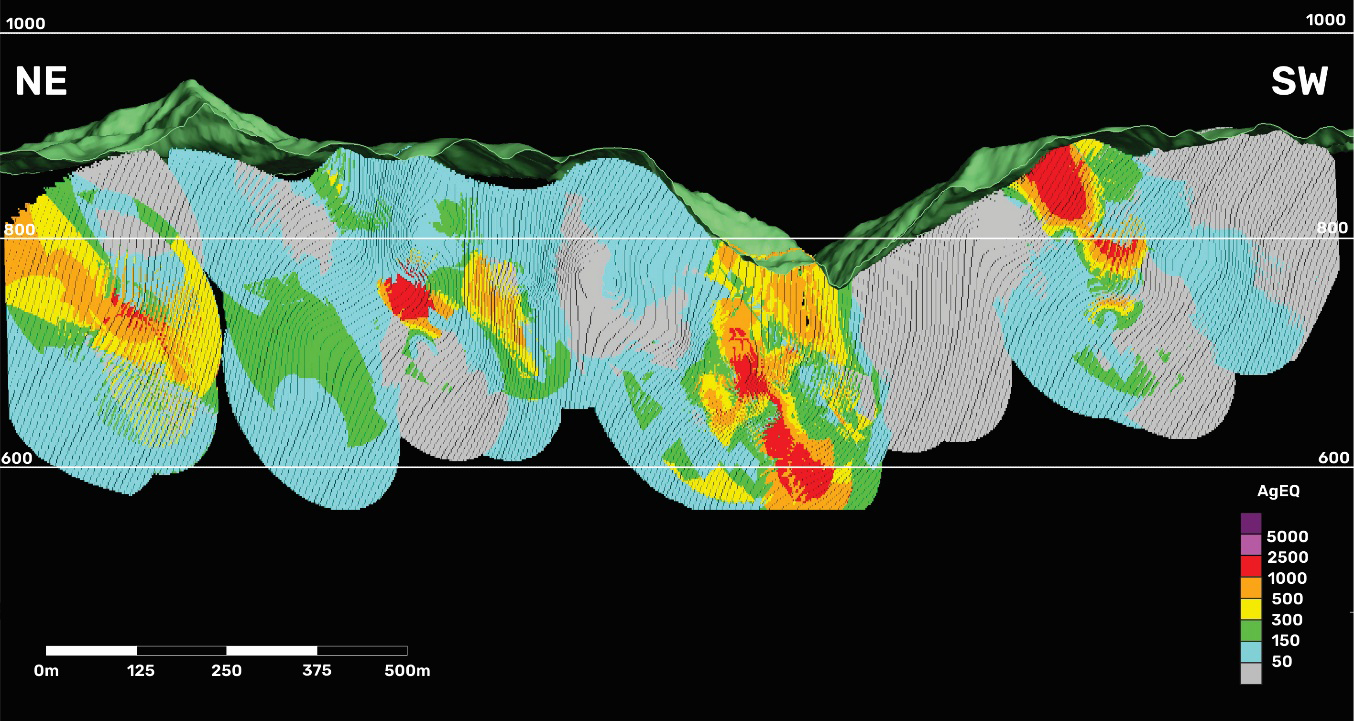
The Paris ore body presents several geological advantages that support efficient, low-cost mining operations. The deposit is flat and tabular, measuring approximately 400 meters wide and one kilometer long. The ore body starts about 10 meters below the surface, supporting a low strip ratio and efficient bulk mining operations.
The operation utilises a dual fleet strategy in the first two years to accelerate mining of higher-grade zones, bringing high-grade material forward in the mine plan. This approach results in an average head grade of approximately 130 grams per ton for the first couple of years, producing an average of 4.7 million ounces of silver annually, compared to a life-of-mine average of about 90 grams per ton.
This grade front-loading strategy drives early cash flows and underpins the rapid payback period of less than one year. An important operational outcome is the development of substantial stockpiles early in the mine life. By the end of the first year, these stockpiles contain approximately 1.3 million ounces of recoverable payable silver, representing around $120 million in Australian terms of net realisable value after processing and sales costs. This grows to approximately $500 million later in the mine life.
These stockpiles provide crucial operational flexibility, effectively decoupling mining from processing and allowing the operation to maintain discipline and optimise value from a mining perspective rather than reacting to short-term disruptions to keep the plant full.
3-Pronged De-Risking Strategy
Wallace outlined 3 main drilling work streams designed to de-risk the operation and build lender confidence. The first focuses on detailed drill-out of areas targeted for the first three years of mining, where the majority of debt repayments will occur. The company is taking drill spacing down from approximately 25 meters to 12.5 meters - essentially adding three holes for every existing hole - bringing the data density to grade control or operational level.
"What we'll be able to do is to really increase the amount of data down to basically a grade control, so an operational type level of density and I think what we'll really see there is that lenders will be comfortable or get a lot more comfortable with the geological confidence around that area.”
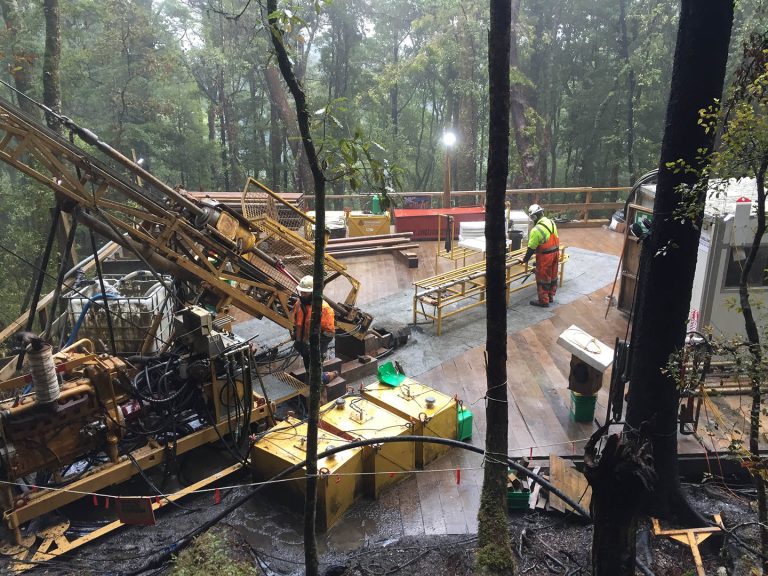
The second work stream focuses on expanding the operation itself. Pit optimisation indicated potential to extend the pit significantly to the north, south, and east, but these areas were predominantly inferred material and deliberately excluded from the DFS. A drill rig is scheduled to begin work on these areas to increase data density, bring material to indicated level that can be brought into reserve, and potentially develop a larger, more wholesome mine plan.
The 3rd drilling program targets broader growth opportunities. Paris sits within a 15-kilometer mineralised corridor that has seen only modest drilling. Strong results have been returned about five kilometers north of Paris (8 meters at 260 grams per ton) and 10 kilometers to the south (20 meters at 160 grams per ton, including 5 meters at almost 500 grams per ton). Any discoveries in close proximity to the planned Paris plant face lower environmental permitting and economic hurdles for potential integration into a longer mine life.
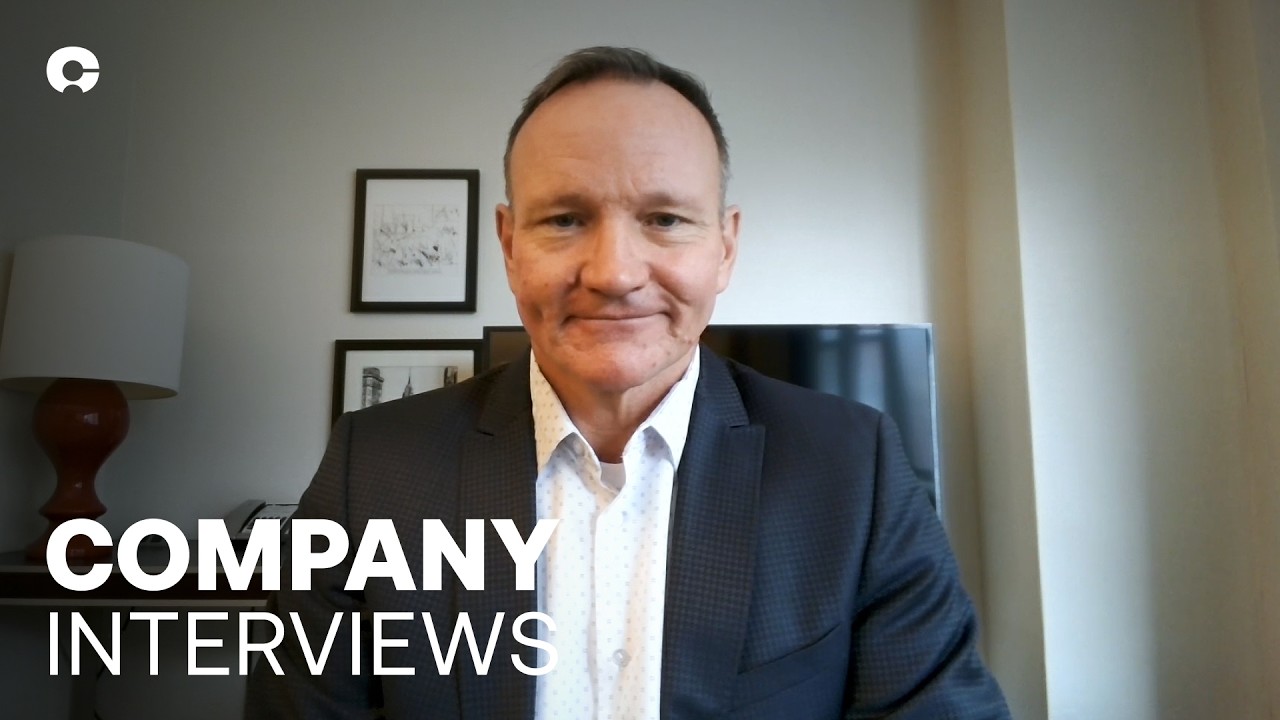
Interview with Lachlan Wallace, MD of Investigator Silver
Permitting Position & Government Support
Wallace expressed confidence in the permitting pathway, citing South Australia's supportive mining environment. Resources contribute approximately one in every fifteen dollars to the state economy, reflected in government policy and approach. The Fraser Institute recently ranked South Australia number one globally for mineral potential and fourth globally (number one in Australia) for investment attractiveness.
The company has maintained over 13 years of respectful engagement with traditional owners, conducting five formal heritage surveys that identified culturally sensitive areas. The project layout has been designed in consultation to avoid disturbing these areas. The company is now well into the formal native title agreement-making process, expected to conclude over the next 12 months.
Wallace noted the advantage of having built an operation in South Australia previously:
"South Australian government being a supportive government but it does also help having built an operation in the state before. The government does deploy significant time and resources towards these projects and what they're looking for is that the proponent once permitted gets operating and provides their economic activity for the state."
Optimisation Opportunities
The DFS was structured with conservative assumptions to ensure defendable metrics for lenders, creating multiple optimisation opportunities. Power represents a significant area: the study assumed 100% diesel power generation, a robust but unlikely optimal long-term solution. The company is assessing alternative power options including hybrid solutions and third-party supply options to reduce both capital and operating costs.
Pit expansion offers substantial upside. The mine was deliberately designed excluding inferred areas, but upcoming drilling aims to convert these resources and potentially increase both mine life and project value. Construction logistics optimisation includes accessing borrow pits along roadside for construction materials rather than hauling from the township of Kimba 70 kilometers away.
Cutoff grade optimisation presents another opportunity. The project was designed at an Australian $70 (approximately $48 US) silver price, excluding approximately six million tons of mineralised material that sits outside this cutoff grade. At current silver prices, this material becomes economic and represents opportunity to extend mine life and increase free cash flow for no additional mining cost, as the material would be extracted anyway.
The tailings storage facility has been designed with expansion in mind, with capacity to accommodate the current mine plan plus an additional 4.5 years of expansion. The crest is engineered at 30 meters wide rather than the typical four to five meters, making additional lifts straightforward. Every meter of lifting provides another year's worth of storage capacity.
Pure Play Silver Leverage in Structurally Supported Markets
As Australia's only pure play silver producer, Investigator Silver offers direct leverage to silver price movements. Every $1 US movement in the silver price translates to approximately $42 million of life-of-mine project value and $27 million in pre-tax NPV.
Wallace emphasised the structural supply-demand fundamentals supporting silver markets. The Silver Institute has reported deficits in each of the past five years totaling up to 250 million ounces - approximately one quarter of global supply. Rising demand from electrification and decarbonisation efforts continues while mining supply struggles to keep pace.
Approximately 75% of silver supply comes as a byproduct of lead-zinc or copper-gold mining, making production response price-inelastic. Copper and gold miners do not adjust production profiles to capture additional silver during price rises. Much existing supply comes from Latin America, Russia, and China, regions experiencing their own supply disruption issues.
These structural fundamentals, combined with macro factors including monetary expansion, credit concerns, and demand for inflation hedges, support the case for sustained upward pressure on silver prices - exactly when pure play exposure provides maximum leverage versus byproduct producers.
Financing Strategy
With $65 million recently raised, Investigator is well-funded to advance the project toward a final investment decision (FID). The company is targeting debt financing under normal terms, potentially supplemented by royalty-related offtake arrangements, to complete the approximately $260 million Australian capital requirement.
Wallace reported positive reception during recent meetings with institutional funds and debt providers in the United States, expressing confidence that debt financing will be available on reasonable terms. The company is actively progressing detailed engineering toward issued-for-construction work packages, conducting geotechnical test pits on site for mill foundations and other key infrastructure, and advancing long-lead item procurement.
The share register includes long-term support from Jupiter Asset Management, based in the UK, holding approximately 14% after participating in every raise over more than a decade. Recent capital raises have targeted institutional investors with long-only precious metals funds that understand silver market cycles and can provide stable, long-term support.
While the company maintains an over-the-counter listing on the pink sheets, expanding North American market access remains under consideration given the more mature understanding of pure silver mining in US and Canadian markets compared to Australia, where pure silver mining has been largely absent.
The Investment Thesis for Investigator Silver
- Compelling Project Economics – NPV of $1.2B at $80/oz silver with 93% IRR and 11-month payback; remains robust at $618M NPV even at conservative $60/oz pricing, demonstrating strong project fundamentals across commodity price scenarios
- Significant Valuation Discount – Current enterprise value of ~$100M (market cap $150M less $65M cash) represents approximately 8-17% of project NPV depending on silver price assumptions, offering substantial re-rating potential as development de-risking progresses
- Pure Play Silver Leverage – Australia's only pure silver mine provides direct exposure to silver price movements ($1/oz = $42M life-of-mine value) in structurally supported market with five consecutive years of supply deficits and rising electrification demand
- Geological Advantages Enable Low-Cost Production – Shallow (starts 10m below surface), flat, tabular ore body (400m wide x 1km long) ideal for efficient bulk open pit mining; simple metallurgy using proven conventional leach technology reduces operational complexity and execution risk
- Front-Loaded Cash Generation – High-grade zones prioritised in first two years (130 g/ton vs 90 g/ton life-of-mine average) produce ~4.7M oz annually, driving rapid payback and generating substantial early stockpiles ($120M value first year) that provide operational flexibility
- Multiple Optimisation Pathways – Conservative DFS assumptions create upside through power optimisation (currently 100% diesel), pit expansion (6M tons excluded mineralisation economic at current prices), construction logistics, and 15km mineralised corridor exploration potential
- Well-Funded Development Path – Recent $55M raise provides capital for detailed engineering, infill drilling, permitting advancement, and long-lead items; targeting debt financing for remaining ~$260M capital requirement with strong lender reception in recent US meetings
- Strategic Re-Rating Catalysts – Near-term de-risking milestones include native title agreement (12 months), infill drilling results demonstrating grade confidence, detailed engineering completion, debt financing commitment, and construction commencement driving valuation convergence to project fundamentals
The global silver market faces a structural supply deficit that has persisted for five consecutive years, with the Silver Institute reporting cumulative shortfalls approaching 250 million ounces - approximately one quarter of annual global supply. This deficit stems from accelerating demand driven by electrification and decarbonisation initiatives, particularly solar panel manufacturing and electric vehicle components, while supply remains constrained. Approximately 75% of silver production comes as a byproduct of copper, gold, lead, and zinc mining, rendering supply response price-inelastic: base metal and gold producers do not adjust production profiles to capture incremental silver during price rallies. Primary supply concentration in Latin America, Russia, and China introduces additional disruption risks.
Macro factors including monetary expansion, sovereign credit concerns, and investor demand for inflation hedges further support pricing. These fundamentals create favorable conditions for pure play silver producers offering direct price leverage, particularly in tier-one jurisdictions like Australia where sovereign and operational risks remain minimal compared to traditional silver-producing regions.
TL;DR: Executive Summary
Investigator Silver is advancing Australia's only pure play silver mine with a recently completed DFS demonstrating $1.2B NPV at $80/oz silver and 93% IRR, deliberately designed for financeability rather than maximum value. The shallow, flat Paris ore body enables low-cost open pit mining with high-grade zones front-loaded for rapid payback. Experienced management, tier-one South Australian jurisdiction, and structural silver market deficits support the investment case as the company progresses toward debt financing, permitting, and construction.
FAQs (AI Generated)
Paris combines tier-one Australian jurisdiction with shallow, low-cost bulk open pit mining (versus typical deep narrow vein underground operations), simple proven metallurgy, and conservative design for financeability at prices materially below current spot levels.
Primary near-term catalysts include infill drilling to grade-control density in first three years of mining areas, native title agreement conclusion, detailed engineering to issued-for-construction level, and debt financing commitment from lenders.
Every $1 US silver price movement translates to $42M life-of-mine value and $27M pre-tax NPV, providing direct leverage. Byproduct producers (75% of supply) don't adjust production for silver prices as economics are driven by base metals/gold.
Major upside pathways include power solutions (currently 100% diesel), pit expansion to north/south/east, 6M tons mineralised material excluded at $48/oz cutoff grade economic at current prices, construction logistics, and 15km corridor exploration targets.
Total capital requirement approximately $260M AUD with $65M recently raised. Company targeting debt financing under normal terms, potentially supplemented by royalty-related offtake arrangements, based on positive US lender reception during recent meetings.
Analyst's Notes





Subscribe to Our Channel


Stay Informed






