Confirming the Historical Record: How Phase 2 Drilling Underpins Myriad Uranium's Re-Rating Case


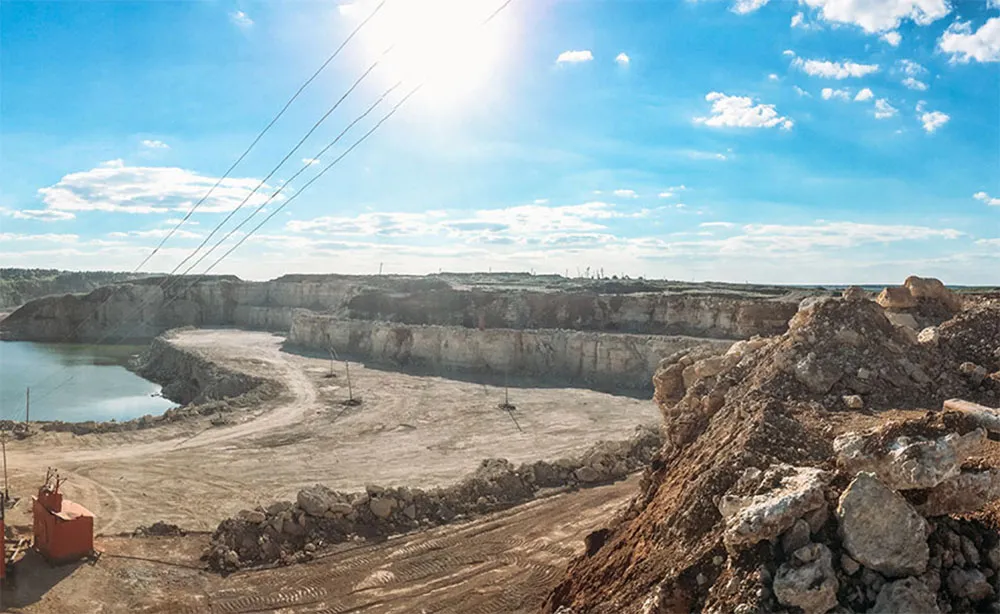
Myriad Uranium advances Phase 2 drilling at 655M lb Wyoming endowment, funded by Red Basin tech sale, targeting US listing with grade-enhancing resource validation.
- Myriad Uranium recently filed a comprehensive NI 43-101 technical report covering their maiden drill program and completion of high-res airborne geophysics at Copper Mountain, Wyoming.
- Company launching 4,500-meter drilling program targeting historical deposits with potential 20-60% grade increases due to disequilibrium effects previously underreporting uranium concentrations
- Divesting Red Basin, New Mexico project to tech-backed Subatomic for $2.5M USD plus 10% free carried interest through production, providing insight into technology sector's uranium ambitions
- $8.5M cash on hand growing to ~$11-12M CAD post-Red Basin transaction, funded for significant Phase 2 drilling with minimal burn rate outside drilling campaigns
- Advancing toward NASDAQ or NYSE American listing, 80% complete on legal and accounting requirements, while merging with Rush (25% Copper Mountain stakeholder)
Myriad Uranium is advancing the process of upgrading the historical resource at its flagship Copper Mountain project in Wyoming to current reporting standards, with the potential to improve both geological confidence and overall grade definition through modern exploration and verification work. CEO Thomas Lamb outlined the company's progress following publication of a comprehensive NI 43-101 technical report that establishes the foundation for Phase 2 drilling aimed at converting historical resources into current categories while exploring significant new uranium zones identified through recent geophysics.
The company operates two US-based uranium projects: the primary Copper Mountain project in Wyoming and the Red Basin project in New Mexico, which Myriad announced in March 2026 plans to sell to oSubatomic Red Basin, LLC. Listed in Canada, the United States, and Germany, Myriad is positioning for a senior US exchange listing to access deeper capital markets and align with its American asset base.
Resource Foundation and Phase 2 Drilling Strategy
The recently published NI 43-101 technical report represents a significant advancement from previous documentation, and which has provided an array of high priority target areas which have been identified for follow-up exploration drilling in Phase 2.
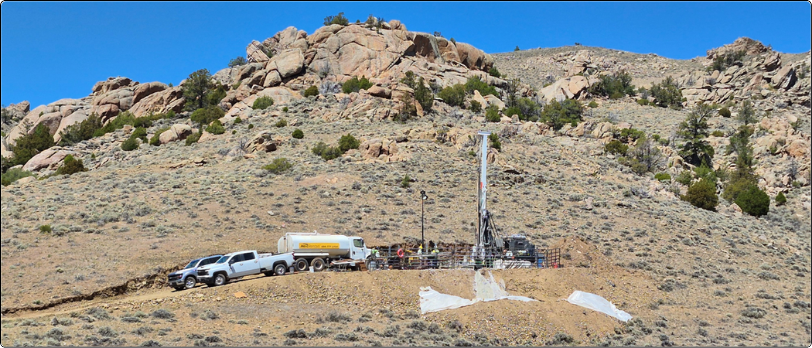
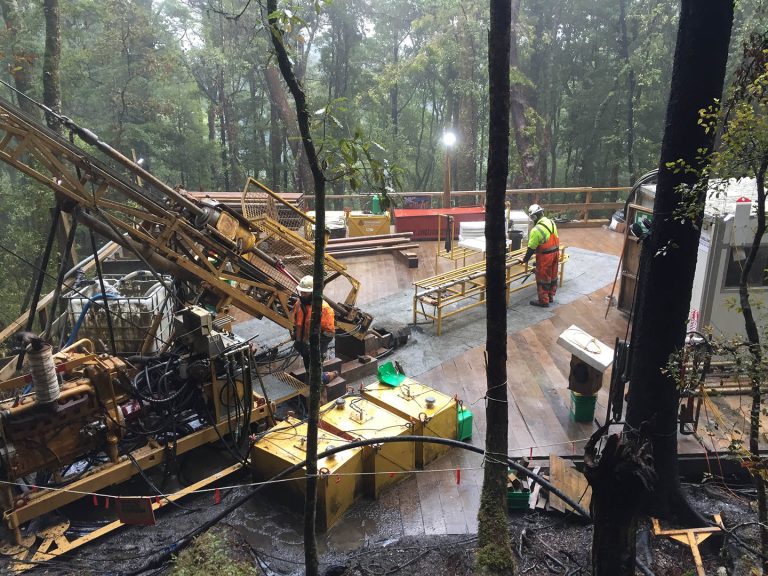
Phase 2 drilling will focus on three strategic stages. Stage one targets the central historical deposits (655 million pound uranium endowment, 27 million pound starter resource) with approximately 4,500 meters of drilling, including both shallow and deep holes designed to confirm historical intercepts and validate the disequilibrium effect. The company plans to drill several boreholes at each of seven known historical deposits that were slated for mining before the 1979 Three Mile Island incident shut down US uranium development.
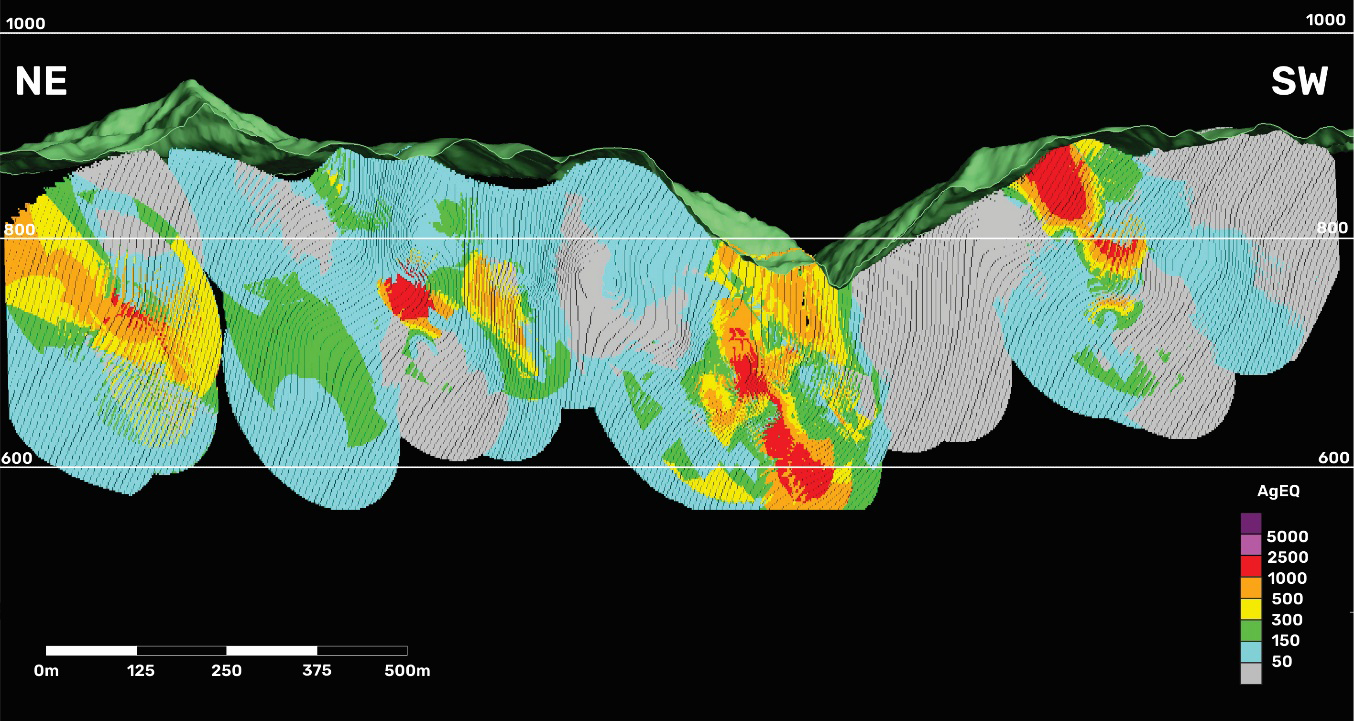
Stage two of Phase 2 will address prospects in the periphery that have seen limited historical drilling (3-20 boreholes each) but show promising mineralisation. Stage three involves drilling entirely new targets revealed by recent geophysics, potentially opening an exploration area as large as the known resource zone. Throughout this program, infill drilling will work to bring historical resources into current NI 43-101 categories.
The Disequilibrium Factor: Potential Grade Enhancements
A critical technical aspect of Myriad's thesis centers on radioactive disequilibrium, which caused historical gamma probe measurements to significantly underreport actual uranium grades. The company's recent drilling with modern assay methods has demonstrated grade boosts of 20-60% compared to historical gamma probe readings. This phenomenon occurs because the gamma probes detected only uranium in radioactive equilibrium, missing uranium at the margins of mineralised intervals.
If disequilibrium holds consistently across the historical deposits, a historical 50-foot intercept grading 2,000 ppm could see grades increase by up to 60% when properly assayed. Additionally, intercept lengths may extend beyond historical measurements as modern techniques detect uranium the probes missed at interval endpoints. This technical factor underpins significant value creation potential as Myriad systematically re-assesses the historical resource base.
The 2,000 historical boreholes at Copper Mountain provide high-density drill coverage across each deposit, giving strong confidence that mineralisation exists as historically documented. The question now centers on confirming higher grades and extended intervals through modern analytical methods, potentially substantially increasing the resource beyond historical estimates.
Strategic Red Basin Transaction: Technology Sector Entry
Myriad's decision to divest its Red Basin, New Mexico project for $2.5 million USD plus a 10% free carried interest through production provides strategic and financial benefits while offering insights into technology sector uranium interests. The buyers, 8VC (backed by PayPal founders) and Overmatch, are operating through Subatomic, led by industry veterans Tim Chilleri and Paul Goranson (former president of Cameco and leader at Energy Fuels and enCore Energy).
The transaction delivers over 5x cash-on-cash return on Myriad's original $525,000 investment made 14-15 months earlier. Beyond immediate capital, the deal includes a strategic alliance for future transactions and expands the 10% carried interest across the entire basin area of interest, not just the specific claims sold. This structure suggests potential for ongoing collaboration as technology companies increasingly view uranium as critical infrastructure for AI and data center expansion.
The technology firms demonstrate characteristics distinct from traditional mining investors. They are not price-sensitive, anticipate uranium prices reaching $150-200 per pound, maintain political connections relevant to US uranium policy, and possess resources to advance projects rapidly without typical junior mining constraints around capital raising and permitting timelines. Lamb noted that these groups likely have visibility into federal government uranium strategies, positioning them to capitalise on anticipated policy support.
Interview with Thomas Lamb, CEO, Myriad Uranium
Financial Position and Capital Allocation
Myriad maintains a strong balance sheet with $8.5 million in current cash, modest burn rate outside drilling periods, and incoming proceeds from the Red Basin transaction that will bring total cash to approximately $11-12 million CAD. This positions the company to execute substantial Phase 2 drilling without immediate financing requirements, though the company will assess market conditions and drilling results to determine optimal capital deployment pace.
The capital allocation strategy balances generating investor interest through positive drill results with building systematic resource confirmation that enables current NI 43-101 classification. Management recognises the paradox of twinning historical holes: confirmation validates the historical data but may not excite markets already aware of that data. However, making historical resources "real" through modern drilling, potentially with significant grade improvements from disequilibrium effects, creates tangible value even when confirming known mineralisation.
The company is also advancing toward merger completion with Rush, which currently owns 25% of the Copper Mountain project. This consolidation simplifies the ownership structure and positions Myriad for the planned US listing.
US Listing Strategy and Market Positioning
Myriad is advancing toward a NASDAQ or NYSE American listing, most likely as a foreign private issuer, with legal and accounting preparations 80% complete. The rationale centers on visibility, trading accessibility for US investors, and potential market rerating. Management has received consistent feedback over 18 months that the company belongs on a major US exchange given its Wyoming and New Mexico asset base.
The company cites comparable uranium companies trading on these exchanges with $400 million USD market capitalisations and believes Myriad's assets compare favourably. A US listing could facilitate access to capital for accelerated development and provide the visibility platform needed to communicate Myriad's unique position to the broadening investor base interested in domestic US uranium supply.
New Exploration Upside: Eastern Geophysical Anomaly
Recent airborne geophysics flown in December has identified a substantial radiometric and magnetic signature east of the access road, in an area with minimal historical exploration. All historical resources and nearly all historical targets lie west of the main access structure, but the largest geophysical signature appears to the east. The company is currently ground-truthing these targets with field geologists using scintillometers and rock sampling to validate the anomalies before drilling.
Geophysicists have identified specific high-priority target points with elevated likelihood of significant uranium mineralisation. Early ground-truthing results are encouraging, and management expects many of these geophysically-identified areas will host substantial uranium mineralisation. This represents entirely new uranium potential beyond the 655 million pound historical endowment, as the eastern area was never included in the Department of Energy assessments focused on the western portion of the property.
Conclusion
The intersection of artificial intelligence expansion, data center power requirements, and energy security concerns is driving technology sector capital into uranium assets with unprecedented urgency. Traditional mining timelines and price sensitivity no longer apply as tech companies with functionally unlimited resources recognise uranium as critical infrastructure rather than commodity speculation. These entities maintain political connectivity enabling accelerated permitting and development pathways while anticipating government support mechanisms including potential floor pricing and strategic reserves. Lamb observed: "the tech and AI companies are coming. They're coming into this space." Unlike cyclical commodity investors, technology firms view large-scale uranium endowments as long-term strategic positions comparable to oil reserves, willing to accept higher extraction costs across resource tails in exchange for supply security. This capital source transformation fundamentally alters uranium development economics and timelines, particularly for US domestic projects aligned with reshoring and energy independence policy objectives supporting both traditional nuclear baseload and emerging small modular reactor deployment.
TL;DR
Myriad Uranium is transitioning from historical data story to active resource development at Copper Mountain, Wyoming, with Phase 2 drilling targeting validation and expansion of a 27 million pound historical resource within a 655 million pound DOE-assessed endowment. The company's $2.5M Red Basin sale to tech-backed buyers provides funding while validating uranium's strategic value to the technology sector, positioning Myriad's large-scale, grade-enhancing resource as a call option on rising uranium prices and US energy security policy. Strong cash position ($11-12M CAD), imminent US listing plans, and new geophysical targets provide multiple near-term catalysts alongside systematic resource building.
FAQ's (AI Generated)
Analyst's Notes





Subscribe to Our Channel



Stay Informed