




Brent Falls to $70.47 & OPEC+ Supply Decision Test US Oil Supply Recovery



Brent fell to $70.47 as US-Iran diplomacy eased supply concerns, but a 10.9% US crude import shortfall kept inventories tight ahead of OPEC+ decisions.
- Brent crude futures for September delivery fell 1.4% to $70.47 per barrel, their lowest level since February 27, leaving the contract on track for a fourth consecutive weekly loss for the first time in nearly two years.
- US crude imports averaged 5.5 million barrels per day over the past four weeks, 10.9% below the year-ago period, indicating domestic supply remains below last year's level.
- US commercial crude inventories fell by 3.8 million barrels to 408.4 million barrels, leaving stockpiles about 7% below the five-year average.
- UBS cut its Q3 2026 Brent forecast by $25 per barrel to $80 per barrel, citing the US-Iran pact and higher oil shipments through the Strait of Hormuz. HSBC said Brent could recover to $80 per barrel or higher after stranded tanker volumes clear the market and the temporary supply surplus subsides.
- OPEC+ is expected to consider another output increase for August at its Sunday meeting, pointing to higher global oil supply. The next US-Iran negotiating session has been delayed until after the funeral for Iran's late Supreme Leader Ayatollah Ali Khamenei, extending uncertainty over sanctions and Middle East oil flows.
US-Iran Talks & Brent Falls to $70.47
Brent crude futures for September delivery fell 1.4% to $70.47 per barrel, their lowest level since February 27, and remained on track for a third consecutive daily loss. The contract was also on track for a fourth consecutive weekly loss, its first such streak in nearly two years. WTI futures for August delivery fell 1.5% to $67.54 per barrel and were on track for a fourth consecutive weekly loss, their first since March last year.
The selloff followed Qatar's confirmation that Iran and the US made progress in Doha talks on the Strait of Hormuz memorandum, although no broader peace agreement was reached. US President Donald Trump said negotiations were "going well," adding, "The denuclearization of Iran is moving along well." The talks remained indirect through Qatari mediators after Iran attacked two commercial vessels, prompting US retaliatory strikes inside Iran.
Hormuz Oil Flows Recover & US Import Shortfall Persists
UBS analyst Giovanni Staunovo said recovering oil flows through the Strait of Hormuz continue to pressure prices: "Recovering oil flows through the Strait continue to weigh on prices, driven by previously stranded tankers exiting the Gulf. This additional supply is a headwind for oil for now." ING estimated about 11 tanker crossings through the Strait of Hormuz, down from last week's peak of 24, while inbound traffic increased as shipowners returned vessels to the Persian Gulf, supporting a recovery in oil supply.
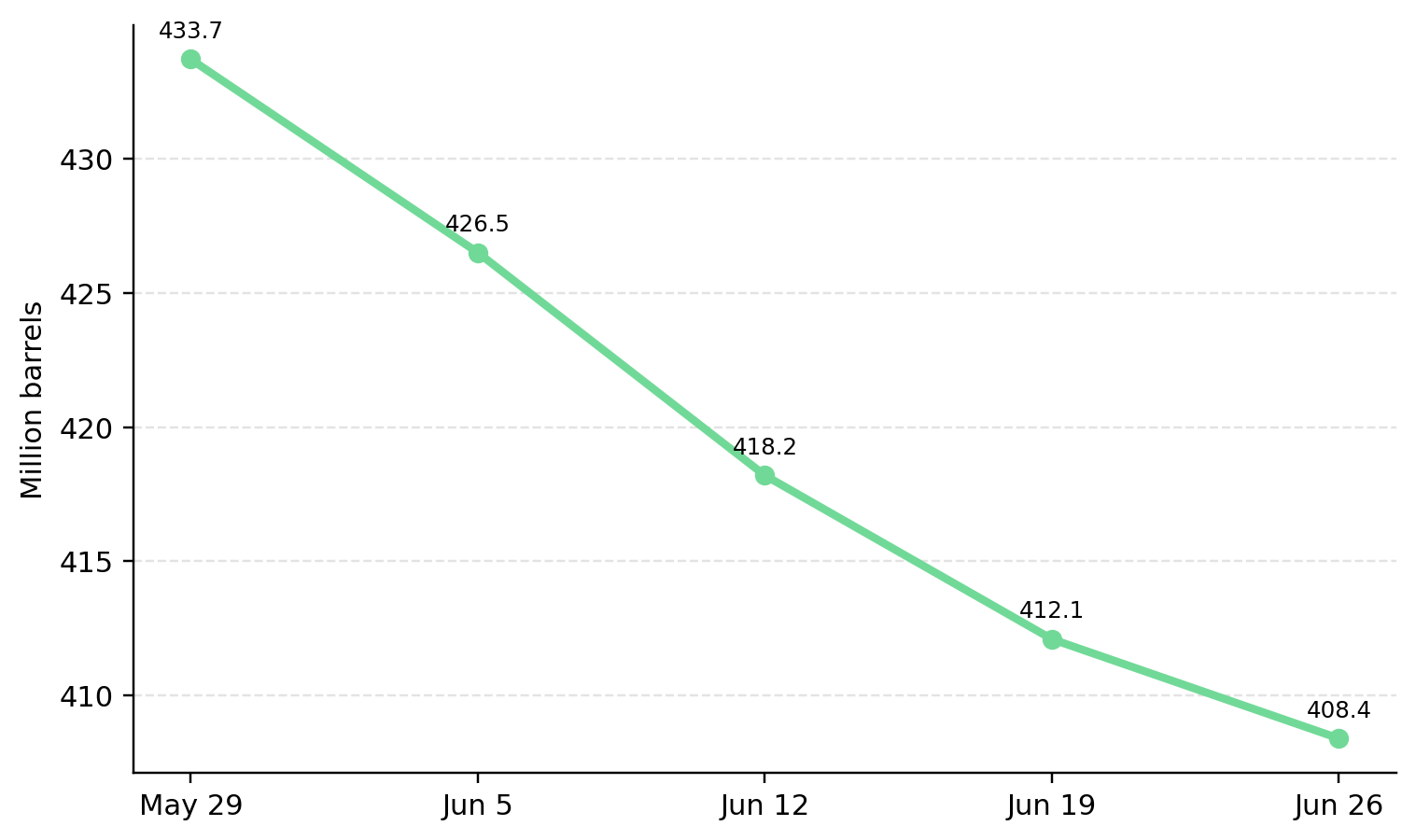
US commercial crude inventories fell by 3.8 million barrels to 408.4 million barrels, leaving stockpiles about 7% below the five-year average. Four-week average crude imports were 5.5 million barrels per day, 10.9% below the year-ago period. US refineries operated at 96.6% of capacity, up 85,000 barrels per day from the prior week, processing 17.2 million barrels per day as both crude and gasoline inventories declined. Global oil supply is recovering, but US inventories remain below historical levels, indicating additional supply has not yet reached the domestic market in volumes large enough to eliminate the deficit.
OPEC+ Supply Decision & Hormuz Uncertainty Shapes Oil Outlook
The next Iran-US meeting has been delayed until after the funeral for Iran's late Supreme Leader Ayatollah Ali Khamenei, postponing further negotiations. Two senior Iranian sources said Iran is seeking international recognition of its control over the Strait of Hormuz, including the right to levy transit fees, "even if it has to do so by force," a position the US has rejected. The remaining MOU period now hinges on whether both sides reach a compromise before it expires or risk renewed uncertainty over shipping through the Strait of Hormuz.
UBS cut its Q3 2026 Brent forecast by $25 per barrel to $80 and its Q4 forecast by $10 per barrel to $80, citing the US-Iran pact and higher oil shipments through the Strait of Hormuz. HSBC said Brent could return to $80 per barrel or higher as stranded tanker volumes clear the market and IEA strategic stock releases end in July. OPEC+ is expected to consider another output increase for August, adding to supply growth while US crude inventories remain below historical levels and Iran-US negotiations continue.
Refinery Utilization Reaches 96.6% & Energy Stocks Face Margin Pressure
US refineries operated at 96.6% of capacity, processing 17.2 million barrels per day. Crude inventories fell by 3.8 million barrels to about 7% below the five-year average, while gasoline inventories declined by 2.3 million barrels. Distillate fuel inventories increased by 2.5 million barrels but remained about 8% below the five-year average. Total products supplied averaged 20.6 million barrels per day over four weeks, 1.7% above the year-ago period, indicating demand remained stronger even as crude imports stayed below last year's level.
Lower Brent prices have not yet translated into higher crude supply in the US, leaving domestically focused energy producers exposed to tighter local market conditions. Producers that can increase output quickly may benefit from refinery utilization near 96.6%, while longer-cycle projects remain tied to investment decisions made when oil prices were higher. Retail regular gasoline fell to $3.831 per gallon, down $0.083 from the prior week but still $0.667 above the year-ago level, indicating lower crude prices have not yet fully reached consumers.
US Crude Inventories & OPEC+ Output Shape Oil Prices
Brent remains near $70 per barrel as diplomatic progress between the US and Iran and recovering oil shipments through the Strait of Hormuz reduce supply disruption concerns. Brent prices could strengthen if OPEC+ announces a smaller-than-expected output increase and Iran-US negotiations stall, or if US crude inventories continue to decline despite weak import growth. Brent prices could face additional downside if OPEC+ increases output more than the market expects and Iran and the US reach an agreement that supports uninterrupted shipping through the Strait of Hormuz.
US commercial crude inventories stood at 408.4 million barrels, excluding the Strategic Petroleum Reserve, providing the benchmark for assessing whether domestic supply is recovering. Further inventory declines alongside lower Brent prices would indicate the 10.9% import shortfall persists despite recovering oil shipments through the Strait of Hormuz, supporting UBS's view that Brent could return to $80 per barrel. An inventory build above 408.4 million barrels would indicate additional supply from Iran and other Gulf producers is reaching the US in volumes sufficient to reduce the current supply deficit. The OPEC+ meeting may indicate whether higher production adds enough supply to pressure oil prices further or is offset by continued inventory deficits and firm refinery demand.
Analyst's Notes





Subscribe to Our Channel




.jpg)


Stay Informed


