




The Cudi-Gabar Frontier: Inside SE Türkiye’s Rapid Onshore Oil Buildout


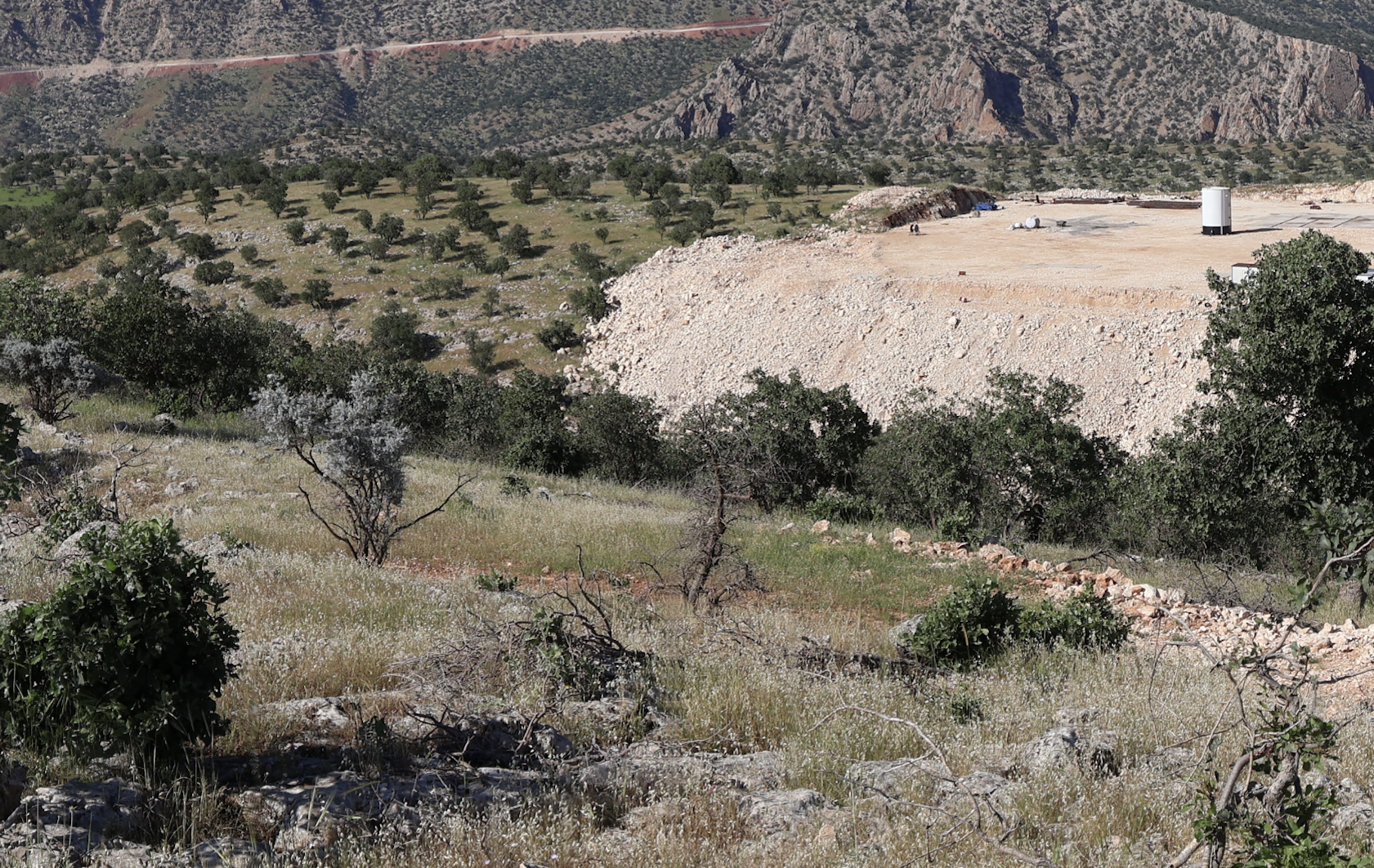
SE Türkiye’s Cudi-Gabar oil fairway is scaling domestic supply as fractured carbonates, seismic & managed-pressure drilling advance toward development.
- Regional production has reached more than 80,000 barrels per day, with Türkiye Petrolleri Anonim Ortaklığı (TPAO) targeting 100,000 barrels per day.
- Block M47’s C-1 well encountered more than 70 meters of gross oil pay, including 38 meters of net oil pay, but drilling stopped at 2,455 meters because of lost circulation.
- Initial oil can be trucked 130 kilometers to the Tüpraş Batman refinery, while a completed regional pipeline has a capacity of more than 150,000 barrels of oil equivalent per day.
- The planned sidetrack is designed to bypass the loss zone and use managed-pressure drilling to penetrate the remaining reservoir.
- Dune Oil has a US$15 million Block M47 work-program commitment, with approximately US$4.35 million due on September 15, 2026, while seismic & the C-1 sidetrack determine whether the resource can advance toward development.
Türkiye’s Domestic Oil Gap Creates a Regional Development Case
Southeastern Türkiye’s Cudi-Gabar petroleum province has moved from a recently identified exploration fairway to a material oil-producing region within 5 years. Dune Oil Corp (CSE: DUNE | OTCQB: TRLEF | Frankfurt: Z62), citing Türkiye Petrolleri Anonim Ortaklığı (TPAO) public disclosures and company estimates, places combined regional production at approximately 81,000 to 99,000 barrels of oil equivalent per day, compared with zero production approximately 5 years earlier. The scale of this buildout provides an established production benchmark for operators entering adjacent licenses.
The development case is driven by the gap between domestic supply and demand. Dune Oil Corp cites an oil demand of approximately 1 million barrels per day against domestic production of approximately 127,000 barrels per day, with an annual oil import bill of approximately US$35 billion. The presentation also identifies Russia and Iraq as accounting for approximately 72% of crude imports, linking incremental domestic production directly to import displacement.
The Cudi-Gabar model therefore combines 3 identifiable mechanisms: established oil-bearing carbonate geology, concentrated regional drilling activity & access to existing transportation infrastructure. The relevant commercial test for junior operators is whether those regional conditions can translate into sustained production at individual licenses while satisfying technical & funding requirements.
The Zagros Carbonate Play: Fractures Turn Reservoir Quality Into a Drilling Challenge
The Cudi-Gabar fairway sits within the Zagros Basin carbonate system, with Block M47 positioned among producing fields & discoveries identified by Dune Oil as regional analogs. The company describes the targeted Mardin & Beloka Groups as fractured carbonate reservoirs comprising dolomite & limestone. The presentation also identifies more than 100 analog wells within a 2 to 12-kilometer radius of Block M47, providing a substantial local drilling dataset for geological interpretation.
The C-1 well illustrates the relationship between reservoir quality & drilling risk. The well encountered 32.4° API light oil & more than 70 meters of gross oil pay, including 38 meters of net oil pay. Dune Oil reports matrix porosity of 6.5% to 8% & total effective porosity of 8% to 12% after incorporating fracture contributions. Those fractures can provide reservoir connectivity, but they can also cause severe drilling-fluid losses before the target interval is fully penetrated.
That trade-off directly affected the outcome of the C-1 drilling. Dune Oil reports that drilling stopped at 2,455 meters due to lost circulation, leaving approximately 160 meters of potential reservoir unpenetrated. The company’s resource assessment therefore relies on interpreted reservoir continuity & data from the penetrated interval rather than a completed production history across the full prospective section.
Route to Market Reduces the Initial Infrastructure Requirement
The development case also benefits from access to existing regional infrastructure. Dune Oil’s August 2026 presentation describes an initial commercialization model in which 250-barrel tanker trucks transport oil approximately 130 kilometers to the Tüpraş Batman refinery. The same presentation identifies a pipeline completed in 2026 with a stated capacity of more than 150,000 barrels of oil equivalent per day into the Esma Çevik system.
Dune Oil’s economic sensitivity shows how transportation & operating costs affect the potential margin. At a US$72 per barrel oil price, the company estimates a US$50 per barrel operating netback after a US$9 royalty, US$8 operating cost & US$5 trucking cost. At oil prices of US$65, US$75 & US$85 per barrel, the presentation estimates netbacks of US$44, US$53 & US$61 per barrel, respectively. These are company-derived economic estimates rather than realized historical operating results.
The infrastructure therefore provides a staged commercialization route, with trucking potentially supporting initial volumes before higher-volume pipeline transportation is used. For Block M47, however, infrastructure access does not eliminate development risk because the North Prospect remains classified as a 2C contingent resource rather than a reserve. Dune Oil states that there is no certainty that any portion of the contingent resource will become commercially viable.
Managed-Pressure Drilling Addresses the Primary Subsurface Constraint
The principal technical constraint described in the M47 materials is lost circulation when drilling encounters fractured carbonate intervals beneath the swelling Germav shale. This can prevent conventional drilling from reaching the full reservoir section, turning a subsurface opportunity into a well-construction problem. The C-1 well stopped before fully penetrating the Mardin Group after circulation losses were encountered.
Dune Oil’s proposed solution is managed-pressure drilling (MPD), which controls wellbore pressure while drilling through the loss-prone interval. The planned C-1 sidetrack would kick off below the loss zone after casing off the problematic Germav interval, then use MPD to control pressure while penetrating the reservoir. The proposed completion design incorporates open-hole packers & sliding sleeves to isolate individual zones, followed by selective flow testing & acid stimulation where required.
The approach is intended to address a demonstrated drilling failure, but it does not, in itself, establish commercial production. The economic significance of MPD therefore depends on whether it allows the reservoir to be fully penetrated & subsequently delivers sustained flow rates sufficient to support the development case.
TPAO Provides the Regional Production Benchmark
TPAO provides the principal regional production benchmark because the state operator is already producing across multiple fields surrounding Block M47. Dune Oil identifies Gabar at approximately 40,000 barrels of oil equivalent per day, Esma Çevik at approximately 27,000 barrels of oil equivalent per day, MİG at approximately 9,000 barrels of oil equivalent per day & Bulmuşlar at approximately 8,000 barrels of oil equivalent per day.
The company also cites more than 80,000 barrels per day of regional production & states that TPAO is targeting 100,000 barrels per day. The release also describes approximately 40 active rigs against a 140-well inventory. These figures establish the scale of regional drilling activity, although production from neighboring TPAO-operated fields does not indicate equivalent performance in Block M47.
The production data provide an important distinction between geological validation & asset-level validation. Cudi-Gabar has established that the regional carbonate system can support material oil production, while individual licenses still require their own drilling, completion & production results to demonstrate commerciality.
Dune Oil & the Junior Entry Point Into the Fairway
Dune Oil Corp. provides a public-market case study of a junior operator entering the regional fairway through a staged farm-in. The company is listed on the Canadian Securities Exchange (CSE) under DUNE, the OTCQB Venture Market (OTCQB) under TRLEF & the Frankfurt Stock Exchange (FSE) under Z62, and is earning up to a 29% working interest in Block M47 through a US$15 million work-program commitment.
The North Prospect carries a 2C best-estimate contingent resource of 27.6 million barrels gross to Dune Oil’s 29% working interest before royalty, equivalent to 24.186 million barrels net after the 12.5% state royalty. The Chapman Petroleum Engineering evaluation, effective December 31, 2025, assigns an unrisked net present value at a 10% discount rate (NPV10%) of US$733.5 million before income tax for the 2C case, while the risk-adjusted 2C NPV10% is US$594.2 million. These values are modeled outcomes based on the independent resource evaluation & are not equivalent to realized asset value.
President of Dune Oil Corp., Scott Lower, described the strategic rationale for the pivot:
“So the new name, Dune Oil, represents to us a new pivot for the company, a pivot towards developing oil and exploring oil in a newly discovered fairway in the Zagros Basin in the southeast of Türkiye. The fairway was only discovered five years ago, and it's now up to over 80,000 barrels a day. And there's a bit of an oil rush going on there. So we pivoted our operations to focus on this onshore oil opportunity. Historically, we've been focused on natural gas. So the new name reflects the new company strategy here.”
The capital requirement remains a separate test from the geological case. Dune Oil states that US$800,000 had been advanced against the US$15 million work-program commitment, with approximately US$4.35 million due on September 15, 2026. The company therefore has to fund additional earn-in commitments while simultaneously financing drilling & seismic work required to advance the asset.
Seismic Coverage Determines the Next Exploration Decisions
The next exploration decisions depend on converting interpreted structures into drillable targets. Dune Oil states that approximately 25% of Block M47 currently has seismic coverage, while a newly launched 40-kilometer 2D seismic tender forms part of a broader 90-kilometer seismic program described in the company’s August 2026 corporate presentation. The program is designed to refine priority exploration areas after integrating the seismic data with a high-resolution gravity survey completed in May & June 2026.
The prospective resource inventory remains separate from the confirmed North Prospect contingent resource. The Chapman evaluation assigns a P50 prospective resource of 23.987 million barrels gross & 20.989 million barrels net to Dune Oil across the broader prospect portfolio. Those volumes remain subject to both discovery & development risk and therefore cannot be treated as equivalent to the 27.6 million-barrel North Prospect contingent resource.
Lower also described the relationship between the M47 leads and surrounding discoveries:
“On top of that, there are two other areas, the south and mid-leads, that are again on trend with several close regional discoveries that give some exploration upside as well. At least one of those wells is expected to be drilled this year or potentially early next year. There's a multi-pronged approach to developing and proving up reserves and getting production on this block.”
Industry Outlook
The next 12 to 24 months will test whether Cudi-Gabar’s established regional production can be replicated at individual licenses, with Dune Oil’s Çetinkaya-1 sidetrack and 40-kilometer 2D seismic program, forming part of a broader 90-kilometer program, providing the next technical tests for Block M47. The company must also fund its US$15 million work-program commitment, with US$800,000 advanced to date and approximately US$4.35 million due on September 15, 2026, while drilling and seismic results determine whether the Mid, North & South leads can support additional targets. Regional proof is established through TPAO’s production base, but asset-specific proof still requires successful drilling, completion, sustained flow rates, infrastructure access & funded development.
FAQs (AI-Generated)
Analyst's Notes





Subscribe to Our Channel






Stay Informed


