




Dune Oil Eyes Fast-Track Turkish Production From Newly Discovered Gabar Oil Basin


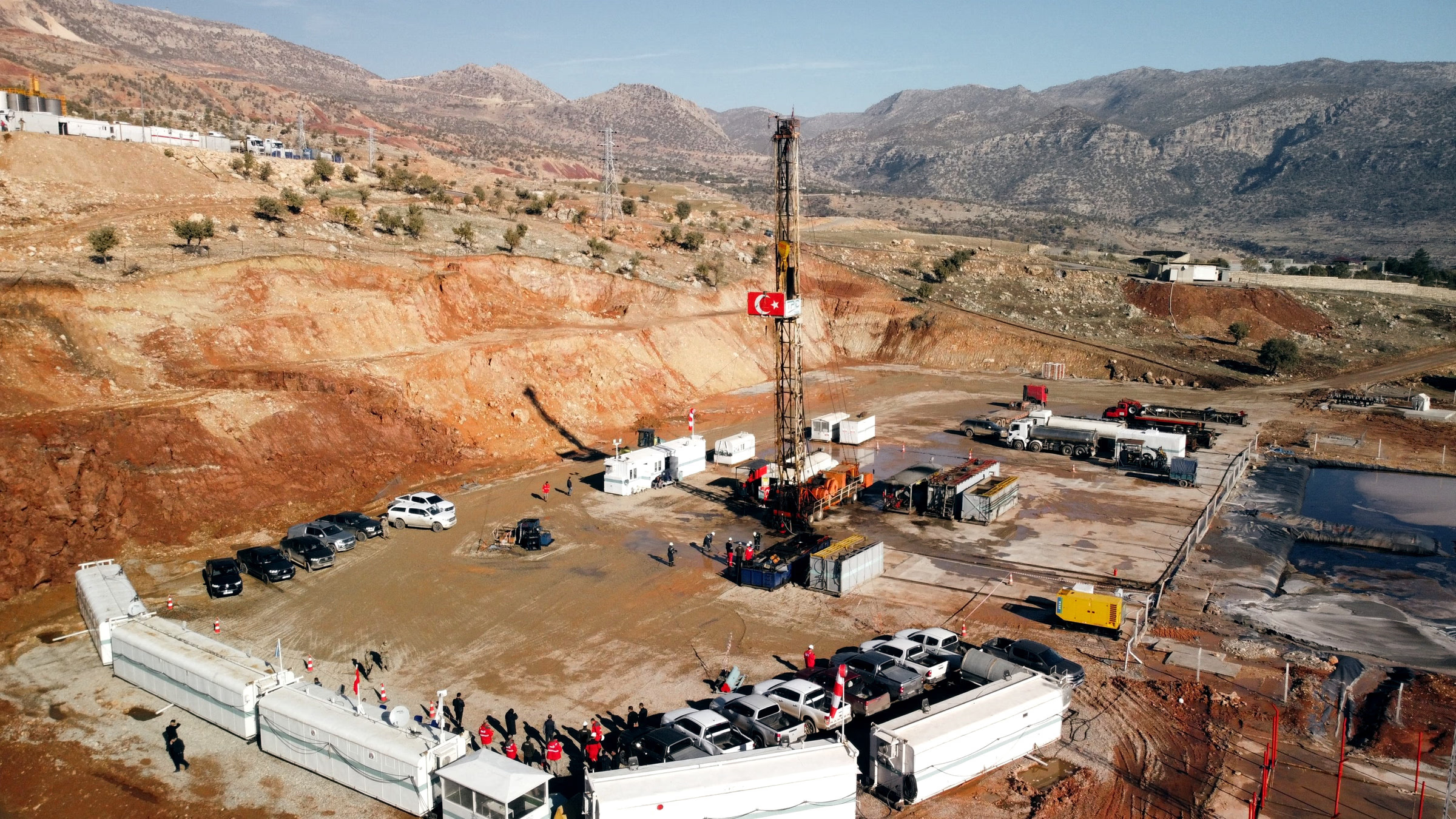
Dune Oil (CSE: DUNE) pivots to onshore Turkish oil, targeting production from its 27.6 MMbbl Gabar Block M47 discovery amid a September funding deadline.
- Dune Oil Corp. (CSE: DUNE, OTCQB: TRLEF), formerly Trillion Energy International, has pivoted away from its offshore Black Sea gas project to focus on Block M47 in the Gabar region of southeastern Türkiye, where a 2025 discovery has been assigned a 27.6 MMbbl net 2C contingent resource.
- President Scott Lower told Crux Investor that the company exited its offshore SASB gas project after gas prices fell from US$30/MCF to US$7/MCF, selling the asset along with its associated debt to redirect capital toward the onshore oil opportunity.
- An independent Chapman resource evaluation assigns the North Prospect an unrisked NPV10 of US$733.5 million and an 81% chance of commerciality, though converting contingent resource to reserves depends on a flow test still to be completed on the re-entered C-1 well.
- Dune Oil must raise approximately US$4.35 million by September 15, 2026 to meet its work-program commitments, part of a broader US$15 million, two-year earn-in to secure a 29% working interest in the M47 concession.
- Management is targeting first cash flow from a sidetrack of the existing C-1 wellbore, with netbacks estimated near US$50 per barrel at US$72 Brent and a payback period of roughly two to three months per well.
Introduction to Dune Oil & New Opportunities
Dune Oil Corp. (CSE: DUNE, OTCQB: TRLEF, Frankfurt: Z62), formerly known as Trillion Energy International, has repositioned itself around a light-oil discovery in southeastern Türkiye's Gabar region, part of the Zagros Basin's Cudi-Gabar petroleum province. President Scott Lower framed the shift as a response to a step-change discovery on Block M47, where the company holds the right to earn up to a 29% working interest.
The catalyst, according to Lower, was a discovery on a structure known as the North Prospect that has since been assessed with an independent 2C contingent resource of 27.6 MMbbl net to Dune Oil, alongside four additional defined structures the company intends to drill.
"What changed everything was a discovery in a new basin, in a previously undiscovered region that is now a tremendous producer. It's the biggest oil-producing area in Turkey at this point."
The Gabar oil fairway has grown from effectively zero production five years ago to more than 80,000 bbl/d today, against a Turkish state target of 100,000 bbl/d, with roughly 40 rigs currently working a 140-well inventory across the surrounding blocks.
Turkey's broader oil-import dependence underpins the investment case. The country imports over 85% of the roughly one million barrels per day it consumes, spending an estimated US$35 billion annually on imported crude, with more than 70% sourced from Russia and Iraq. A confirmed domestic discovery in an established production trend, close to existing infrastructure, positions Dune Oil to sell into a market willing to pay premium pricing for local barrels.
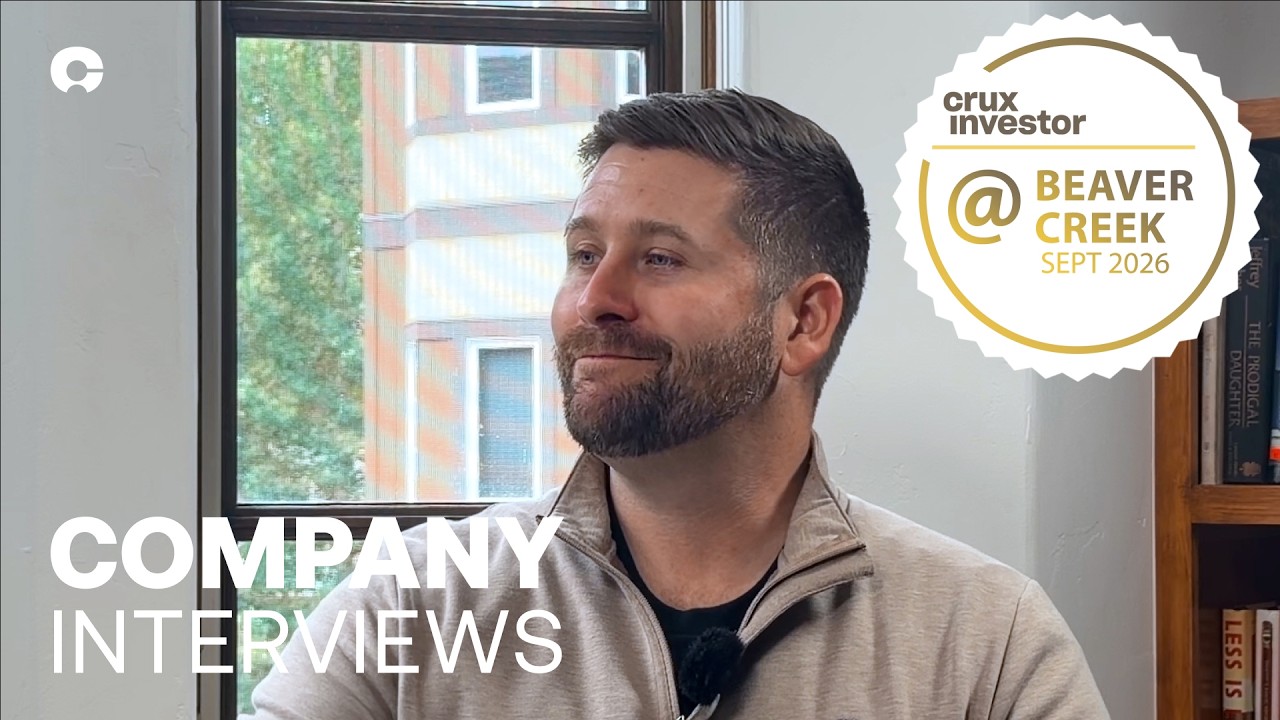
Interview with President, Scott Lower
Transition from Black Sea Gas to M47 Oil Strategy
Dune Oil's current strategy represents a deliberate move away from the company's prior focus as Trillion Energy, when it held an offshore natural gas project in Türkiye's Black Sea, referred to internally as SASB. That project produced approximately 7.1 MMcf/d net between 2022 and 2025 before operatorship reverted to the Turkish state company in 2024.
Lower was direct about why the company walked away from the gas strategy:
"When we were taking on that project, gas prices were at $30 an MCF, and they fell to $7, which took a lot of the cream off of that."
Beyond pricing, the state partner's shifting priorities limited Dune Oil's ability to execute its planned work program on the offshore asset. In the second quarter of 2026, the company sold the SASB project along with its associated debt, using the proceeds and roughly US$3 million of new equity to redirect capital toward M47.
The switch also brought a materially different cost structure. Lower noted that onshore wells in the Gabar region cost between US$2 million and US$3 million to drill and complete, compared with roughly US$16 million for an offshore well in the Black Sea. The North Prospect concession is not government-operated, which Lower described as an important distinction from the SASB arrangement, where the company had been required to hand back operatorship after two years.
Financial Strategies & Funding Requirements
Funding the M47 earn-in is the company's most immediate priority. Dune Oil has committed to a US$15 million work program over two years to earn its 29% interest, of which approximately US$800,000 had been advanced as of the interview, largely allocated to seismic work. A further US$4.35 million is due in September 2026 to fund the company's share of drilling and seismic obligations, with Dune Oil carrying 60% to 80% of the cost of the next several wells under its earn-in terms.
Asked directly about the funding timeline, Lower acknowledged the company still has work to do:
"We have to come up with $4.3 million dollars in September to fund operations...We've got some work to do on the money-raising side, and we're talking to investors and bankers on that."
He characterized the raise as most likely to come through equity given the pre-production stage of the asset, describing it as part of a broader recapitalization intended to carry the company from contingent resource through to reserves, production, and additional discoveries.
The company's own materials frame the current valuation as heavily discounted relative to peers. On an enterprise-value-per-2C-barrel basis, Dune Oil trades at roughly US$0.21 per barrel today and an estimated US$0.91 per barrel following a proposed CAD$27 million raise, compared with a peer median of US$2.58 and a figure of US$3.41 for ShaMaran Petroleum, a Kurdistan-focused operator in a geologically similar Zagros carbonate setting.
Team Dynamics & Operational Strategies
Dune Oil's earn-in position means it operates alongside two other partners in the M47 concession: Derkim, the 51% block licensor, and GYP (Güney Yıldızı), a 20% partner and local drilling contractor. Lower described the ownership dynamic in practical terms, noting that Derkim's principal is not an oil and gas operator by background.
"The fifty-one percent interest holder is a politician. He has a mining background and doesn't want to operate oil and gas, so he's going to defer to people who know what they're doing," Lower said, adding that Dune Oil expects to take on operational responsibility for the wells it funds.
The GYP partnership brings a practical cost advantage: as a drilling contractor with its own rig fleet, GYP can supply rigs to the joint program at close to cost, which Lower estimated saves the group roughly 40% on drilling expenditure. On the technical side, Dune Oil is bringing in North American lateral-drilling expertise, a technique Lower said has seen limited use in the Gabar region to date but has already been introduced by at least one other operator on a neighboring block. The company also disclosed it was in the process of appointing two new directors and a new Chief Operating Officer at the time of the interview, alongside its existing in-country geology and petrophysics team.
Future Expectations & Production Goals
Dune Oil's near-term operational focus is the re-entry of the C-1 well, which encountered 38 metres of gross oil pay in 32.4° API light oil before drilling was halted by lost circulation at 2,455 metres, leaving an estimated 160 metres of potential reservoir unpenetrated. The company plans to cement, perforate, and pump the well to convert the flow test data needed to move resource from the contingent category toward booked reserves.
Lower set out a phased production plan built initially around vertical wells before transitioning to lateral drilling once the reservoir is better characterized:
"In the next three to six months we're going to be focused on production in the north field and the re-entry of the C1 well... hopefully by next year we get this production on for the C1 well," he said.
Route to market is established via 250-barrel tanker trucks hauling oil roughly 130 kilometres to the Tüpraş refinery in Batman, with a pipeline connection expected to add scale-up capacity later in 2026.
On economics, the company is modelling netbacks of approximately US$50 per barrel at a benchmark Brent price of US$72, after accounting for a 12.5% royalty, trucking costs, and operating expenses, with an estimated payback period of two to three months per well once the company moves beyond its earn-in carry obligations.
The Investment Thesis for Dune Oil
- Dune Oil holds a right to earn up to a 29% working interest in Block M47, home to a confirmed 2025 light-oil discovery with a Chapman-evaluated 2C contingent resource of 27.6 MMbbl net to the company and an unrisked NPV10 of US$733.5 million.
- The North Prospect carries an 81% chance of commerciality per the independent evaluation, though the conversion to booked reserves is contingent on a flow test that has not yet been completed on the re-entered C-1 well.
- The company operates in an established and rapidly growing production fairway, with regional output rising from near zero to more than 80,000 bbl/d over five years and eight neighbouring TPAO-operated fields already in production.
- Near-term financing risk is material: Dune Oil must raise approximately US$4.35 million by September 2026 to meet its work-program commitment, and management has indicated this will likely be funded through further equity issuance and associated dilution.
- Reported netbacks of roughly US$50 per barrel and payback periods of two to three months per well, if realized, would support a rapid path to self-funded development once initial production wells are online.
- Dune Oil's shares currently trade at a steep discount to peer group valuations on a per-2C-barrel basis, which management attributes to the asset's pre-reserve, pre-production stage rather than to any known impairment of the underlying resource.
Dune Oil presents investors with an early-stage, binary-leaning proposition tied to a single, well-defined catalyst: the successful flow testing and re-entry of its C-1 well in the Gabar region of southeastern Türkiye. The underlying geology sits within a proven and fast-growing oil fairway, surrounded by producing analogue fields, and the independent resource evaluation supports a substantial unrisked valuation relative to the company's current market capitalisation. That gap between resource value and market value is central to the bull case, but it also reflects genuine execution and funding risk that has not yet been resolved. The company must complete a near-term capital raise, convert contingent resource into reserves through actual production data, and demonstrate that its onshore, low-cost development model performs as modelled across multiple wells rather than a single test. Investors weighing the opportunity will want to track the outcome of the September 2026 funding round, the results of the C-1 flow test, and progress on the 40-kilometre seismic program covering the North, Mid, and South leads, each of which will materially inform whether the discount to peers narrows.
Macro Thematic Analysis
Dune Oil's story sits at the intersection of two durable macro themes: energy security in import-dependent markets and the ongoing re-rating of small-cap oil and gas equities holding stranded or underdeveloped resource. Türkiye imports more than 85% of the roughly one million barrels per day it consumes, spending an estimated US$35 billion annually and sourcing over 70% of that crude from Russia and Iraq, a concentration that leaves the country structurally exposed to supply and pricing shocks from a small number of counterparties. Domestic discoveries in the Gabar region, including Dune Oil's M47 acreage, offer the state and its refiners an alternative that reduces reliance on imported barrels, a dynamic that has already driven regional production from near zero to over 80,000 bbl/d in five years, with a state target of 100,000 bbl/d.
For investors, the more immediate theme is valuation dislocation. Junior oil and gas companies holding contingent rather than proved reserves typically trade at a steep discount until a flow test, sustained production history, or reserve booking removes a layer of uncertainty. Dune Oil's own disclosures place it at a 92% to 94% discount to peers such as ShaMaran Petroleum and Sintana Energy on a per-2C-barrel basis, a gap management attributes to development stage rather than resource quality. Whether that gap closes depends on execution: successful flow testing, funding certainty, and the translation of a single discovery well into a repeatable, multi-well development program.
The clearest articulation of the opportunity, and its conditionality, came directly from President Scott Lower:
"That's a huge discount. That's very much the type of upside that investors want to see in junior resource companies, right? They don't want to see lots of risk, small upside. You want to see huge upside, smaller risk, and that's what makes it a good opportunity at this point."
The quote captures both the appeal and the caveat that defines early-stage resource investing: re-rating potential is real, but it is earned through delivery, not assumed at the outset.
TL;DR
Dune Oil Corp., formerly Trillion Energy, has exited its offshore Black Sea gas project and refocused on Block M47 in southeastern Türkiye's Gabar region, where a 2025 discovery carries a 27.6 MMbbl 2C contingent resource net to the company and an unrisked NPV10 of US$733.5 million. President Scott Lower says near-term priorities are a US$4.35 million funding round due September 2026 and re-entering the C-1 well to convert contingent resource into reserves through a flow test. Management projects roughly US$50 per barrel netbacks and two-to-three-month well payback, with the stock currently trading at a steep discount to peer valuations pending execution.
FAQ's (AI-Generated)
Analyst's Notes





Subscribe to Our Channel


Stay Informed


