




Vicuña's $4.5 Billion Discovery & the Adjacency Premium Junior Explorers Must Earn


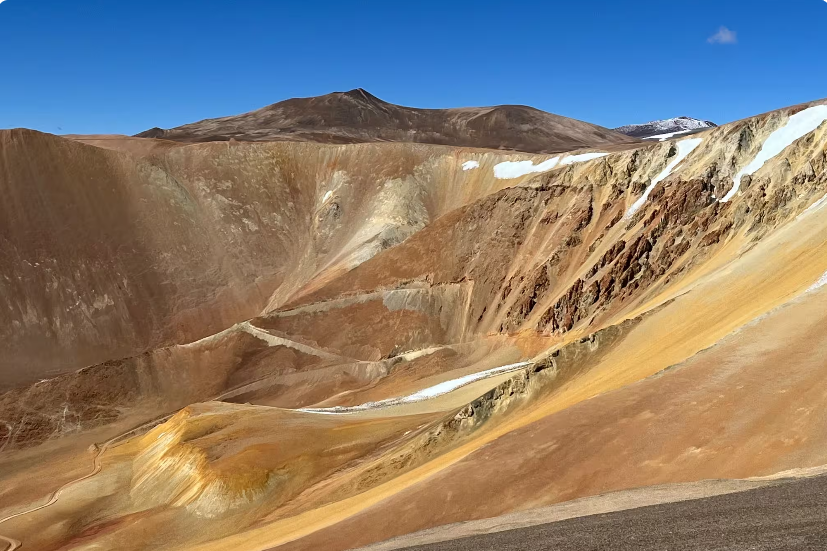
Vicuña’s $4.5B Filo del Sol discovery is driving an adjacency rush, but juniors must prove geological continuity through drilling, not proximity alone.
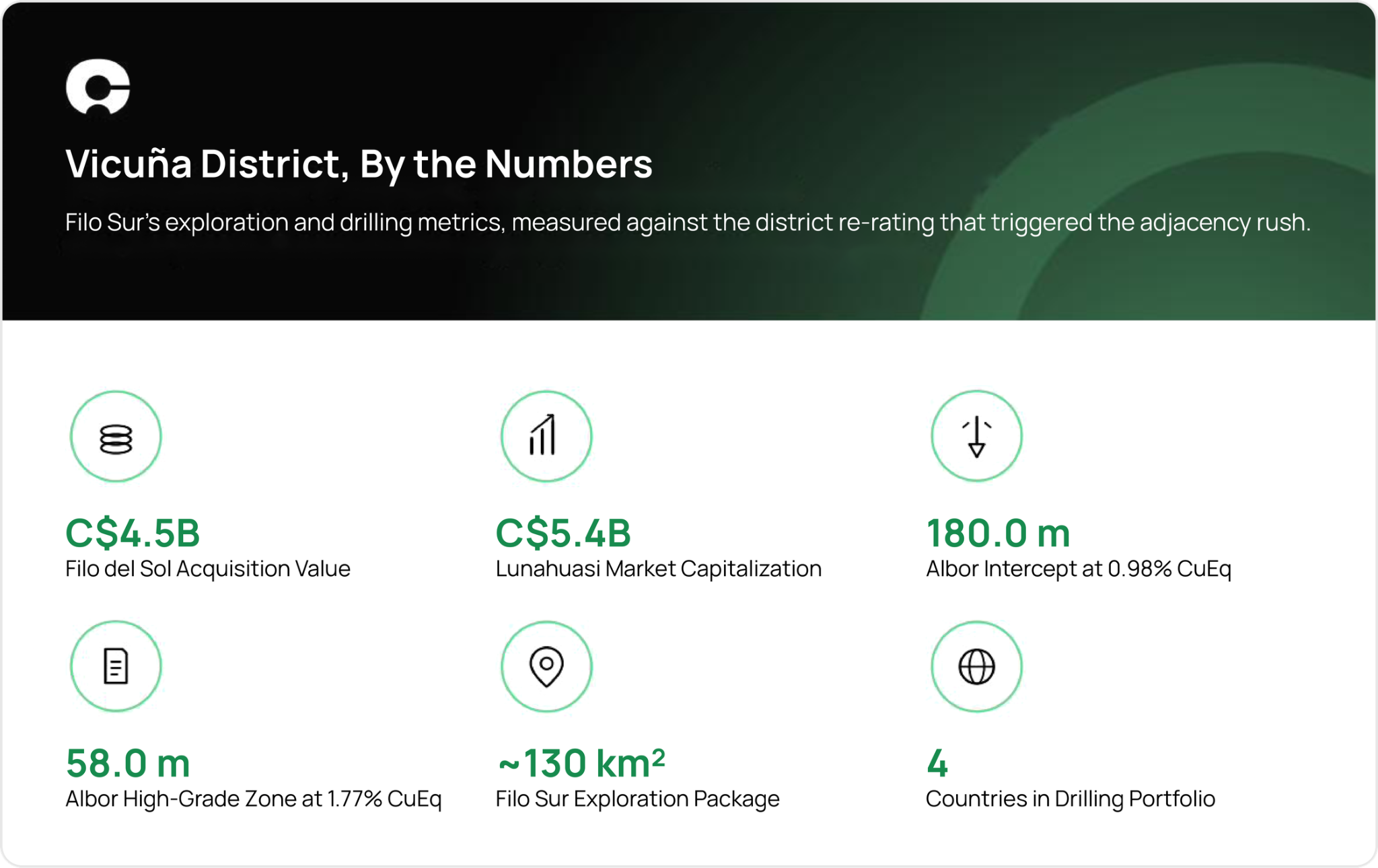
- Filo del Sol sold for C$4.5 billion, and neighboring Lunahuasi now carries a C$5.4 billion valuation, triggering a wave of claims of adjacency across the Vicuña copper-gold-silver district.
- A 4-year soil-to-drill exploration funnel turned roughly 100 square kilometers of largely untested ground into 2 confirmed discoveries in a single season, showing how juniors try to convert proximity into proof.
- Both discoveries lie along the same structural corridor and share geophysical signatures with the neighboring deposit, providing the technical basis for claiming continuity rather than coincidence.
- A counter-cyclical 4-country drilling model is emerging as a way for single-district juniors to address the cost-of-capital problem posed by a 6-month annual drilling window.
- Continued institutional buying, including an August 12, 2026 upsized rights exercise, shows capital markets appetite for the thesis, though drill results, not location, remain the harder test.
The Proximity Trade
A major discovery does more than mint one winner. It sets off a rush of junior explorers staking ground on the margins, betting that geology, or simply investor enthusiasm, crosses the property line with them. The market rewards that bet immediately: a junior sitting on strike from a world-class deposit gets re-rated on location alone, often before a single drill hole tests whether the same system actually continues onto its ground.
That generosity has a short fuse. Once a discovery hole lands, or fails to, the market stops pricing location and starts pricing evidence. Investors ask whether the alteration, the structural setting, and the metal ratios actually match the neighboring deposit, or whether the junior has simply borrowed a narrative it hasn't earned. That pivot, from a premium bought on the map to one proven with a drill rig, is the test every explorer on the margins of a major discovery eventually faces.
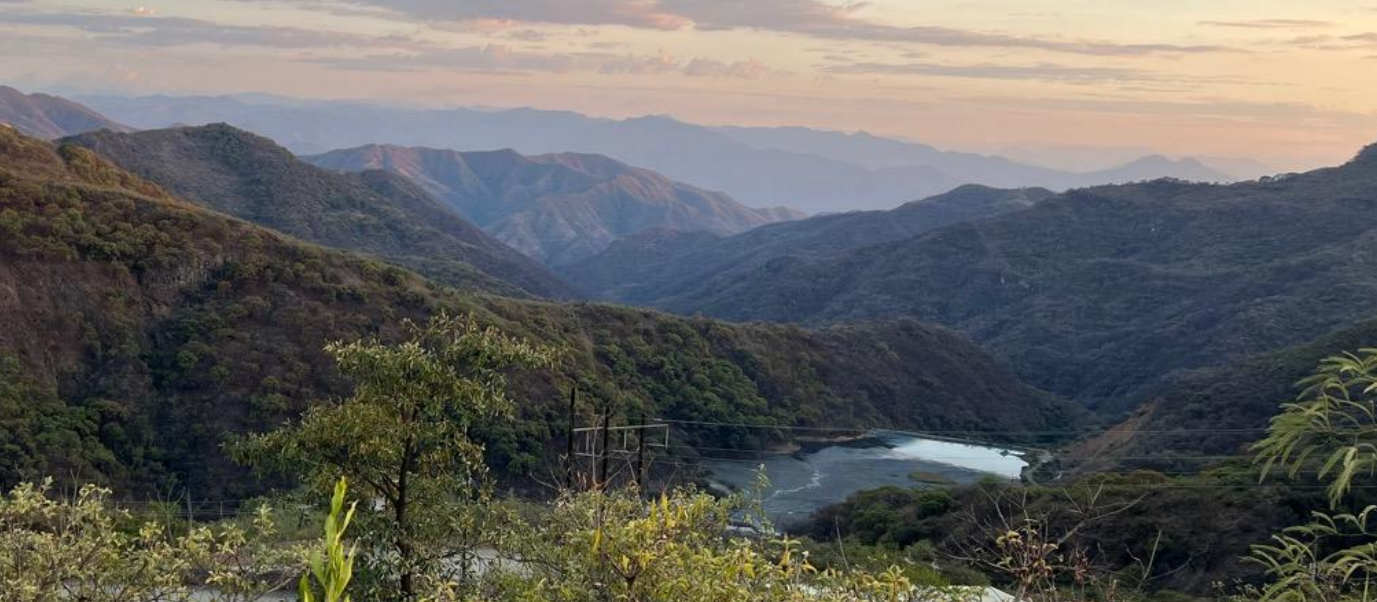
The Vicuña district in Argentina and Chile is the clearest live test of that pivot underway right now. Filo del Sol, discovered by Filo Corp and acquired jointly by BHP and Lundin Mining for C$4.5 billion, reset market expectations for what this belt can host. Mogotes Metals Inc. (TSXV: MOG | FSE: OY4 | OTCQB: MOGMF), whose Filo Sur project adjoins the southern limit of the Filo del Sol resource, shows what that conversion from location to standalone value actually requires, and where it still falls short.
A District Re-Rated by One Discovery
The numbers explain why proximity alone commands a premium here. Lundin Mining's own release on Filo del Sol cited a preliminary economic assessment (PEA) showing a net present value at an 8% discount rate (NPV8%) of C$9.5 billion, a 70-year mine life, and average annual free cash flow of C$2.2 billion. Those figures pertain only to Filo Mining's project and are not indicative of mineralization on any adjacent or unrelated property. Next door, NGEx Minerals' Lunahuasi discovery has pushed that company's market capitalization to C$5.4 billion. Both companies trace back to explorers the market once largely overlooked.
That precedent is exactly why the market prices proximity fast. A junior holding ground in the same belt inherits a slice of that optionality the moment investors notice it. But dozens of properties ring Filo del Sol, and only a handful will ever produce a drill hole that stands on its own. Between a company that is merely nearby and one that has proven a shared mineralizing system sits the real work, and the real risk.
The Exploration Funnel
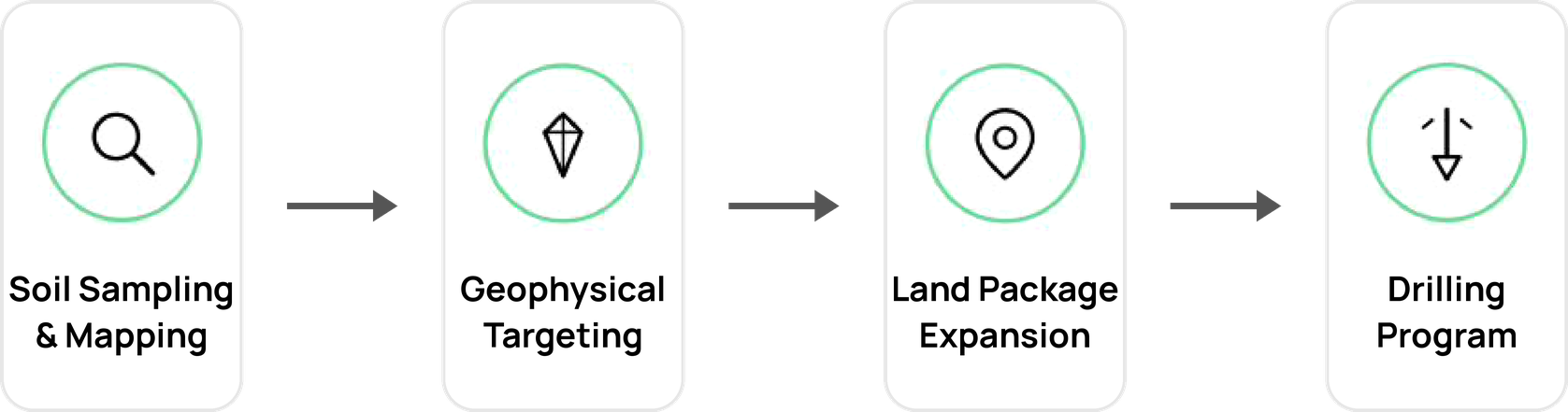
Closing that gap follows a recognizable sequence: map and sample the soil, run geophysics to define anomalies, expand the land package around the strongest ones, then drill. Mogotes has run this funnel across Filo Sur for 4 consecutive field seasons, narrowing roughly 100 square kilometers down to a shortlist of drill-ready targets.
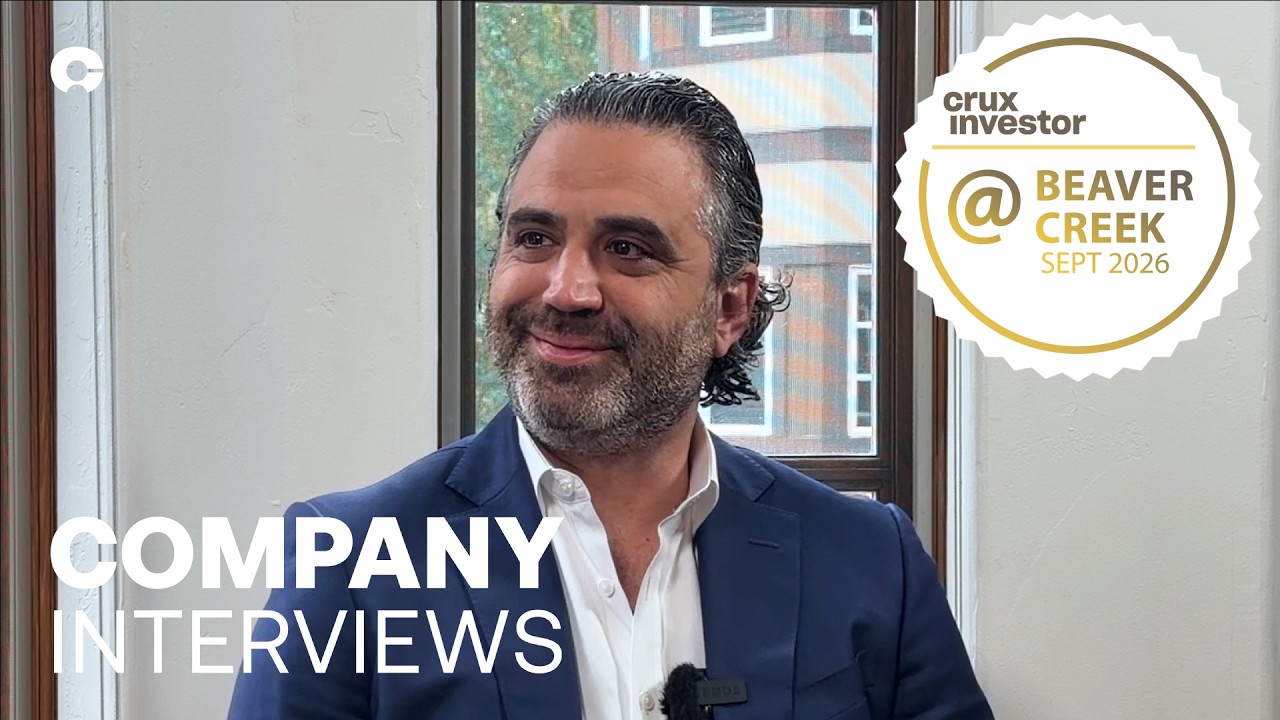
President and Chief Executive Officer of Mogotes Metals, Allen Sabet, described the sequence in blunt terms:
"We're starting with the ground that was nothing, and now we've worked it systematically and methodically through the stages of exploration."
The heaviest lifting comes from geophysics matched to the deposit next door. Per the company's corporate presentation, the same low-resistivity magnetotelluric (MT) signature, readings under 100 ohm-meters, that guided exploration at Filo del Sol now shows up across multiple targets at Filo Sur, and this season's program drilled straight into those anomalies. The bet paid off twice. At Albor, final assays confirmed 180.0 meters grading 0.98% copper equivalent from 108 meters, expanding the 86-meter intercept first reported in May, and including a higher-grade zone of 58.0 meters at 1.77% copper equivalent. Cruz del Sur, reported separately, returned a gold-zinc breccia of 24 meters at 1.01 grams per tonne gold within a broader 120-meter interval, underlain by a gold-copper porphyry intercept of 62 meters at 0.62 grams per tonne gold and 800 parts per million copper, with copper grades improving with depth.
Solving the Cost-of-Capital Problem
A second practice runs alongside the technical funnel: counter-cyclical, multi-jurisdiction drilling. Filo Sur's season runs through the Southern Hemisphere summer, leaving a roughly 6-month annual gap in which a single-asset explorer typically goes quiet, and its share price languishes for lack of news.
Mogotes closes that gap with 2 additional projects, Beskauga in Kazakhstan and Copper Cliffs in Montana, that drill during the Northern Hemisphere summer instead. The result is a portfolio spanning 3 continents on offsetting calendars, built to keep news flowing year-round rather than fall silent for half of it.
What Still Needs Proving
None of this erases the geological risk still sitting underground. Final assays now confirm the Albor breccia over a length of 180 meters. Still, the mineralized system remains open along strike and at depth, cut off only where drilling met the Macho Muerto Fault, and 2 holes in Chile are still awaiting results. The company also conceded the property carries localized arsenic pulses alongside its encouraging low-arsenic zones. This metallurgical question needs far more definition before it can speak to concentrate quality or smelter terms. Roughly 10 targets are located across the property, and several have never been tested, leaving the geophysical footprint far larger than the ground actually drilled.
The financial side carries its own strain. A systematic, multi-continent program runs on repeated capital raises, and every raise dilutes existing shareholders. Mogotes' common share count stood at 523 million as of June 5, 2026, with a further 193 million warrants and options outstanding, and additional shares continue to be issued as investors exercise pre-emptive rights. Operating across Argentina, Chile, Kazakhstan and the United States multiplies that exposure into 4 distinct sets of jurisdictional, permitting and foreign exchange risk instead of one.
The Case for Filo Sur
The clearest sign the market is, at least provisionally, rewarding this approach is the institutional capital still arriving alongside the drill results. On August 13, 2026, Mogotes closed CD Capital Fund IV L.P.'s exercise of its pre-emptive rights, issuing 39,186,369 common shares at $0.49 per share for aggregate gross proceeds of $19,201,320.81, increasing CD Capital's ownership interest to 19.9% on a partially diluted basis. Insiders took 36,689,414 of the shares issued in the offering. That follows Rio Tinto Exploration Canada's earlier strategic investment and proposed technical alliance covering Filo Sur.
Pressed on why location alone should carry a price, Sabet reached for a real estate analogy:
"If you're in downtown Manhattan, okay, and you're next to five apartment blocks, each of which fetch a billion dollars, and you have a plot that fits an apartment block, okay, and it's empty and someone's offering it to you, how much you paying? You're paying a lot."
The harder claim, the one still unproven, is that the ground itself, not just its coordinates, carries the same mineralizing signature. The company points to covellite, digenite, chalcopyrite, and a hypogene epithermal overprint in the Albor core, along with a structural corridor, the Macho Muerto Fault Zone, that now links 2 separate discoveries, as evidence. Whether that holds across the rest of the roughly 10-kilometer corridor, still untested beyond those 2 points, is the question the next drill season exists to answer.
Multiple Jurisdictions, Multiple Risk Profiles
Filo Sur straddles Argentina and Chile, with a single geological belt split between 2 distinct permitting and fiscal regimes. That cross-border structure adds administrative complexity without adding geological risk, since the Middle Miocene-aged rocks the company cites, 14 to 16 million years old, run continuously across the border, shared with both Filo del Sol and Lunahuasi.
The counter-cyclical portfolio adds 2 more jurisdictions with distinct risk and cost profiles. Beskauga, in Kazakhstan's Pavlodar Province, carries a historical indicated resource of 111.2 million tonnes at 0.30% copper, 0.49 grams per tonne gold and 1.34 grams per tonne silver, with drilling costs low enough, per the company, to fund 15,000 meters for roughly $3 million. Copper Cliffs, in Montana, sits in a Tier-1 jurisdiction under an option-to-joint-venture structure with a major mining company, trading a capped 60% ownership ceiling for United States permitting stability.
What to Watch Across the Sector
The Vicuña re-rating has made a spot on the map a valuable starting position, but the market's patience for the map alone is shrinking as more companies stake ground on the margins. The juniors that sustain a premium will be the ones that prove, through matched geophysics, structural continuity, and more than one discovery, that their ground behaves like an extension of the deposit next door, not a separate system that merely sits close by.
Mogotes' next season, targeting a November start, tests both halves at once: whether the deeper porphyry system interpreted beneath Albor and the untested ground along the Macho Muerto Fault Zone convert into further discoveries, and whether the counter-cyclical funding model holds up for other single-district juniors facing the same cost-of-capital wall. The pattern worth tracking across the sector is the one playing out at Filo Sur right now: capital keeps arriving on the strength of location, but only the drill bit can prove that location was ever more than a coincidence.
FAQs (AI-Generated)
Analyst's Notes





Subscribe to Our Channel




Stay Informed


