




Cabral Gold Advances Towards Construction for Q4 2026 Production


Cabral Gold advances Brazil construction with $45M gold loan, targeting Q4 2026 production whilst three drill rigs expand district-scale resources concurrently.
- Cabral Gold's two-stage development strategy leverages unusually deep oxide weathering (averaging 60 metres) to generate internal cash flow from a modest initial 1,500 tonnes per day (tpd) operation, which will fund aggressive exploration of much larger hard rock resources rather than relying on repeated equity financings.
- The company has secured $45 million US in non-dilutive gold loan financing to construct its Cuiú Cuiú mine in northern Brazil, with 143 construction personnel on site, major foundation concrete pours scheduled by year-end, and commercial production targeted for Q4 2026 without equity dilution.
- Cabral maintains three drill rigs and 80 exploration personnel operating concurrently with construction activities, recently confirming 2-kilometre structural continuity between the Central deposit and PDM discovery through drone magnetic surveys, with reconnaissance drilling validating gold mineralisation along the newly identified trend.
- The permitting pathway utilises Brazilian trial mining licences for initial 1,500 tpd operations with full mining licence approval for 3,000 tpd expansion anticipated January 2026 following supportive public consultations that demonstrated no community opposition, providing comfortable buffer before expansion requirements in mid-2027.
- Management characterises Cuiú Cuiú as a district-scale gold system with four new discoveries since the 2022 resource estimate, 50 additional peripheral targets with identified gold, and substantial hard rock resources beneath the oxide zone that represent the larger long-term prize beyond the initial oxide operation.
Cabral Gold is executing a disciplined path to gold production in northern Brazil that challenges conventional junior mining development models. With construction underway at its Cuiú Cuiú project and $45 million US in non-dilutive financing secured, the company is simultaneously building its first mine whilst aggressively exploring what management characterises as a district-scale gold system. This dual-track approach of generating near-term cash flow from oxide mineralisation whilst expanding hard rock resources positions Cabral within a cohort of developers successfully navigating the challenging transition from explorer to producer without catastrophic shareholder dilution.
Cabral Gold's Strategic Rationale for Staged Development
Cabral's development strategy directly addresses the dilution challenge that confronts junior mining companies. Traditional exploration-stage companies typically execute repeated equity financings to fund drilling programmes, progressively diluting early shareholders as the share count expands. Alan Carter, President and CEO of Cabral Gold, articulated the problem:
"In order to drill all these targets off and the 50 other peripheral targets that we've got where we found gold, we need a significant amount of money."
The company's solution involves generating internal cash flow from oxide mining to fund exploration rather than accessing capital markets repeatedly. Carter explained:
"We think that the best way to fund all that work that needs to be done is not by continually diluting the capital structure and doing private placement after private placement and ending up with a massive number of outstanding shares issued. We think there's a better way of doing it - start with a relatively modest stage one operation to mine the oxides and use that cash to then fund the drilling of the much larger hard rock resources."
This approach transforms Cabral from a pure exploration company dependent on market sentiment into a cash-generating entity with internal funding capacity. The strategic shift represents management's view that the company's ultimate value lies not in the oxide material alone but in the broader district potential that requires substantial capital to properly evaluate.
Carter confirmed the company's construction progress, stating:
"We recently raised $45 million through a gold loan. Project is in construction. We should be producing gold in the fourth quarter of 2026," and noting, "There was no equity raise as part of that, which I think surprised a lot of people."
The gold loan structure, which requires repayment in gold plus interest, represents a strategic financing decision that preserves the equity structure at a critical development phase.
Interview with President & CEO, Alan Carter
Construction Milestones & Operational Timeline
The Cuiú Cuiú project benefits from geological characteristics that enable Cabral's phased development strategy. The deposits exhibit unusually deep weathering profiles, a feature Carter highlighted as distinctive:
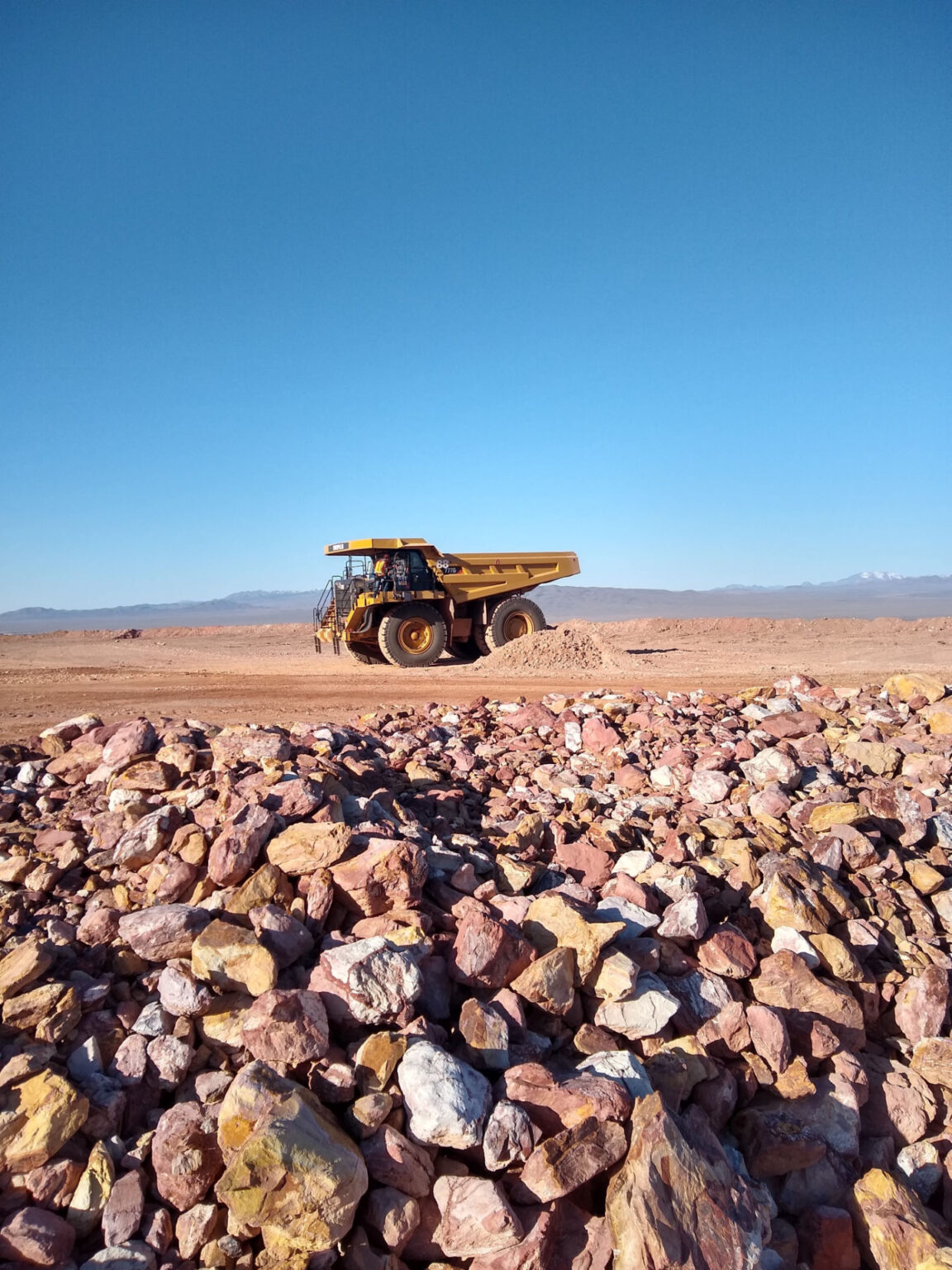
"The gold deposits that we have so far found at Cuiú Cuiú are very deeply weathered and they're weathered down to about 60 metres on average. That's quite unusual from most gold deposits around the world."
This deep oxidation, occurring because the deposits sit on topographic highs, creates substantial free-digging material that can be processed through relatively simple metallurgical circuits without the crushing and grinding requirements of hard rock operations.
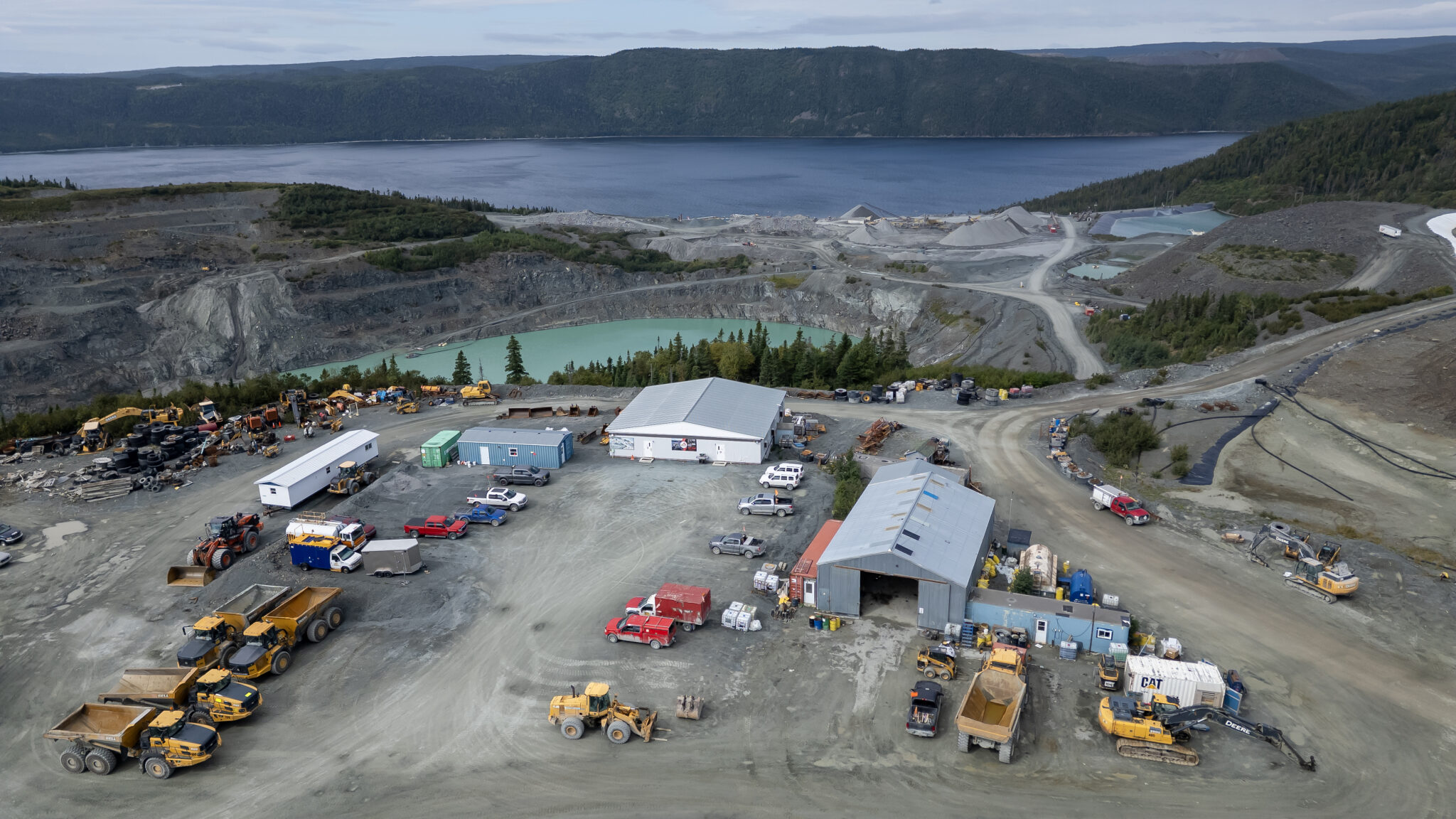
Cabral's construction activities have accelerated substantially following the construction decision taken approximately six weeks prior to the interview. The project now employs 143 construction personnel alongside roughly 80 exploration staff, creating a bustling operational hub. Carter described the intensity:
"We have 50 pieces of heavy equipment moving around. There are buildings going up. There are different parts of the plant going up."
Infrastructure improvements have included substantial road upgrades, transforming site access into what Carter characterised as a proper mine road. The company anticipates pouring concrete for major foundations by year-end, representing a significant construction milestone that will enable subsequent structural and equipment installation phases.
The project timeline targets commissioning in Q3 2026 followed by commercial production in Q4 2026. Carter acknowledged the complexity of the undertaking:
"This is a complex exercise. There are a lot of inputs. There are a lot of different contracting groups and a lot of pieces of equipment we need to get on site on time. It is an aggressive schedule."
The primary risk Carter identified centres on schedule adherence rather than technical or permitting challenges, with weather representing the principal uncontrollable variable. The company has engaged Ausenco for engineering support and assembled what Carter described as a very impressive group of consultants covering various technical aspects.
Permitting Pathway & Regulatory Progress
The project's permitting strategy utilises trial mining licences that authorise processing of 1,500 tonnes per day, which is sufficient for the initial phase but below the 3,000 tonnes per day throughput detailed in the 2024 Preliminary Feasibility Study. Carter explained the regulatory pathway:
"In order to make that jump, we need the full mining licence in place. We expect to get the preliminary permit for the full mining licence early next year."
The company conducted public audiences in recent months both at Cuiú Cuiú and in the local town, which Carter characterised with no opposition. Full mining licence approval is anticipated early 2026, though the permit is not operationally required until mid-2027, providing comfortable scheduling buffer for the initial oxide operation.
This permitting structure exemplifies a pragmatic approach common in Brazilian mining regulation, allowing operators to demonstrate technical and environmental competence through smaller-scale operations before authorizing full-scale production. The trial mining framework effectively de-risks the permitting process by establishing operational credibility prior to expansion.
Exploration Success & District-Scale Potential
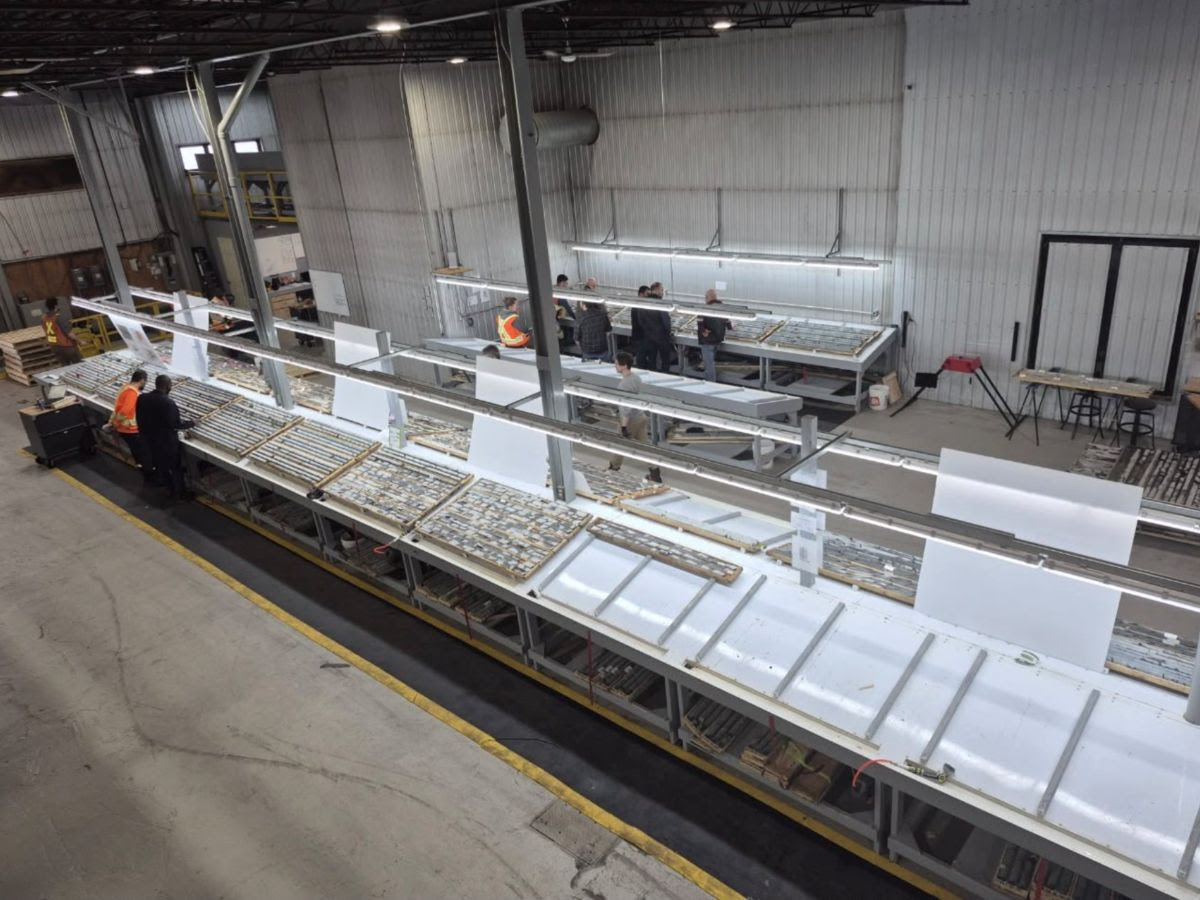
Whilst construction activities dominate near-term attention, Cabral maintains aggressive exploration efforts with three drill rigs operating and approximately 80 personnel focused on resource expansion. Carter emphasised the company's commitment to concurrent exploration:
"Unlike a lot of other developers, we are going to keep exploring aggressively during the build here. We've got a separate team working on that."
Recent exploration work has focused on confirming structural continuity between known deposits. The company recently completed a drone magnetic survey that revealed clear structural definition between the Central deposit and the PDM discovery located 2 kilometres to the north. Carter described the significance:
"The previous airborne magnetic survey that we've done didn't really give us any definitive structure, but we've re-flown it. We did a drone survey recently and the structure just pops out as clear as a bell."
Reconnaissance drilling into the newly identified structure returned gold intersections, validating the structural interpretation and opening the entire 2-kilometre trend for systematic drilling. Carter characterised this development as "tremendously exciting," noting it substantially expands the prospective ground between two known deposits.
Additional drilling targets include Jerimum Cima, where the company is obtaining encouraging results, and Machichie. Down-dip extensions of the MG and Central deposits are scheduled for drilling in early 2026. Carter positioned these activities within the broader district framework:
"The bigger prize at Cuiú Cuiú is the definition of this very, very large gold district that clearly contains multiple deposits. We've got multiple deposits already. We've got several new discoveries."
The company has identified four new discoveries since updating its resource estimate in 2022, with 50 additional peripheral targets where gold has been identified. This exploration inventory represents substantial drilling requirements that the oxide operation's cash flow is designed to fund.
Hard Rock Resource Expansion Beyond Initial Oxide Operation
Carter repeatedly emphasised that the oxide operation, whilst important for near-term cash generation, represents a modest portion of Cuiú Cuiú's total gold endowment. The current resource estimate, last updated in 2022, contains substantial hard rock material beneath the oxide zone. Carter explained:
"There's an awful lot more gold in the current resource base in terms of upside here in the hard rock underneath that oxide weathered material. That's the material that we're targeting."
This geological architecture - shallow oxide mineralization overlying deeper hard rock resources - creates optionality for Cabral's development pathway. The oxide operation provides cash flow and operational experience whilst the company systematically drills the higher-grade hard rock potential that would require more substantial capital investment and conventional processing infrastructure.
The exploration focus on hard rock expansion indicates management's conviction that the district contains sufficient gold to justify eventual development of a larger, longer-life operation.
Operational Context & Brazilian Mining Jurisdiction
Cuiú Cuiú's location in northern Brazil places the project within a historically significant gold mining region. The Tapajós region has produced gold for decades, providing established infrastructure, skilled labour availability, and regulatory familiarity with mining operations. Carter's references to experienced Brazilian mining engineers and contractors suggest access to competent execution resources.
The project's road access, whilst requiring upgrades, provided existing connectivity that many greenfield projects lack. The ability to improve existing infrastructure rather than constructing access from scratch reduces capital requirements and schedule risk. Similarly, the availability of trial mining licences demonstrates regulatory frameworks designed to accommodate staged project development.
Brazil's position as a significant gold producer with established mining codes and operational precedents provides relevant jurisdiction context. Whilst political and regulatory dynamics vary across Brazilian states, established mining regions typically offer proven permitting pathways and experienced regulatory authorities.
The Investment Thesis for Cabral Gold
- Near-term production catalyst with non-dilutive financing: Cabral has secured construction funding through gold loan rather than equity, preserving shareholder value during the critical development phase whilst targeting Q4 2026 commercial production from oxide mineralisation.
- Cash-generative business model funding exploration upside: The oxide operation is designed to generate internal cash flow that will fund aggressive exploration of much larger hard rock resources, eliminating dependence on repeated equity financings that characterise most junior explorers.
- District-scale exploration potential beyond initial mine: Management has identified multiple deposits, four new discoveries since 2022, and 50 peripheral targets within what Carter characterises as "a very, very large gold district," with recent drone magnetics confirming 2-kilometre structural continuity between Central and PDM deposits.
- Unusual geological advantages enabling low-cost oxide processing: Deep weathering averaging 60 metres provides substantial free-digging material requiring simple processing, a characteristic Carter describes as "quite unusual from most gold deposits around the world."
- De-risked permitting pathway in established mining jurisdiction: Trial mining licences authorise initial 1,500 tpd operation with full mining licence for 3,000 tpd expansion anticipated January 2025, following public consultations that demonstrated community support and no opposition.
- Aggressive exploration during construction creates dual value drivers: Unlike typical developers focused solely on construction execution, Cabral maintains three drill rigs and 80 exploration personnel actively expanding resources concurrent with mine building, positioning the company to enter production with a larger resource base.
- Experienced Brazilian mining team executing construction: Luiz Celaro's track record building multiple coal mines in Brazil, combined with Ausenco engineering support and "very impressive" consultant team, provides technical execution capability for the aggressive construction schedule.
- Strategic optionality through staged development approach: Initial oxide operation provides operational experience and cash generation whilst preserving optionality to develop larger hard rock resources based on exploration success, avoiding premature commitment to fixed mine life or scale.
- Contrarian positioning in junior gold sector: Cabral's transition from explorer to near-term producer during a period when many juniors struggle to access capital creates differentiation within a crowded sector, particularly given the non-dilutive financing structure.
- Macro alignment with gold price environment: Construction and commissioning timeline positions first production during 2026 gold price environment whilst company maintains exploration optionality to capture resource expansion value if gold prices remain elevated.
Macro Thematic Analysis: The Self-Funding Gold Explorer Model
The junior mining sector faces a structural challenge: exploration-stage companies require substantial capital to drill prospects, yet equity markets frequently fail to provide sufficient financing at reasonable valuations, creating a dilution spiral that destroys shareholder value. Cabral Gold's development strategy represents an emerging solution to this problem: generating internal cash flow from modest mining operations to fund exploration rather than depending on external capital markets.
This "self-funding explorer" model challenges conventional wisdom that companies should focus exclusively on either exploration or production. Traditional thinking holds that developers should concentrate capital and management attention on construction execution, deferring exploration until operational stability is achieved. Cabral's approach instead maintains aggressive exploration concurrent with development, betting that the value created through resource expansion exceeds any efficiency losses from divided management focus.
The model requires specific geological conditions to function effectively. Cabral benefits from deeply weathered oxide mineralisation suitable for simple processing, providing cash generation without the capital intensity of hard rock mining. Not all deposits offer this optionality – many require immediate commitment to conventional milling infrastructure without staged development possibilities.
Brazil's trial mining licence framework enables this strategy by providing regulatory pathways for smaller-scale operations that can demonstrate technical and environmental competence before scaling to full production. This contrasts with jurisdictions requiring comprehensive permitting for any commercial production, which eliminates staged development optionality.
With gold prices above $4,000 per ounce improve oxide operation economics, generating stronger cash flows to fund exploration. Sustained elevated gold prices would enable Cabral to accelerate drilling programmes beyond what equity financing might support, particularly given challenging junior mining equity market conditions.
The broader mining sector increasingly recognizes that capital efficiency matters as much as geological endowment. Companies that can fund exploration through internal cash generation rather than external financing gain strategic advantages in preserving shareholder value whilst advancing projects. Cabral's execution of this model may establish precedent for other juniors with similar geological characteristics, potentially reshaping development strategies across the sector.
TL;DR
Cabral Gold is building Brazil's next gold mine with $45 million in non-dilutive debt financing, targeting Q4 2026 production from oxide mineralisation at its Cuiú Cuiú project. The company employs 143 construction personnel with major foundations scheduled by year-end and full mining licence approval anticipated January 2026. Unlike typical developers, Cabral maintains three drill rigs and 80 exploration staff operating concurrently with construction, recently confirming 2-kilometre structural continuity between deposits through drone magnetics. The two-stage strategy generates oxide cash flow to fund exploration of much larger hard rock resources beneath the weathered zone, eliminating serial equity dilution. Management characterises Cuiú Cuiú as a district-scale system with four new discoveries since 2022 and 50 additional peripheral targets. The self-funding model transforms Cabral from pure explorer into near-term producer with internal capital generation capacity for resource expansion, preserving shareholder value whilst advancing what CEO Alan Carter describes as "very large gold district that clearly contains multiple deposits."
Frequently Asked Questions (FAQs) AI-Generated
The $45 million US gold loan preserves shareholder value by avoiding equity dilution during the critical construction phase when junior mining share prices typically remain depressed relative to eventual production valuations. The gold loan requires repayment in physical gold plus interest rather than cash, appealing to lenders seeking gold price exposure whilst providing Cabral with development capital. CEO Alan Carter noted this structure "surprised a lot of people" but aligns with management's strategy to minimise share count expansion.
The deposits exhibit unusually deep weathering averaging 60 metres – a characteristic Carter describes as "quite unusual from most gold deposits around the world." This deep oxidation occurs because deposits sit on topographic highs, creating substantial free-digging material processable through simple metallurgical circuits without crushing and grinding requirements of hard rock operations. This geological architecture enables low-capital oxide mining to generate cash flow whilst preserving optionality to develop deeper hard rock resources requiring conventional processing infrastructure.
Brazil's trial mining licences authorise processing of 1,500 tonnes per day, allowing operators to demonstrate technical and environmental competence through smaller-scale operations before scaling to full production. Cabral's 2024 Preliminary Feasibility Study contemplates 3,000 tonnes per day, requiring full mining licence approval anticipated in January 2026. However, this permit isn't operationally required until mid-2027, providing comfortable buffer. The trial mining framework de-risks permitting by establishing operational credibility prior to expansion.
Recent drone magnetic surveys revealed clear structural definition between the Central deposit and PDM discovery located 2 kilometres north, with reconnaissance drilling validating gold intersections along the newly identified structure. This opens the entire 2-kilometre intervening trend for systematic drilling, substantially expanding prospective ground between two known deposits. Carter characterised this as "tremendously exciting," representing material exploration upside beyond the four new discoveries already identified since 2022.
The oxide operation is designed to generate internal cash flow that eliminates dependence on repeated equity financings for exploration. With 50 peripheral targets identified where gold has been found and substantial hard rock resources beneath the oxide zone requiring evaluation, traditional equity financing would progressively dilute shareholders. Carter explained: "We think there's a better way of doing it – start with a relatively modest stage one operation to mine the oxides and use that cash to then fund the drilling of the much larger hard rock resources." This transforms Cabral from market-dependent explorer into self-funding entity with internal capital generation capacity.
Analyst's Notes





Subscribe to Our Channel




.jpg)
Stay Informed






















