Cabral Gold Nears Commercial Production, Cash Flow to Fund Phase 2 Study


Cabral Gold targets commercial production at Cuiú Cuiú and plans to fund 6-deposit drilling and a Phase 2 hard rock study from Phase 1 cash flow.
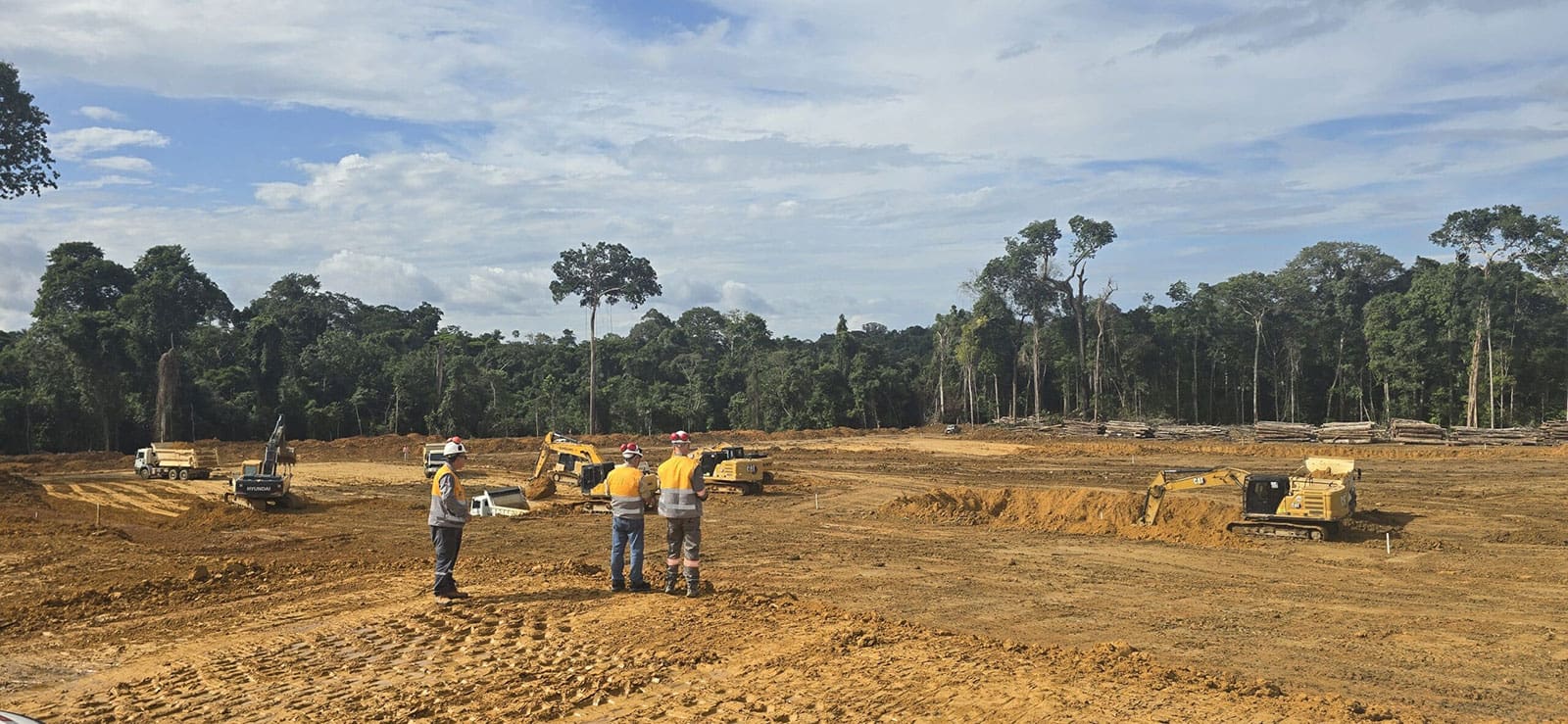
- Cabral Gold built its Phase 1 heap leach mine at Cuiú Cuiú in 10 months and on budget, and it is targeting commercial production before the end of 2026.
- Management plans to fund 6 to 8 drill rigs in 2027, a Phase 1 expansion, and Phase 2 engineering from mine cash flow, and it is not anticipating further dilution.
- About 75% of the current resource is hard rock, and Cabral is targeting a Phase 2 preliminary economic assessment in the third quarter of 2027.
- The resource update targeted for the end of 2026 models 6 deposits, and management’s expects a resource above 2 million ounces.
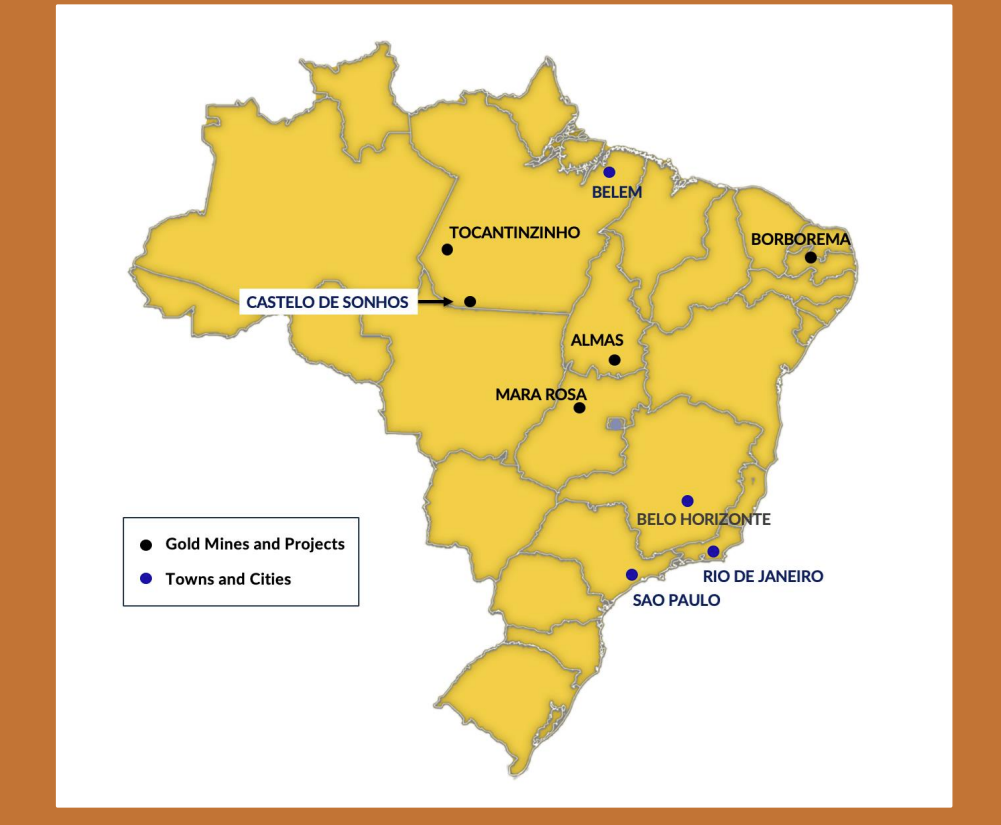
- Cuiú Cuiú lies near and on the same fault structure as Tocantinzinho, one of Brazil's largest gold mine and a deposit which CEO Alan Carter helped discover.
Cabral Gold Inc. (TSXV:CBR) has built Brazil’s newest gold mine. It is a Phase 1 heap leach operation on near-surface oxide material at the company’s Cuiú Cuiú district in Pará State, and Cabral is targeting a declaration of commercial production before the end of 2026. The company is now moving from a funding model built on equity raises to one built on its own gold sales.
Cuiú Cuiú hosts 6 gold deposits, up from 3 in the last estimate, and all 6 are being modelled for a resource update targeted for the end of 2026. About 75% of the current resource is hard rock that Phase 1 does not mine. Management plans to pay for district drilling, a Phase 1 expansion, and the engineering for a much larger Phase 2 hard rock mine from Phase 1 cash flow. It is not anticipating further share dilution.
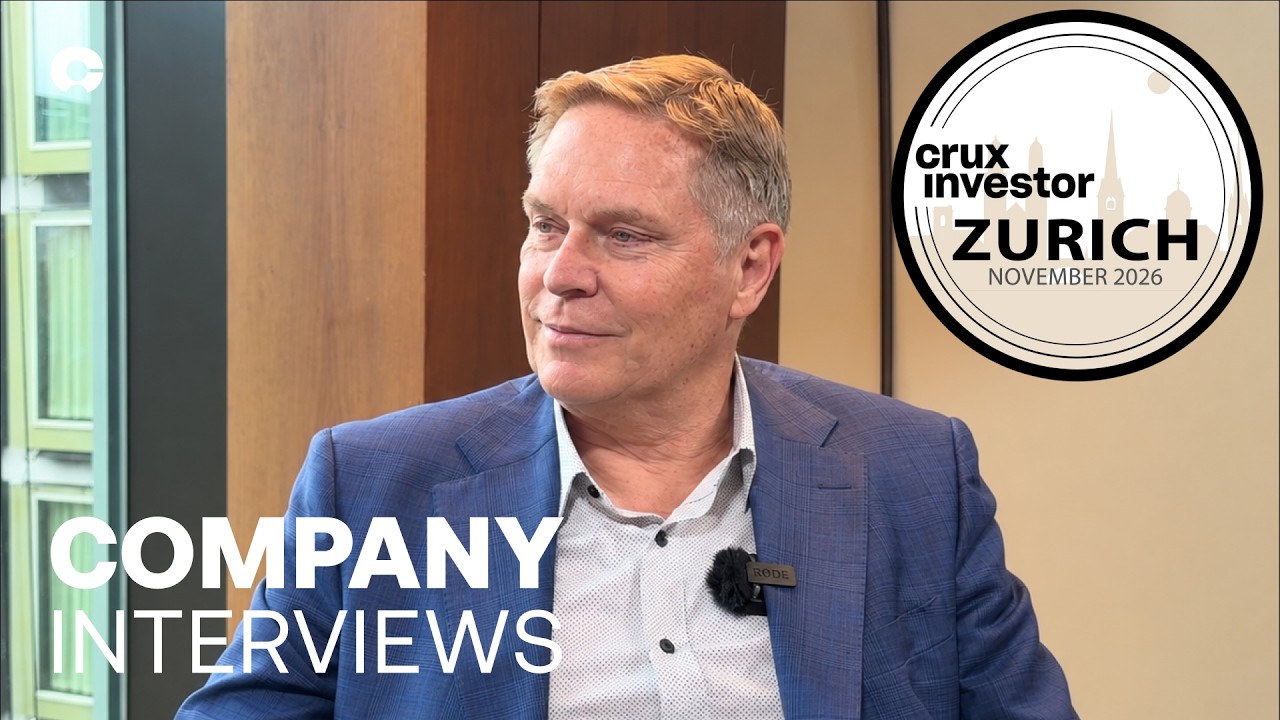
The timing coincides with new money entering gold equities. Cabral’s meeting schedule at a conference in Zurich in November 2026 was fully booked. Management estimated that 60% to 70% of those meetings were with investors it had never met before.
First Gold & the Move to Commercial Production
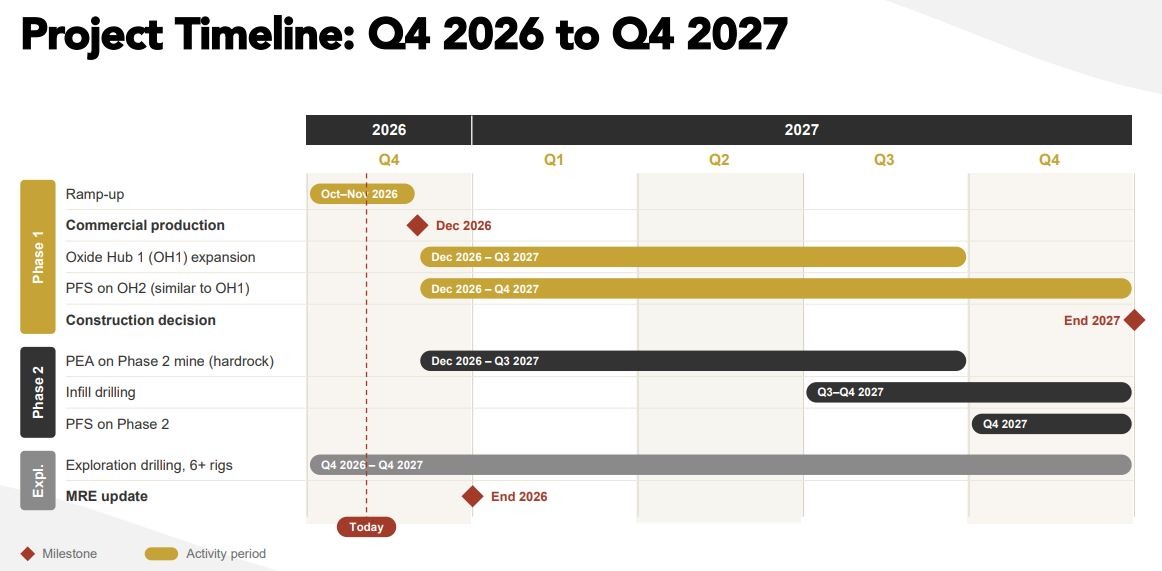
Cabral completed Phase 1 construction in August 2026 and announced a first gold pour of 1,130 ounces (oz) on September 10, 2026. The Prefeasibility Study (PFS) by Ausenco Brazil, released July 29, 2025, scheduled a 12-month build. Cabral built the mine in 10 months and on budget. Ramp-up ran through October and November, and the company targets the commercial production declaration within the next 2 weeks or so .
Phase 1 mines free-digging soils, sediments and saprolite (weathered bedrock) within 60 meters (m) of surface. The material needs no drilling, blasting, crushing or grinding. The plant is designed for 3,000 tonnes per day. Column leach tests returned gold recoveries of 72.5% to 96%, against 87.8% assumed in the PFS.
The PFS targets 25,000 oz per year in the first 2 years, with cash costs of US$950/oz over that period. It puts the all-in sustaining cost at US$1,210/oz over the life of mine. Management is targeting 25,000 to 30,000 oz in the first year and expects costs close to the PFS figure. The company is targeting details of a Phase 1 expansion before the end of 2026. The company schedules the first oxide hub expansion from December 2026 to the third quarter of 2027.
Interview with Alan Carter, President and CEO of Cabral Gold
Phase 1 Cash Flow Funds the District Without Dilution
Cabral set out years ago to explore a whole district as a small company. President and Chief Executive Officer of Cabral Gold, Alan Carter, described what changed once the mine started producing:
“Until now, we’ve relied on dilutionary equity financings. And the problem with that is with a district that big, with over 50 targets that we’ve still got to test here, you just keep diluting the capital structure. Now, we don’t need to do that anymore because we’re making money from Phase 1, the Phase 1 oxide material, which will more than cover our exploration costs.”
Carter said Cabral is not anticipating any further dilution. He defined growth as market capitalization, value per share and share price. As of November 6, 2026, Cabral held C$68 million in cash with a market capitalization of C$448.4 million. Construction was paid for with a US$45 million gold loan that closed on November 2025. The loan has a 39-month term, with 10% interest paid quarterly, and principal repayments of 39 kilograms (kg) of gold per quarter start on March 31, 2027.
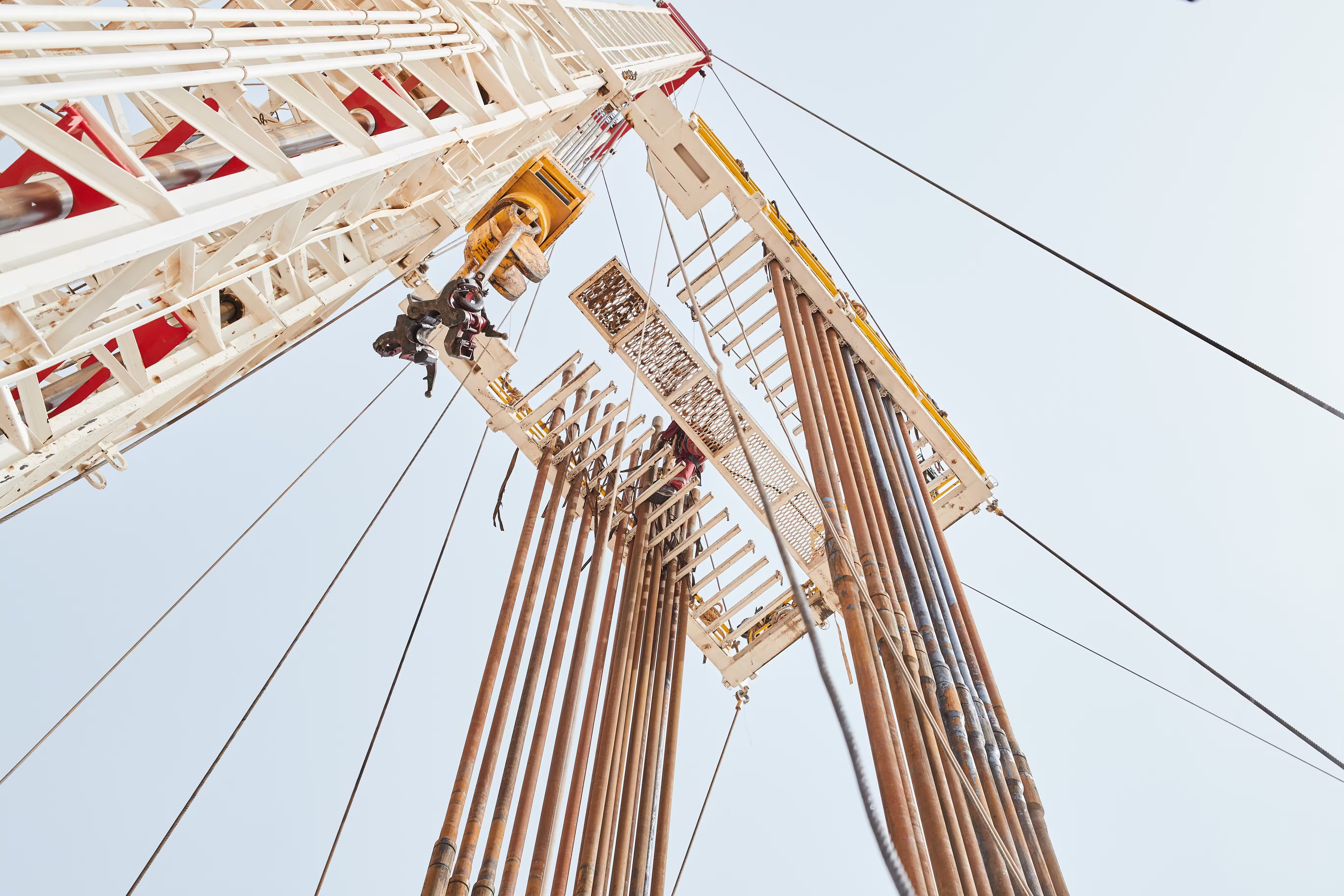
Six rigs are drilling now. Carter said Cabral plans 6 to 8 rigs in 2027, with the exact number to follow once the budget is set.
Phase 2 & Hard Rock Resource
The global resource inventory totals 670,480 oz Indicated and 527,320 oz Inferred. The hard rock portion includes 450,200 oz Indicated at 1.14 grams per tonne (g/t) gold and 455,100 oz Inferred at 1.04 g/t. Carter called the hard rock material the real prize at Cuiú Cuiú.
Each of the 6 deposits has an oxide layer down to about 60 m and is open at depth, and several are open along strike. Carter said the hard rock combines a lower-grade stockwork halo with central high-grade zones that appear continuous. At Jerimum Cima, the most recently discovered deposit, drilling returned 9.5 m at 87.4 g/t gold. That intercept lies within a high-grade zone that extends about 400 m along strike.
Cabral is targeting a preliminary economic assessment (PEA) on Phase 2 in the third quarter of 2027, after the resource update. Its timeline then adds infill drilling in the second half of 2027 and a Phase 2 PFS in Q4 2027. Carter expects Phase 2 capital to be much larger than the cost of Phase 1, which the PFS put at US$37.7 million. He said the PEA will define the size of the operation.
Six Deposits & More Than 50 Targets Ahead of the Resource Update
About 50,000 m have been drilled since the 2022 estimate, which covered 3 deposits. Management’s target for the update due at the end of 2026 is a global resource above 2 million oz. The company has also reported results outside the main deposit: 5.3 m at 24 g/t gold in a trench at the JN target, 27 m at 6.9 g/t from drilling at Central SE, and 3.4 m at 36.9 g/t at Machichie SW.
Carter said he believes the district could host 10 million up to 20 million oz, all within ground Cabral controls 100%. While this is a management view, not a resource, the next measurable test is the year-end estimate which is set against the 1.2 million oz base.
A Management Team Back on the Tocantinzinho Trend
Cuiú Cuiú lies about 20 kilometers from G Mining Ventures’ Tocantinzinho mine. Tocantinzinho is Brazil’s third-largest gold mine and produced 177,000 oz in 2025. Both are on the same fault structure. Carter was part of the early discovery of Tocantinzinho, and Cabral’s presentation credits management with 5 grassroots gold discoveries in Brazil.
According to Brazil’s National Mining Agency, Cuiú Cuiú produced an estimated 2 million oz of placer gold, 10 times the 200,000 oz recorded at Tocantinzinho. Carter said the difference suggests the Cuiú Cuiú district could ultimately be larger than its neighbour.
The Investment Thesis for Cabral Gold
- Cabral has built a producing heap leach mine in 10 months and on budget, and is targeting a commercial production declaration before the end of 2026.
- Management plans to fund district drilling, a Phase 1 expansion and Phase 2 engineering from mine cash flow and is not anticipating further share dilution.
- About 75% of the current resource is hard rock beneath the oxide being mined today, and the preliminary economic assessment on that Phase 2 resource is targeted for the third quarter of 2027.
- The resource update targeted for the end of 2026 models 6 deposits instead of 3, with a management target above 2 million ounces from about 1.2 million ounces today.
- The district lies on the same fault structure as Tocantinzinho, a deposit the Chief Executive Officer helped discover, and recorded 10 times its placer gold output.
- Monitor the commercial production declaration, the year-end resource estimate, and gold loan principal repayments starting March 31, 2027.
Cabral’s case now depends on carrying out a funded plan: steady Phase 1 output, a larger resource, and a Phase 2 study that defines the size of the hard rock mine.
Macro Thematic Analysis
Cabral’s Phase 1 economics were built on a conservative gold price. The PFS base case of US$2,500/oz returned an after-tax NPV5% of US$73.9 million and an internal rate of return of 78%. The highest case modelled uses US$3,500/oz. At that price, the after-tax NPV5% rises to US$149.9 million, with a 6-month payback. The gold loan terms assumed a price of US$4,100/oz when setting the principal at 353 kg of fine gold.
The gap between the study’s price assumptions and the prices used in current financing lets a junior producer pay for exploration from operations. Most explorers with district-scale ground fund drilling through repeated equity raises, and the share count grows with every programme. A producing junior with a low-capital oxide mine can drill without that cost to shareholders. That is part of what draws the new investors Cabral met in Zurich.
A single deposit in the region, Tocantinzinho, produced 177,000 oz in 2025. Carter framed the district’s scale for the company:
“Make no mistake, Cuiú Cuiú is a company maker. It is a district-scale project. I believe it’s going to be a very large gold district. What we want to do is grow this company as quickly and as aggressively as expeditiously as we can."
The Tapajós region adds a geological argument. It hosted the largest gold rush on record, with an estimated 30 million oz recovered between 1978 and 1995, and Cuiú Cuiú was its largest placer producer.
TL;DR
Cabral Gold built its Phase 1 heap leach mine at Cuiú Cuiú, Brazil, in 10 months and on budget. It announced a first gold pour of 1,130 oz in September 2026 and is targeting commercial production before year-end. Management is targeting 25,000 to 30,000 oz in the first year at costs close to the PFS all-in sustaining cost of US$1,210/oz. Cash flow will fund 6 to 8 rigs in 2027, a Phase 1 expansion, and a Phase 2 hard rock PEA targeted for the third quarter of 2027. Cabral is not anticipating further dilution. A 6-deposit resource update targeted for the end of 2026 replaces a 2022 estimate covering 3 deposits.
FAQs (AI-Generated)
Analyst's Notes





Subscribe to Our Channel




Stay Informed