




Brent’s Climb to $92.53 on Hormuz Attacks Pauses Oil Producers’ Price Slide



Mine clearance and insurance costs could outlast a peace deal, while producers that cover costs without a war premium offer more resilient oil exposure.
- Brent rebounded 1.1% to $92.53 a barrel on November 11, after touching a two-month low and settling at $91.49 on November 10.
- Washington Institute for Near East Policy data showed 37 ships attacked near the Strait of Hormuz in October, the highest monthly total of the war.
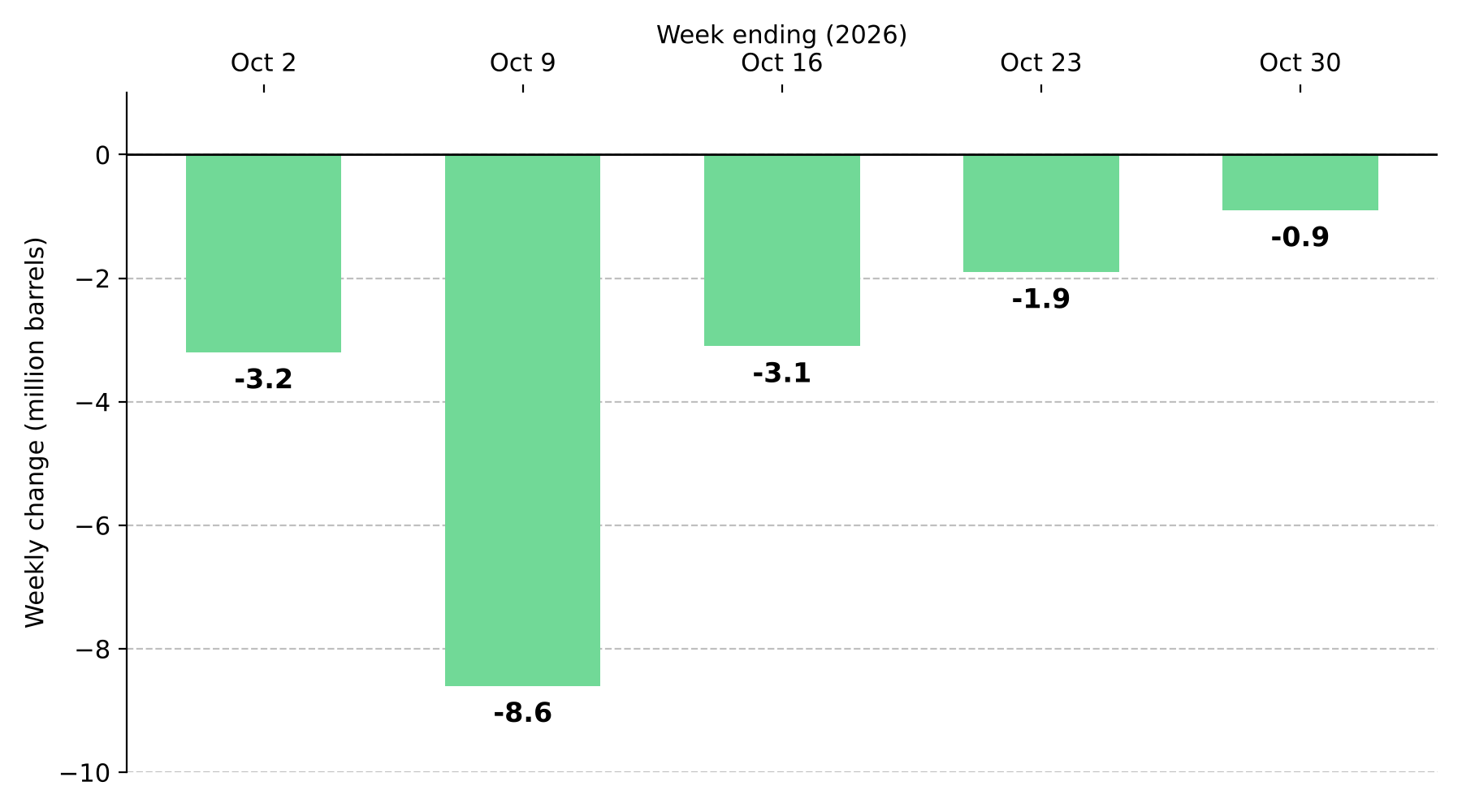
- American Petroleum Institute (API) data indicated US crude stocks rose 9 million barrels in the week ended November 6, potentially ending five consecutive weekly draws.
- A US-Iran deal would not immediately remove shipping risks, as LSEG Oil Research indicated Hormuz flows would still depend on mine clearance, insurance costs, and shipowner willingness.
- The US Energy Information Administration (EIA) report due November 12 will test Brent’s rebound, with a confirmed crude stock build potentially triggering a retest of $89.16, while a draw taking inventories below 409.8 million barrels could support prices.
Record 37 Ship Attacks Return Supply Risk to Brent After Two-Month Low
Brent futures rose $1.04, or 1.1%, to $92.53 a barrel, while West Texas Intermediate (WTI) gained $0.67, or 0.8%, to $86.71. Both contracts rebounded from two-month lows, with Brent recovering after touching $89.16 and settling at $91.49 in the previous session.
Washington Institute for Near East Policy data showed 37 ships attacked in and around the Strait of Hormuz in October, the highest monthly total since the war began, followed by 10 more in November. For oil producers, the attacks restored a supply-risk premium to crude prices after the market priced in an end to the conflict during the previous session.
Returning Tanker Traffic & Naval Mines Keep Hormuz Risk in Crude Prices
Attack counts climbed as daily freight rates above $1 million drew shipowners back into the Gulf, placing more tankers within range. Iran's Revolutionary Guards Navy said two tankers caught fire after striking naval mines, while a third was struck northeast of Lima, Oman. Each strike raises war-risk insurance and freight costs for Gulf cargoes, increasing delivered costs that feed into crude benchmark prices.
ANZ Research said US-Iran negotiations remained deadlocked as both sides held to key demands, while an Iranian security official said no talks were taking place. ANZ also cited rising risks to energy infrastructure following the targeting of Saudi Arabia's East-West pipeline and two limited US strikes on Iran's Qeshm Island.
Pipeline Rerouting Limits Brent’s Upside Despite Hormuz Shipping Risks
LSEG Oil Research said higher oil flows through Hormuz after any deal would depend on mine clearance, insurance costs, and shipowner willingness. Pipeline rerouting limits potential price gains from Hormuz disruptions, with 40% of Gulf crude now bypassing the strait. June Goh, Senior Analyst at Sparta Commodities, said the outlook for oil prices appeared more bearish.
Deal Timing Uncertainty Exposes Unhedged Crude Producers to Price Swings
Unhedged crude producers face direct revenue exposure, with each $1 decline in their crude benchmark reducing revenue by $1 per barrel sold. Front-month crude exchange-traded funds (ETFs) also face direct exposure to crude price movements.
Producers with part of their next 12 months of output sold forward have greater budget protection against either EIA outcome, while fully unhedged producers depend on higher crude prices. June Goh, Senior Analyst at Sparta Commodities, said oil prices depend primarily on how far Iran moves toward US demands, a factor producers cannot control.
Crude prices fell more than $3 a barrel after US officials played down further strikes, then recovered part of the loss when an Iranian security official said no talks were taking place. With diplomatic outcomes unpredictable, position size remains the controllable factor, as a position dependent on one outcome can lose capital within a single session.
What Brent's Pause Establishes
A record month of shipping attacks halted a crude selloff triggered by diplomatic headlines, even after exports had been rerouted around the Strait of Hormuz. Although supply risks are lower than in spring, they continue to support crude prices.
For unhedged crude producers and front-month crude fund holders, the rebound remains tentative, with the war premium representing potential upside rather than an assumed price level. A peace deal may pose less downside risk than the selloff suggested because naval mines, insurance terms, and shipowner caution would remain after signing.
Over the longer term, producers that cover costs without a war premium are less dependent on elevated crude prices. Shipping attacks can increase their margins without being necessary for solvency, while valuations depend on the oil they deliver.
Analyst's Notes





Subscribe to Our Channel






Stay Informed


