
US Gold Output Falls 7% as North American Projects Shape Future Supply



Near-record gold demand and rising mining costs make project economics, permitting, and financing central to future North American mine supply.
- US gold mine production fell 7% year over year in the third quarter of 2026, while Canada increased output 22% as newly commissioned mines strengthened its contribution to North American supply.
- US gold output remains concentrated, with Nevada accounting for 64% of domestic production in 2025 and the 25 largest operations producing 94% of the national total.
- Global mine production rose 3% to a third-quarter record of 1,071 tonnes, yet an 8% fall in recycling contributed to a 1% contraction in total gold supply.
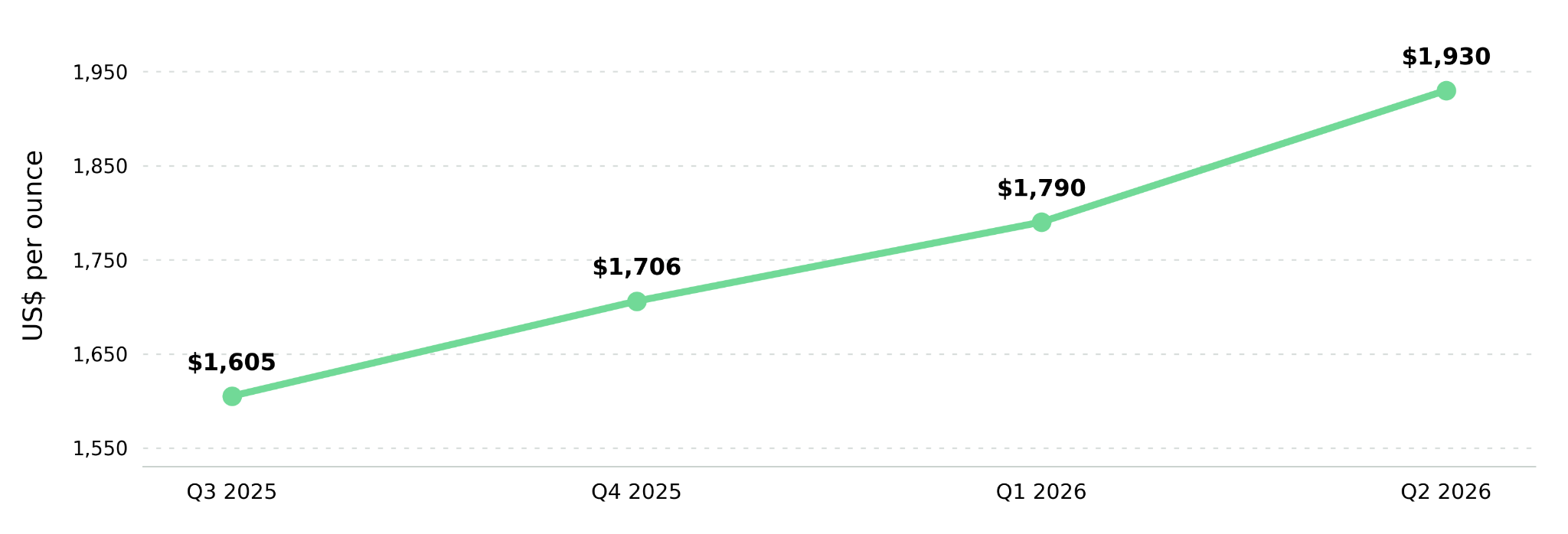
- Gold miners' average all-in sustaining costs (AISC) rose 22% year over year to $1,930 per ounce, increasing the importance of economic studies that account for rising operating and capital expenditures.
- Gold mines typically take 10 to 20 years from discovery to production, making permitting progress and construction financing critical to bringing new supply online.
US Output Decline Amid Falling Recycling Raises Need for New Mine Supply
The World Gold Council (WGC) reported that US gold mine production fell 7% year over year in the third quarter of 2026, partly due to lower-grade mining at established operations. The US Geological Survey (USGS) estimated that US mines produced 160 metric tonnes in 2025, down from 163 tonnes in 2024, with the 25 largest operations accounting for approximately 94% of domestic output. In contrast, Canada's gold production rose 22% year over year in the third quarter of 2026, supported by newly commissioned mines and higher output from existing operations.
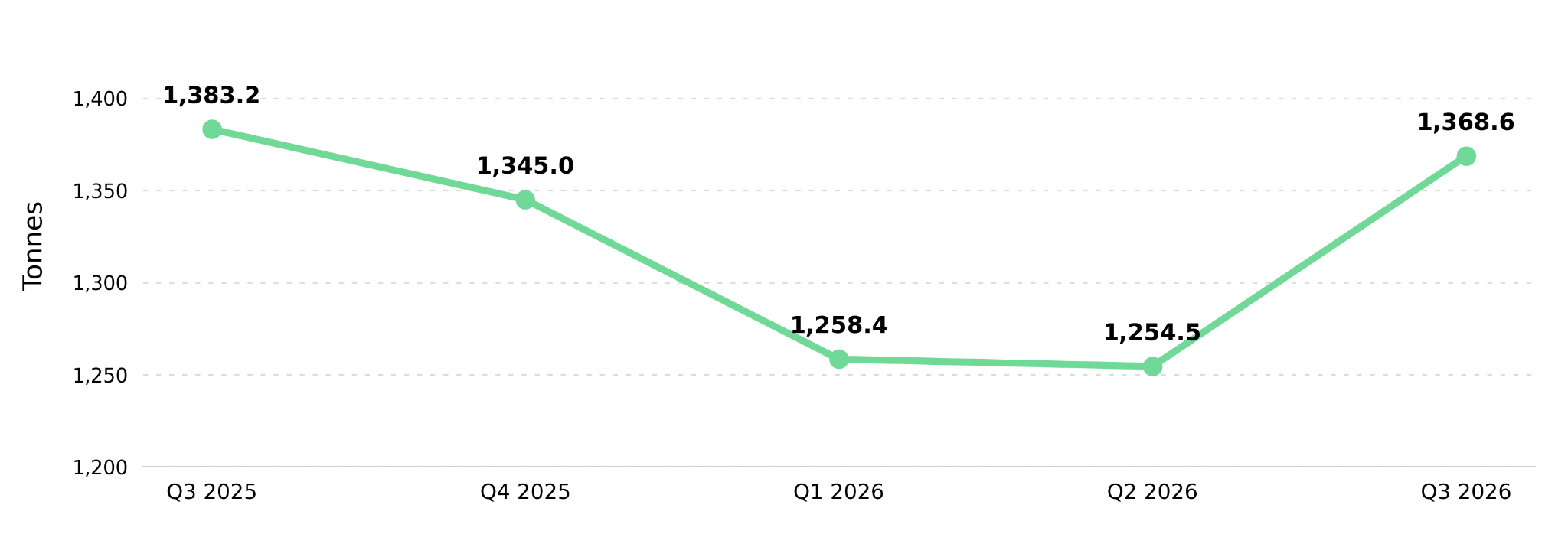
Global gold mine production rose 3% year over year to a third-quarter record of 1,070.9 tonnes in 2026. However, an 8% decline in recycled gold supply to 314.5 tonnes, alongside 16.8 tonnes of net producer de-hedging, contributed to a 1% contraction in total gold supply to 1,368.6 tonnes.
Gold demand, including over-the-counter activity, totaled 3,881 tonnes in the first nine months of 2026, compared with a record 3,884 tonnes during the same period in 2025. Beyond these figures, gold's role as a hedge against policy risk offers another perspective on demand. With mine production projected to be the main source of potential supply growth, credible project economics and financing progress remain important to bringing additional gold capacity online.
Rising Mining Costs Put Permitted Project Returns in Focus
Gold miners maintained substantial margins despite rising costs, with the WGC reporting average AISC of $1,930 per ounce in the second quarter of 2026, up 22% year over year. Average margins remained at $2,582 per ounce, while sustaining capital expenditure rose 34% quarter over quarter, increasing the importance of disciplined capital spending.
The US gold development pipeline includes projects at different stages of readiness, from Revival Gold's Mercur Project in Utah, which is advancing toward a prefeasibility study, to projects with completed feasibility studies and permits. These later milestones provide greater clarity on potential development costs and returns.
U.S. Gold Corp. is advancing its fully permitted CK Gold Project in Wyoming, where a March 2026 feasibility study projects an 11-year mine life and average annual gold production of approximately 64,300 payable ounces, alongside copper and silver. Under the study's metal-price assumptions, the project has an estimated after-tax net present value at a 5% discount rate (NPV5%) of $632 million and a 27% after-tax internal rate of return (IRR). With initial capital estimated at $394 million, the company is exploring financing options to advance toward construction.
George Bee, President and Chief Executive Officer of U.S. Gold Corp., explains why permitted projects matter for portfolio expansion:
“We're fully permitted, ready to go for development… We see that there are lots of juniors, mid-tier companies that really need to add to their portfolio. If you don't grow, you die. ... Count on your left hand the number of fully permitted projects ready to go in a stable jurisdiction.”
Long Mine Timelines Increase Importance of Canadian Gold Resources
WGC estimates that gold mines typically take 10 to 20 years from discovery to production, making development milestones important to future capacity. Canada's recent production growth demonstrates the contribution of completed mines, while First Mining Gold's Springpole Project in Ontario secured federal environmental assessment approval in 2026. Elsewhere in Canada, economic studies are progressing to evaluate how undeveloped gold resources could support future production.
Tudor Gold reported expanded gold mineralization at the Perfectstorm Zone of its 80%-owned Treaty Creek Project in British Columbia. The company is also finalizing a preliminary economic assessment (PEA) of a potential underground mine at the higher-grade Goldstorm deposit, a key step toward evaluating its production potential and development economics.
Joseph Ovsenek, President and Chief Executive Officer of Tudor Gold, highlights the scale of its undeveloped gold resources:
“We have 24.9 million oz of gold in the indicated category, another 4 million oz of gold in the inferred category. That is one of the biggest undeveloped gold deposits you'll find anywhere around.”
Canada's undeveloped gold resources offer potential for future mine production, although bringing these deposits into operation requires further economic evaluation and development. Projects such as Banyan Gold's AurMac in Yukon form part of this longer-term supply pipeline.
Nevada's Output Concentration Raises Need for New Gold Deposits
Nevada supplied approximately 64% of US mined gold in 2025, while Alaska contributed another 22%, according to USGS. This concentration highlights the importance of continued exploration in established mining regions to expand the pipeline of potential domestic gold production. New discoveries that progress toward defined resources could provide additional sources of supply over time.
P2 Gold reported further gold-copper mineralization at its Gabbs Project in Nevada, with drilling extending the Lucky Strike Zone south and southwest. Following 114 drill holes completed since October 2025, the company is targeting an updated mineral resource estimate in the fourth quarter of 2026 and a feasibility study in the first quarter of 2027, advancing plans for a potentially larger mine.
Slow Mine Growth Makes Project Readiness Central to Future Supply
Global mined gold production declined slightly from approximately 3,658 tonnes in 2018 to 3,645 tonnes in 2024, highlighting the slow pace of annual mine supply growth. Despite record quarterly mine production in 2026, falling recycling reduced total gold supply while demand remained near its previous nine-month record, increasing the importance of developing additional mining capacity.
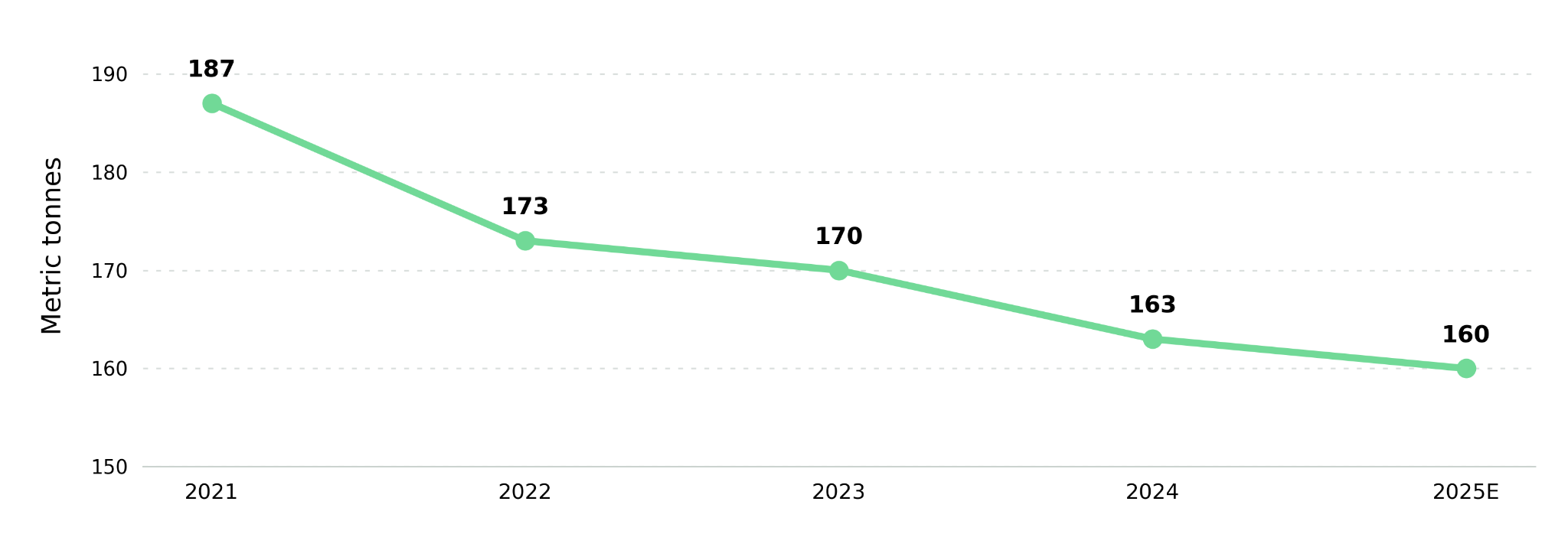
Lower ore grades have contributed to declining US gold output, while newly commissioned mines have supported Canada's production growth. Rising mining costs increase the importance of realistic operating and capital expenditure estimates when evaluating new projects. Future North American gold supply will depend on how successfully undeveloped resources progress through economic assessment, permitting, and financing toward production.
The Investment Thesis for Gold
- Developers with credible economic studies, permitting progress, and financing plans offer exposure to potential new gold production, with construction costs and projected returns influencing valuations.
- Explorers expanding gold resources through drilling can create future development opportunities, particularly where higher-grade discoveries improve the potential economics of a mine.
- Rising mining costs increase the importance of projects with competitive operating expenses and manageable capital requirements, as these factors determine potential profitability.
- Permitting progress can bring undeveloped gold projects closer to construction, reducing regulatory uncertainty and improving visibility into development timelines.
- Gold price assumptions influence projected mine profitability, making realistic revenue forecasts and capital spending estimates essential to evaluating project economics.
- Long-term gold supply depends on converting economically viable resources into producing mines, supporting opportunities for projects that demonstrate progress toward construction.
North America's long-term gold supply will depend on the successful development of new mining capacity as existing operations mature. The region's exploration and development pipeline presents opportunities for resource expansion and future production, with economic studies and financing progress helping establish which projects can advance toward construction. As new gold mines require years to develop, projects demonstrating credible economic potential and measurable progress toward production offer a compelling long-term investment opportunity beyond short-term movements in gold prices.
TL;DR
US gold mine production fell 7% year over year in the third quarter of 2026, partly due to lower ore grades, while Canada's output rose 22% as newly commissioned mines added capacity. Globally, record quarterly mine production was offset by declining recycling, reducing total gold supply despite demand remaining near record levels. Rising mining costs have increased the importance of credible project economics and disciplined capital spending. With new gold mines typically taking 10 to 20 years to develop, North America's exploration and development pipeline offers long-term opportunities tied to resource expansion, permitting progress, economic assessments, and construction financing.
FAQs (AI-Generated)
Analyst's Notes





Subscribe to Our Channel









Stay Informed