




Canada Nickel Nears Historic Federal Approval for Crawford as Global Nickel Supply Tightens



Canada Nickel nears permit for Crawford nickel project, one of few pre-2030 producers globally. Non-dilutive funding strategy targets construction decision 2027.
- Canada Nickel received its Draft Impact Assessment report and permit conditions for the Crawford nickel project, positioning it to become the first mining project approved under Canada's 2019 legislation, with final permit expected early summer 2026
- Company pursuing funding strategy combining Export Development Canada debt, bridge facilities for refundable tax credits (covering 60% of equity needs), and strategic partnerships, targeting minimal shareholder dilution (2% or less)
- Nickel prices increased nearly $5,000/ton since December 2025, with only 3-6 meaningful nickel projects globally positioned for pre-2030 production, creating favourable supply-demand dynamics
- Crawford targets European steel producers facing carbon border adjustment mechanism pressures, leveraging Ontario's low-carbon nuclear/hydro grid to produce semi-finished steel products with competitive carbon advantage
- Project technically de-risked and ready for long-lead equipment orders, with government funding tranches beginning to be received Q2 2026 and construction decision targeted for early-to-mid 2027; significant pipeline of additional projects potentially superior to Crawford
In a mining sector characterised by prolonged development timelines and regulatory complexity, Canada Nickel Company's Crawford nickel sulfide project has emerged as one of the few near-term nickel supply solutions capable of production before 2030. With only a handful of meaningful nickel development projects advancing globally, and nickel prices recovering substantially from multi-year lows, the Crawford project represents a strategic opportunity at the intersection of critical mineral supply constraints and accelerating electrification demand.
Regulatory Milestone: Four Years to Federal Approval
Canada Nickel has achieved a significant regulatory milestone, receiving its Draft Impact Assessment report and permit conditions from the Impact Assessment Agency of Canada. This positions Crawford to become the first mining project approved under Canada's comprehensive 2019 environmental legislation, which CEO Mark Selby describes as "far more broad in terms of social engagement, First Nations engagement, in addition to the technical piece."
The permitting process, while rigorous, demonstrated improved government coordination compared to historical norms. The company filed over 20,000 pages of documentation and navigated a four-year approval process that Selby characterises as collaborative rather than adversarial.
"Regulators are much more focused on coming up with the solution. It's equally rigorous.. but they're much more willing to work on a collaborative basis in terms of getting to the solution as quickly as possible."
Following a 30-day consultation period on the draft permit conditions, the federal government will finalise terms and issue the permit, expected in early summer 2026. The company reports satisfaction with the published permit conditions, suggesting minimal risk of material changes during the final review period.
Market Context: Supply Scarcity in a Recovering Sector
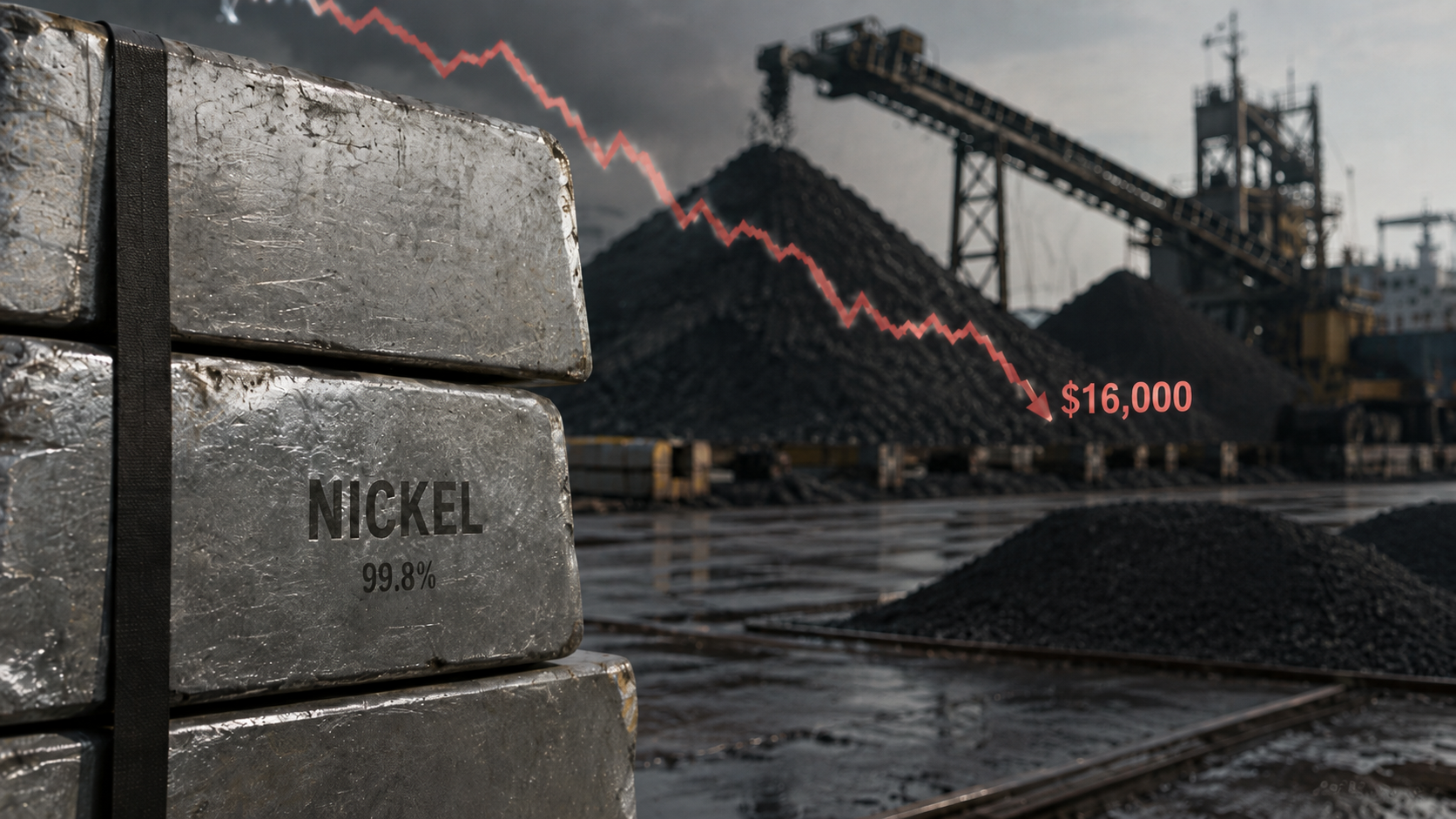
The nickel market has experienced significant volatility, however recent price action has transformed sentiment dramatically, with nickel climbing nearly $5,000 per ton since December 2025. This recovery has catalysed renewed investor interest in nickel development projects after years of capital flight from the sector.
Critically, the supply pipeline for new nickel production remains exceptionally constrained. Selby notes that
“[Crawford is] really now one of the only projects that can come online before 2030. There's about three of us that can conceptually get there."
This scarcity of near-term supply creates a favourable competitive position for projects approaching production readiness, particularly as battery and stainless steel demand continues to grow.
The concentration of viable projects has also fostered an unusual collaborative dynamic among developers.
"There's 200 gold stories, there's 150 silver stories, there's 100 copper stories, but there really is only a half a dozen nickel stories that have had meaningful advancement. It’s pretty tight group of people who are all trying to help each other get over the line because the world needs all of them."
Financing Strategy: Minimising Dilution Through Strategic Capital
Canada Nickel's financing approach prioritises shareholder value preservation through a diversified, minimally-dilutive capital structure. The company is advancing negotiations with Export Development Canada (EDC) for project debt, having recently completed an independent engineer review that "went very well." EDC previously issued a letter of intent, and the company has identified additional export credit agencies keen to participate alongside EDC's facility.
A critical component of the equity requirement will be addressed through bridge financing for Canada's refundable tax credits, which Selby indicates represents "60% of the equity capital we need to get the project." The company has secured interest from three to four groups for this bridge facility, with announcement targeted for September-October 2026.
Strategic partner Samsung maintains active involvement, motivated by the need for non-Indonesian nickel offtake before 2030. Scotia Bank and Deutsche Bank are engaged in the broader financing syndication, supplemented by meetings with additional financial institutions during recent roadshow activities.
Importantly, the company anticipates minimal equity dilution. Selby projects only periodic raises of $10-15 million to bridge timing gaps between funding tranches, representing approximately 2% dilution at current share prices. "We will take the time to make sure that government money comes in to minimise dilution to the maximum extent possible," Selby emphasised, contrasting this approach with competitors who have executed 50-100% equity raises to accelerate timelines.
Interview with Mark Selby, CEO, Canada Nickel Company
Government Support and Funding Timeline
Canada Nickel expects to receive its first tranche of government funding before the end of June 2026, with subsequent disbursements following progressively. This government capital will enable the company to order critical long-lead equipment, particularly electrical infrastructure including transformers and high-voltage equipment. These items face extended delivery timelines, exacerbated by demand from artificial intelligence data center construction.
Hydroelectric equipment has already been secured, representing another long-lead procurement milestone achieved in coordination with project advancement. The timing of government funding directly influences the construction decision timeline, currently targeted for early-to-mid 2027.
Market Positioning: Decarbonisation Advantage in Europe and North America
Crawford's strategic value proposition extends beyond nickel production to encompass steel industry decarbonisation, particularly in European markets. The project will produce both nickel products for battery and steel applications and magnetite concentrate containing nickel and chromium for conversion into semi-finished steel products.
Europe's Carbon Border Adjustment Mechanism (CBAM) creates compelling economics for Crawford's low-carbon steel products. European steel producers, particularly those manufacturing specialty steels with nickel and chromium using blast furnaces, face increasing carbon costs and energy volatility. Ontario's predominantly nuclear and hydroelectric power grid provides Crawford with a structural carbon intensity advantage, with the province adding over 10,000 megawatts of nuclear capacity.
"We're in an ideal position where we can take the lower-cost, very low-carbon energy grid we have in Ontario... and we're building over 10,000 megawatts of nuclear energy in Ontario. We're in a tremendous position to help Europe decarbonise some of their steel industry."
The company anticipates that half to two-thirds of its steel production will serve European markets through this decarbonisation value chain, with the balance supplying North American producers seeking incremental furnace capacity without constructing entirely new facilities.
Technical Readiness and Project Pipeline
The Crawford project has completed technical optimisation and is construction-ready pending financing closure.
"Crawford, technically it's done. We're ready to order long lead items. It's just waiting for the cash to come to be able to place those long lead orders."
Beyond Crawford, Canada Nickel maintains a significant pipeline of additional projects, several of which Selby suggests will ultimately prove superior to Crawford in economic terms. The Nesbitt property will see a resource update, while the Reid project presents particularly attractive characteristics including lower strip ratios, less overburden, and more consistent serpentinization, which enhances metallurgical recovery. The company is evaluating whether to publish a preliminary economic assessment for Reid to demonstrate the pipeline's value.
"We have three or four projects that we think will be bigger and better than Crawford eventually," Selby noted, emphasising that Crawford's advancement is primarily driven by its regulatory maturity rather than being the optimal project in the portfolio.
The Investment Thesis for Canada Nickel
- Regulatory De-Risking: First-mover under 2019 Canadian legislation with federal permit expected summer 2026, eliminating primary development risk
- Capital Efficiency: Non-dilutive financing structure targeting <2% equity dilution through government support, export credit, and strategic debt
- Supply Scarcity Premium: One of only 3-6 projects globally capable of pre-2030 production in a constrained nickel development landscape
- Nickel Price Leverage: Nearly $5,000/ton price recovery since December 2025 expands project economics and investor appetite
- Decarbonisation Premium: Low-carbon production advantage via Ontario's nuclear/hydro grid positions Crawford for Europe's CBAM-driven specialty steel market
- Construction-Ready Assets: Technically de-risked, long-lead items identified, awaiting only funding closure for equipment orders
- Portfolio Optionality: Multiple projects in pipeline (Nesbitt, Reid) potentially superior to Crawford, creating significant embedded value
- Government Funding Catalyst: First tranche expected June 2026, triggering construction decision timeline and equipment procurement
- Strategic Offtake: Samsung partnership securing non-Indonesian supply validates project viability and market positioning
- Market Timing: Construction decision early-mid 2027 positions for production during anticipated supply deficit as Indonesian discipline continues
Macro Thematic Analysis
The Crawford project exemplifies the critical minerals supply crisis facing electrification and industrial decarbonisation. With only six meaningful nickel development projects advancing globally, and existing operations constrained by geological depletion and Indonesian export management, the supply-demand imbalance intensifies. Canada Nickel's positioning leverages regulatory stability in a Tier-1 jurisdiction, low-carbon energy infrastructure providing CBAM advantages, and construction-ready status entering a period of recovering prices and capital availability. The convergence of battery demand growth, stainless steel requirements, and European industrial decarbonisation creates multiple demand vectors for Crawford's production. As Selby articulated:
"When that capital comes back into nickel, and as conviction comes around Indonesia sticking to their guns with managing supply, there's a lot of money going to be chasing a few stories."
TL;DR
Canada Nickel's Crawford project reaches construction inflection with federal permit expected summer 2026, positioning as one of only 3-6 pre-2030 nickel supply solutions globally. Non-dilutive financing strategy (<2% equity dilution) combines government support, export credit debt, and strategic partnerships, with construction decision targeted early-mid 2027. Low-carbon Ontario production provides European CBAM advantage while nickel prices recover $5,000/ton from December lows, creating favorable economics for shareholders with minimal dilution risk.
FAQs (AI Generated)
Analyst's Notes





Subscribe to Our Channel





Stay Informed


