




Canadian Graphite Developer Secures $14M Government Grant as More Western Nations Seek China Alternatives


Focus Graphite: 15% grade Quebec deposit, $14M government grant, targeting defense markets. $236M capex, ESIA completing soon. First North American specialty graphite play.
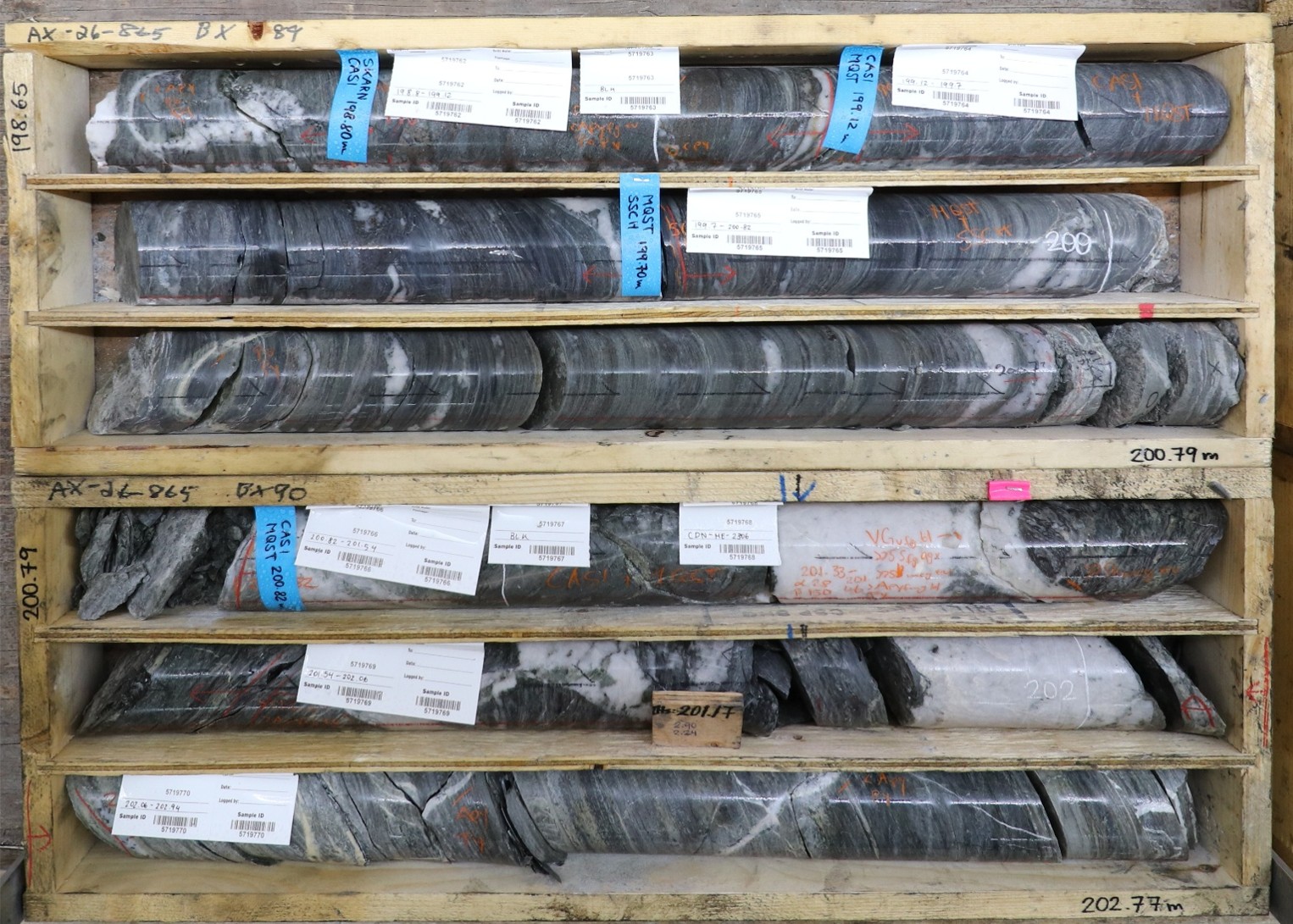
- Focus Graphite's Lac Knife project in Quebec features 15% graphitic carbon content, approximately 3x higher than the industry average of 3-5%, providing significant cost advantages in a North American operating environment
- The company has secured $14 million in non-dilutive funding from Natural Resources Canada's Global Partner Initiative, with total cash position of $18 million and minimal near-term dilution requirements
- At $236 million capex for a 27-year mine life producing 50,000 tons annually, the project represents a fraction of typical critical mineral development costs, with potential for substantial debt financing coverage
- Focus is developing specialty large-flake graphite for military, defense, and aerospace applications, leveraging unique purification technology that preserves flake integrity without chemicals
- The company is in final stages of environmental permitting (ESIA completion expected within 3-4 months) and has already demonstrated material in missile applications, positioning for production in 2-3 years
Focus Graphite (TSXV: FMS) has two graphite projects in Quebec, with the flagship Lac Knife deposit representing an 18-year development effort now approaching commercial viability. Under CEO Dean Hanisch's leadership since early 2025, the company has transformed from an overlooked exploration story trading at $0.08 to a government-backed critical minerals developer with substantial institutional support and a clear path to production.
The cornerstone of Focus Graphite's investment thesis rests on an exceptional geological endowment. The Lac Knife deposit features 15% graphitic carbon content, contrasting sharply with typical graphite deposits averaging 3-5% grade globally, including Chinese operations. This grade differential provides fundamental cost advantages that CEO Hanisch argues can bridge the operating cost gap between North American and Chinese production.
Beyond grade, the project benefits from Quebec's hydroelectric infrastructure, with power costs approximately one-third of North American averages and, according to management, lower than Chinese equivalents. When combined with the reduced material handling requirements from high-grade ore, these factors position Focus to compete on price rather than rely solely on geopolitical premiums for North American supply.
Strategic Government Backing
A distinguishing feature of Focus Graphite's development pathway is the extent of government financial support, reflecting strategic imperatives around critical mineral security. The company recently secured a $14.1 million grant from Natural Resources Canada's Global Partner Initiative, specifically earmarked for developing downstream purification capabilities and qualifying material with defense contractors.
This non-dilutive funding model extends beyond the federal grant. Management indicates Investment Quebec historically contributes 20% equity to provincial mining projects, while UK and European export credit agencies have expressed willingness to finance "double the offtake" value - potentially covering a significant portion of the $236 million capex through project finance structures.
With $18 million currently in the bank and minimal capital requirements before project finance closes, Focus appears positioned to advance through permitting and demonstration phases without significant near-term dilution, a notable advantage given the company's sub-$50 million market capitalisation.
Technology-Driven Market Differentiation
Focus Graphite's technical differentiation centers on a fluidised thermal bed purification process that removes impurities through thermal treatment rather than chemical processing. Management employs a potato analogy: impurities sit on the surface like skin rather than being embedded throughout the material, enabling simple thermal removal while preserving the structural integrity of large graphite flakes.
This preservation of flake size and crystallinity is crucial for the company's market positioning. Approximately 40% of Lac Knife's output consists of large and jumbo flake material, which commands premium pricing in specialty applications. The company has completed a proprietary flake characterisation study using AI to map flake size distribution throughout the deposit, enabling targeted mining of specific flake profiles based on customer requirements - a capability management suggests is unique in the industry.
The technology and material characteristics align with Focus's strategic pivot toward high-value defense and aerospace markets rather than competing in commodity battery-grade fine graphite.
Targeting High-Value Defense Applications
Focus Graphite has deliberately positioned itself to capture demand from Western defense contractors seeking to derisk supply chains previously dependent on Chinese material. Graphite ranks eighth out of ten on the critical minerals list for military and defense applications, with uses spanning radar suppression coatings, expandable graphite for fire suppression, thermal management in aerospace, and various ballistic applications.
The company's go-to-market strategy involves embedding within existing defense contractor supply chains rather than displacing established relationships. Management is targeting suppliers to major defense primes, offering material substitution that provides G7 country sourcing as a differentiator in competitive bidding. Material qualification has already advanced beyond laboratory testing - Focus successfully tested material in a missile application in the Mojave Desert during summer 2025.
The $14.1 million federal grant specifically supports construction of a demonstration-scale fluidised thermal bed plant in Ottawa, which the government is developing as a defense manufacturing hub. This facility will enable production-scale material qualification while the main Lac Knife mine completes permitting, potentially accelerating offtake agreements with defense contractors that typically operate on extended qualification timelines.
Interview with Dean Hanisch, CEO of Focus Graphite
The Path to Production
After 18 years of development work, Lac Knife is approaching the final stages of environmental permitting. The Environmental and Social Impact Assessment (ESIA) has progressed from an initial 380 questions to 30 remaining items, with management targeting completion within three to four months. The project benefits from location in the Fermont region of Quebec, described as home to North America's largest iron ore operations, suggesting a mining-friendly regulatory and community environment.
Post-ESIA approval, the company must update its 2014 Indigenous agreement and complete community engagement processes, though management expresses confidence these represent manageable rather than rate-limiting steps. The timeline positions Focus for potential construction decision by late 2026 or early 2027, with production possibly commencing in 2028-2029.
Hanisch acknowledges the impossibility of "fast-tracking" major mining projects in North America, but argues Focus's 18-year development history has already absorbed the lengthy permitting burden that would delay greenfield competitors: "We're past most of that and we're in the final sprint to the finish line."
Valuation Relative to Peers
At sub $50 million market capitalisation, Focus Graphite trades at a substantial discount to larger graphite developers despite what management argues is a superior asset profile. The company specifically references Nouveau Monde Graphite, trading at $400 million with 4% grade material and significantly higher capex requirements, as a valuation comparable.
The $236 million capex estimate for a 27-year mine life producing 50,000 tons annually translates to relatively modest per-ton capital intensity, particularly given the revenue potential from large-flake specialty material. With multiple sources of non-dilutive funding and debt financing potentially covering the majority of capex, the equity requirement may prove far smaller than the headline number suggests.
Management has demonstrated capital markets execution, raising the stock price from $0.08 to peaks of $0.65 while building cash reserves and securing government grants. Additional warrant and option exercises are expected to contribute $2-3 million without return to equity markets, though current trading levels likely require renewed marketing efforts to restore momentum.
Conclusion
The global realignment of critical mineral supply chains represents a multi-decade structural shift driven by geopolitical fragmentation and hard-won lessons from supply chain disruptions. China's dominance of graphite processing has created strategic vulnerabilities that Western governments now view as unacceptable, particularly for defense applications where graphite appears in nearly every major weapons system.
The convergence of three forces - defense spending increases across NATO countries, industrial policy supporting domestic mineral production, and technological requirements for advanced materials in aerospace and defense - creates a favorable environment for North American graphite developers with the right geological and technical credentials.
As Hanisch articulates: "You can't outsource sovereignty. So we're in a good space."
This reshoring imperative, backed by billions in government funding through programs like the U.S. Defense Production Act and Canada's Critical Minerals Strategy, suggests sustained demand rather than cyclical opportunism, though execution risks remain substantial for individual companies navigating the transition from exploration to production.
TL;DR: Executive Summary
Focus Graphite offers exposure to North American critical mineral reshoring with a high-grade (15% vs. 3-5% industry average) Quebec graphite deposit approaching production after 18 years of development, now backed by $14.1M in government grants and targeting premium defense/aerospace markets. The combination of exceptional geology, low $236M capex, Quebec's cost-advantaged hydroelectric power, and unique chemical-free purification technology positions the company to compete with Chinese supply on price while capturing geopolitical premiums. With ESIA completion expected within months and $18M cash for advancement without near-term dilution, the ~$50M market cap appears mispriced relative to larger peers and the strategic value of establishing North American specialty graphite supply.
FAQs (AI Generated)
Large-flake specialty graphite commands premium pricing in defense/aerospace applications where synthetic alternatives cannot match natural graphite's thermal and electrical properties. Battery-grade fines offer lower margins and face intense Chinese competition.
Moving one-third the material volume of competitors (3-5% grade) dramatically reduces mining, transportation, and processing costs, potentially offsetting North America's higher labor costs while enabling price competitiveness with Chinese supply.
This non-dilutive funding specifically supports demonstration plant construction and material qualification - critical pre-revenue activities that typically strain junior miners' balance sheets and require equity dilution. Government backing also validates strategic importance.
Management indicates $2-3M from warrant/option exercises, with majority of $236M capex potentially covered by debt (export credit agencies willing to finance "double offtake"), Quebec government equity, and project finance.
Securing binding offtake agreements with defense contractors operating on extended qualification timelines, while maintaining capital discipline through permitting completion and demonstration plant commissioning without adverse equity financing.
Analyst's Notes





Subscribe to Our Channel

Stay Informed


