




Sovereign Metals: World's Lowest-Cost Graphite Play


Kasiya project positioned to become world's lowest-cost graphite producer at US$241/t with 265ktpa output from by-product operations.
- Sovereign Metals controls the world's largest rutile resource (17.9Mt) and second-largest flake graphite resource (24.4Mt) at Kasiya, Malawi
- Kasiya represents the only known deposit where graphite is produced as a by-product of rutile mining, creating exceptional cost advantages
- Weathered saprolite ore enables simpler processing, producing 96-98% carbon concentrate with 68% higher-value medium/large flakes
- Strategic partnership with Rio Tinto (19.9% stake for A$60M) validates project quality and provides development expertise
- Optimised PFS delivers US$241/t graphite incremental cost versus industry average US$500-700/t, targeting 265ktpa production
Introduction: The Critical Materials Opportunity
Critical materials supply security has emerged as a defining investment theme of the 2020s. While lithium and cobalt dominate headlines, graphite – the largest battery component by weight – presents an overlooked opportunity. Natural graphite comprises 95% of lithium-ion battery anodes, yet 75% of global production remains concentrated in China at an average cost of US$257 per tonne.
This concentration risk has created an imperative for Western supply chain diversification. However, most non-Chinese graphite projects face fundamental economics challenges, with cash costs exceeding US$500 per tonne. Sovereign Metals Limited presents a compelling solution through its Kasiya project in Malawi – the world's only known deposit where graphite emerges as a by-product of rutile mining.
Following the completion of its Optimised Pre-Feasibility Study (OPFS) in January 2025, Sovereign has demonstrated graphite production economics that could reshape the industry's cost curve outside China.
Company Overview: A Dual-Commodity Giant
Sovereign Metals controls the Kasiya project across 201km² in Malawi's Kasungu district, representing the convergence of two critical material markets. The deposit contains 17.9 million tonnes of contained rutile – the world's largest known resource – alongside 24.4 million tonnes of contained graphite, ranking as the second-largest known flake graphite resource globally.
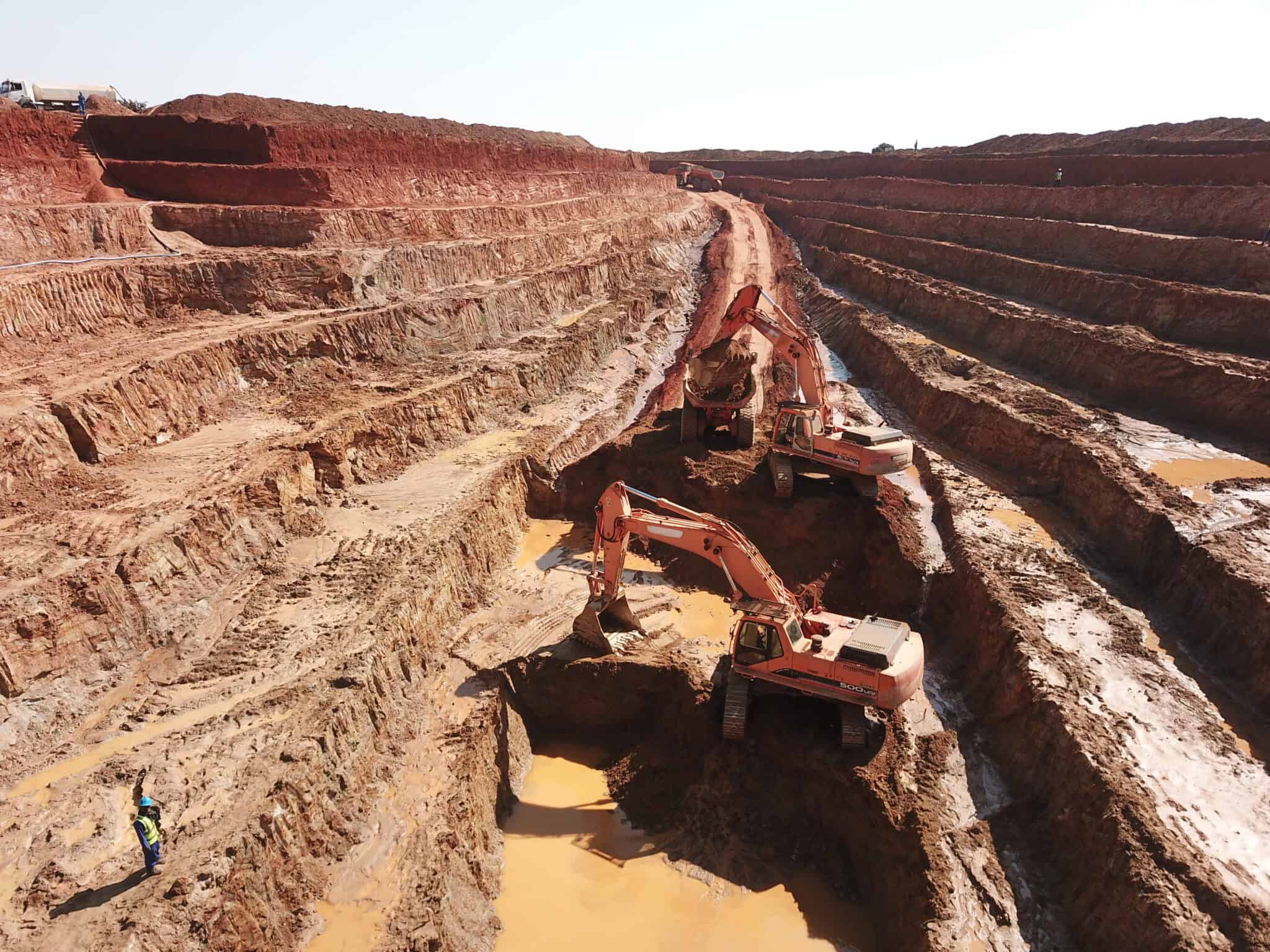
The project's geological characteristics distinguish it from conventional graphite operations. Kasiya's mineralization occurs in weathered saprolite – totally weathered rock that eliminates the need for conventional drilling, blasting and hard rock processing. This 'soft rock' ore contains both rutile (titanium dioxide) and graphite minerals within the same material, creating the industry's only known by-product graphite opportunity.
Strategic validation came through Rio Tinto's A$60 million investment for a 19.9% stake in October 2023. The global mining major's participation brings both capital and technical expertise, with joint technical committees overseeing development studies. Rio Tinto's investment threshold represents just below Australia's 20% mandatory bid requirement, signaling strong conviction while preserving Sovereign's independence.
Key Development: The By-Product Advantage
Kasiya's fundamental advantage lies in its unique geological setting. While conventional graphite mining requires dedicated operations targeting graphite-bearing rock, Kasiya's weathered saprolite contains both target minerals within the same ore body. This co-occurrence enables graphite production as a natural extension of rutile processing, fundamentally altering project economics.
The January 2025 OPFS quantified this advantage. The study allocated operational costs between the two commodities, revealing a graphite incremental cost of US$241 per tonne – representing only the additional costs required to produce graphite concentrate after covering primary rutile production expenses. This contrasts sharply with standalone graphite projects, where the full operational burden falls on a single commodity.
Frank Eagar, Managing Director and CEO, emphasized the significance:
"Kasiya represents the only known deposit where graphite is produced as a by-product. This creates cost advantages that are simply unavailable to conventional graphite operations."
The weathered ore characteristics further enhance processing efficiency, eliminating conventional crushing and grinding stages while preserving valuable large flake sizes.
Strategic Significance: Competing with China
Sovereign's cost positioning addresses the graphite industry's central challenge: Chinese dominance. China produces approximately 1.2 million tonnes annually – roughly 75% of global supply – at an average weighted cost of US$257 per tonne according to Benchmark Mineral Intelligence. This cost advantage has effectively priced most Western operations out of the market.
Kasiya's US$241 per tonne incremental cost positions it below even Chinese production costs, creating a rare non-Chinese project capable of competing on pure economics rather than relying solely on supply chain premiums. The project's 265,000 tonnes per annum target production would represent approximately 16% of current global demand, providing meaningful supply diversification.
Beyond cost competitiveness, Kasiya's weathered ore produces superior product quality. The saprolite processing yields 96-98% carbon concentrate compared to typical 94-95% grades, while the gentler processing preserves larger flake sizes. The project's flake size distribution shows 57% large-to-jumbo flakes (+80 mesh) commanding premium pricing of US$1,140-1,193 per tonne versus US$564 per tonne for smaller flakes used primarily in battery applications.
Current Activities: Definitive Studies Underway
Development momentum has accelerated following the OPFS completion. The study, conducted with Rio Tinto technical oversight, incorporated learnings from a six-month pilot program that processed 170,000m³ of material across 10 hectares. This pilot phase validated mining, processing, and rehabilitation methodologies under real-world conditions.
The Definitive Feasibility Study (DFS) is now underway, targeting completion in Q4 2025. This study will provide bankable documentation for project financing and final investment decisions. Parallel activities include ongoing metallurgical testwork confirming graphite suitability across all major end-use markets, representing 94% of global natural graphite demand including refractories, expandable graphite, and battery anodes.
Commercial developments include testwork with leading German laboratories ProGraphite and Dorfner Anzaplan, confirming Kasiya graphite's technical specifications. Recent announcements in February 2025 validated suitability for both refractory applications and expandable graphite markets, demonstrating product versatility beyond battery applications.
The Investment Thesis for Sovereign Metals
- Position in Sovereign before DFS completion in Q4 2025 to capture re-rating as bankable feasibility confirms world-class economics
- Consider accumulated positions during graphite price weakness as Kasiya's cost advantage widens the margin of safety versus higher-cost producers
- Monitor Rio Tinto's participation in future funding rounds as validation of project quality and potential pathway to development financing
- Target near-term catalysts including DFS completion, offtake agreements, and potential development financing arrangements with strategic partners
- Diversify critical materials exposure beyond lithium through graphite – the largest battery component by weight with limited non-Chinese supply options
- Leverage the dual-commodity structure as rutile provides primary project economics while graphite offers additional upside from supply chain diversification premiums
Sovereign Metals represents a rare convergence of geological advantage, strategic partnership, and market opportunity within the critical materials sector. The company's by-product graphite strategy addresses the industry's fundamental challenge – competing with low-cost Chinese production through cost structures unavailable to conventional operations.
The investment opportunity centers on Kasiya's potential to become the world's largest and lowest-cost graphite producer outside China, supported by Rio Tinto's validation and technical oversight. With the DFS approaching completion in Q4 2025, investors have a defined timeline for project advancement and potential re-rating.
For investors seeking exposure to critical materials diversification beyond lithium, Sovereign offers a unique proposition combining proven resources, strategic backing, and exceptional cost positioning. The dual-commodity structure provides additional optionality as both rutile and graphite markets benefit from supply chain security considerations in an increasingly fragmented global economy.
TL;DR
Sovereign Metals' Kasiya project represents a unique opportunity to invest in the world's potentially lowest-cost graphite production outside China. The company's by-product structure, strategic Rio Tinto partnership, and superior ore characteristics position it to compete directly with Chinese producers while serving growing Western supply chain diversification demand.
FAQs (AI-Generated)
By-product structure means graphite production costs only include incremental expenses beyond primary rutile operations, creating unmatched cost advantages.
Kasiya's US$241/t incremental cost sits below China's weighted average of US$257/t, making it potentially cost-competitive even without supply chain premiums.
Rio Tinto invested A$60M for 19.9% ownership and provides technical expertise through joint committees overseeing development studies.
The Definitive Feasibility Study is due Q4 2025, with development timeline dependent on financing and permitting post-DFS completion.
Key risks include permitting delays, commodity price volatility, development financing requirements, and operational execution in emerging market jurisdiction.
Analyst's Notes





Subscribe to Our Channel

.png)


.jpg)
Stay Informed


