




Cement, Copper, Carbon: Unpacking PLC's Multi-Asset Portfolio


PLC (ASX:PLA): PNG lime/cement builder hits kiln-foundation stage, Newmont offtake locked, govt owns up to 30% equity. Cash A$46M, ~1yr runway. FY27 production target.
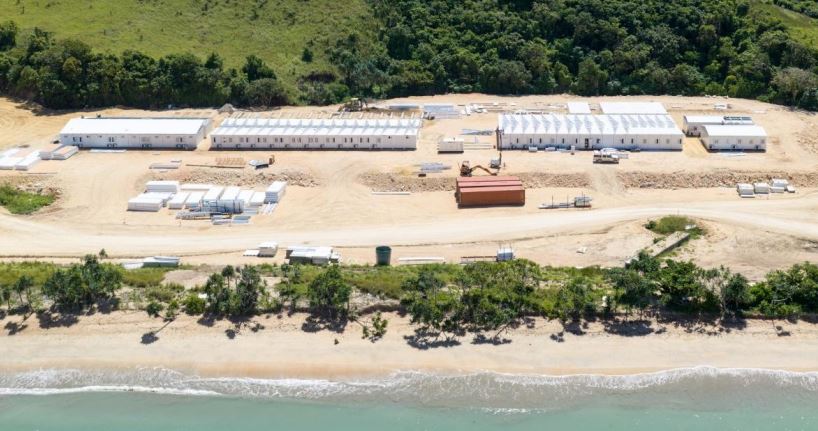
- As of the March 2026 quarter, the Central Lime Project (CLP) transitioned from bulk earthworks into civil, foundation, and structural works; kiln foundation concrete pours began in late April 2026, the concrete batch plant was installed, and workforce grew to 175 personnel - all while the project remained on schedule and within its approved budget, targeting first lime production in early-to-February 2027.
- In February 2026, PLC secured Newmont Corporation as a cornerstone quicklime customer under a multi-year agreement covering approximately one-third of CLP's nameplate production capacity, materially underpinning the project's commercial viability ahead of production.
- A Project Development Agreement (PDA) was executed and ratified by PNG's National Executive Council in March 2026, granting the PNG Government rights to acquire up to 18% equity in the Lime SPV (US$23.14 million) and up to 30% in the Cement SPV at an independently agreed net present valuation (less 15%); the Cement Project's NPV is estimated at US$284–339 million.
- Cash and cash equivalents fell to A$46.050 million at 31 March 2026 (from A$80.603 million nine months earlier), with A$11.504 million deployed to CLP capex in the quarter alone; management's own disclosure implies roughly 3.92 quarters of funding at the current outgoing rate, a figure calculated before capex is expected to increase into commissioning.
- Kevin Savory was appointed CEO – Cement (effective January 2026) and Darren Holley was appointed joint Chief Commercial & Chief Operating Officer (effective 1 June 2026), while the Company initiated a strategic review of its non-core Star Mountains Copper-Gold project and continues to hold a 16.3% stake in TSX-V-listed Adyton Resources Corporation.
Papua New Guinea currently imports 100% of its lime and cement requirements, predominantly from China and Japan, to serve a domestic construction, mining, and infrastructure sector characterised by chronic supply-chain distance and cost. Pacific Lime and Cement (PLC) is positioning itself as the country's first vertically integrated domestic producer of both materials, a structural shift rather than an incremental capacity addition. The broader thesis is one of import substitution economics layered onto a resource-extraction skill set: rather than exporting raw commodities, PLC intends to capture domestic manufacturing margin in a protected market, supported directly by the PNG state as an equity partner. This model is relatively uncommon among ASX-listed developers and warrants separate analytical treatment from typical junior mining plays.
Building Toward Production
The March 2026 Quarterly Activities Report and the 30 April 2026 Construction Update both confirm that the Central Lime Project has moved from bulk earthworks into the structural phase. Kiln foundation reinforcement and formwork advanced, with concrete pours commencing in late April 2026; the concrete batch plant was installed with commissioning ongoing; crushing and screening operations became active on site, reducing reliance on imported aggregates; and camp infrastructure reached substantial completion to support a workforce that grew to 175 personnel. Supporting infrastructure - Bridge 1 and Bridge 2 on the access road linking the Special Economic Zone (SEZ) to Port Moresby, and Stage 3 of the export wharf - also progressed. Management maintains that the project remains on schedule and within its approved budget for commissioning and first production in early 2027 (with the interview specifying February 2027). Investors should note that the Company explicitly flagged ongoing monitoring of "emerging global cost pressures, including supply chain and geopolitical factors," while asserting that contingency capital is sufficient - a statement that bears monitoring each quarter given the project's remaining capital intensity.
Commercial Underpinning: Offtake and Government Equity
The February 2026 Newmont cornerstone offtake agreement, covering roughly one-third of CLP's nameplate capacity, is the single most significant de-risking event disclosed, as it provides revenue visibility from a large, credit-worthy industrial counterparty (Newmont operates PNG's Lihir Gold Project and is a joint-venture partner in Wafi-Golpu). Separately, the PDA executed in March 2026 formalises PNG Government equity rights of up to 18% in the Lime SPV for US$23.14 million (a 22% discount to the base-case two-kiln NPV of US$161 million) and up to 30% in the Cement SPV at an independently agreed NPV (less 15%), with the Cement Project's NPV estimated between US$284 million and US$339 million. Landowners separately hold a contemplated 2% direct equity interest in both SPVs, with a further allocation of up to 8% of the State's equity potentially directed to landowner and provincial stakeholders. Management has characterised these transactions as implying a company valuation of approximately A$700 million versus a market capitalisation of approximately A$250 million as of March 2026; this figure is a management estimate rather than an independently derived valuation and should be treated accordingly.
The Cement Growth Vector
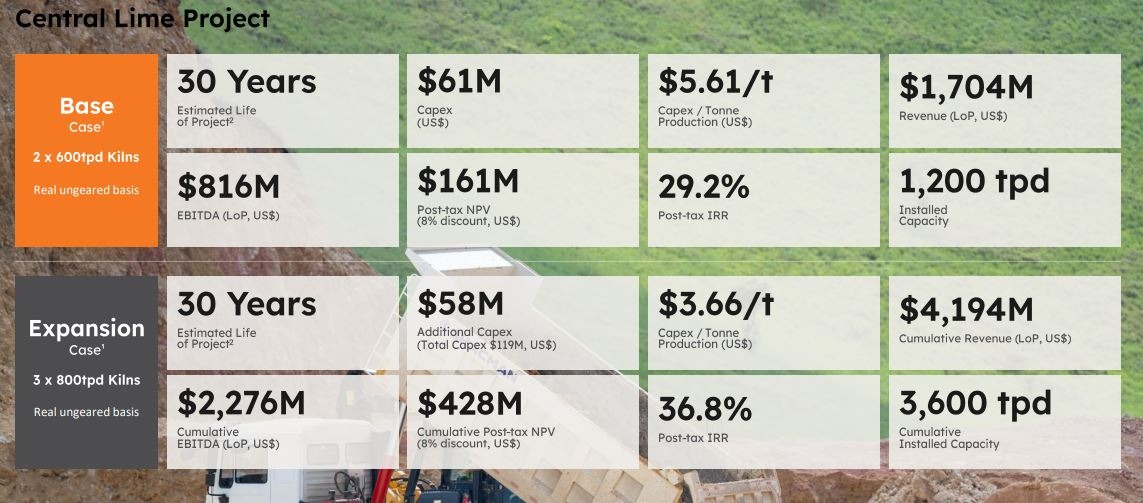
The Central Cement Project is advancing toward a targeted Final Investment Decision later in 2026, supported by the International Finance Corporation (IFC), which became a partner in late 2025. Definitive Feasibility Study workstreams span feasibility update, market assessment, ESG, and financial modelling, with configuration options under review between a single 5,000 tonnes-per-day kiln and a staged two-kiln, 2,500 tonnes-per-day configuration. An Environmental and Social Impact Assessment has commenced, and Special Purpose Vehicle structuring is underway, with a stated intention to pursue a dual listing of the Cement operation on ASX and PNGX. On a combined basis, assuming completion of the CLP expansion case and Cement Stage 2, the Company projects EBITDA of approximately US$178 million (A$249 million) - a forward-looking figure subject to the standard caveats attached to all such projections.
Funding the Runway
PLC's cash position stood at A$46.050 million at 31 March 2026, down from A$54.618 million at the start of the quarter and A$80.603 million nine months prior. Quarterly net cash outflows included A$11.504 million in exploration and development capex (predominantly CLP construction) against modest operating inflows of A$1.090 million in customer receipts and A$3.181 million in financing inflows from equity issuance. The Company's own disclosure estimates 3.92 quarters of available funding based on the current burn rate - a metric that will likely compress as commissioning-phase capital intensity increases. Outstanding financing facilities are limited to USD$10 million (A$14.936 million drawn) in unsecured convertible notes bearing 10% annual interest, maturing 31 October 2026, convertible at A$0.2425 per share. The equity-funded structure eliminates debt covenants and interest-servicing risk on senior facilities but leaves the Company dependent on continued capital markets access, government equity inflows, and IFC support to fund the balance of construction and the separate Cement Project capital program.
Unlocking Value Beyond the Core
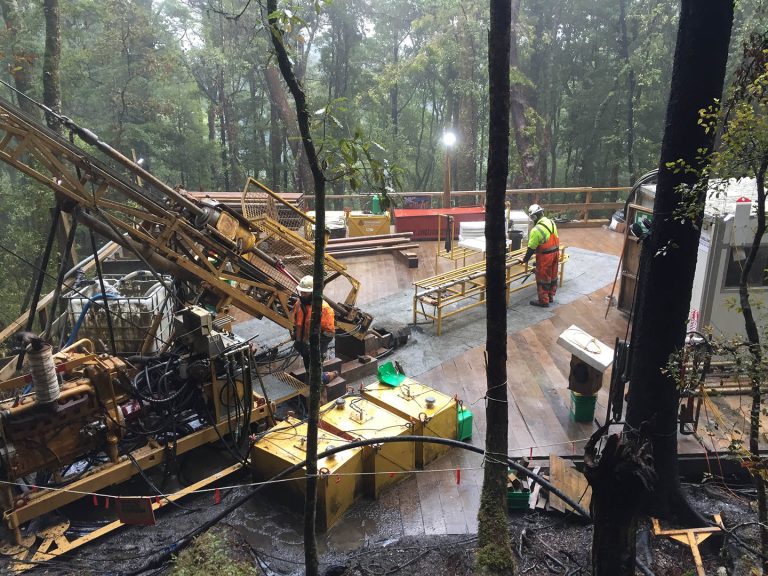
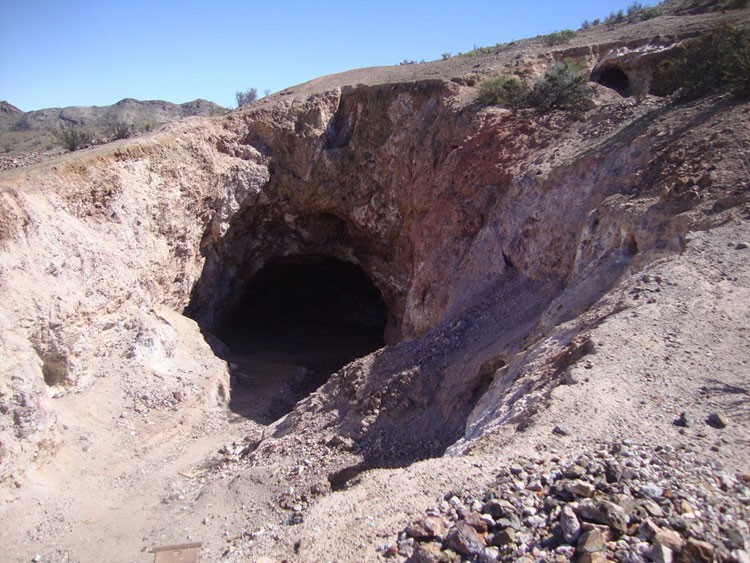
Beyond CLP, PLC holds several non-core assets under active review. The Orokolo Bay Industrial Sands Project is structured as fully funded by PowerChina (which bears all capital, operating, and working capital costs), with PLC retaining 60% profit share and 100% asset ownership - a capital-light arrangement, though execution remains contingent on the JV partner's continued commitment. A strategic review of the 100%-owned Star Mountains Copper-Gold Project (inferred resource of approximately 626 Mt at 0.53% CuEq) is assessing joint venture, partnership, and capital markets pathways, consistent with management's stated intent to monetise adjacent-to-Frieda River exploration assets acquired during a period of depressed commodity prices. PLC also holds a 16.3% interest in TSX-V-listed Adyton Resources Corporation, which reported a 197% increase in inferred resources at Wapolu and continued high-grade drilling results at Feni Island during the quarter. Mayur Renewables' geothermal, solar/BESS, and Kamula Doso forestry carbon initiatives remain early-stage and, in the case of Kamula Doso, subject to ongoing litigation despite validation of carbon permits by PNG's National and Supreme Courts.
Governance
Executive capacity was strengthened during the period under review, with Kevin Savory appointed CEO – Cement (effective January 2026, bringing prior senior roles at Cement Australia, Holcim, and CRH) and Darren Holley appointed joint Chief Commercial & Chief Operating Officer effective 1 June 2026, bringing finance, governance, and operational experience from Aristocrat Leisure, Betr Entertainment, OneSteel, and Goodman Fielder. These appointments coincide with the Company's stated transition from development to execution-stage management requirements.
Conclusion
Pacific Lime and Cement presents a differentiated, government-backed import-substitution story with credible near-term catalysts: a cornerstone offtake agreement, a ratified sovereign development agreement, and construction progressing into its structural phase on stated schedule. The core risks for shareholders are execution risk on a capital-intensive build in a single emerging-market jurisdiction, a liquidity runway that management's own disclosure places under one year at current burn rates, near-term refinancing or conversion of the October 2026 convertible notes, and dependence on non-core asset sales or further government/IFC capital to fund the Cement Project through to FID and beyond. The valuation gap management highlights between market capitalisation and implied government-equity valuation may narrow as production commences and the order book fills beyond the Newmont agreement, but this remains contingent on schedule adherence and continued sovereign and multilateral partner support.
TL;DR
Pacific Lime and Cement is advancing toward first production (targeted early 2027) at its Central Lime Project in Papua New Guinea, supported by a cornerstone Newmont offtake agreement, a ratified Project Development Agreement with the PNG Government, and a 10-year tax-exempt Special Economic Zone status. The investment case rests on import substitution in a market that currently sources 100% of its lime and cement from overseas, combined with a debt-free, equity-funded capital structure that avoids covenant and interest burdens. Near-term catalysts include completion of kiln and cement facility construction, advancement of the Central Cement Project toward Final Investment Decision, and potential monetisation of non-core copper-gold assets. The principal near-term risks are execution and cost-inflation risk on a large capital program, a liquidity runway of under one year at current disclosure, an unsecured convertible note maturing October 2026, and reliance on continued government and IFC support in a single-country, single-project-dependent structure.
FAQs (AI Generated)
Analyst's Notes





Subscribe to Our Channel


Stay Informed


