




Minto's First Mine Plan Takes 40% to 45% of the Indicated Resource


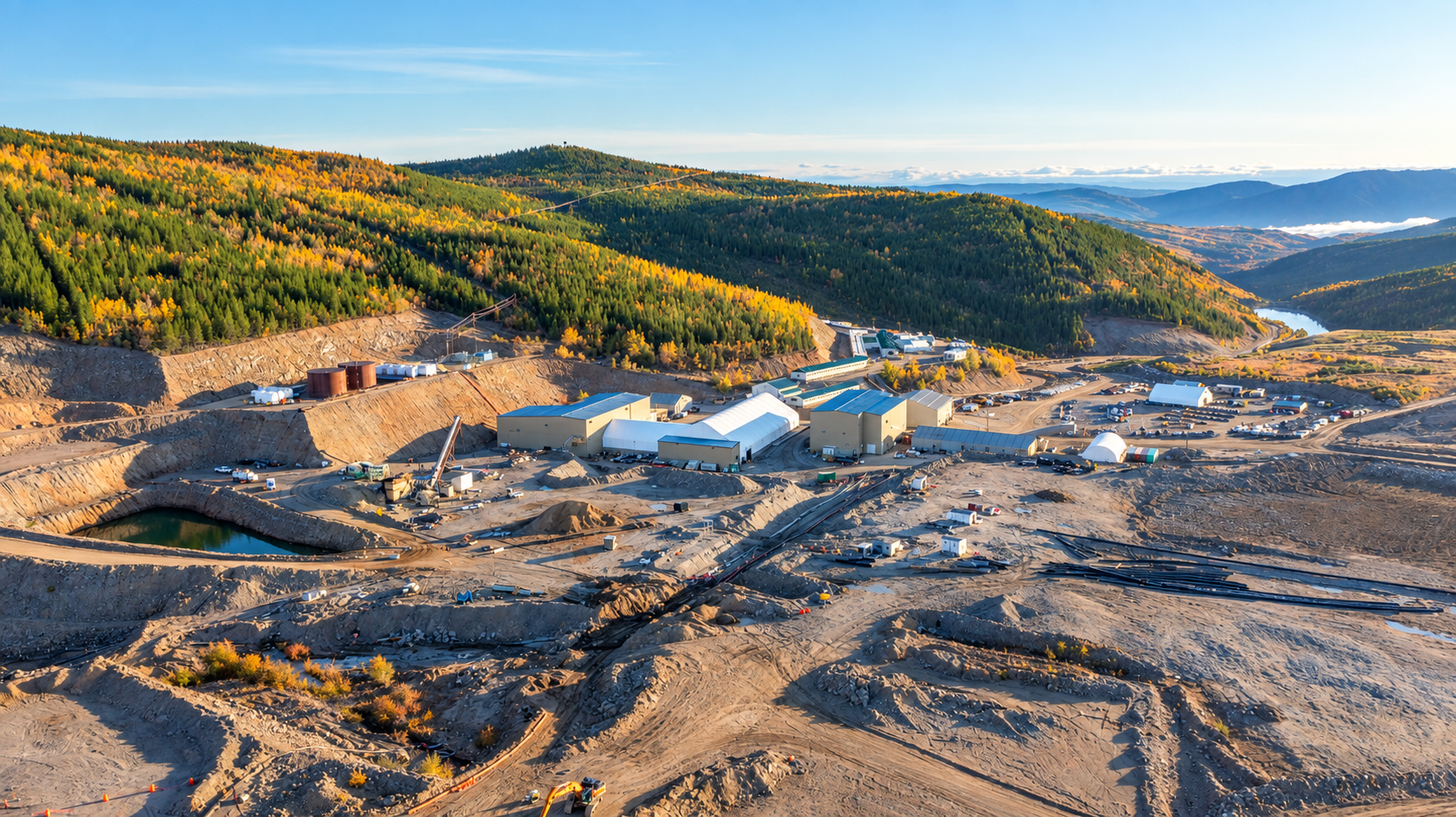
Selkirk Copper's Phase 2 program is 90% complete at Minto, and management includes 40% to 45% of the indicated resource in the mine plan.
- Phase 2 drilling at Minto had reached 45,299 meters (m) in 187 holes as of August 18, 2026, 90% of the planned 50,000 m.
- Assay results released on August 20, 2026, cover holes drilled in May, against a turnaround of six to eight weeks.
- Most of the reported holes are classified as infill that confirms modeled geometry, and expansion is confined to three holes.
- Management puts the share of the indicated resource currently reaching the mine plan at 40% to 45%.
- The mineral resource estimate (MRE) behind the preliminary economic assessment (PEA) has an effective date of June 10, 2026.
Phase 2 Drilling Status & Assay Reporting
The second drill program at Minto is nearly finished, and its results have barely begun to emerge. Selkirk Copper Mines (TSXV: SCMI | OTCQB: SKRKF | FRA: IO20) had completed 45,299 meters (m) of drilling in 187 holes as of August 18, 2026, or 90% of the 50,000 m planned for the program. Four drill rigs are active, and drilling began on May 1, 2026. Assay turnaround currently runs six to eight weeks, and the results released on August 20, 2026, come from holes drilled in May alone.
That distance between the drill and the data shapes what an investor can price today. Samples go to a preparation facility in Whitehorse and then to an analytical laboratory in Vancouver, both operated by ALS, with quality-control material inserted at approximately 15% of all samples. Drilling is targeted to continue until approximately late September 2026, with further assays released through the summer and fall. One further distinction governs how every reported interval should be interpreted: the company reports intervals as drill-core lengths and estimates true widths at approximately 90% of those lengths, given the sub-horizontal to shallow-dipping geometry of the modeled zones.
The program's meterage is not spread evenly across the deposit. Area 118 accounts for 11,530 m, Minto Main 10,069 m, and Copper Keel 9,323 m, while Minto North, the highest-grade zone, has 7,227 m across 29 holes. Ridgetop has 34 holes and 3,402 m drilled with no holes yet reporting assays. Against a Phase 1 program of 52,288 m, the company had completed over 97,000 m of diamond drilling in the 11 months to August 20, 2026, and was targeting more than 100,000 m by the end of that month. Management describes 100,000 m of drill core as a large volume to analyze and model, and says the priority is translating that modeling into mine plans as quickly as it can.
Infill Against Expansion in the Central Mine Area
The August results are dominated by holes the company itself classifies as infill, and expansion is confined to three: one at the 117 Lens in the Minto Main area, one at Area 118, and one testing the southern extent of the 202 Lens at Minto North. Infill work at the center of the 202 Lens returned 6.01% copper, 8.77 grams per metric ton (g/t) gold, and 36.6 g/t silver, or 13.12% copper equivalent, over 1.93 m, within a broader interval of 1.49% copper equivalent over 33 m.
Those grades do not add tonnage, and the company does not claim they do. The stated result for that hole is that it further delineates the extents of high-grade mineralization within the lens and will be used to help define the geometry of the underground excavations the ore is mined from. At Area 118, all three reported holes intersected mineralization between 150 m and 350 m below surface, and the company says the results confirm the modeled geometry of the lenses there and increase confidence in grade estimation within them. Confidence in geometry and grade is the input for a restart mine plan, and it is a different product from a bigger resource.
President and Chief Executive Officer of Selkirk Copper Mines, M. Colin Joudrie, credits new targeting methods for the step-out hit rate:
"We've got new methods to expand existing zones, where we're doing step-out drilling, almost all of which is being successful on 50, 75, and even 100-meter step-outs. And on lenses of this character, that's significant."
The three expansion holes tested shorter distances and still moved the limits. A 50-meter step-out at Area 118 returned 3.39% copper, 0.61 g/t gold, and 16.5 g/t silver, or 3.73% copper equivalent, over 6.0 m, within a broader interval of 1.66% copper equivalent over 23.0 m, at a thickness and grade the company describes as better than expected, with mineralization remaining open to the southwest. A 30-meter step-out west at the 117 Lens returned 0.98% copper, 0.39 g/t gold, and 3.4 g/t silver, or 1.25% copper equivalent, over 12.7 m, and that lens remains open to the west. At the southern end of the 202 Lens, one hole intersected an upper interval of 1.87% copper, 0.46 g/t gold and 17.5 g/t silver, or 2.25% copper equivalent, over 13.3 m that previous drilling had not anticipated, and preliminary interpretation of a reverse fault beneath it suggests the interval may be the offset portion of the lens, with further drilling planned southwards to test that hypothesis.
Where the Results Ran Below the Model
Copper Keel is where the same confirmation drilling priced a zone down. Eight holes targeted infill of the eastern portion of the Copper Keel resource area. Seven of them intersected notable copper, gold, and silver mineralization and increased confidence in the geological model; the eighth returned no significant intercept. Assay grades in those holes were variable and somewhat lower than expected, with the best interval at 1.67% copper equivalent.
The results confirm the continuity of the geological model at Copper Keel and also indicate limited potential for additional resource expansion within that area. Infill drilling identified newly recognized mineralization in the upper portion of several holes, which is a modeling gain in the same breath as an expansion limit.
Copper Keel has 44 holes and 9,323 m of the Phase 2 meterage, the largest hole count of any zone in the program, and every Copper Keel interval reported takes an infill classification. A confirmation program produces exactly this pattern. The drilling that raised confidence in geometry at Minto North and Area 118 closed off expansion potential in the zone it drilled hardest, and a mine plan has to schedule around both outcomes at once.
Converting Indicated Resource Into a Mine Plan
The figure that governs the size of a Minto restart is not in the resource table. The mineral resource estimate (MRE) with an effective date of June 10, 2026 gives measured and indicated material of 47.8 million metric tons grading 0.89% copper, 0.34 g/t gold and 3.2 g/t silver, containing 940 million pounds of copper, 530,000 ounces of gold and 4.97 million ounces of silver, on flat long-term prices of US$4.60 per pound for copper, US$3,300 per ounce for gold and US$40.00 per ounce for silver. A further 16.9 million metric tons of inferred material grades 0.76% copper. Management puts the share of that indicated material currently included in the mine plan at 40% to 45% and says it would like the figure to be higher.
Two things govern that share. The first is the mill: the restart is planned around 4,100 metric tons per day of mine and mill throughput, described as consistent throughput at steady grades with an ore blending strategy to keep mining ahead of milling, over a mine life of 12 to 15 years and roughly 30,000 metric tons a year of contained copper equivalent. The second is where the material lies. Management says the best and most proximate material to existing underground facilities will be taken first, and that grade will always be a factor in the plan.
Joudrie ties the plan's ceiling to what a fixed mill has to be fed:
"Our job is to do the best to get the right rock into the mill at the right grade. There will always be pressure on the head grade on this operation."
Management bounds that immediately, saying the company will not try to high-grade the deposit and needs to produce the amount of metal that reflects the asset. It also says mine planning takes time, is not a trivial exercise, and that it will keep pushing the team to pull more material into the plan. Taken together, the three statements describe the conversion share as a working target the company is managing, not a fixed property of the deposit.
Study Sequencing & What Resets the Conversion
The preliminary economic assessment (PEA), which the company is committed to completing in the third quarter of 2026, will be built on the MRE effective June 10, 2026. Phase 2 began on May 1, 2026, so that effective date precedes almost all of the 45,299 m drilled by August 18, 2026. Management says the Phase 1 meterage completed in April is fully in the resource model behind the published estimate, and that the next phase of drilling enters at the feasibility stage. The 40% to 45% conversion share is a proportion of the June 2026 estimate, not of the current drilled position.
Joudrie describes the mine-plan work as a loop that re-runs at each study:
"We will have this MRE, we'll incorporate as much of those tons into the mine plan as we can, and then we get another cut at it."
Management says that the next estimate is likely in the first part of 2027, so the loop has one more turn before an investment decision. The feasibility study is intended to begin around the end of September 2026 and culminate in updated integrated open-pit and underground mine plans that lead to an investment decision in mid-2027, after which a roughly 12-month execution program begins. Amended permits are to be filed in the October 2026 time frame under a category 2 district office assessment, and management names a proper set of permits as the largest challenge inherited with the asset. Wet commissioning of the mill is targeted for the early part of the second quarter of 2028, with first production in the middle of that year and full throughput of 4,100 metric tons per day by the fourth quarter of 2028 or early in the first quarter of 2029.
Management does not treat the assessment's timing as a delay and says the work incorporates the maximum amount of metal from the MRE, so the mine plans reflect the opportunity. For an investor, the study due in the third quarter of 2026 gives a first schedule against a known resource, with a second schedule already set for the first part of 2027, and the remaining Phase 2 meterage is the material that will change it.
The Investment Thesis for Selkirk Copper Mines
- Minto has an existing processing plant rated at 4,100 metric tons per day and underground development, so the second drill program is collecting data to inform a schedule, not proving a discovery.
- Management puts 40% to 45% of the indicated resource in the mine plan today, which sets the scale for a restart against a measured and indicated base of 47.8 million metric tons at 0.89% copper.
- The August results are dominated by holes classified as infill that confirm modeled geometry and grade estimation, the input a mine plan needs, and not the same thing as a larger resource.
- Three holes are classified as expansion; a reinterpreted reverse fault at the southern end of the 202 Lens may open untested ground to the south, and both Area 118 and the 117 Lens remain open in the directions they were drilled.
- Copper Keel returned variable grades below expectations across seven holes, and the company indicates limited potential for additional resource expansion there, in the zone with the program's largest number of holes.
- The preliminary economic assessment due in the third quarter of 2026 is based on a mineral resource estimate effective June 10, 2026, and on the feasibility-stage mineral resource estimate management says is likely in the first part of 2027, which is when the remaining meterage enters the plan.
Minto's investment case turns on a figure the resource table does not contain. The measured and indicated base is large enough and high enough in grade to support the company's planned throughput, but the share of the schedule that can actually be taken is 40% to 45% today, and most of the second program's meterage is going into confidence on material already counted. A restart decision needs exactly that work, and the figure to watch through the third quarter of 2026 is how much of the indicated resource the first mine plan carries.
TL;DR
Selkirk Copper is a brownfield copper restart whose next milestone is a mine plan, not a discovery. Phase 2 drilling at Minto reached 45,299 m in 187 holes by August 18, 2026, 90% of the program, and the August results are mostly infill that confirms the modeled geometry at Minto North and Area 118 while closing off expansion potential at Copper Keel. Management puts 40% to 45% of the indicated resource in the mine plan today, against a measured and indicated base of 47.8 million metric tons at 0.89% copper. The PEA due in the third quarter of 2026 is built on an MRE effective June 10, 2026, and the remaining meterage enters the model at the feasibility-stage estimate, which management says is likely in the first part of 2027.
FAQs (AI-Generated)
Analyst's Notes





Subscribe to Our Channel







Stay Informed


