




Red Metal's Chile Copper Royalty Starts Delivering


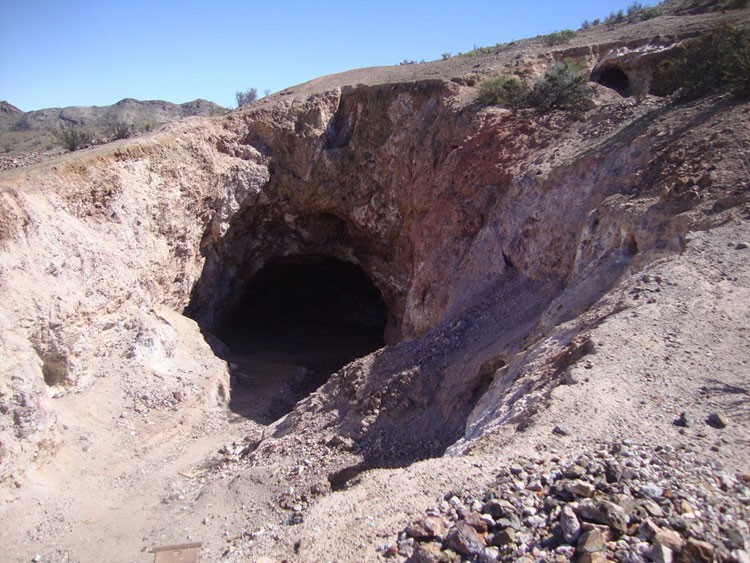
Red Metal Resources (CSE:RMES) ships first Farellon ore in Chile ahead of schedule, using royalty income to fund copper drilling at Carrizal.
- Red Metal Resources leases individual Carrizal concessions to Chilean small-scale miners and collects a 10% net sales royalty, which nets to 8.5% at Farellon until a $600,000 vendor royalty is paid out.
- Operator Minera KMT delivered about 592 tonnes of copper sulphide ore to ENAMI roughly four months ahead of its seven-month development deadline.
- CEO Caitlin Jeffs expects grades near 2% copper and a royalty of $35,000 to $50,000 a month at the 2,500-tonne minimum although ENAMI's first settlement has not yet been received.
- Around 9,000 metres of drilling, 15 km of mapped veining and a new 3D IP survey support a target of 50-100 million tonnes at 1% copper or better across three parallel veins.
- With 61 million shares outstanding and about $300,000 in cash, Red Metal options to raise or warrant exercises before its late 2026 drill programme.
Copper's supply problem has pushed many investors towards large, long-dated development projects. Red Metal Resources Ltd. (CSE:RMES) is making a different bet. The Vancouver-based explorer argues that smaller, higher-grade underground mines that can be outlined and built quickly may win out over the next decade. Its vehicle is the Carrizal copper-gold-silver-cobalt property in the coastal cordillera of Chile's Atacama region, near the city of Vallenar. President and CEO Caitlin Jeffs set out a model that is unusual for a junior at this stage. Red Metal leases small parts of its ground to experienced local miners and collects a royalty on the ore they sell. The first operator began delivering ore in August 2026, about four months ahead of its contracted timeline.
Royalty Model Built on Small-Mining System
Chile has a well-developed and closely monitored small-scale mining industry. Operators can be permitted to mine up to 5,000 tonnes per month on an individual concession, and Carrizal is made up of 21 concessions. Small miners typically sell ore to processing plants run by the Empresa Nacional de Minería (ENAMI), Chile's state mining company. They receive roughly 50% to 65% of the rock's value. Red Metal rents specific claims to established artisanal operators and takes a 10% net sales royalty (NSR) paid directly by the plant. At Farellon, a pre-existing 1.5% royalty to the original vendor reduces Red Metal's share to 8.5% until that vendor has received $600,000. Red Metal can also buy a bulk sample from the operator at any time at the plant price and contracts also protect its right to keep exploring.
"We get to go underground, see how that's looking underground and looking in three dimensions. We can also buy a bulk sample from them at any point and just take what they would be paid from the central processing facility. So in my mind, it's a win-win," Jeffs said.
Management Track Record From Consultancy to Takeover
Jeffs is a geologist who began in gold exploration in northwestern Ontario with Placer Dome. After Barrick acquired Placer Dome, she and two partners set up Fladgate Exploration Consulting with the aim to give juniors the team structure, 3D modelling software and technical tools normally found at the majors. The most relevant precedent is Kesselrun Resources, started in 2012 with Michael Thompson, who also sits on Red Metal's board. While Kesselrun's original gold thesis did not work out, the team kept acquiring projects, never rolled back the share structure, and built a project next to the Moss gold deposit into a takeover target. Kesselrun was sold to Gold X2 in December 2025.
Interview with Caitlin Jeffs, President & CEO of Red Metal Resources
Farellon Deliveries & the Revenue Outlook
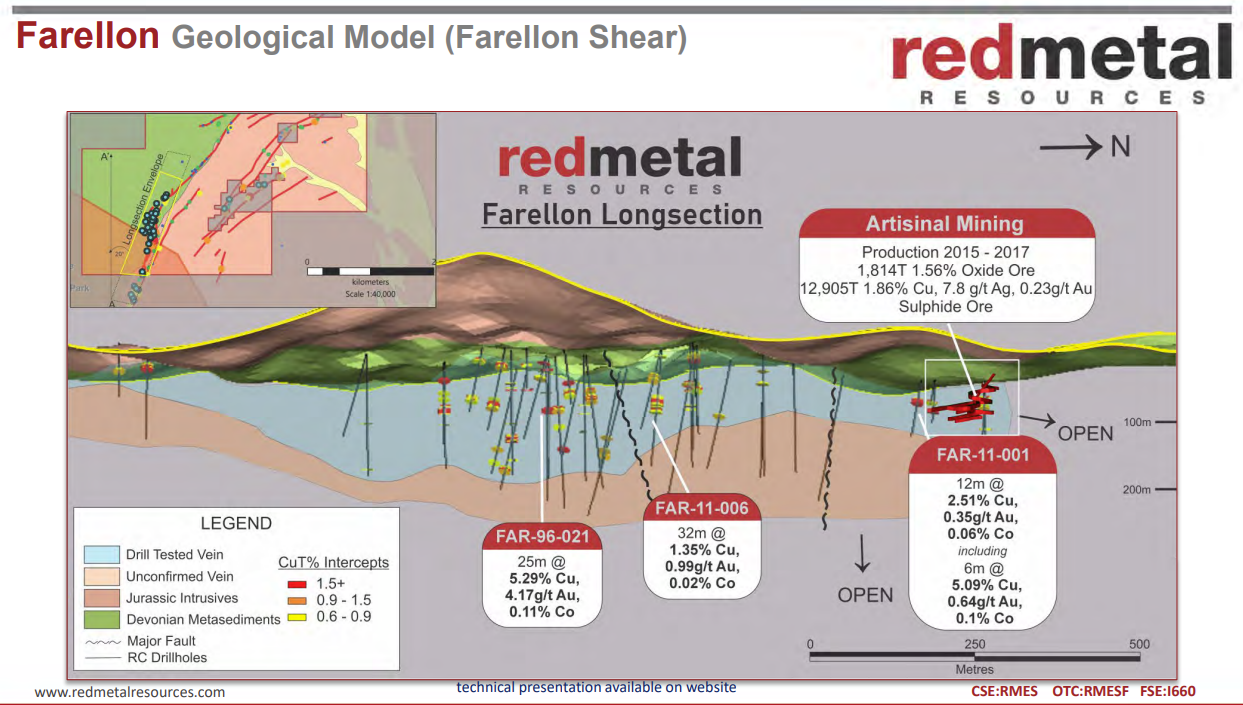
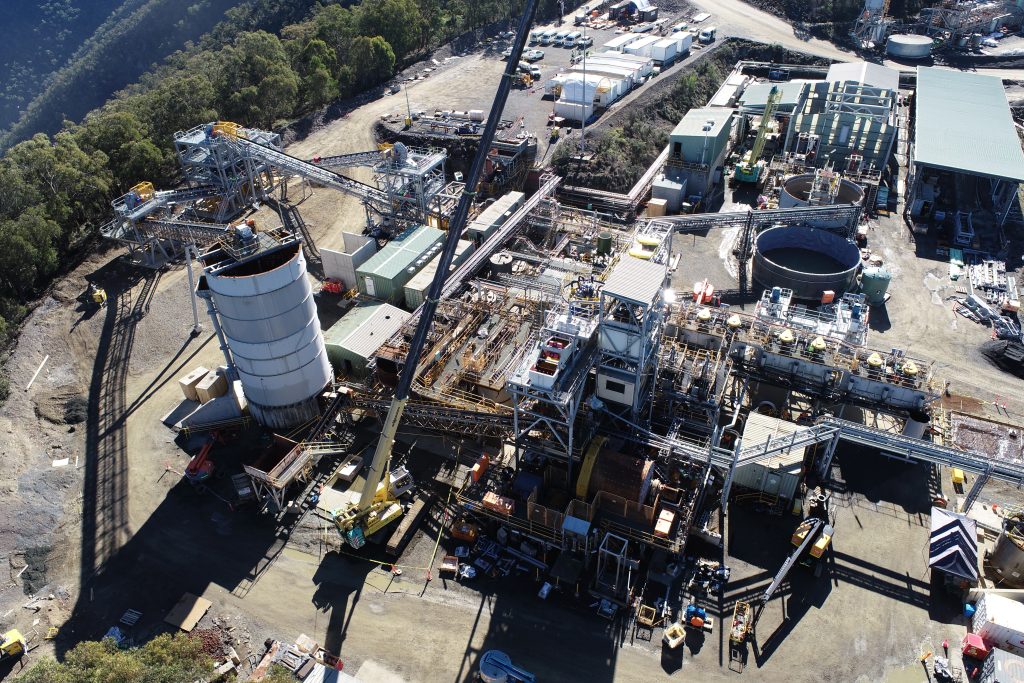
The first lease covers the Farellon 1/8 concession and is operated by Minera KMT SpA (KMT). The May 2026 contract gave KMT a seven-month development period before it must reach and hold at least 2,500 tonnes per month. Red Metal can cancel the lease if that minimum is missed for three consecutive months. KMT hauled approximately 592 tonnes of copper sulphide ore to ENAMI's Vallenar plant. Small-scale mining on the same ground between 2015 and 2017 averaged 1.87% copper at roughly half today's copper price. Jeffs expects grades of close to 2%, which she said could generate a royalty cheque of $35,000-50,000 a month. ENAMI's final assays and settlement for the first deliveries are still pending. A Red Metal technician visits every second week to sample the working face and reconcile tonnes mined against tonnes delivered. ENAMI settlements also report copper, gold and silver grades and any arsenic penalties, giving an early read on metallurgy.
A second lease over the Irene and Margarita concessions is with local operator Catalina. Red Metal has held those two claims since around 2012. At about 150 hectares, they are too small to host a company-scale deposit. Catalina has two portals and roughly six months to reach the same 2,500 tonnes per month.
Carrizal: A Decade Assembling the District
Red Metal started at Carrizal with 66 hectares and about 3,000 metres of drilling by an Australian company in 1996 and 1997 wherein only the assay results survive from that work. Assembling a package large enough to drill properly took about 10 years. Later drilling added roughly 3,000 metres of reverse circulation (RC) and 3,000 metres of diamond core which took the total to about 9,000 metres over roughly 1.5 km of mineralised strike. The work showed the mineralisation is continuous, with better grades and wider intervals down to about 200 metres. Surface mapping has since outlined about 15 km of veining running along strike towards Carrizal Alto, a historic mine that flooded in 1891 at around 500 metres depth. Jeffs estimates that 19th-century sulphide mining at that depth would have needed grades of at least 3% to 5% copper to pay.
Geophysics & the Underground Thesis
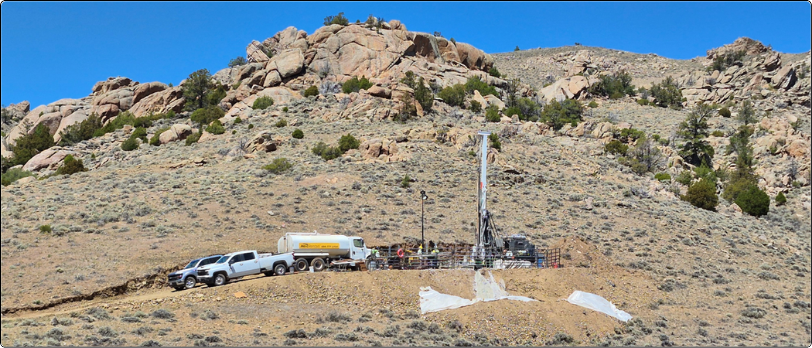
After a LiDAR (light detection and ranging) survey to map fine structures, Red Metal completed data collection on a three-dimensional induced polarisation (3D IP) survey over two blocks. In the southern block, six lines produced one chargeability anomaly coinciding with the drilled area. A second anomaly sits where mapped surface veins continue at depth. Northern-block results have not yet been released. Jeffs's working model is an underground operation grading 1% copper or better, built on three parallel veins over 5 km. Veins drilled so far are 3 to 15 metres wide with a lower-grade halo that could support bulk underground mining. The long-term target is 50 to 100 million tonnes, the scale that matters to a larger miner. Jeffs was candid that getting there could take 50,000 to 100,000 metres of drilling. Drilling costs about $350 per metre and access is year-round. The last diamond programme drilled 2,700 metres in under a month, so news flow should be steady once drilling starts. Drilling is planned for late 2026.
"As we start to drill, it's going to be the kind of news that actually moves the market versus IP surface mapping. Those kinds of things are just me beginning to tell the story and beginning to sort of come up with a thesis about what's happening on the project," Jeffs states.
Capital Structure & Funding Needs
Red Metal has 61 million shares outstanding plus about 20 million options and warrants priced up to 15 cents. Full exercise would add roughly $2 million and take the share count to about 80 million. The company last financed at 6 cents and has since traded between 10-15 cents. Cash stood at about $300,000 at the time of the interview. Red Metal must therefore see options and warrants exercised or raise new capital before drilling. Red Metal's case is that royalty income should cover general and administrative (G&A) and marketing costs, leaving new money free to go into the ground.
Investment Thesis for Red Metal Resources
- Red Metal's lease-and-royalty model aims to fund G&A from third-party mining, so new equity can go mostly into drilling.
- KMT's first Farellon deliveries reached ENAMI about four months early, which supports the operator's development pace.
- Monitor the first ENAMI settlement and Red Metal's pending face-sample assays to test the $35,000 to $50,000 monthly royalty target.
- Watch whether KMT reaches and holds 2,500 tonnes per month, and whether Catalina follows at Irene and Margarita.
- The late 2026 drill programme is the main re-rating catalyst, with the aim of showing that all three parallel veins carry grade and width.
- Funding is the near-term risk because roughly $300,000 in cash means a raise or warrant exercises must come first.
- No NI 43-101 resource exists yet, and royalty income depends on operators, ENAMI settlement terms and the copper price.
Macro Thematic Analysis
Global copper supply rests heavily on a small number of very large operations. Jeffs noted that 10 mines produce about 20% of the world's copper, with Escondida alone contributing around 6%. Projects of that scale take many years to permit and build, and they face growing social licence pressure. That backdrop underpins her argument that the market will increasingly value deposits that can be found and developed on a shorter timeline.
"We're coming up on a crunch in copper. And the idea is I think that smaller mines might win the day in the next decade or two. Things that can be found and outlined in single-digit years and then also developed fairly easily."
Chile's coastal cordillera suits that thesis. The country combines a mining-educated workforce with a regulated small-mining regime, state-run processing plants and permits of up to 5,000 tonnes per month per concession. Red Metal's leases show that this system can provide both income and geological information to an explorer that never operates a mine itself. Price is also doing some of the work. Copper today is roughly double the level at which small miners last worked Farellon between 2015 and 2017. That has turned dormant historic workings into assets operators will pay to lease. For investors, the broader point is that mid-sized, higher-grade underground copper deposits in established districts may become more strategic if large greenfield projects keep slipping.
TL;DR
Red Metal Resources (CSE:RMES) is exploring for a multi-vein underground copper deposit at its Carrizal property in Chile. It also leases small parts of the ground to local miners for a royalty. The first operator, Minera KMT, delivered about 592 tonnes of copper sulphide ore to ENAMI in August, four months ahead of schedule. Red Metal nets an 8.5% royalty at Farellon and hopes to receive $35,000 to $50,000 a month to cover G&A, although final settlement is pending. A 3D IP (Three-Dimensional Induced Polarization) survey is being integrated into drill targeting ahead of late 2026 drilling on three parallel veins.
FAQs (AI-Generated)
Analyst's Notes





Subscribe to Our Channel

Stay Informed


