




Cerro de Pasco: Tailings Play Meets Silver Timing



Peru tailings project targets 423Moz AgEq reprocessing. Sprott-backed, $1-2/t extraction cost, gallium upside. Historic estimate unverified; 2025 studies critical.
- Cerro de Pasco Resources controls mineral rights to the Quiulacocha tailings facility in Peru, which the company estimates contains 423 million ounces silver equivalent based on historical metallurgical balances, a figure that has not been independently verified under modern NI 43-101 standards and requires substantial confirmation work.
- Tailings reprocessing eliminates traditional mining's drilling, blasting, and hauling costs, with the company projecting extraction costs of $1 to $2 per tonne versus $2 to $200 per tonne for conventional open-pit or underground operations, though these figures remain subject to engineering validation.
- Recent drilling across 40 holes confirmed average grades of 1.66 oz/t silver, 1.47% zinc, 0.89% lead, plus significant gallium (53.2 g/t) and indium (19.9 g/t), critical minerals with supply concentrated in China and growing semiconductor demand.
- Billionaire resource investor Eric Sprott acquired a 14.5% stake (19.6% fully diluted) in 2024, providing capital and market credibility as the company advanced from land easement securing to active drilling and scoping studies.
- The company has outlined six major work streams for 2025 including metallurgical testing, expanded Phase 2 drilling, geotechnical and environmental baselines, and formalization of additional tailings claims that will determine whether historical estimates translate into a compliant resource and economically viable project.
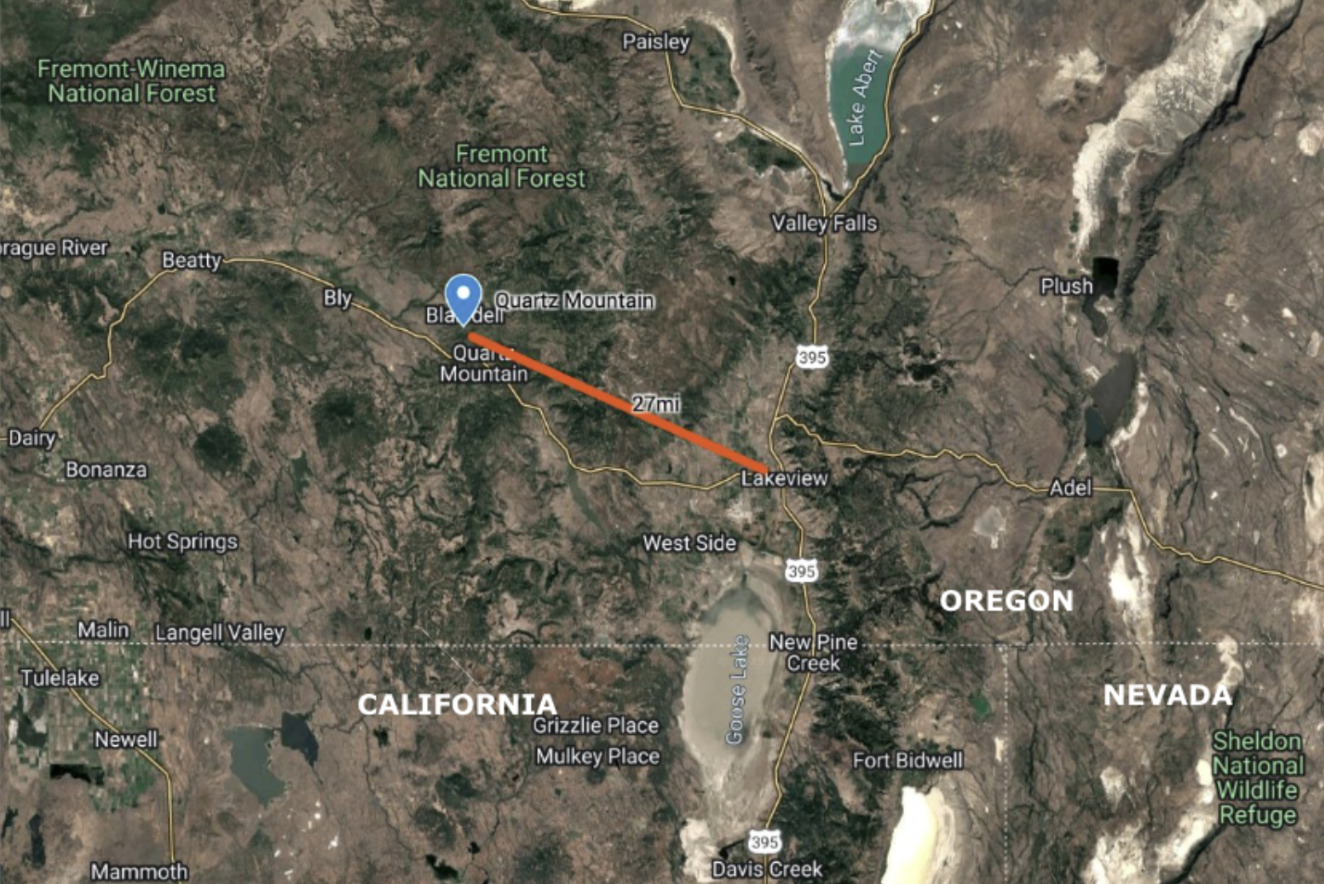
Cerro de Pasco Resources Inc. is a Canadian-listed development company focused exclusively on reprocessing legacy mining waste in Peru's historic Cerro de Pasco mining district, located approximately 175 kilometers northeast of Lima. The company holds a 100% interest in the El Metalurgista mining concession covering 95.74 hectares, which includes mineral rights to 57 hectares of the Quiulacocha Tailings Storage Facility, a repository of mine tailings deposited from the early 1900s through 1992 during successive copper and polymetallic mining eras.
The Quiulacocha tailings cover approximately 115 hectares and are estimated by the company to hold roughly 75 million tonnes of material. Historical metallurgical balance calculations suggest the tailings contain approximately 423 million ounces of silver equivalent across copper, lead, zinc, gold, and silver, though this figure has not been verified by a qualified person under current NI 43-101 standards and does not constitute a mineral resource or reserve. The company separately holds an NI 43-101-compliant inferred resource at the adjacent Excelsior mineral stockpile: 30.1 million tonnes grading 44 g/t silver, 0.6% lead, and 1.5% zinc.
Cerro de Pasco Resources completed a transformative sequence of milestones in 2024. In May, the Peruvian government issued a Supreme Resolution granting the company a land easement to access the El Metalurgista concession for a 40-hole drilling campaign. Between May and December, the company drilled all 40 planned holes and received assay results confirming average grades of 1.66 oz/t silver, 1.47% zinc, 0.89% lead, 0.09% copper, 0.10 g/t gold, 53.2 g/t gallium, and 19.9 g/t indium, translating to a composite 5.5 oz/t silver equivalent at current metal prices. In June, Eric Sprott acquired 87 million units at $0.25 each, establishing a 14.5% equity position and adding $21.75 million to the company's treasury.
The Tailings Reprocessing Advantage
Tailings reprocessing occupies a distinct niche in the mining value chain, extracting residual metals from historical mine waste rather than developing greenfield deposits. The economic rationale rests on three structural advantages: eliminated extraction costs, minimal grade dilution, and existing infrastructure proximity. According to industry estimates cited in the company's presentation, tailings extraction typically costs $1 to $2 per tonne, compared to $2 to $15 per tonne for open-pit mining and $30 to $200 per tonne for underground operations.
"Since the material has already been mined, processing primarily involves excavation, wet tailings pumping, and hauling. These activities typically cost between $1 and $2 per ton."
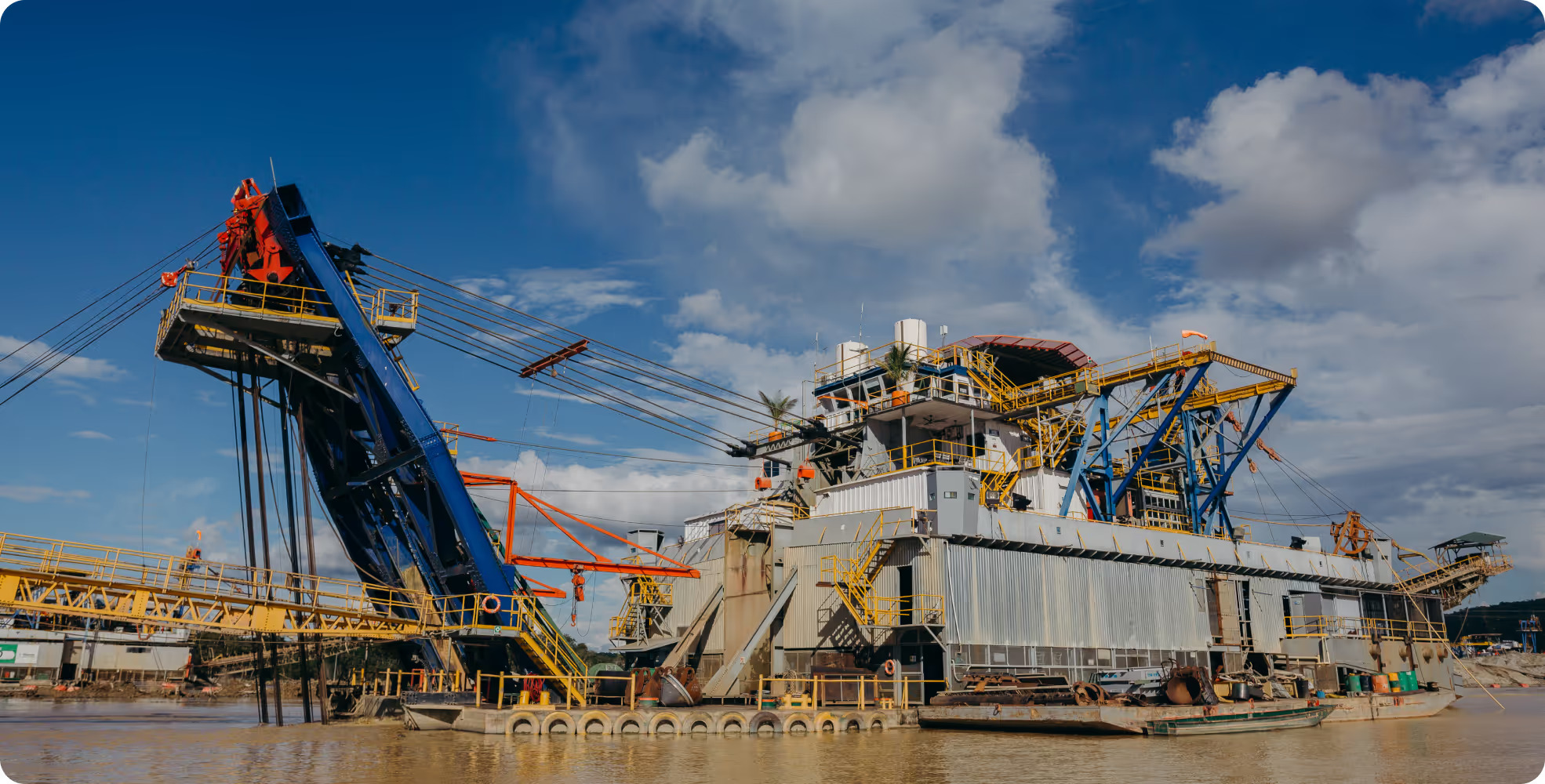
Cerro de Pasco Resources plans to extract the Quiulacocha tailings using submersible slurry pumps mounted on floating barges. A pump submerged in the tailings agitates and lifts the slurry through a floating pipeline to processing facilities, powered by electrical cables. This approach eliminates trucking, dust generation, noise, and explosives, allowing continuous 24-hour operation with lower energy intensity than conventional load-haul-dump cycles.
The processing strategy leverages third-party capacity. The Cerro de Pasco district hosts multiple operating concentrators with a combined throughput exceeding 20,000 tonnes per day, and the company has indicated it is negotiating toll-treatment agreements to avoid the capital expense and permitting timeline of constructing a dedicated plant. The presence of gallium and indium adds a premium revenue stream if metallurgical testing confirms economic recovery rates.
Strategic Metals & Market Context
Silver forms the largest component of the company's projected value, representing 27% of total contained metal by value in the historical estimate. Global silver fundamentals have tightened materially since 2021, driven by accelerating industrial demand. According to industry data cited in the company's presentation from the World Silver Survey 2024, the silver market recorded a supply deficit in 2023, one of the largest on record. Silver prices have risen substantially since 2016, climbing from lows near $14 per ounce to over $30 per ounce by late 2024, reflecting increasing industrial demand and macroeconomic trends.
Gallium represents a distinct strategic opportunity. The company's drilling program reported average gallium grades of 53.2 grams per tonne, among the highest concentrations documented in a base-metal tailings facility. Gallium is classified as a critical mineral due to its essential role in compound semiconductors used in 5G infrastructure, electric vehicle power electronics, and defense radar systems. According to the U.S. Geological Survey, China accounted for 98% of global primary gallium production in 2024, producing approximately 750,000 kilograms versus 12,000 kilograms for the rest of the world combined. China's export controls on gallium have accelerated Western efforts to diversify supply.
Zinc and lead, which together represent 42% of the project's estimated contained value, benefit from parallel supply constraints. Global zinc mine production has declined due to depletion at mature operations, while lead demand from battery storage has grown faster than recycled supply.
Project Economics & Internal Projections
Cerro de Pasco Resources has published two internal economic scenarios to illustrate potential project returns, though the company explicitly states these projections are not NI 43-101-compliant. The Base Case assumes an average metal recovery of 40%, a processing rate of 10,000 tonnes per day, and metal grades based on recent assay results. At metal prices of $30/oz silver, $3,000/t zinc, $2,000/t lead, $9,000/t copper, and $2,500/oz gold, the net smelter return per tonne is projected at $49. Subtracting an estimated operating cost of $10 per tonne yields a profit of $39 per tonne, which over 75 million tonnes implies life-of-mine profit of $2.9 billion.
The Upside Case raises recovery assumptions to 70% and processing throughput to 20,000 tonnes per day while incorporating gallium and indium revenues. After deducting an estimated $15 per tonne operating cost, the profit per tonne is projected at $85, implying life-of-mine profit of $6.3 billion. Both scenarios exclude capital costs, permitting timelines, financing costs, royalties, and taxes.
The gap between scenarios highlights key technical uncertainties. Recovery rates for tailings vary widely depending on mineralogy, reagent optimization, and the specific metals targeted. Operating cost assumptions similarly require validation through trade-off studies on pumping distances, slurry density, and toll-treatment fees.
Current Technical Program & 2025 Catalysts
The company has outlined a six-stage technical program for 2025. First, final assay results from the remaining Phase 1 drillholes are expected in Q1 2025. Second, mineralogical studies will characterize the sulfide mineral assemblages, oxidation state, and liberation characteristics. Third, metallurgical test work will involve locked-cycle flotation tests to establish achievable recovery rates for each metal.
Fourth, the company is working to formalize a claim on the surrounding government-owned tailings that lie outside the current 57-hectare mineral concession. The Quiulacocha tailings facility covers 115 hectares in total, meaning roughly half the surface area is not yet under the company's control. Fifth, an expanded Phase 2 drilling program targeting the copper-silver-gold tailings deposited during the 1906-1965 "Copper Era" is planned for mid-2025.
Sixth, the company is completing a suite of scoping studies that will feed into a preliminary economic assessment. Geotechnical stability studies assess the structural integrity of the tailings dam. Hydrogeology studies model groundwater interactions and acid rock drainage potential. Environmental baseline studies establish water quality and ecological conditions. Infrastructure trade-off studies will compare pipeline routing options and toll-treatment logistics.
Key Risks & Execution Challenges
The most material risk is that the 423 million ounce silver-equivalent figure is a historical estimate not verified under NI 43-101 standards and may not reflect actual recoverable resources. A qualified person has not independently verified the tonnage, grade, or spatial distribution. If actual grades prove materially lower, or if tonnage is concentrated in inaccessible zones, the project's scale and economics could be significantly diminished.
Metallurgical risk is equally significant. The company's Base Case assumes 40% average recovery and the Upside Case assumes 70%, but these figures are not based on completed test work. Copper recovery from low-grade secondary sulfides is particularly challenging, and gallium/indium recovery depends on downstream zinc refinery capabilities. If locked-cycle testing demonstrates recoveries below 30%, capital and operating costs could rise materially.
Permitting and social license risks are inherent in Peru's mining sector. The Quiulacocha tailings facility is located adjacent to the town of Cerro de Pasco, a community with complex mining legacy pollution history. Any project involving large-scale material movement faces the risk of community opposition or delays in environmental impact assessment approvals.
Investment Thesis for Cerro de Pasco Resources
- The company's market capitalization of approximately $300 million prices in a fraction of the historical estimate's contained value, offering high-torque upside if scoping studies confirm a compliant resource above 200 Moz AgEq.
- Extraction costs of $1-2/t versus conventional mining's $30-200/t imply breakeven silver prices well below $20/oz, creating margin expansion leverage if silver sustains levels above $30/oz.
- Sprott's participation at $0.25/unit provides both a valuation floor and access to his extensive network of resource-focused institutional investors.
- China's 98% gallium market share and export controls create strategic buyer urgency; even modest offtake contracts at premium pricing can materially lift project NPV.
- Recovery rates will either validate the economic scenarios or force downward revision; results expected Q2-Q3 2025 will drive significant share price volatility.
- Reprocessing the tailings reduces acid mine drainage, positioning the project for green financing or Peruvian government royalty relief under environmental rehabilitation frameworks.
Cerro de Pasco Resources offers exposure to one of the mining sector's most unusual value propositions: a large-tonnage, multi-metal resource that requires no traditional mining, located in an established district with 500 years of production history, and now backed by one of the resource sector's most respected investors. The historical estimate of 423 million ounces of silver equivalent, if even partially validated through 2025 scoping studies, would rank among the largest undeveloped silver resources globally.
The 2025 technical program represents the definitive inflection point for the investment thesis. Metallurgical test work will either confirm that 40-70% recoveries are achievable, validating the economic scenarios, or it will reveal that recoveries fall short, forcing a material reset of project scale. The gallium discovery adds a strategic dimension that extends beyond metal prices, as Western governments actively seek to diversify supply away from China.
Investors should approach the opportunity with clear understanding of the distinction between historical estimates and compliant resources. The 423 Moz AgEq figure is a starting hypothesis, not a bankable resource. Eric Sprott's participation provides a valuation reference point but does not eliminate commodity price risk, recovery risk, or Peru country risk. For risk-tolerant investors, the current $0.50 share price offers asymmetric upside if scoping studies confirm even a fraction of the historical estimate. For conservative investors, waiting for PEA publication in 2026 will provide greater clarity.
TL;DR
Cerro de Pasco Resources controls mineral rights to a Peruvian tailings facility estimated to contain 423 Moz silver equivalent, unverified under modern standards but supported by drilling that confirmed 5.5 oz/t AgEq grades including strategic gallium. Tailings reprocessing costs $1-2/t versus $30-200/t for conventional mining. Eric Sprott's 19.6% stake and $22M capital injection provide credibility, but project viability hinges on 2025 metallurgical testing to validate recovery assumptions. Internal projections suggest $2.9B-$6.3B life-of-mine profit, though these carry significant technical and permitting risk.
FAQs (AI-Generated)
No, it is a historical estimate from metallurgical balances, not verified under NI 43-101, and requires extensive drilling and validation to become a compliant resource.
Tailings are already mined, crushed, and stockpiled, eliminating drilling, blasting, hauling, and most dilution, reducing extraction costs to $1-2/t versus $30-200/t.
China controls 98% of global gallium production and imposed export restrictions in 2023; the project's 53.2 g/t average offers a non-Chinese supply source critical for semiconductors.
A preliminary economic assessment is expected in Q4 2025 or Q1 2026, following completion of metallurgical testing and scoping studies.
Metallurgical recovery rates; if locked-cycle testing shows recoveries below 40% or capital costs exceed projections, the economic scenarios could be materially reduced or uneconomic.
Analyst's Notes





Subscribe to Our Channel


%20(1)%20(1).jpg)


Stay Informed






