




Integra's Land Consolidation at DeLamar Signals a Shift in US Gold Project De-Risking


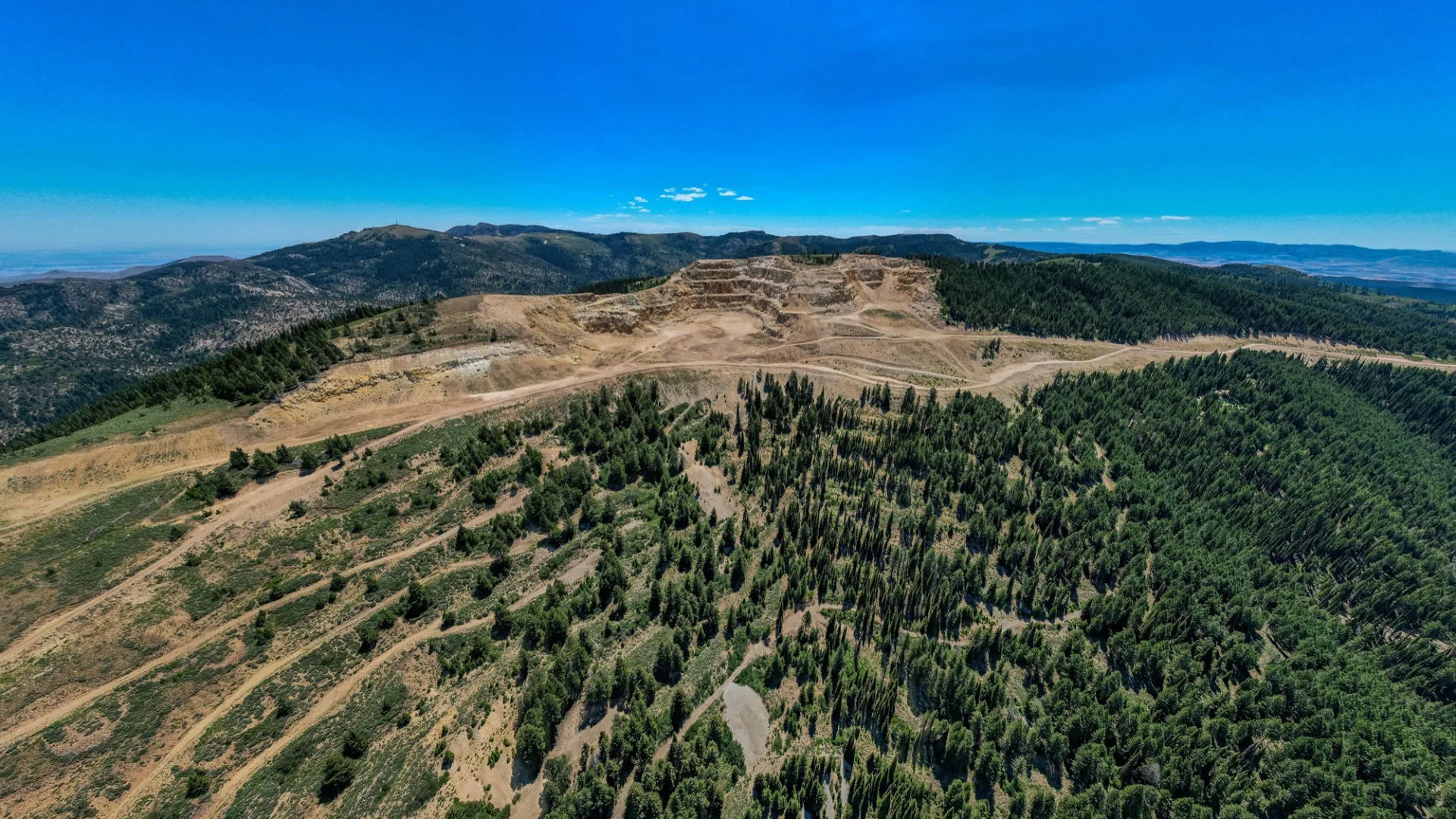
Integra Resources advances DeLamar gold-silver in Idaho with $12.5M land deal, $61M financing, FAST-41 permitting, 46% IRR, $1,480/oz AISC.
- Integra's $12.5M acquisition of a 6,600-acre ranch consolidates critical surface rights at the DeLamar Project in Idaho, eliminating easement dependencies, improving mitigation flexibility, and reducing access-related permitting risk.
- A $61M bought-deal financing, three times oversubscribed and anchored by new institutional participants including generalist funds, reflects renewed capital market interest in de-risked, domestic gold development stories.
- DeLamar's feasibility study metrics, 1.1 million ounces gold equivalent (AuEq) reserve base, all-in sustaining cost (AISC) of $1,480 per ounce, and a 46% after-tax internal rate of return (IRR), place the project competitively among US heap-leach development peers.
- A FAST-41 federal permitting timeline of approximately 15 months, issued by the Bureau of Land Management (BLM), transforms DeLamar from a multi-year permitting story into a near-term construction candidate.
- The combined strategy, operating cash flow from Florida Canyon, early works capital deployment, and land consolidation, reflects an industry shift toward execution-phase positioning over exploration-stage narratives.
US Gold Development Re-Rating as Permitting & Capital Align
The environment for US gold development assets has shifted materially. Gold prices exceeding $3,000 per ounce, with spot prices recently trading above $5,000 per ounce on certain benchmark measures, have renewed institutional focus on development-stage projects that were previously sidelined during the 2021-2023 funding drought. Safe-haven demand driven by persistent geopolitical uncertainty and evolving interest rate expectations has extended gold's multi-year bull run, according to data tracked by the World Gold Council (WGC). Capital is rotating back into the developer pipeline, but selectively.
Federal Policy & Safe-Haven Demand Reshaping the Developer Pipeline
Institutional capital is not returning indiscriminately. The preference is for projects with defined permitting pathways, feasibility-level economics, and domestic jurisdiction. US-domiciled assets have gained particular attention as supply chain security concerns have elevated the strategic value of domestic precious metals production. Against this backdrop, developers capable of demonstrating permitting visibility rather than merely exploration potential are commanding a premium in capital markets.
Permitting Timelines & Their Effect on Valuations
Traditional US permitting cycles for open-pit mining projects have historically ranged from four to seven years under the National Environmental Policy Act (NEPA). The introduction of the FAST-41 framework, designed to coordinate and accelerate federal environmental review, has begun compressing those timelines in certain cases to approximately 15 months. The valuation implications are direct. Net present value (NPV) calculations are sensitive to discount rates, and longer permitting timelines inflate the effective discount applied to future cash flows. A project that moves through permitting in 15 months versus five years carries a meaningfully different risk-adjusted NPV at any given gold price assumption. For institutional investors applying discount rates of 5% to 8%, permitting compression is not a narrative advantage, it is a quantifiable economic input.
Early Capital Deployment as a De-Risking Strategy
The traditional developer pathway, feasibility study, followed by permitting, followed by financing, followed by construction, creates a prolonged period of capital inactivity that compounds timeline risk and inflates peak construction funding requirements. A more capital-efficient model has emerged among better-positioned developers: deploying equity early into long-lead procurement, infrastructure preparation, and land acquisition ahead of final permit receipt.
From Feasibility Study to Construction Readiness
This approach shortens the interval between permit issuance and first production, which is among the most value-destructive phases of any development project. Investors have historically discounted construction-stage companies for execution risk as much as for permitting uncertainty. Reducing that interval, by completing preparatory works under existing authorizations, directly addresses a recognized source of valuation discount.
How Early Works Improve Project Economics
Capital deployed before construction commencement can reduce peak funding requirements, improve the terms available under project debt facilities, and lower execution risk for lenders and equity holders alike. Long-lead equipment orders, land purchases, and preliminary infrastructure works are activities that can proceed in parallel with final permitting. Each dollar deployed pre-construction comes off the peak capital requirement that would otherwise need to be financed at or near construction start.
George Salamis, President and Chief Executive Officer of Integra Resources, describes the capital logic:
"The feasibility study that we just submitted identifies really a defined set of early works, things that we can tackle on the project. Long lead time items, land purchases, some infrastructure work, things that we can do without having the full permit in place. This is $60 million essentially coming off of the project capital. It's invested capital into the project. That sets us up for a better discussion when it comes to project financing eventually."
The framing is important. Early work capital is not speculative spending, it is a deliberate compression of future capital requirements, and one that improves the debt-to-equity balance available at the project finance stage.
Land Consolidation as a Permitting & Operational Catalyst
Surface control is a technical and legal prerequisite in open-pit heap-leach development that is frequently underweighted in project-level analysis. Access corridors, waste dump locations, leach pad expansion areas, and water rights are all dependent on surface ownership or legally enforceable easements. Fragmented land ownership introduces easement payment obligations, access dispute risk, and mitigation complexity that can delay permitting and inflate operating costs over the mine life.
Surface Control in Open-Pit Heap-Leach Projects
For projects with large surface footprints, typical of low-grade, bulk-tonnage heap-leach operations, the gap between mineral title and surface rights represents one of the more material sources of unquantified project risk. Permitting agencies require demonstrated control over mitigation habitat, waste facilities, and infrastructure corridors before issuing Records of Decision. Projects that cannot demonstrate that control face requests for additional mitigation, extended comment periods, or redesigns that affect capital costs and layouts.
Integra's DeLamar Acquisition in Context
Integra's acquisition of a 6,600-acre ranch adjacent to the DeLamar Project for $12.5M addresses each of these risks directly. The purchase eliminates existing easements, secures mitigation habitat for environmental offset requirements, and transfers water and surface rights that the project will require during construction and operations. It also establishes alignment with local ranching stakeholders, a community relations consideration with direct permitting implications in rural western US jurisdictions.
Salamis frames the acquisition in operational terms:
"This is not a money situation... We didn't raise this money because something else went wrong. This money is earmarked for DeLamar early works, right, and nothing else."
The acquisition is consistent with that characterization. It reflects a deliberate sequencing of capital deployment, not a reactive response to a permitting obstacle.
DeLamar's Economics in the Context of US Heap-Leach Peers
DeLamar's feasibility study, submitted in 2025, provides a defined economic framework against which the project can be benchmarked within the US heap-leach development peer group.
Feasibility Study Metrics
The project's reserve base supports 1.1 million ounces AuEq over a 10-year mine life, with average annual production of approximately 106,000 ounces AuEq. AISC is estimated at $1,480 per ounce. At a $3,000 gold price assumption, the after-tax NPV at a 5% discount rate (NPV5%) is $774 million, with a 46% IRR. Sensitivity analysis indicates NPV5% rising to approximately $1.9 billion at higher gold price scenarios, reflecting the operating leverage inherent in a fixed-cost heap-leach operation.
Cost Curve Positioning & Margin Leverage
US heap-leach developers typically operate within an AISC range of $1,300 to $1,700 per ounce. DeLamar's $1,480 per ounce positions it at the midpoint of that range, with margin capture improving materially as gold prices move above $3,000 per ounce. At $5,000 gold, the cash margin per ounce exceeds $3,500, which compresses payback periods, improves debt service coverage ratios, and strengthens the economics available to project finance lenders.
Salamis connects the project's economics to the current gold price environment:
"Florida Canyon continues to deliver strong margins. We're still making $25 thousand dollars of margin per gold ounce produced."
While this statement references the producing asset, it reflects the cost discipline informing both operations, a relevant signal for investors evaluating execution credibility at DeLamar.
Institutional Capital Returns to Near-Term Producers
The structure of Integra's bought-deal financing warrants attention beyond the headline size. Units were priced at C$1.05 with warrants at C$1.40, and the offering was three times oversubscribed. Participation included approximately 12 new institutions, among them generalist funds not previously invested in the company, a meaningful signal in a sector where capital has historically been concentrated among dedicated resource managers.
Salamis describes the institutional reception:
"Very well subscribed. Three times oversubscribed. You know, there's 12 or so new institutions in the book including three generalist funds. It was really well accepted in the investment committee."
Generalist fund participation is a qualitative indicator of project maturity. These investors typically require a higher standard of permitting visibility, management credibility, and economic definition before committing capital.
Why Investors Are Re-Entering the Developer Space
The combination of strong gold prices, a limited pipeline of construction-ready domestic projects, and supply chain security concerns has shifted institutional risk tolerance toward developers with defined timelines. The FAST-41 framework provided the specific catalyst for Integra's financing timing.
Salamis explained:
"The 'why now' is really driven by that Fast-41, 15-month timeline that the BLM handed us a mere two weeks ago. That timeline was far faster than certainly we expected, which is all great news obviously, but that's what's driving the motivation to get this financing done."
The decision to accelerate the raise rather than wait for market stability reflects a judgment that the permitting window, combined with institutional demand, created a narrow and favorable financing opportunity.
Operational Cash Flow as a Strategic Advantage
Florida Canyon as a Funding Platform
Integra's hybrid producer-developer structure differentiates it from single-asset developers entirely dependent on equity markets for capital. Florida Canyon, a producing heap-leach gold mine in Nevada, generated approximately 72,000 ounces of gold in 2024 and continues to generate operating margins that support corporate overhead and contribute to development funding.
Hybrid Producer-Developer Model
The significance of this structure is financial rather than operational. A company generating cash flow from a producing asset enters project financing discussions with a demonstrably stronger balance sheet, lower near-term dilution risk, and an established operational track record. These attributes compress the risk premium lenders and equity investors apply to the development asset.
The Investment Thesis for Gold Developers
- Permitting acceleration under federal programs such as FAST-41 directly reduces the discount rates applicable to US development projects by compressing the timeline between feasibility completion and construction commencement.
- Developers deploying equity capital into early works, land acquisition, and long-lead procurement ahead of final permit receipt reduce peak construction funding requirements and improve the terms available under project debt facilities.
- Heap-leach oxide projects with AISC below $1,500 per ounce carry significant operating leverage to gold prices above $3,000 per ounce, with NPV and IRR sensitivity that improves financing attractiveness at current spot prices.
- Institutional capital is concentrated in projects with clear permitting pathways, feasibility-level economic definition, and near-term construction visibility rather than earlier-stage exploration narratives.
- Companies combining operating cash flow from producing assets with defined development pipelines present a lower financing risk profile and offer multiple sequential valuation catalysts through the permitting and construction cycle.
A compressed FAST-41 permitting timeline, an oversubscribed institutional financing, and a strategically executed land consolidation positions DeLamar within a narrow cohort of US gold development projects that have moved from feasibility narrative to execution phase. For investors tracking the re-rating cycle in domestic precious metals development, the relevant variables are no longer geological—they are permitting milestones, early works progress, and the transition to construction financing. Integra's sequencing of capital deployment across these variables reflects an execution-driven development strategy with quantifiable implications for project NPV and financing risk. At current gold prices, the margin for error in that execution has widened considerably.
TL;DR
Integra’s $12.5M land acquisition at the DeLamar Project consolidates key surface rights, removing easement dependencies and improving both permitting flexibility and long-term operating control. The move follows a $61M financing that was three times oversubscribed and attracted new institutional and generalist investors, signalling renewed capital market appetite for de-risked US gold development projects. DeLamar’s feasibility study outlines 1.1 million ounces of gold equivalent, a $1,480/oz AISC, and a 46% after-tax IRR, placing it competitively among US heap-leach peers. A FAST-41 federal permitting timeline of roughly 15 months further compresses development risk and brings the project closer to construction. Together, operating cash flow from Florida Canyon, early-works capital deployment, and land consolidation illustrate a broader shift in the sector toward execution-stage, domestically permitted gold projects rather than early-stage exploration narratives.
FAQs (AI generated)
The $12.5M ranch acquisition consolidates 6,600 acres of surface rights around the DeLamar Project, removing easement dependencies and access constraints. This reduces permitting complexity, improves mitigation flexibility, and provides greater operational control over waste dumps, leach pads, and infrastructure corridors. For investors, stronger surface control translates into lower execution risk and a more predictable development timeline.
The financing was three times oversubscribed and brought in around a dozen new institutional investors, including generalist funds. This signals renewed capital market interest in domestic, de-risked gold development projects with clear permitting timelines and feasibility-level economics. Institutional participation is often viewed as a proxy for project maturity and management credibility.
FAST-41 can compress federal permitting timelines from the traditional four to seven years down to roughly 15 months. Shorter timelines reduce the effective discount rate applied to future cash flows in NPV calculations. This means the project’s economic value becomes more robust and the path to construction—and ultimately cash flow—becomes clearer.
The feasibility study outlines 1.1 million ounces of gold equivalent over a 10-year mine life, with AISC of $1,480 per ounce and a 46% after-tax IRR at $3,000 gold. These metrics place DeLamar near the midpoint of the US heap-leach cost curve. At higher gold prices, the project shows strong operating leverage, with significantly improved margins and NPV.
Florida Canyon is Integra’s producing heap-leach mine in Nevada, generating operating cash flow that supports corporate costs and development spending. This hybrid producer-developer model reduces reliance on equity markets, lowers financing risk, and strengthens the company’s balance sheet ahead of project financing discussions for DeLamar.
Analyst's Notes





Subscribe to Our Channel





Stay Informed






















