




Downstream Integration Expands Americas Gold & Silver’s Strategic Position in US Antimony Processing


Americas Gold & Silver integrates US antimony processing, boosting margins, lowering AISC, and aligning with critical mineral policy for re-rate potential.
- Americas Gold & Silver integrates US antimony processing, boosting margins, lowering All-In Sustaining Costs (AISC), and aligning with critical mineral policy for re-rate potential.
- Americas Gold & Silver is expanding into US antimony processing, aligning with critical mineral policy and reducing reliance on foreign supply chains.
- The Galena mine produced 2.65 million ounces of silver in 2025 at very high grades (nearly 500 grams per tonne), marking its strongest performance in 20 years.
- The nearby Crescent project adds more than 20 million ounces of high-grade silver (over 600 grams per tonne) and can use Galena’s existing mill, lowering development costs.
- A majority-owned processing partnership (Americas 51%, United States Antimony 49%) will construct a $50 million leaching facility to produce finished antimony metal to Department of Defense specifications, improving margins, lowering costs per silver ounce, and establishing a fully domestic mine-to-metal supply chain.
- Alignment with Project Vault, a $12 billion US critical mineral stockpiling initiative, existing Defense Logistics Agency contracts, and an 18-month construction timeline create defined re-rate catalysts as the company transitions into a vertically integrated US minerals platform.
Strategic Context: Critical Mineral Policy & the Domestic Processing Gap
US critical mineral policy has shifted to distinguish between upstream extraction and downstream processing, recognizing that geology alone does not guarantee supply security. Antimony, a defense-critical metal used in flame retardants, ammunition primers, and semiconductors, is subject to domestic production incentives and trade scrutiny. The United States remains heavily reliant on foreign refined antimony, primarily from China, not due to a lack of domestic resources but because processing infrastructure is limited, creating a structural upstream-versus-downstream gap that now carries a strategic premium for investors.
Concentrate production alone does not deliver finished metal for domestic use, and reliance on offshore smelters introduces payability, opacity, and geopolitical risk. Companies that internalize processing capture margin previously ceded to third parties while aligning with federal procurement channels and accessing non-dilutive funding. Americas Gold & Silver’s joint venture exemplifies this approach, converting an existing by-product stream into domestically processed metal and directly addressing the strategic bottleneck in US critical mineral supply.
Recent Strategic Actions: Asset Rehabilitation & District Consolidation
Americas Gold & Silver's current position did not emerge from a single strategic decision. It reflects a sequenced capital allocation framework: stabilize the core asset, consolidate the district, then expand the margin stack. Each step has been executed with measurable results, reducing the execution discount that typically accompanies transformation narratives in the mining sector.
Galena Complex: Operational Rehabilitation
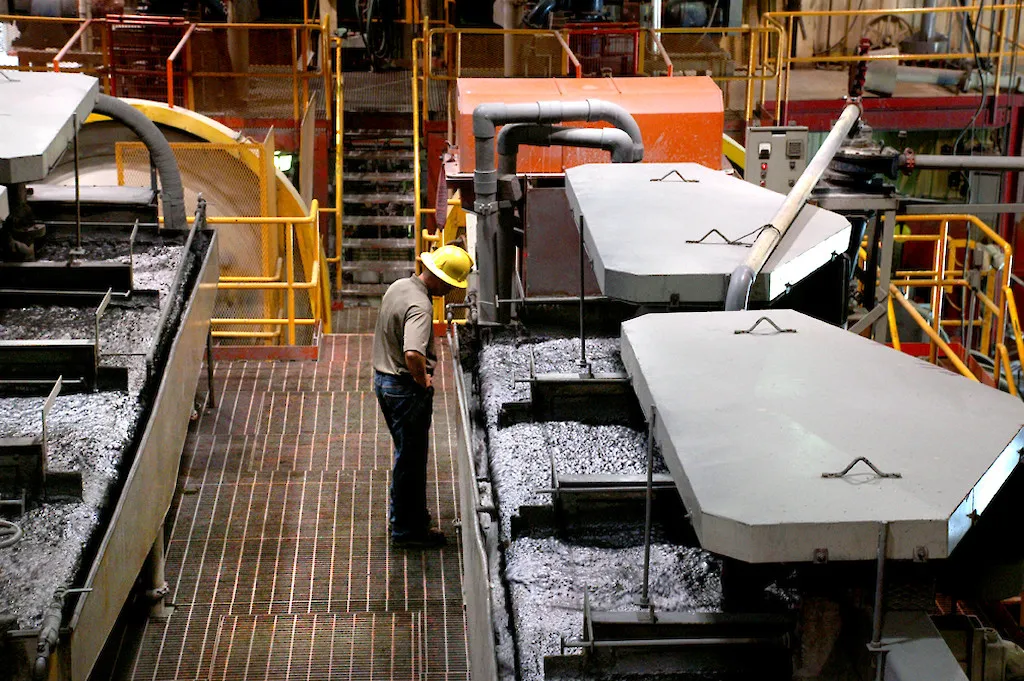
The Galena Complex in Idaho underpins Americas Gold & Silver’s platform. In 2025, the operation produced 2.65 million ounces of silver, a 52% production increase and the highest level in 20 years, at grades just under 500 g/t Ag. Grade strength materially improves cost positioning, as higher-grade ore lowers unit costs per ounce, reduces cost per tonne milled, and enhances by-product credit leverage within All-In Sustaining Costs (AISC) calculations. Galena’s tetrahedrite ore also contains copper, antimony, lead, and gold, and these co-products, previously under-monetized under legacy smelter terms, represent a structural margin improvement opportunity.
On the production results and the economic advantage embedded in Galena's ore body, Chairman and Chief Executive Officer of Americas Gold & Silver, Paul Andre Huet, stated:
"When I mine a ton of rock, and I skip it up the shaft, and I run it through the mill, I'm getting paid for my silver, my copper. Now, I'm finally going to get something. I'm getting something for antimony.”
Crescent Mine Acquisition: District Consolidation as a Scale Multiplier
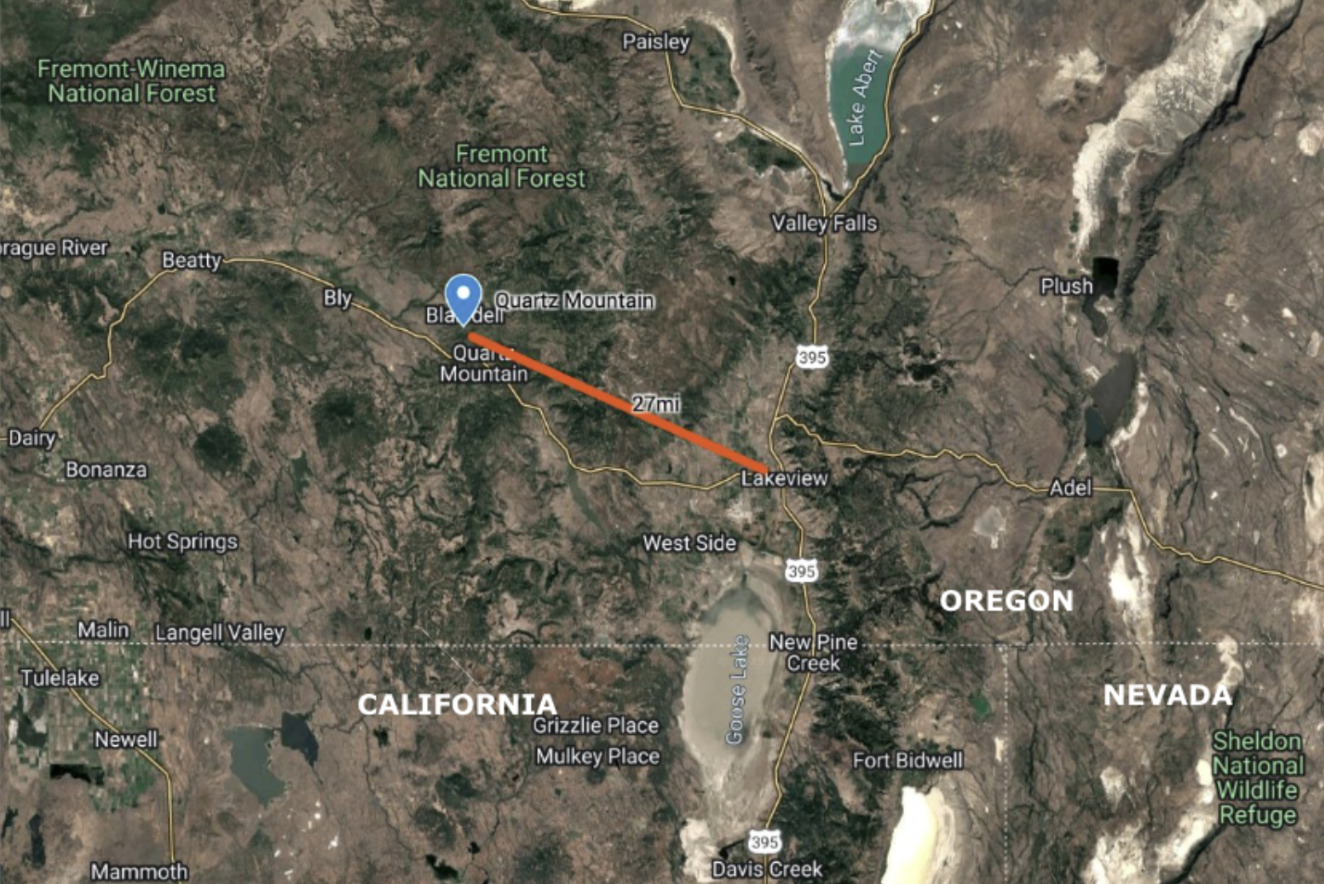
The Crescent Mine acquisition, located 9 miles from Galena, adds more than 20 million ounces at grades exceeding 600 g/t Ag, placing it among the highest-grade undeveloped silver assets globally. Its proximity enables infrastructure sharing, particularly mill utilization at Galena, eliminating the need for standalone processing capex and materially lowering development intensity. From a valuation perspective, Enterprise Value per Ounce (EV/oz) metrics typically assign premiums to assets with near-term development optionality, infrastructure access, and established permitting; criteria Crescent meets across indicated and inferred resource categories, with further definition expected from the 2026 drill program deploying 15 to 20 drills. The $130M-plus capital raise to fund the acquisition brought institutional ownership to above 60%, signaling capital market validation while reducing dilution overhang risk relative to the company's scale.
The Joint Venture with United States Antimony: A Structural Pivot
Americas Gold & Silver holds a 51% interest in a new antimony processing facility at the Galena Complex, with United States Antimony Corporation owning 49% under existing permits. With 561,000 pounds of antimony produced in 2025 as baseline feed, the Joint Venture (JV) converts a previously third-party by-product stream into internally processed metal, enhancing payability and margins. US Antimony serves as the facility operator, while Americas' representatives chair the six-member management committee as majority owner. Governance provisions include a deadlock resolution mechanism under which Americas may buy out US Antimony's interest at the greater of fair market value or 120% of its capital contributions, while US Antimony may sell at the greater of fair market value or 100%. Structured in under 30 days, the partnership leverages US Antimony's existing government contracts and board-level relationships, including a former general with established federal procurement connections, providing institutional credibility that strengthened the joint federal funding submission.
On the end-to-end domestic supply chain the JV creates, Huet described the scope of the integration:
"We're going to have domestic antimony from the raw earth, from the ground, drilling and blasting it from the drill bit all the way to a metal bar, to what the Department of Defense actually requires domestically."
Rationale & Trade-Offs: Capital Allocation Logic for Downstream Integration
The investment rationale for downstream processing integration is grounded in margin mechanics rather than production volume. The core logic is straightforward: if a mine produces antimony as a co-product of its primary silver extraction, and that antimony is currently sold at market terms through a third-party smelter, then internalizing the processing of that antimony increases the percentage of contained value captured by the producer. This is the payability argument.
Payability, By-Product Credits & AISC Sensitivity
Payability: the portion of contained metal a smelter pays for after charges, has historically undervalued antimony and copper in Galena’s silver concentrates. Improved offtake terms effective January 1, 2026, increase revenue per tonne milled, while by-product credits mechanically reduce AISC per silver ounce. In high by-product environments, this both compresses unit costs in weaker silver markets and amplifies earnings leverage when silver prices rise.
Huet described the cost structure of Galena's antimony production as a function of the ore body itself:
"Our antimony comes at no cost. I'm mining a ton of rock, and I'm getting ore; the antimony is included. Therefore, my cost for producing antimony is very, very low."
The Earnings Before Interest, Taxes, Depreciation, and Amortization (EBITDA) sensitivity to payability improvement is significant given production volumes. As internal processing replaces third-party smelter terms, a greater share of the antimony and copper value is retained within the consolidated entity, improving margin stability and reducing dependence on spot smelter pricing.
Federal Funding, Strategic Optionality & Timing of the Downstream Pivot
The facility carries an estimated capital requirement of approximately $50 million and is structured as a leaching facility, extracting antimony from concentrate into a finished metal bar meeting Department of Defense specifications, built on Americas' permitted land adjacent to the Galena mill. US Antimony has prepared federal funding applications aligned with Project Vault, a $12 billion government initiative to stockpile critical minerals, providing a potential non-dilutive pathway that would improve Internal Rate of Return (IRR), accelerate capex recovery, and enhance Net Present Value (NPV) by reducing required equity. The JV also enters with commercial traction: US Antimony brings existing Defense Logistics Agency contracts offering price protection, and four to five third-party feedstock agreements are already identified, reducing reliance on Galena concentrate alone. A 90-day supply agreement window serves as a near-term catalyst; however, if agreements are not finalized within that period, either party retains the right to suspend construction.
The pivot’s timing reflects disciplined capital allocation: after stabilizing Galena and consolidating Crescent, the company enters downstream integration with a strong balance sheet and institutional backing. Execution risks remain: an 18-month construction window that begins upon completion of an agreed project budget, market-priced antimony exposure, and JV governance complexity, but sequencing the pivot post-turnaround reduces the execution discount. Combined with favorable silver prices and supportive federal policy, the timing optimizes risk-adjusted returns while capturing margin and strategic optionality.
Long-Term Implications: Re-Rating Pathways & Valuation Considerations
The investment framework applicable to Americas Gold & Silver is evolving in parallel with the company's operational strategy. Traditional silver producers are valued on EV/oz of silver equivalent resource or EV/EBITDA multiples derived from silver price assumptions. These frameworks reflect the cyclical, commodity-price-driven nature of single-metal exposure. Vertical integration introduces variables that these frameworks do not natively capture.
Valuation Transition & Margin Durability
Americas Gold & Silver’s vertical integration positions it to transition from a cyclical silver producer to a strategic domestic minerals platform, capturing policy, scarcity, and thematic premiums unavailable to pure silver producers. Near-term re-rate catalysts include federal funding approval, finalization of supply agreements within the 90-day window, and on-schedule construction, which together could drive multiple expansions by reclassifying the company within institutional critical minerals and US industrial policy-oriented capital pools.
Internalizing processing stabilizes payability-driven revenue, while the Crescent integration improves throughput with minimal incremental capital. Energy cost reductions, from $0.65/kWh to $0.05/kWh, demonstrate operational leverage that materially compresses AISC. Combined with US jurisdictional advantages, these factors strengthen margin durability, reduce external volatility, and reinforce the company’s competitive cost positioning relative to global peers.
Risk Framework for Investors
Vertical integration reallocates margin control; it does not eliminate price risk. Antimony prices remain subject to global supply-demand dynamics and China-related trade policy variables. Construction delays and capital overruns are endemic to facility build projects and should be factored into risk-adjusted NPV calculations with appropriate probability weighting. JV governance, particularly the deadlock resolution and dilution provisions, introduces counterparty risk that a 100% owned facility does not carry.
Regulatory continuity for critical mineral support programs carries policy risk under changing administrations. The existing permit position at Galena mitigates one dimension of this risk, but federal funding eligibility is subject to program availability and application outcomes. Investors should monitor the 90-day supply agreement window, federal funding application status, and construction commencement milestones as the primary risk indicators for the integration thesis.
The Investment Thesis for Americas Gold & Silver
- Americas Gold & Silver aligns with US critical mineral policy by internalizing antimony processing, reducing reliance on foreign supply, and capturing margin previously ceded to third-party smelters.
- High-grade assets at Galena and Crescent provide a cost-advantaged production base, with by-product credits from antimony, copper, and lead lowering AISC and amplifying earnings leverage.
- The joint venture structure, alignment with Project Vault, and existing Defense Logistics Agency contracts provide a non-dilutive capital pathway and immediate offtake credibility, improving IRR, accelerating capex recovery, and enhancing risk-adjusted NPV.
- Near-term catalysts, including supply agreement finalization within the 90-day window, federal funding approvals under Project Vault, and an 18-month construction window commencing upon budget agreement, create defined re-rate pathways.
- Vertical integration and district consolidation position the company as a strategic domestic minerals platform, attracting thematic institutional capital and scarcity premiums beyond traditional silver producers.
The combination of an active production base, a defined exploration pipeline targeting 15 to 20 drills across the asset base, and downstream integration in progress provides investors with exposure to multiple concurrent value creation pathways within a single platform.
TL;DR
Americas Gold & Silver is transitioning from a high-grade silver producer into a vertically integrated US critical minerals platform by constructing a $50 million leaching facility at Galena to produce finished antimony metal to Department of Defense specifications. After stabilizing operations and consolidating the district with the Crescent acquisition, the company is capturing previously lost payability, lowering AISC through by-product credits, and entering the downstream market with immediate commercial traction through existing Defense Logistics Agency contracts and alignment with Project Vault, a $12 billion federal critical mineral stockpiling initiative. The result is enhanced margin durability, defined re-rate catalysts, and strategic exposure to US supply chain security themes that extend well beyond traditional silver valuation metrics.
FAQs (AI-Generated)
Antimony is designated as a US defense-critical mineral due to its use in flame retardants, ammunition primers, semiconductors, and military applications, while refined supply remains heavily concentrated in China.
By internalizing processing, Americas captures a higher percentage of contained metal value, improves payability, increases revenue per tonne milled, and reduces AISC through stronger by-product credits.
Galena operates at nearly 500 g/t silver grades, making it one of the highest-grade producing silver mines globally, which lowers unit costs and enhances leverage to by-product metals.
Crescent adds over 20Moz at grades above 600 g/t Ag and benefits from proximity to Galena’s mill, reducing development capex and increasing district-scale optionality.
Key risks include construction execution on the $50 million facility, the 90-day supply agreement deadline, federal funding continuity under Project Vault, and antimony price volatility.
Analyst's Notes





Subscribe to Our Channel



Stay Informed






















